Ask most people what “tethering a dog” means and they picture the worst version of it: a dog clipped to a stake in the yard, alone for hours. That image has poisoned a genuinely useful, humane tool. Real tethering, the kind a good trainer actually recommends, is almost the opposite: a short, supervised, indoor technique for helping an energetic puppy learn to settle, while quietly preventing the small disasters that turn into lifelong habits.
That is the reframe worth holding onto. Tethering is not about restraint for its own sake, and it is absolutely not a punishment. It is a management tool, a way to set your puppy up to do the right thing so you can reward it, and to stop them from rehearsing the wrong thing before it becomes their default. Once you see it that way, its unused potential becomes obvious.
What tethering actually is
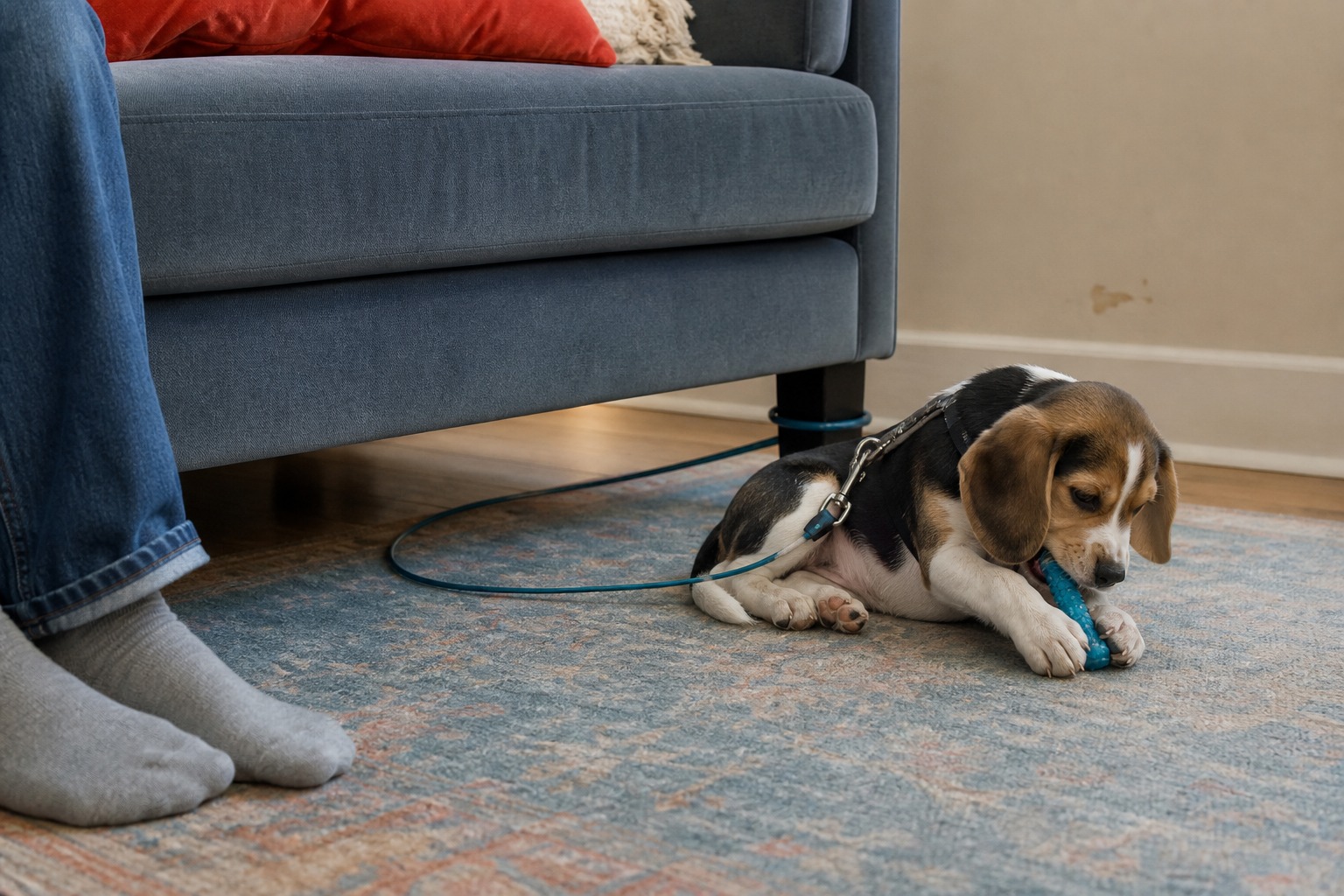
Tethering means attaching your dog, with a puppy-safe cable of a generous length, to something sturdy, a heavy chair or table, a piano, a couch leg. The word “cable” is deliberate: this is not usually a job for an outdoor leash. Many dogs will happily chew straight through a leash, so unless yours truly never would, use a chew-resistant cable instead. (A regular leash can fill in short-term in a pinch, but that is Plan B, not Plan A.)
Setting it up is simple. Loop the cable around the leg of something heavy and stable, then thread the hooked end through the small loop at the other end to cinch it in place. Clip the hook to your puppy’s harness, not their collar (more on why in a moment), leaving enough slack that they can move comfortably around their little zone. That is the whole rig.
Why it works: preventing the rehearsal
Tethered puppies can only travel as far as the cable reaches, and that limited range is exactly what makes the technique so practical as a short-term indoor management tool. It gives many puppies a way to settle down, buys you some peace and quiet, and reduces friction between dogs in a multi-dog home. Crucially, it stops your puppy from practicing behaviors you do not want, and behaviors that get practiced get stronger, so preventing the rehearsal is half the training battle.
Teach your dog to genuinely like their tether as a puppy, and you have a tool for life. A dog who has learned that being tethered is calm and pleasant can be asked to settle in one spot as an adult whenever it is useful, without stress. And unless your puppy is tired enough to rest or sleep while tethered, always give them something to do, a stuffed food toy or a safe chew, so the spot is associated with a good job rather than boredom.
Where it earns its keep
A few everyday situations show off why tethering is worth learning.
When company is over (or you’re the guest). A tethered puppy simply cannot launch themselves at visitors who are out of reach, which prevents the jumping habit from forming and gives you the chance to reward calm instead. Letting your puppy settle before guests even arrive lowers the odds of an over-the-top greeting. Every time you reinforce the right choice, you make it more likely next time.
When they’re bored. A bored puppy is a project looking for a place to happen, and a loose one goes looking for trouble. On a tether, they cannot wander off to steal or chew things they shouldn’t. You can clear their small area of anything off-limits and hand them an approved chew, protecting your shoes, blankets, books, and everything else with teeth marks in its future.
When you’re trying to get something done. Yoga, assembling furniture, a craft project, anything that needs floor space, becomes possible when your puppy has a defined spot rather than the run of the room. Just make sure you, or someone, can keep an eye on the tethered pup while you work.
To prevent accidents, carefully. Tethering keeps a puppy in sight, which helps with the classic house-training failure of sneaking off to potty in another room. It is not a substitute for the real work: tethered puppies still need frequent trips outside, and tethering alone will not prevent accidents.
To keep them out of food. A tether keeps a counter-surfing puppy away from human food on tables and counters, and in a multi-pet home it can keep your puppy clear of another animal’s bowl, heading off food guarding before it starts.
To keep two dogs comfortable. Sometimes tethering two dogs at opposite ends of a room, one at the far end of the couch, the other by the piano across the way, gives them the space they need to coexist, each with their own chew, no one raiding the other’s. This only works with dogs who are already okay being in sight of each other in the same room.
Make it a good experience, not a time-out
The whole technique lives or dies on whether your dog feels fine about it, so build the association carefully. Pick a comfortable clip-in spot with a bed or blanket to rest on, well clear of foot traffic so your puppy is not stepped over or bumped. As a rule, keep other pets from approaching a tethered dog, since their range of motion is limited and it is not fair to let another animal pester them into an interaction they cannot walk away from.
Start absurdly small: a session might run only two or three minutes at first, with you sitting right there for company. After a while, stop sitting the entire time but linger close enough to keep them in view. Build up slowly toward the 10-to-30-minute range. Tethering is not meant to be a marathon; it is a brief, calm interlude.
Safety is rule one
Because tethering keeps a dog in one place, it can help keep them safe, but it comes with its own hazards, and the top rule is non-negotiable: a tethered dog must be supervised at all times. An unwatched dog can twist themselves up in the cable, which is dangerous, frightening, and can cause injury. Never walk away from a tethered puppy.
The other guidelines are practical. Anchor to something your dog can’t budge, a 20-pound weight for a small dog, the leg of a piano or similarly heavy furniture for a big one, or use properly installed wall eye-bolts or gear made specifically for tethering. At the dog’s end, clip to a harness instead of a collar, so no force can ever land on the neck.
Not a punishment, and not for every dog
Two boundaries close this out. First, tethering is never a punishment and should never be used as one. It does not mean tying your dog up when you leave, and it certainly does not mean putting them outside unprotected. It is a supervised, positive tool, full stop; punishment has no place in it.
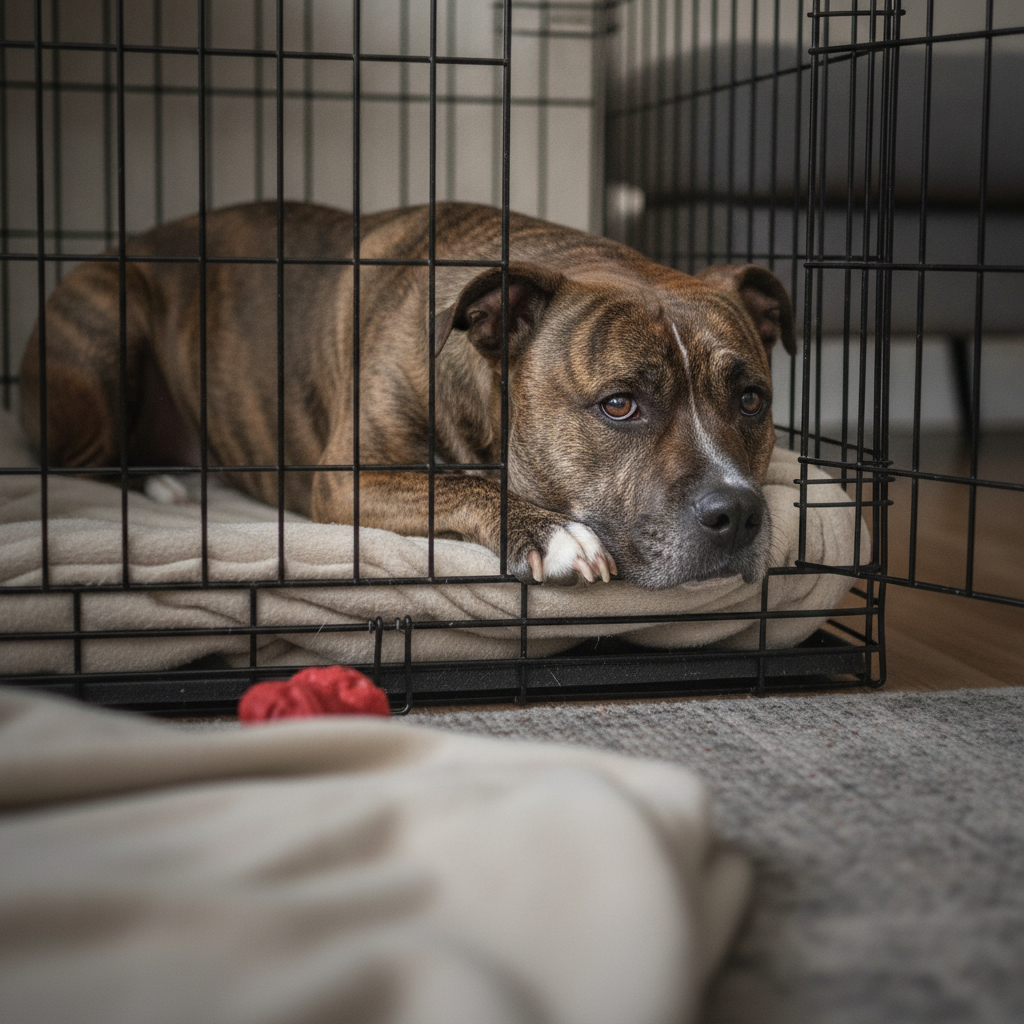
Second, it is not right for every dog, and that is okay. Some dogs panic when restrained no matter how gradually and kindly you introduce the tether. If yours stays upset despite a patient, positive approach, don’t force it. No single technique fits every dog, and a good trainer keeps the ones that create positive experiences and drops the ones that don’t.
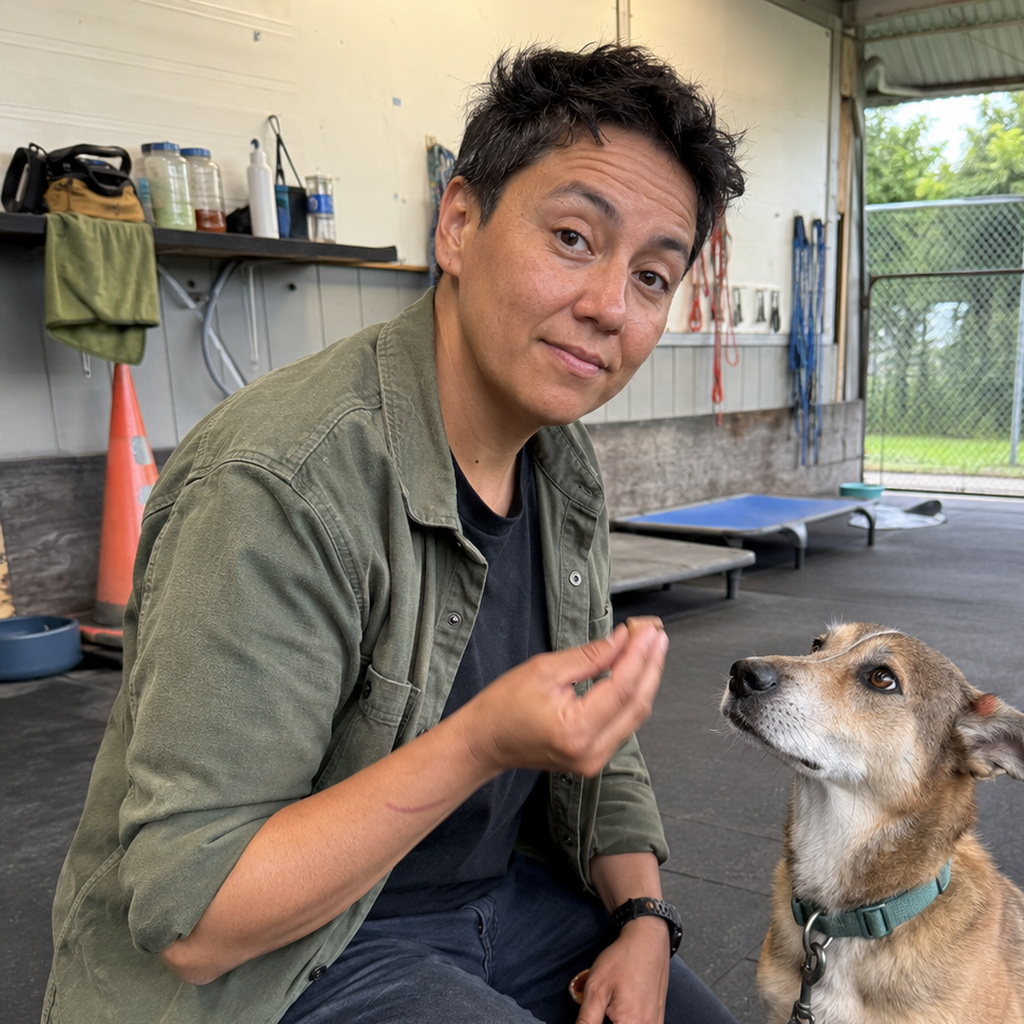
“I wish more owners knew tethering as the gentle thing it actually is,” says Jordan Ellis. “It’s not about controlling the dog, it’s about arranging the room so the puppy can’t practice the habit you don’t want, and can earn a reward for the calm you do want. Give them a stuffed chew and a comfy spot, stay in sight, and most puppies learn to love their settle spot.”
What newer research adds
Tethering fits neatly into where modern dog training has landed: on management plus reinforcement rather than correction. Behavior professionals increasingly emphasize “setting the environment up for success,” using barriers, gates, pens, and short supervised tethers so a dog physically cannot rehearse unwanted behavior, then rewarding the good choices that remain. Enrichment tools like stuffed food toys turn a settle spot into a satisfying activity, which is why they show up in so many current puppy-raising protocols.
It is worth separating this humane, supervised technique from the thing lawmakers have targeted, which is unsupervised outdoor tethering or chaining for long stretches. A number of states and municipalities restrict how long and under what conditions a dog can be left tied outside, precisely because unattended tethering is unsafe. The short, in-the-room, always-supervised version described here is a different practice entirely, and staying on the right side of that line, someone always watching, comfort always provided, is exactly what keeps it kind.