


Stop Punishing Your Puppy. It's Backfiring.
Yelling and scolding don't teach a puppy to behave. They teach a puppy to hide, fear you, and get sneakier. Here's the science-backed alternative, plus how to actually stop the jumping, barking, and nipping.

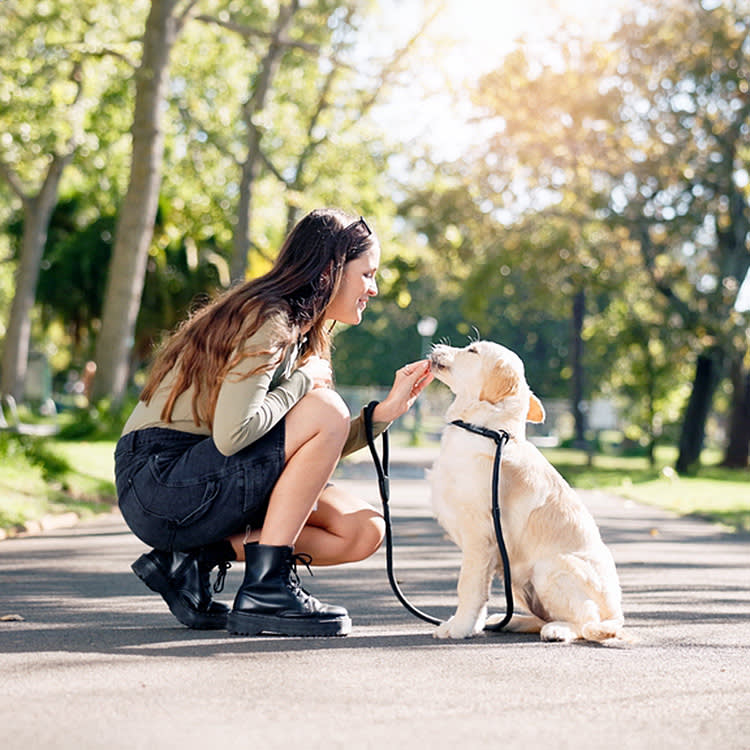
Let’s say it plainly, because it is the whole point: punishment is an outdated, counterproductive way to train a puppy. Not just unkind, ineffective, and often worse than doing nothing. Dogs do not understand punishment the way we picture them understanding it. What a scolded, yelled-at puppy actually learns is to feel insecure, to tune you out, and, most damaging of all, to hide the behavior you were trying to stop. Over the years, dog training has moved decisively away from this, and the majority of veterinarians and trainers now recommend positive reinforcement, an approach built on the actual science of how animals learn.
The reframe worth internalizing is this: punishment tells a dog what not to do in a language they do not speak, while positive reinforcement teaches them what to do in one they do. That difference is not soft or sentimental. It is the difference between a confident dog who eagerly offers good behavior and an anxious one who has simply learned to avoid getting caught.
Why punishment backfires
The clearest illustration is the one every new owner faces: the house-training accident. Ugh, what’s that smell? Your instinct is to let the puppy know they did wrong. But yelling at a dog for an accident does not stop the accidents, it teaches the dog to keep pottying in the house and just not do it in front of you. You can even create a dog so afraid of your reaction that, out on a walk, they won’t relieve themselves anywhere you can see. You haven’t fixed the behavior; you’ve driven it underground and added fear on top.
The better response is almost anticlimactic: don’t react. If the accident already happened and you didn’t catch it, calmly clean it up. If you catch your dog mid-squat, gently interrupt and whisk them outside to finish, then let a treat or some warm praise follow for going in the right place. That is the pattern for everything that follows, remove the drama, and reinforce the behavior you want.
This isn’t just philosophy. Research has confirmed that punishment-based methods are associated with behavioral and health problems in dogs. Owners and trainers who switched to positive reinforcement widely find their dogs more willing to cooperate, likely because reinforcement teaches the correct behavior rather than leaving a dog to guess what the “right” thing was after being scolded for the wrong one.
The tools of positive reinforcement
Positive reinforcement is a small toolkit, and it helps to know each tool.
Treats, especially early on, are a huge piece of the puzzle. Match the value of the treat to the difficulty of the ask: for a brand-new skill, something tricky, or practice in a distracting environment, reach for high-value rewards like liver, low-sodium turkey, or freeze-dried raw bites. Treats let you mark the right behavior quickly and precisely, so your dog connects the reward to what they just did. Once the behavior is reliable, you can taper the treats off, and your dog will happily perform for affection alone.
Praise and affection should ride along with the treats from the start, so you can phase the food out later. Be genuinely enthusiastic, and think of it as a little sequence, treat, pet, voice, treat, pet, voice, so praise and touch get paired with the reward.
Play and toys are a treat-free way to reward. Ask for a sit, then throw the ball; ask for a stay, then release into a game of tug. The more of a good time training becomes, the more your dog wants to engage with you.
Clicker training adds precision. The click marks the exact instant your dog nails the behavior, with the reward following right after. You start by pairing the click with a treat over and over until the sound alone means “yes,” then use the click to capture behaviors in real time. Your dog learns that the click is a promise a reward is coming.
Start with the “why” behind the behavior
Before you can change a behavior, you have to understand why it’s happening, because most of what humans label “bad” is just a dog acting on a natural instinct, barking, digging, humping, chewing. Ask what’s driving it: is your dog stressed, sick, under-exercised, over-exercised, or scared? Once you find the reason, you can manage the behavior rather than just suppress it. If your dog keeps digging a hole in their bed, for example, giving them an appropriate outlet like a sandbox can redirect the urge instead of punishing it.
And remember that rewards are personal. Every dog is different: one is thrilled with plain kibble, another needs liver to stay motivated, one loves a good roughhouse, and a sensitive dog would rather have a gentle ear rub. When you reward, watch how your dog responds. Do they lean in for more, loose and happy, or back away and tense up? Learning to read those signals tells you what your dog actually finds rewarding, which is the whole engine of this method.
Fixing the big three: jumping, barking, nipping
Most puppy complaints come down to a handful of behaviors. Here’s how positive reinforcement handles them.
Jumping. Jumping is tricky because some people love a jumpy dog and others hate it, so first get everyone in the household on the same page; a jumping dog can genuinely hurt the wrong person. If you do want to allow it, put it on cue so it happens by invitation. Otherwise, ignoring the jump is most of the battle. A cute 10-pound puppy who jumps becomes a 50-pound problem, so don’t yell or push them off, which just makes it a game. Stand still or turn away, wait for all four feet on the floor, and only then give attention. If a passerby asks to pet your dog, it’s fine to decline, because every chance to jump erodes your training; if you allow it, warn them to ignore the dog if it jumps and shorten the leash so there’s no height to gain. To build the alternative, reward calm greetings, pet only while all four feet stay down and your dog is engaging with the person, not you. The “sit” game cements it: ask for a sit, deliver all the affection, and the instant they pop up, stop and ignore until they sit again. Dogs catch on fast that sitting, not jumping, is what earns love.
Barking. Barking can be useful and maddening in equal measure. As always, start with the trigger, a squirrel at the window, a ball under the couch, a sound you can’t hear. Address the cause first: shades can block the view of passing dogs and squirrels, and a sound machine or TV can mask noises that set your dog off. Then teach a “quiet” cue. Let your dog bark, distract them with a toy or sound, and the moment they stop and look at you, reward. Repeat, gradually lengthening the quiet before the treat, and once it’s consistent, add the word “quiet.” Because barking has often been self-reinforcing for a long time, be patient. For fear-based barking, layer in desensitization (playing a trigger sound like thunder at low volume during dinner and slowly increasing it while your dog stays comfortable) and counterconditioning (rewarding every time the trigger appears, so it starts predicting good things).
Nipping and biting. Nipping is natural puppy behavior, and part of why puppies should stay with their mom and littermates for eight-plus weeks is to learn bite inhibition, how hard is too hard, and when mouthing is okay. Your puppy will likely still test their teeth on you, because biting is play. If they nip as you pass, don’t yank your clothes away or run, which makes it a game; instead, stand still and ignore them, and you can gently hold the very end of the fabric near their teeth so they can’t play tug or tear a hole. When they let go and settle, wait a beat before re-engaging. Redirect a bite-y mood onto a toy by dragging it enticingly along the floor, and keep toys handy during greetings and other predictable nipping moments. To teach a soft mouth, allow gentle mouthing, and the instant it hurts, give a small, sharp yelp (like a littermate would) and pause play for a minute before resuming, repeating the yelp any time the bite is too hard.
Getting help
If you want backup, look for trainers and organizations built around positive reinforcement, such as Karen Pryor Academy Certified Training Partners (KPA CTP), the International Association of Animal Behavior Consultants (IAABC), and Victoria Stilwell Positively Dog Training (VSPDT). Training this way does more than fix behaviors; it builds your dog’s confidence and a genuine bond between you. Everybody wins.
The thing punishment can never do is tell a dog what you’d like instead. You can suppress a behavior with fear and end up with a dog who’s shut down and sneaky, or you can teach the behavior you want and end up with a dog who’s actively trying to figure out how to please you. Once owners see how fast a puppy learns when there’s a reward on the line, they rarely miss the yelling.
What newer research adds
The evidence has only sharpened since positive-reinforcement training went mainstream. Reviews of aversive methods, shock, prong collars, leash corrections, harsh scolding, consistently link them to higher rates of fear, anxiety, and stress-related behavior, and controlled comparisons find reward-based training at least as effective for teaching skills without those costs. Leading veterinary behavior organizations now formally recommend reward-based methods as the standard of care, which is why the punishment-first advice of a generation ago has fallen out of professional favor.
There’s also growing appreciation for how much a puppy’s early experiences shape adult behavior. Well-run socialization and reward-based training during the sensitive puppy period are associated with more confident, less fearful adult dogs, which reframes this whole topic: the goal isn’t to correct a “bad” puppy, it’s to build a good one. Time spent teaching what to do, gently and consistently, pays off for the life of the dog.
References
- Ziv, Gal — “The Effects of Using Aversive Training Methods in Dogs: A Review,” Journal of Veterinary Behavior, 2017
- China, L., Mills, D.S., Cooper, J.J. — “Efficacy of Dog Training With and Without Remote Electronic Collars,” Frontiers in Veterinary Science, 2020
- American Veterinary Society of Animal Behavior — Position Statement on Humane Dog Training
- Vieira de Castro, A.C., et al. — “Does Training Method Matter? Evidence for the Negative Impact of Aversive-Based Methods on Companion Dog Welfare,” PLOS ONE, 2020
Common questions
Why shouldn't I punish my puppy?
Because it doesn't teach what you think it does. Dogs don't understand punishment the way people imagine; instead it makes them insecure and can shut down their willingness to engage. Research links aversive methods to behavioral and health problems. Worse, punishing an accident often just teaches a puppy to hide the behavior from you, which makes training harder, not easier.
What should I do when I catch my puppy having an accident?
Don't react with anger. If you didn't catch them in the act, simply clean it up calmly. If you do see it happening, calmly interrupt and take them outside to finish, then reward them with a treat or praise for going in the right spot. Yelling only teaches them to avoid pottying in front of you.
How do I stop my puppy from jumping on people?
Ignore the jump instead of pushing them off, which just turns it into a game. Stand still or turn away and wait for all four paws on the ground, then reward. Teach a 'sit' for greetings and reward calm, grounded attention. Get visitors on board, since every allowed jump undoes your training.
Dr. Solis is a board-certified veterinary dermatologist with over twelve years of clinical experience. She advises on skin conditions, allergies, and grooming practices that affect coat and skin health. All dermatology and allergy content at The Pet Times is reviewed by her team before publication.
Meet our experts ↗Keep reading
 TrainingYou Can't Train the Bladder. Fix the 30 Seconds Before the Door.Dr. Amara Solis · 7 min
 TrainingYour Dog Isn't Being Stubborn About the Snow. They're Confused.Dr. Amara Solis · 7 min
 TrainingYour Dog Jumps Because It Works. Here's How to Make It Stop.Dr. Mara Chen · 7 min
 TrainingYour Dog Isn't Being Bad. The Couch Is Just the Best Bed in the House.Dr. Nina Kohl · 6 min
 TrainingYour Dog Isn't Being Bad. Your Christmas Tree Just Looks Like an Indoor Bush.Dr. Nina Kohl · 6 min
 TrainingYes, You Can Potty Train a Senior Dog. Start Here.Dr. Ravi Mehta · 6 min