


Your Dog Doesn't Need a Muzzle. Train Them for One Anyway.
The stigma around muzzled dogs is a public-relations problem. The bigger problem is timing: almost everyone waits until a crisis to introduce one, which is the exact moment the training cannot work.

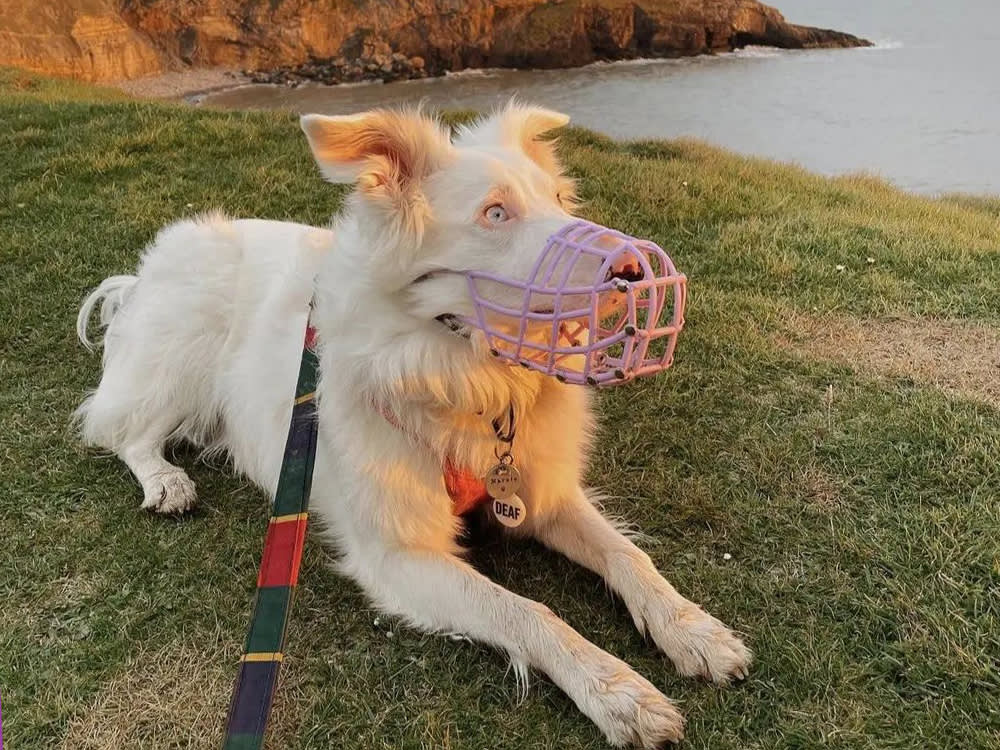
Somebody sees a muzzled dog on the sidewalk and crosses the street. The dog is not dangerous. The dog might be recovering from surgery, or picking up rocks, or ten years old and terrified of the vet. But the human brain reads the hardware and files the animal under threat.
That reflex is the thing advocacy groups have been chipping away at for years, and it is worth chipping away at. But it is not the biggest problem with muzzles in this country. The biggest problem is that almost nobody introduces one until they have a reason to, and by the time you have a reason, it is the worst possible moment to start.
The organization that took this on
The Muzzle Up! Project was founded in 2013 by Maureen Backman, then a private dog trainer in San Francisco, with a straightforward goal: make the muzzle an ordinary object rather than a scarlet letter, and teach people to use one without making them feel accused of something. Backman eventually left the project for a career in human therapy, but the mission and the collaborative approach she built stayed put.
Sarah McManaman, the group’s director of operations, has described being drawn to the message early on, specifically its emphasis on empowering dogs and treating the handler and animal as a working team rather than a problem to be managed. The organization partners with trainers and rescues around the country, and its central argument has stayed consistent: the muzzle is a tool, and the tool has been badly mischaracterized.
The mischaracterization is that a muzzle means “this dog bites.” Bite prevention is on the list, and nobody at the project pretends otherwise. But it is one item on a longer list.
The reasons that are not aggression
Pica. Dogs who compulsively eat non-food items, and there are a lot of them, need something between their mouth and the world. A basket muzzle on a walk is the difference between a nice loop around the block and a foreign-body surgery.
Veterinary safety. A dog in pain is a different dog. An animal who has never snapped in their life may bite when someone palpates a broken bone or handles an infected ear. A muzzle-conditioned dog makes that visit safer for the staff, calmer for you, and less traumatic for the dog, who is far less likely to end up wrapped in a towel and held down.
Injury. A severely hurt dog will defend themselves from further pain. That is not a character flaw, it is a reflex, and it is why emergency clinics reach for muzzles as routinely as they reach for gloves.
Legal and regional requirements. Plenty of transit systems, countries, and rental situations require them, and none of that cares about your dog’s temperament.
The timing problem nobody talks about
Here is the failure mode I see constantly. A dog snaps at the groomer, or fails an exam, or gets a scary diagnosis. The owner buys a muzzle on the way home. They put it on the dog the next morning, in the vet parking lot, on the worst day of that dog’s year.
The dog now has one association with this object, and it is a bad one, formed in a state of panic. It is not just that this does not work. It actively teaches the dog that the muzzle is the thing that shows up right before everything goes wrong.
Conditioning a muzzle takes days to weeks of short, cheerful sessions in a boring room where nothing is at stake. You cannot compress that into an emergency. Which means the only dogs who get the benefit of a muzzle are the dogs whose owners trained for it before they needed it, back when it seemed unnecessary.
That is the whole argument, and it is why the advice from people who do this work is unanimous and slightly counterintuitive: train the dog who does not need it. McManaman does exactly this with her own two dogs, neither of whom requires a muzzle. Every dog can benefit from being conditioned to wear one. Every dog, given the wrong pain and the wrong day, has the capacity to bite.
I have never once regretted that a dog arrived at my clinic already comfortable in a basket muzzle, and I have regretted the opposite many times. It is a fifteen-minutes-a-week investment that you may never cash in. It is also the only version of this training that ever works, because you cannot teach a frightened dog to love a new object while they are frightened.
The Pit Bull double bind
There is a group of owners for whom this is genuinely harder, and it is worth naming.
People with bully breeds are already managing a public perception problem they did not create, built over decades of lopsided media coverage and hardened into breed discrimination and, in some places, actual legislation. Ask them to put a muzzle on their dog and you are asking them to volunteer for the exact stereotype they spend every walk disproving. McManaman, whose own dog is a Pit Bull and Rottweiler mix, has heard this resistance repeatedly, and it is not irrational.
But the logic bends the wrong way. Protecting your dog’s image at the cost of their preparedness means that when the day comes, and for a large powerful dog it eventually does, they meet the muzzle cold, in the worst circumstances, in front of the people most primed to judge them. The dog pays for the optics.
Muzzles are for every breed. That is not a slogan, it is a risk-management statement. Every dog can benefit from the training, and every dog has teeth.
What newer veterinary practice adds
The strongest case for muzzle training has quietly shifted from the sidewalk to the exam room. Cornell’s Riney Canine Health Center and Fear Free, the veterinary program built around reducing fear and stress during care, now both promote proactive basket-muzzle conditioning as a standard preparation for handling, not a response to a bite history.
The practical payoff is concrete. A dog who is genuinely comfortable in a basket muzzle can often be examined, treated, or groomed with less physical restraint, not more, because nobody in the room is bracing for teeth. In some cases it is the difference between a straightforward appointment and one that requires sedation. The muzzle, used properly, is what lets a fearful dog be handled gently.
That reframing matters. A muzzle is not what you put on a dog you cannot trust. It is what you put on a dog so that everybody in the room can relax.
How to help the stigma along
Post the pictures. That is the whole ask, and it is more powerful than it sounds.
The people who cross the street when they see a muzzle are not villains. Most of us were that person once, working from the only image we had. The counter-image is a muzzled dog swimming, hiking, catching treats, napping in the sun, and doing all of the ordinary happy dog things that muzzles do not prevent. That image only exists if the people living it keep putting it out there.
And when someone asks you why your dog is muzzled, take the question at face value. Criticism makes people defensive, and defensive people learn nothing. A calm, one-sentence answer at the dog park does more for the next muzzled dog than an argument in a comment section ever will.
References
- Basket muzzle training (Cornell University College of Veterinary Medicine, Riney Canine Health Center)
- Basket Muzzle Training (Maddie’s Fund)
- The Muzzle Up! Project: resources and training plans
- Muzzle training and low-stress handling (Fear Free Pets)
Dr. Chen is a small-animal veterinarian who leads health and safety coverage at The Pet Times. She writes and reviews the bulk of our illness, condition, and safety content, translating clinical guidance into clear, practical advice owners can act on at home.
Meet our experts ↗Keep reading
 LivingEvery Trail Closed to Dogs Was Closed Because of a Dog OwnerMarcus Webb · 8 min
 LivingDon't Teach Your Dog to Swim. Teach Them to Get Out.Dr. Priya Nair · 8 min
 TrainingThat Bootie Wobble Isn't Funny. You Just Blindfolded Their Feet.Dr. Nina Kohl · 8 min
 TrainingBefore You Cut a Hole in Your House, Answer This: What Else Can Fit Through It?Marcus Webb · 8 min
 LivingThe Kayak Isn't What Hurts Dogs. The Water Is.Dr. Ravi Mehta · 8 min
 TrainingYou Can't Bribe a Snow-Drunk Dog Inside. One Command Actually Works.Dr. Priya Nair · 7 min