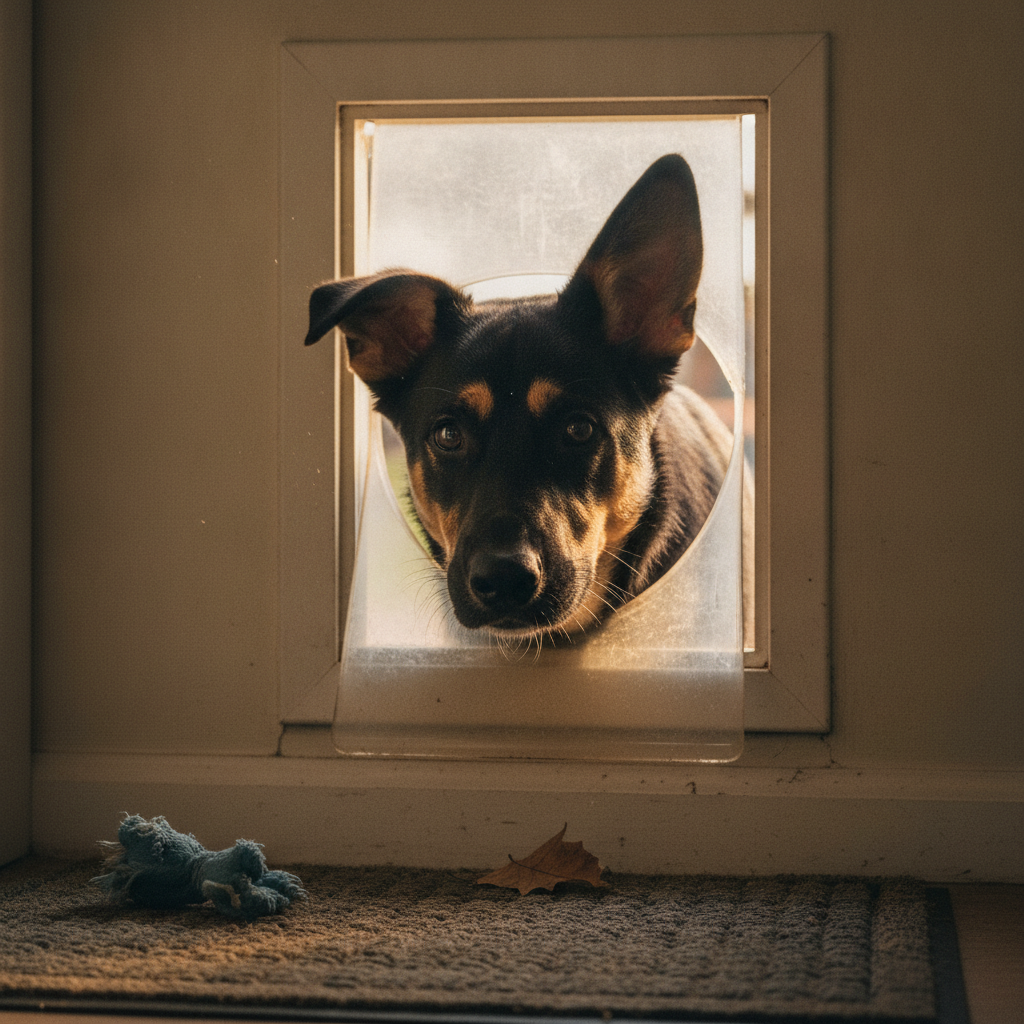
A dog door solves a real problem. If you have ever stood at a back door at 4 a.m. in your underwear while a dog changed their mind about whether they needed the yard, you already know which problem.
But almost every guide to dog doors treats the training as the hard part. It is not. Most dogs learn the door in a few days. The hard part is the sentence nobody makes you write down before you cut a permanent hole in the wall of your house:
Anything that fits through this hole can now come into my home.
That is not a reason to skip the dog door. It is the reason to choose the right one, in the right wall, for the right dog, before you spend a weekend with a jigsaw. So let’s start where the decision actually is.
The question people skip
A dog door is a hole. Holes are neutral. What comes through them is not.
Wildlife. Raccoons are the classic, and they are not deterred by a flap. Depending on where you live, add possums, skunks, feral cats, snakes, and rats. A raccoon in your kitchen at 3 a.m. is a genuinely dangerous animal, not a comedy bit.
People. A large-breed dog door is a large hole. Police departments and insurers have been talking about this for years, which is why placement matters: a door opening onto a fenced, gated yard is a different security proposition than one opening onto an alley.
Your dog, leaving. The flip side of freedom is unsupervised access. If your fence has a weak spot, your dog now has all night to find it. And a dog who can leave the house at will is a dog who can bark at 2 a.m., dig, eat something outside, or meet a coyote.
The mitigations are real, and they are the reason to buy up:
- Electronic or microchip-activated doors unlock only for a collar tag or your dog’s chip. This is the single biggest upgrade, and it solves the raccoon problem and most of the intruder problem at once.
- Locking panels or a curfew. Lock it at night. Freedom during the day is most of the benefit anyway.
- A secured yard. The door is only as safe as what it opens onto.
What you get in return
The benefits are not small, and they are the reason to do this properly rather than not at all.
- Independence. Your dog goes in and out on their own schedule, which reduces boredom and the frustration of waiting on a human.
- Fewer accidents. No more desperate signaling at a door nobody is watching.
- More movement and mental stimulation. A dog with yard access explores, sniffs, and moves more than a dog waiting on a couch.
- Fewer interruptions for you. No more paused calls, no more 4 a.m. wake-ups.
- Better behavior, indirectly. Bored dogs chew furniture and bark. An outlet for energy takes pressure off both.
Choosing the door: four decisions
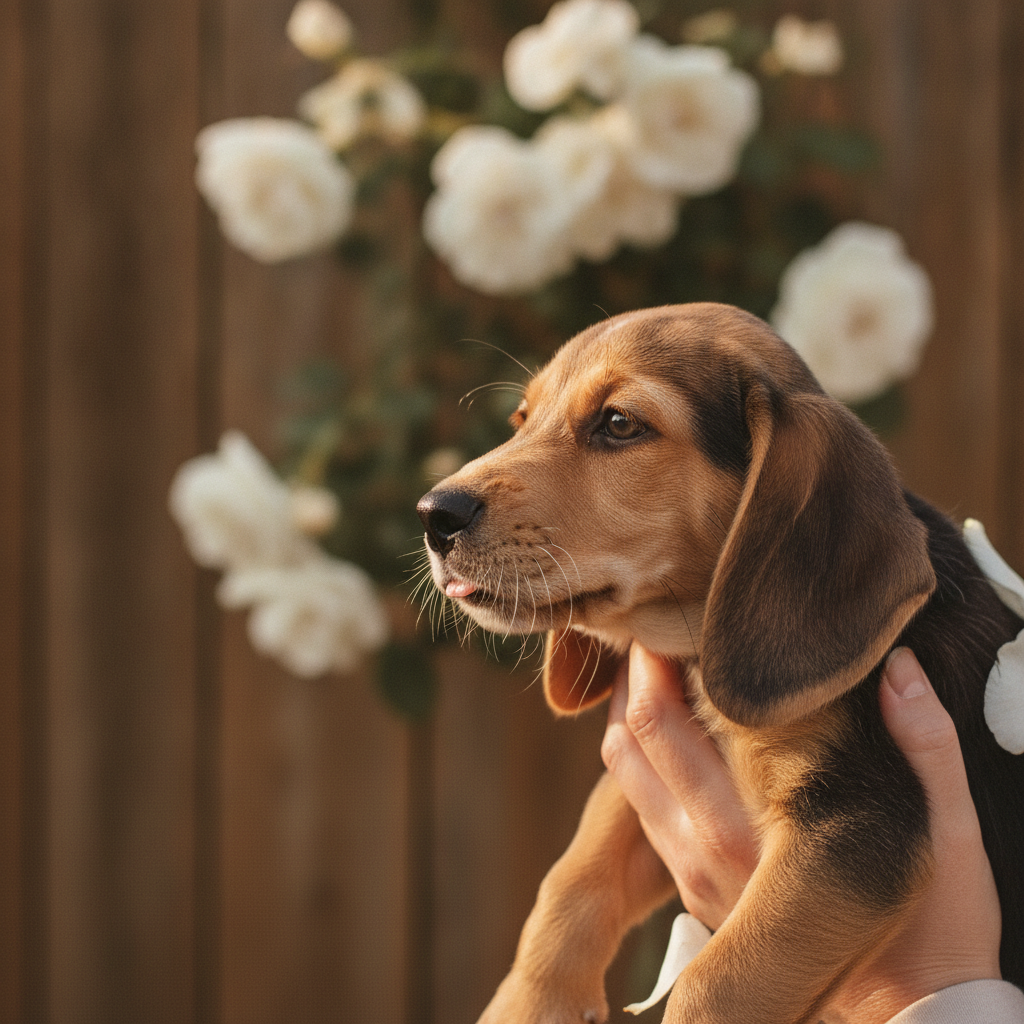
Size. Give the opening an inch or two of clearance around your dog and not a millimeter more, because every extra inch is extra hole. For a puppy, size for the adult dog they will become, and use a temporary insert until then.
Flap type. Soft, flexible flaps are easier for nervous dogs and for small dogs pushing with their heads. Rigid plastic or rubber is more durable and better in weather. Sensitive dog? Start soft.
Weatherproofing. In a cold or storm-prone climate, an insulated door is not a luxury, it is your heating bill and a draft your dog will refuse to walk into.
Mount. Door-mounted is standard. Wall-mounted gives you far more freedom over placement, which matters if you want the exit somewhere less exposed. Sliding-door inserts are the renter’s answer, since they install and uninstall without cutting anything.
Be honest about your dog
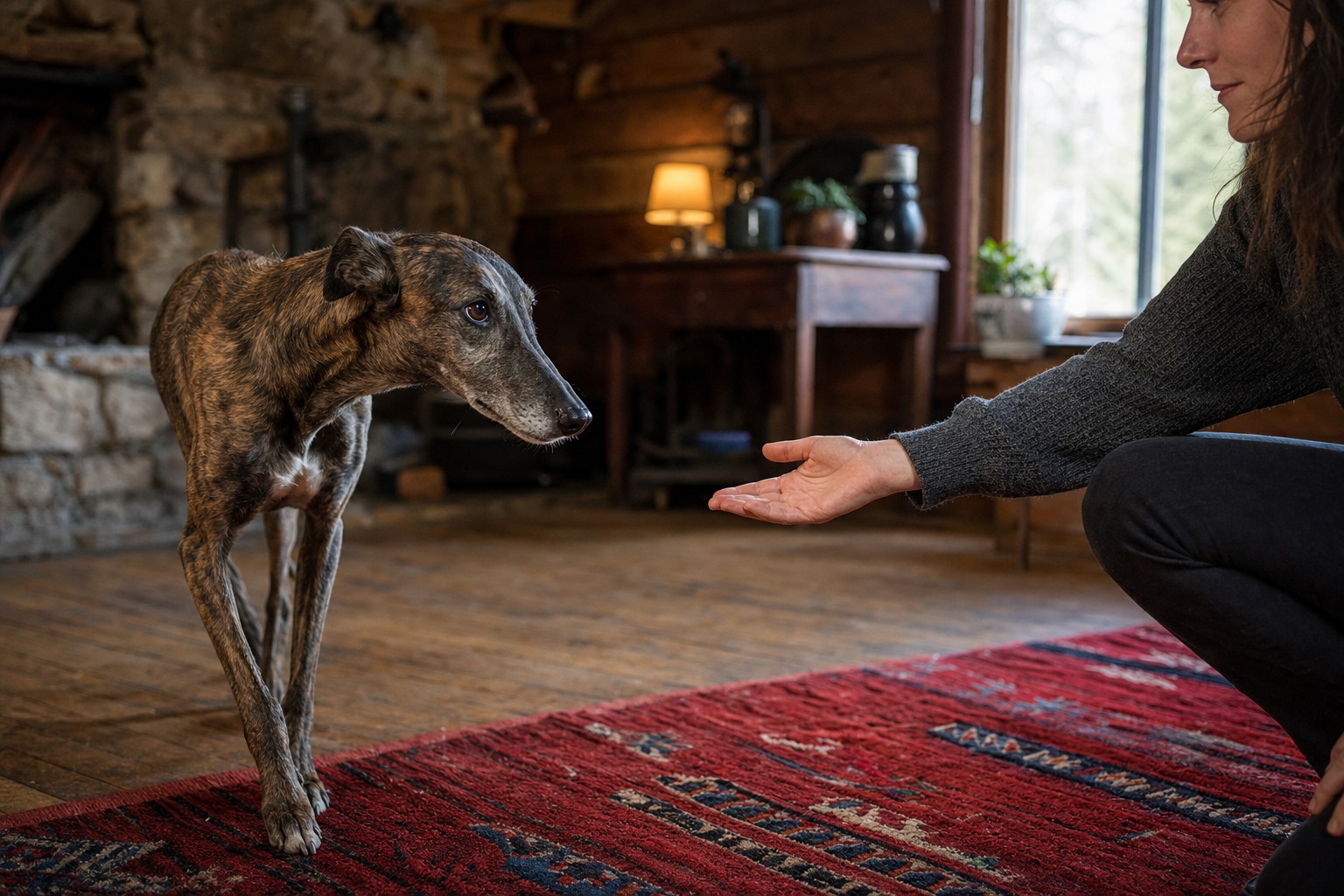
Confident, curious, food-motivated dogs learn a dog door almost by accident. Cautious dogs, older dogs, and rescues with unknown histories need slower introductions and more repetitions.
The relevant trait is not intelligence, it is novelty tolerance. A dog who backs away from a new object in the living room is going to have opinions about a swinging plastic barrier that touches them as they walk through it.
The training, which really is the easy part
Everything you need is in the how-to above, but the design principle behind it is worth stating: make the door disappear, then make it reappear one piece at a time.
Take the flap off. Now it is a hole, and a hole is just a shape with a treat on the other side. Once the shape is boring, put the flap back, but hold it open so it does not touch them. Then lower it in stages until your dog is pushing it themselves.
Keep sessions short, upbeat, and repetitive. High-value treats only, the kind you do not use for sit.
Troubleshooting
Afraid of the flap. The most common failure, and it is almost always about the touch or the noise, not the opening. Hold the flap open and lower it far more gradually than you think you need to. Some dogs need a week at “barely resting on their back.”
Will not go through at all. Have a second person call them from the other side, or guide them through gently on a leash. Do not push or shove: one bad shove and the door becomes a thing that gets done to them.
Only goes one way. Train the reverse direction from scratch, as its own project. Dogs do not automatically generalize.
Hesitant or confused. Stop. Come back later. A frustrated session teaches your dog that the door is where the frustration lives.
What’s new since this was written
The meaningful change in this category is that microchip-activated doors have become mainstream and affordable. Instead of relying on a collar tag that can fall off, the door reads the chip that is already in your dog and opens only for them. That closes the wildlife loophole and the neighbor’s-cat loophole in one purchase, and it is now the default recommendation rather than a premium upgrade.
The security conversation has also matured. The advice from installers and home-security professionals has converged on placement: put the door where it opens into an enclosed, gated, well-lit space, avoid a low-visibility side of the house, and lock the door overnight. A dog door is a fine thing to own. It is a bad thing to forget you own.
References
- American Kennel Club. “Doggy Doors: What to Know Before You Install One.” https://www.akc.org/expert-advice/home-living/dog-doors/
- American Veterinary Society of Animal Behavior. “Position Statement on Humane Dog Training.” https://avsab.org/wp-content/uploads/2021/08/AVSAB-Humane-Dog-Training-Position-Statement-2021.pdf
- The Humane Society of the United States. “Wild Neighbors: Keeping Wildlife Out of Your House.” https://www.humanesociety.org/resources/what-do-about-wild-neighbors