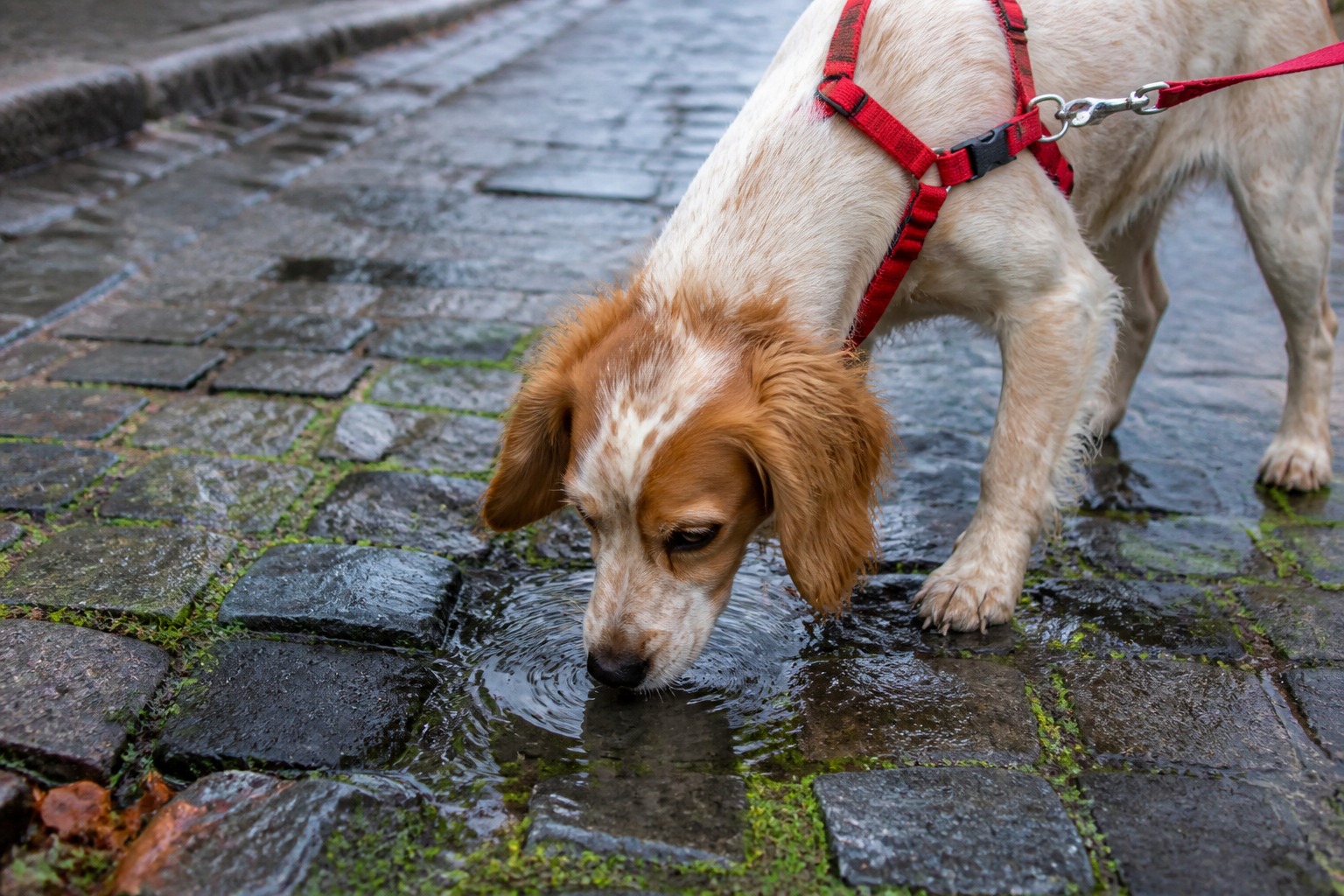
Here is the part people get backwards about giardia: they treat it as a diarrhea problem. It is really a dirty-water problem. The runny stool is just the symptom you notice. The actual event happened a week or two earlier, at a puddle in the dog park, a gutter after rain, or the edge of a slow-moving stream, when your dog put its nose down and drank.
Get that straight and the whole illness makes more sense. You stop chasing the diarrhea and start thinking about where your dog puts its mouth. So let’s walk through what this parasite is, how it gets in, how vets clear it, and one thing about treatment that has quietly changed in the last few years.
The parasite itself
Giardia (the species that infects dogs is Giardia duodenalis) is a single-celled protozoan that lives in the intestine. It is not a worm, even though the drugs used against it overlap with dewormers. It thrives in cool, damp places and can survive there for months, which is exactly why standing water and shady, wet ground are its favorite waiting rooms. It can infect dogs, cats, wildlife, and people, though usually not the same strain across all of them.
Cases turn up all year, but they climb in summer, when dogs and their humans are outdoors more, traveling more, and swimming more. More time near water means more chances to swallow it.
How it actually gets in
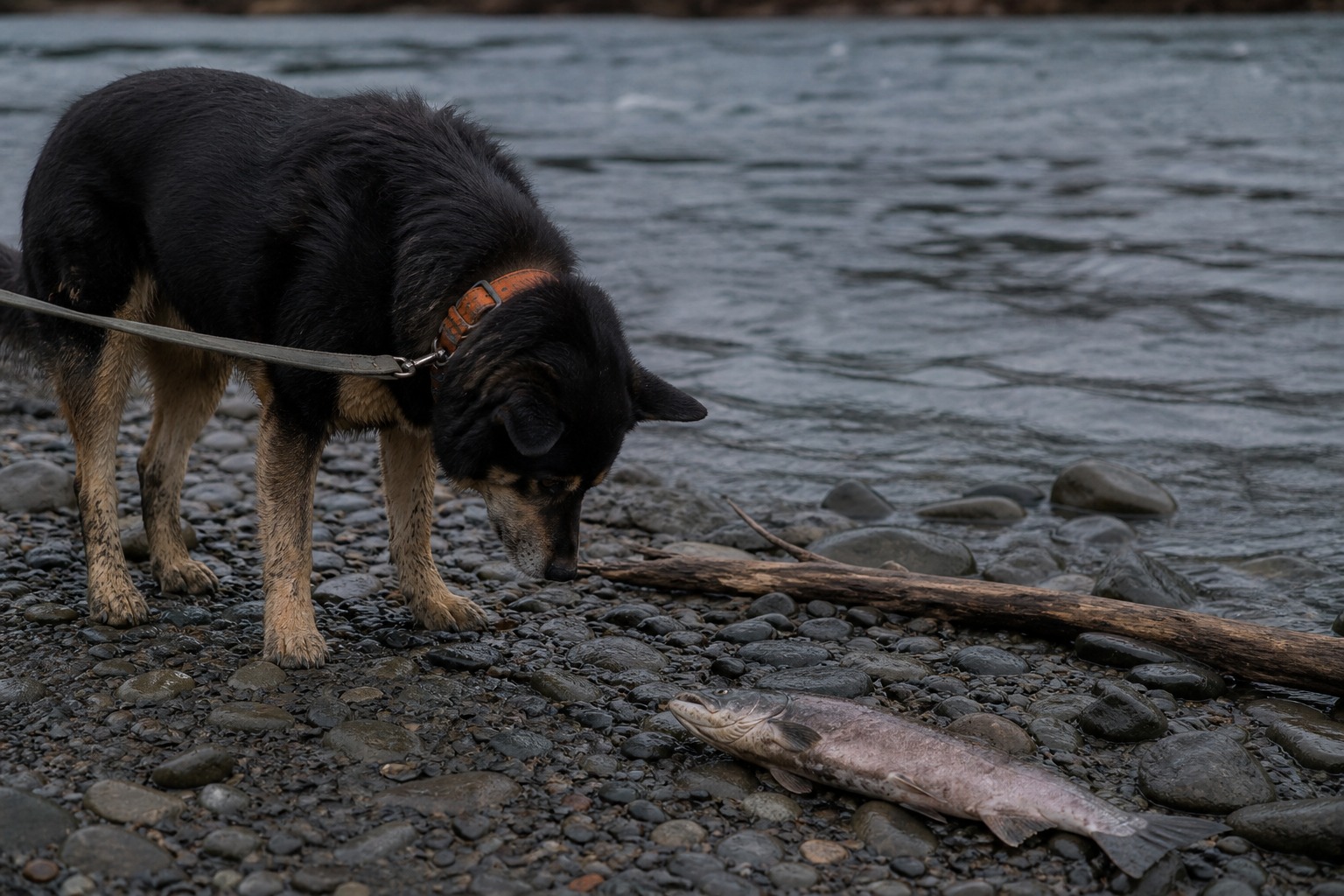
Giardia moves by what vets call the fecal-oral route, which is a clinical way of saying the parasite rides in traces of infected stool and ends up swallowed. Your dog does not have to eat feces to get it. Far more often, a dog drinks it: puddles, gutters, ponds, lakes, and streams that have been contaminated upstream by another animal. A dog park after a rainstorm is close to a worst case, lots of dogs, lots of stool that not everyone picks up, and lots of shallow water pooling on top of it all.
What it looks like
Plenty of infected dogs show nothing at all and clear it on their own. When signs do appear, watery diarrhea is the headline, sometimes streaked with blood or mucus. The fuller list your vet watches for includes:
- Persistent or severe diarrhea, occasionally bloody
- Gas and belly discomfort
- Nausea and vomiting
- Reduced appetite
- Weight loss
- Dehydration
- A dull, poor-looking coat
If diarrhea lasts beyond a day, or comes on suddenly and hard, don’t wait it out. That is a call-the-vet situation, giardia or not.
“The thing owners underestimate is how fast a small dog or a puppy can dehydrate once the diarrhea starts,” says Dr. Priya Nair. “By the time the coat looks rough and the energy drops, you are already behind. I would rather see a dog on day two of loose stool than day five of a limp one.”
How vets find it
The old-school method is looking at a stool sample under the microscope, but giardia is a slippery little thing to spot that way, since it isn’t shed evenly in every sample. So most clinics pair that with an antigen “snap” test: a bit of stool goes into a solution that reads out positive or negative, a bit like a pregnancy test for poop. It is sensitive and quick, and it catches infections the microscope misses.
How it’s treated
The two workhorse medications are fenbendazole, a dewormer, and metronidazole, an antibiotic. A typical course runs about five to ten days, and for stubborn cases that won’t quit, a vet may run both together. Because the parasite hides so well, your vet will usually want to recheck a stool sample a few weeks after the medication ends to confirm the coast is clear.
Recovery, and who’s most at risk
Most otherwise healthy dogs bounce back within a couple of weeks. A smaller number, usually the ones who got very dehydrated, need extra support like IV fluids or a short hospital stay. The dogs to worry about most are puppies, seniors, and any dog with a compromised immune system, where a bad case can turn dangerous rather than just miserable. Your vet will tailor the plan to your specific dog.
Keeping it from coming back
Prevention is partly about the mouth and partly about the cleanup. The single most useful habit is not letting your dog drink from stagnant water, easier said than done on a hot walk, but worth the effort. Bring your own water and offer it often. Beyond that, breaking the reinfection loop at home matters just as much as the medicine, because a dog can catch it right back from its own yard or bedding:
- Pick up your dog’s stool promptly, every time
- If you have cats, indoor or outdoor, pick up after them too
- Wash food and water bowls regularly with soap and water
- Launder toys and bedding often
- Disinfect crates and kennels, and where practical, hose and bleach-treat hard surfaces the dog uses
- Steer clear of soggy, low-lying ground that neighborhood dogs or wildlife may have soiled
What newer research adds
Here is the shift worth knowing. Veterinary parasitology groups now tell vets that in a healthy dog, the goal of treatment is to clear the symptoms, not to scrub every last cyst out of the animal. Part of the reason is practical: giardia is so common in the environment that a symptom-free dog can keep testing positive without being sick. And part of it is newer, some cases in North America appear to shrug off fenbendazole, so chasing a “perfectly negative” test can mean piling on more medication than the dog actually needs.
For you, that changes the finish line. If your dog feels well, is eating, and has firm stool, that is usually the win, even if a follow-up test still flickers positive. Combining fenbendazole with metronidazole is now the standard move for the harder cases rather than the first thing tried. As always, your own vet is the one to set the plan for your dog.
The bottom line
Most giardia infections resolve within a couple of weeks once they’re treated. The best protection isn’t a medication at all, it’s keeping your dog out of stagnant water and keeping their space clean. And if diarrhea runs longer than 24 hours or comes with other signs of illness, that’s your cue to see the vet.
References
- Giardia guidelines, Companion Animal Parasite Council (CAPC)
- Giardiasis in Animals, Merck Veterinary Manual
- Giardia: Infection, Treatment and Prevention, Cornell Riney Canine Health Center
- Effectiveness of Fenbendazole and Metronidazole Against Giardia Infection in Dogs, Frontiers in Veterinary Science
- Giardia and pets: prevention and control, U.S. Centers for Disease Control and Prevention
This article covers a health condition for general education and isn’t a substitute for veterinary care. If you think your dog is sick, contact your veterinarian.