


Your Dog's Ear Infection Keeps Coming Back for One Reason Most Owners Miss
A dog ear infection is rarely a one-off. It's usually the surface sign of an underlying trigger, most often allergies, plus ear anatomy that traps trouble. Here's why they recur, the breeds built to get them, and when head-shaking becomes a same-week vet visit.

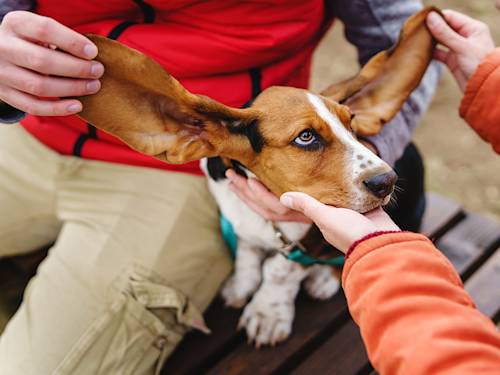
If your dog has had one ear infection, you know the drill: the head shaking, the funky smell, a course of medicated drops, and relief. And then, weeks or months later, it’s back. The frustrating part isn’t the infection itself. It’s the pattern. And the pattern has a cause most owners never hear about, because the vet visit understandably focuses on putting out the current fire.
Here’s the reframe worth having: for a lot of dogs, the ear infection is not the disease. It’s the symptom. Something underneath keeps setting the ear up to fail, and until that something is found and managed, the drops will keep working and the infection will keep returning.
Why the ear canal is a setup
Start with anatomy, because dogs are built differently than we are. Human ear canals are short and run mostly horizontal, so they drain and dry easily. A dog’s canal is long and takes an L-shaped bend, which means moisture, wax, and debris settle at the turn instead of draining out. That warm, damp, dark pocket is a near-perfect environment for the bacteria and yeast that normally live on the skin to overgrow. That overgrowth is the infection, medically called otitis externa.
But a well-functioning ear resists that overgrowth all the time. So the real question isn’t “why did bacteria grow?” It’s “what tipped the balance?”
The trigger you’re probably not treating
In most recurring cases, the answer is allergies. Environmental and food allergies inflame the skin lining the ear canal, and inflamed skin changes the canal’s whole ecosystem, more moisture, more wax, less defense, until yeast and bacteria take over. That’s why an allergic dog can seem to get ear infections “out of nowhere,” on repeat, in both ears.
Allergies are the most common trigger, but they aren’t the only one. The list vets work through includes ear mites, a foreign body such as a grass awn lodged in the canal, excess hair growing in the ear, extra moisture from swimming or baths, changes to the canal’s shape, injury, immune-mediated disease, hormonal (endocrine) conditions, and, counterintuitively, over-cleaning, which irritates the canal and strips its natural defenses.
When a dog comes in with their third ear infection of the year, I’m not just looking at the ear, I’m looking for what’s driving it. Nine times out of ten the ear is telling me about allergies the owner hadn’t connected to the problem. Clear the infection, sure, but if we don’t manage that root cause, I’ll see that same dog again in two months.
The breeds built for it
Some dogs are simply more prone, and the numbers back up what you’d guess. In a large study of dogs under UK veterinary care, otitis externa affected about 7 percent of dogs in a single year, making it one of the more common reasons dogs see a vet. Ear shape mattered a lot: compared with erect-eared breeds, dogs with pendulous (droopy) ears had roughly 1.76 times the odds of an ear infection, and those with V-shaped drop ears about 1.84 times the odds. That flap seals in warmth and moisture at the exact bend where trouble collects.
Breed risk was even starker. Basset Hounds stood out with nearly six times the odds of a crossbred dog, with Chinese Shar-Peis, Labradoodles, Beagles, and Golden Retrievers also well above average. At the other end, some breeds were notably protected, including Chihuahuas, Border Collies, Yorkshire Terriers, and Jack Russell Terriers. If your dog is on the high-risk list, recurring infections aren’t bad luck; they’re the odds, which is all the more reason to hunt down the underlying trigger.
Symptoms, and when it becomes a same-week visit
The signs are usually easy to read once you know them: head shaking, scratching or rubbing at the ear, discharge, a distinct bad odor, redness inside the ear, a swollen canal, obvious pain, itchiness, and crusts or scabs in or along the ear. Any of these earns a vet appointment, and sooner is better. Ear infections don’t tend to resolve on their own, and an infection that spreads to the middle or inner ear is a bigger, more painful, harder-to-treat problem that can affect balance and hearing.
Diagnosis is hands-on for good reason. Your vet may swab the discharge to see under a microscope whether bacteria, yeast, or both are involved, and look down the canal to check the eardrum. That’s not busywork; the right treatment depends entirely on those answers, and some products are harmful if the eardrum is damaged. Depending on what they find, treatment might be a topical ointment, medicated ear cleansers to clear debris, or, for severe or deep infections, oral antibiotics and anti-inflammatories.
Actually preventing the next one
Prevention splits into two jobs. The first is managing the underlying cause, and if that’s allergies, that’s the whole ballgame; for a food allergy, your vet may recommend a hypoallergenic or limited-ingredient diet trial, which should always be done under veterinary guidance rather than by guessing at the pet store.
The second job is everyday ear hygiene done correctly. Dry your dog’s ears thoroughly after swimming or bathing, since trapped water is a classic setup. Never push cotton swabs into the canal; they pack debris deeper and can injure the ear. Use only a vet-recommended cleanser, and only as often as your vet advises, because more is not better here. And don’t let other dogs lick your dog’s ears, which can introduce moisture and bacteria.
Catching it early prevents lasting damage, and finding the driver prevents the rerun. Treat the ear, but ask the bigger question, and your dog’s ears have a real shot at staying quiet.
This article covers a health topic and is meant to inform, not to replace veterinary care. See your veterinarian if you suspect an ear infection.
References
- O’Neill, D. G., et al. “Frequency and Predisposing Factors for Canine Otitis Externa in the UK, a Primary Veterinary Care Epidemiological View.” Canine Medicine and Genetics, vol. 8, 2021, article 7. https://doi.org/10.1186/s40575-021-00106-1
- “Otitis Externa in Dogs.” Merck Veterinary Manual. https://www.merckvetmanual.com/ear-disorders/otitis-externa/otitis-externa-in-animals
Common questions
What are the symptoms of an ear infection in dogs?
Head shaking, scratching or rubbing the ear, discharge, a bad smell, redness inside the ear, a swollen canal, pain, itchiness, and crusts or scabs in or around the ear. Any of these means a vet visit, because untreated infections get worse and more painful.
How do I stop my dog's ear infections from recurring?
Find and manage the underlying cause. If allergies are behind it, controlling them, sometimes with a diet change for food allergies, is what prevents repeats. Dry the ears well after swimming or baths, don't use cotton swabs in the canal, and work with your vet rather than treating each flare in isolation.
Can I treat my dog's ear infection at home?
No. Ear infections need a veterinary diagnosis, because treatment depends on whether bacteria, yeast, or both are involved, and on whether the eardrum is intact. The wrong product can make things worse or, if the eardrum is damaged, cause harm. See your vet, ideally the same week symptoms start.
Not a substitute for your vet. Our guidance is educational. For urgent symptoms, contact a vet or emergency clinic right away. Editorial standards
Dr. Nair is a veterinarian focused on diet and feeding. She covers everyday nutrition, treats, and the many "can they eat this?" questions owners ask, grounding each answer in what is actually safe and sensible for dogs and cats.
Meet our experts ↗Keep reading
 Health & WellnessYour Dog's Itch Is a Symptom, Not a Diagnosis. 13 Culprits, Sorted 4 WaysDr. Priya Nair · 7 min
 Health & WellnessMost Lumps on Your Dog's Back Are Fat. You Cannot Tell Which by Touching.Dr. Amara Solis · 7 min
 Health & WellnessThat Crusty Nose Isn't the Problem. It's the ReceiptDr. Amara Solis · 8 min
 Health & WellnessA Dog Who Keeps Shaking Their Head Is on a ClockDr. Priya Nair · 8 min
 Health & WellnessNo Home Remedy Will Fix a Lick Granuloma. The Cone Might.Dr. Ravi Mehta · 11 min
 Health & WellnessThere's No 'Best' Food for Dog Allergies. Here's How to Actually Find YoursDr. Nina Kohl · 13 min