


Your Itchy Dog Doesn't Need a Perfect Cure. They Need a Livable Itch.
Environmental allergies in dogs are getting worse, not better, and the goal most owners chase, zero itching, is the wrong one. What actually helps, from paw wipes to the newest targeted drugs.


Here is the mistake almost every owner of an itchy dog makes: they treat the scratching like a puzzle with a perfect solution, one magic food, one antihistamine, one clean house that makes it all stop. Environmental allergies do not work like that. They are chronic, they are getting more common, and the honest goal is not a dog who never itches. It is a dog whose itch is low enough that they can just be a dog.
That reframe is the whole point of this article, and it changes what you actually do. Instead of chasing zero, you manage the load, reduce contact where you can, treat flares promptly, and use the goal your vet uses: tolerable, not perfect.
The itch is getting worse, and it’s not your fault
Start with the trend, because it explains a lot of the frustration. Banfield’s State of Pet Health data documented a roughly 30 percent rise in environmental allergies in dogs over a single decade, and most veterinary dermatologists will tell you it has kept climbing since. Climate is a big driver: longer, warmer growing seasons mean pollen shows up earlier and lingers later, and extreme events add insult.
The allergy season I used to see has stretched at both ends. There used to be quiet months on my schedule. Now the flares start earlier and run later, and wildfire smoke can set off a wave of skin cases all at once. When an owner tells me their dog’s itching seems worse than it used to be, they are usually right, and it is not because they did anything wrong.
That matters emotionally as much as medically. Owners tend to blame themselves for a scratching dog. Often the environment simply changed.
What it looks like in dogs (hint: not sneezing)
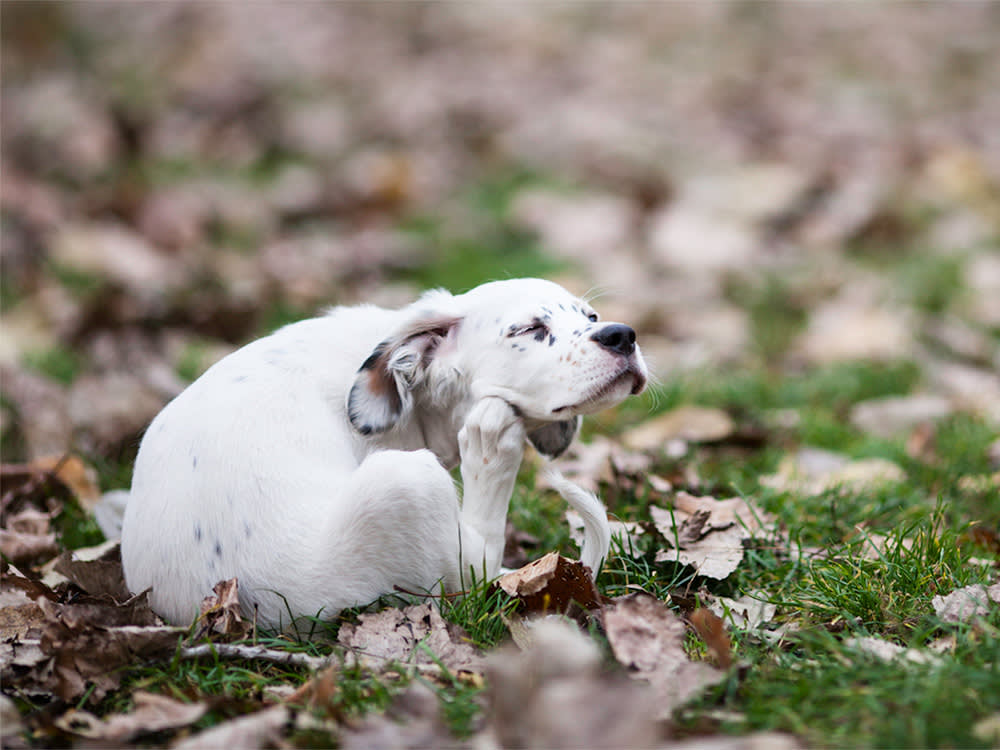
Dogs and people react to a lot of the same triggers, grasses, tree and weed pollens, dust mites, but the symptoms land in different places. In people it is watery eyes and a runny nose. In dogs it is almost entirely skin: itching, scratching, licking, and chewing, along with recurrent ear infections and the raw, self-inflicted damage that comes from a dog who cannot stop.
Because allergens ride in on contact, the worst of it tends to show up where a dog meets the ground. Check the paws, the muzzle, and the groin, along with other thin-haired spots, since those areas make the most direct contact and take the most exposure. A cuddle is a fine excuse to run your hands over those zones and look for redness or thinning fur.
The steps that actually help, in order
This is where the “reduce the load” thesis becomes a to-do list. Most of it is cheap and none of it requires a prescription to start.
Cut the contact. After walks, wipe down paws and belly with a damp cloth or dog-safe wipe to strip off pollen before your dog licks and spreads it. Vacuum often and run an air filter indoors. A national pollen or allergy map can tell you when local counts spike so you can time walks around the worst of it.
Do not over-sanitize. This surprises people. Obsessive hygiene can actually work against you, because a developing immune system needs some exposure to calibrate, an idea borrowed from the “hygiene hypothesis” in human medicine. Keeping your dog cooped up indoors to protect them usually backfires. Let a dog be a dog; the physical and mental benefits are real.
Support the skin barrier. Weekly oatmeal baths can soothe inflamed skin, just skip the blow-dryer, which dries it out further. Omega-3 fatty acids from fish oil have a genuine anti-inflammatory effect on skin and are one of the better-supported supplements; some dogs also benefit from probiotics. You do not need a hundred-dollar prescription diet to get most of this benefit.
Mind the diet, without the hype. Feed something nourishing and balanced. But be skeptical of ultra-premium “allergy” foods marketed as cure-alls, since most canine allergies are environmental, not dietary. If food is genuinely suspected, your vet will run a proper elimination trial rather than sell you a bag.
When home care isn’t enough: the medication ladder
If the itch is severe, or you see redness, sores, or infection, this is not a wait-and-see situation. Untreated allergic skin can spiral into painful secondary infections and, over time, lasting damage. Your vet will first rule out mimics like parasites, hormonal issues, and food, then work up a ladder:
- Steroids as a fast, short-term way to break a severe itch cycle.
- Targeted anti-itch drugs, the modern backbone of treatment. Apoquel (oclacitinib) works quickly to shut down itch signaling, and Cytopoint, an injectable antibody, offers weeks of relief per dose.
- Cyclosporine, slower to kick in but strong on inflammation, for the right cases.
- Immunotherapy (allergy shots or drops) as the long-game option that retrains the immune response over months.
The philosophy running through all of it is the one from the top of this article. “When we treat a dog’s allergies, we are not chasing a spotless, itch-free animal,” Dr. Nair says. “If your only acceptable outcome is zero symptoms, you will end up over-medicating. The real question is: what is a tolerable level of itch that still lets this dog live a normal, happy life?”
What newer research adds
The biggest recent development is a genuinely new tool on the medication ladder. In September 2024, the FDA approved Zenrelia (ilunocitinib), an oral, once-daily JAK inhibitor in the same family as Apoquel but with a different active ingredient. In head-to-head studies it was at least as effective, with the manufacturer reporting itch remission in about 77 percent of dogs versus roughly 53 percent on Apoquel. It is dosed by weight, clears the body quickly if stopped, and gives vets another lever for dogs who are not fully controlled on existing drugs. (Its label carried a prominent vaccination-timing warning at launch that the FDA later revised in 2025, so it is worth asking your vet about the current guidance.)
The other quiet update is not a drug at all: the recognition that these allergies are a moving target driven by a changing climate. Longer pollen seasons and smoke events mean more dogs, flaring for more of the year. That is a reason to build the low-cost habits above into your routine, not just reach for them during a crisis, and to treat allergy management as an ongoing partnership with your vet rather than a one-time fix.
References
Common questions
Are my dog's allergies from their food or the environment?
The great majority of canine allergies are environmental, triggered by pollen, grasses, dust mites, and mold rather than food. Your vet may still trial an elimination diet to rule food out, but expensive 'allergy' diets are not the first answer for most itchy dogs.
When should an itchy dog see the vet?
If the itching is intense or constant, if you see redness, sores, hair loss, a bad smell, or repeated ear infections, or if it flares fast, book a visit. Untreated skin allergies can spiral into painful secondary infections.
Not a substitute for your vet. Our guidance is educational. For urgent symptoms, contact a vet or emergency clinic right away. Editorial standards
Dr. Nair is a veterinarian focused on diet and feeding. She covers everyday nutrition, treats, and the many "can they eat this?" questions owners ask, grounding each answer in what is actually safe and sensible for dogs and cats.
Meet our experts ↗Keep reading
 Health & WellnessYour Puppy's Coat Is Going to Change. Here's When to Shrug and When to WorryDr. Mara Chen · 6 min
 Health & WellnessBathing Your Dog More Won't Fix the Smell. Finding It Will.Dr. Priya Nair · 8 min
 Health & WellnessAnti-Itch Shots Chase the Symptom. Immunotherapy Goes After the Cause.Dr. Nina Kohl · 8 min
 Product PicksThat 'Fresh Groom' Smell Is the Problem, Not the PerkSasha Ford · 5 min
 Health & WellnessYour Dog's Paw Licking Is a Symptom. Investigate It in This OrderDr. Priya Nair · 11 min
 Health & WellnessYour Dog's Yeast Infection Won't Surrender to Coconut OilDr. Priya Nair · 7 min