
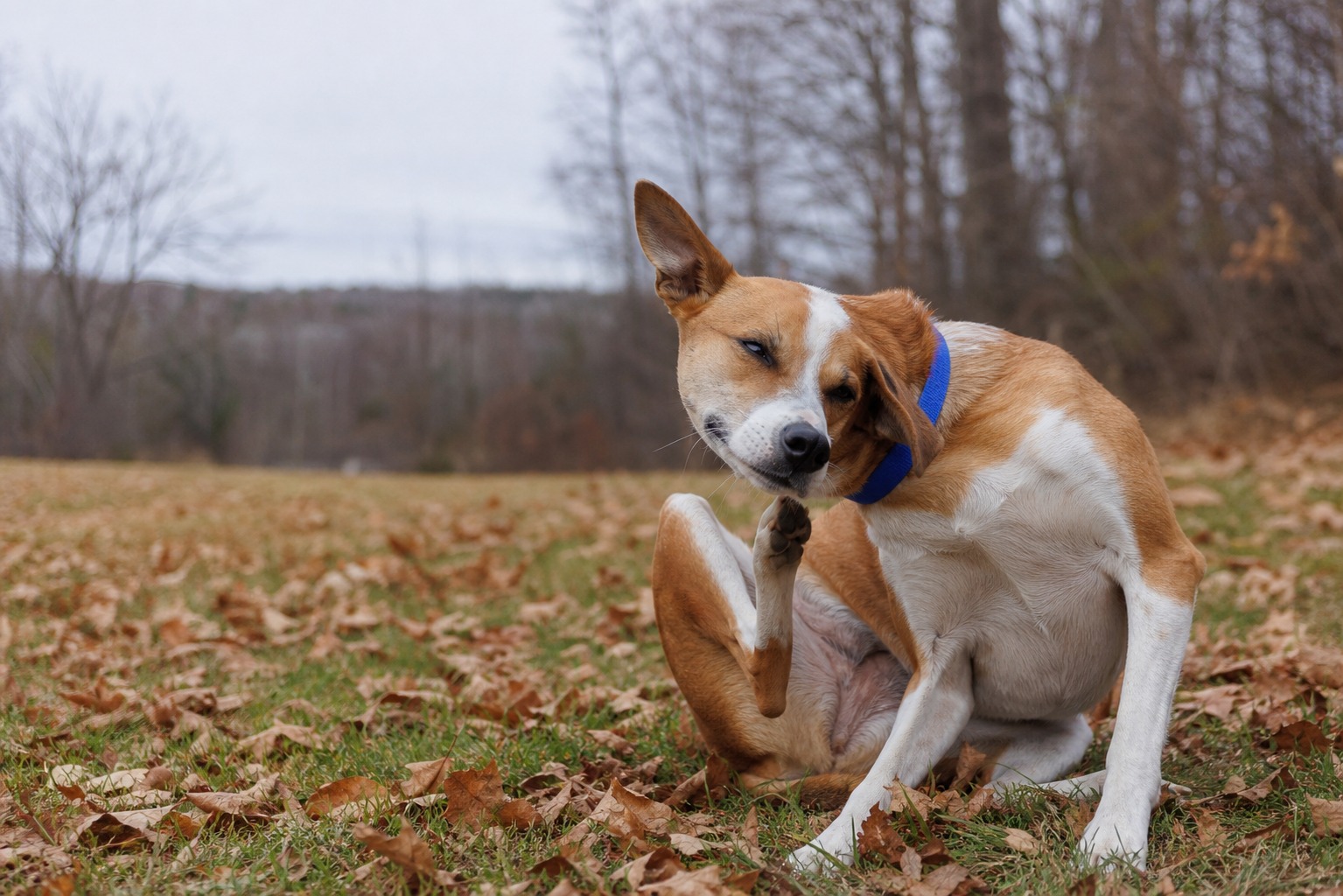
Most allergy care for dogs works like bailing a leaky boat. An anti-itch shot or pill quiets the scratching, buys you a few good weeks, and then wears off, and you’re back at the vet. It’s real relief, and for a dog who only itches for a few weeks each spring, it may be all you need. But it never touches why the boat is leaking. There is one treatment that does, and it’s the reason this piece exists: allergen immunotherapy, which slowly teaches your dog’s immune system to stop treating harmless pollen as a threat.
“Immunotherapy is the only option we have that can actually change the course of the allergy instead of just managing the flare,” says Dr. Nina Kohl. “It works on the root of the reaction, and in the best cases it keeps the allergy from getting worse over the years, which none of the itch-blocking drugs can promise.”
What dogs are even allergic to
Dogs react to a lot of the same environmental triggers we do. Near the top of the list: trees in spring, grasses in summer, weeds in fall or winter, and dust mites all year round. Food allergies are a different beast, handled differently, so set those aside for this conversation. We’re talking about environmental allergens here.
One important difference from people: dog allergies tend to get worse with age. So an anti-itch shot that reliably worked when your dog was three may lose ground by the time they’re eight. That drift is a big part of why chasing symptoms alone can turn into a losing battle.
How to tell it’s allergies in the first place
When people say a dog “has allergies,” what they usually mean is atopic dermatitis, the canine cousin of eczema in humans. An allergic dog gets itchy in specific places, classically the paws, the armpits, and the groin. You’ll see them go at their toes like there’s something delicious hidden between them, then sit up to scratch under a leg.
Ear infections are a sneakier symptom, and one that gets missed. Recurrent ear infections are very often driven by underlying atopic dermatitis, and for a slice of allergic dogs, chronically infected ears are the only sign they show. Those dogs keep going back for drops and washes that never solve the problem, because nobody’s treating the allergy underneath.
Is your dog a candidate? (And are you?)
Generally, a good candidate is a dog with clear allergy symptoms for at least six months of the year. Most dogs qualify, and there’s no harm in treating a dog whose season is shorter.
But the more honest question is whether you’re a good candidate. Immunotherapy is a long-term commitment of money, attention, and follow-through. It only works if you keep it up.
The upside is what you’re committing to. This isn’t a drug you have to worry about affecting your dog’s organs over the years. It’s made from tiny amounts of the very things your dog is allergic to, so the immune system can learn to tolerate them. As Dr. Kohl puts it, it’s not medication, it’s little pieces of pollen.
How long-term? Expect at least a year to judge whether it’s working, and if it is, most dogs stay on it for the rest of their lives.
How immunotherapy actually works, step by step
First, you have to know exactly what your dog is allergic to. That’s done with a skin-prick test or a blood test; both give equally reliable results. For flat-faced dogs like Bulldogs, skin testing is best done under general anesthesia or while intubated, because if a brachycephalic dog has a reaction, their already-compromised airway can swell and cut off breathing.
Timing matters. Testing is ideally done after a dog has shown symptoms for at least a year, so their body has been exposed across the full cycle of seasonal pollens and the different patterns can show up. It’s also best done near the end of a dog’s worst allergy season, while they’re still a little symptomatic, so antibody levels are high enough to read clearly.
Once the test maps your dog’s personal cocktail of triggers, say crabgrass and dust mites, a dermatologist mixes those specific allergens into a treatment. You then give it one of two ways: injections every few days at first, gradually stretched to about once a week, or drops placed under the tongue twice a day.
What’s new: how well it works, and where it’s headed
Here’s the update owners most want, backed by current data. In efficacy trials involving hundreds of atopic dogs treated by veterinary dermatologists across different regions, roughly 60 percent of dogs showed substantial improvement in their symptoms. Broader reviews put allergen immunotherapy’s effectiveness at preventing or delaying flare-ups in the range of 51 to 64 percent of cases. The traditional rule of thumb dermatologists share still holds up: expect something like 60 to 70 percent of dogs to get 60 to 70 percent better, with the large majority seeing at least some improvement.
The field is also refining how the treatment is delivered. Sublingual (under-the-tongue) immunotherapy has become a well-established, needle-free option, and newer research through 2024 and 2025 has explored intralymphatic immunotherapy, where the allergen is injected directly into a lymph node, sometimes with ultrasound guidance to improve accuracy. The headline for owners isn’t any single new product; it’s that immunotherapy remains the one treatment aimed at the root of the problem, and the science keeps making it more precise and more convenient.
What it costs
Most of your spending is upfront, on testing. Skin-prick and blood tests each run a couple hundred dollars. Prices vary by region and practice, but a couple of vials of injections generally cost around $350 to $400. That sounds steep until you do the math: with multiple doses per vial, the cost per month lands around $65, which is meaningfully cheaper than a monthly anti-itch injection that can run about $150. Over the life of a chronically allergic dog, the treatment that targets the cause can be the more economical one, too.
So which dog is immunotherapy really for?
Put simply: the year-round itcher. If your dog is miserable for months on end, immunotherapy offers a shot at genuine, lasting relief rather than an endless cycle of shots that fade. If your dog only gets a little itchy for a few weeks each spring, an occasional anti-itch treatment may be the simpler, cheaper path, and that’s a perfectly good answer too. The point isn’t that everyone should do immunotherapy. It’s that when the itch never really quits, there’s a treatment that does more than mop up the symptom, and plenty of owners don’t know it exists.
References
- Mueller, Ralf S., et al. “A review of allergen-specific immunotherapy in canine atopic dermatitis.” Journal of the American Veterinary Medical Association, vol. 261, S1, 2023.
- DeBoer, Douglas J. “Allergen Immunotherapy for Canine Atopic Dermatitis: An Update.” Today’s Veterinary Practice, 2024.
- Fischer, Nina, et al. “Intralymphatic Immunotherapy with Ultrasound Guidance in Canine Atopic Dermatitis: A Retrospective Study of 109 Cases.” Animals, 2024.