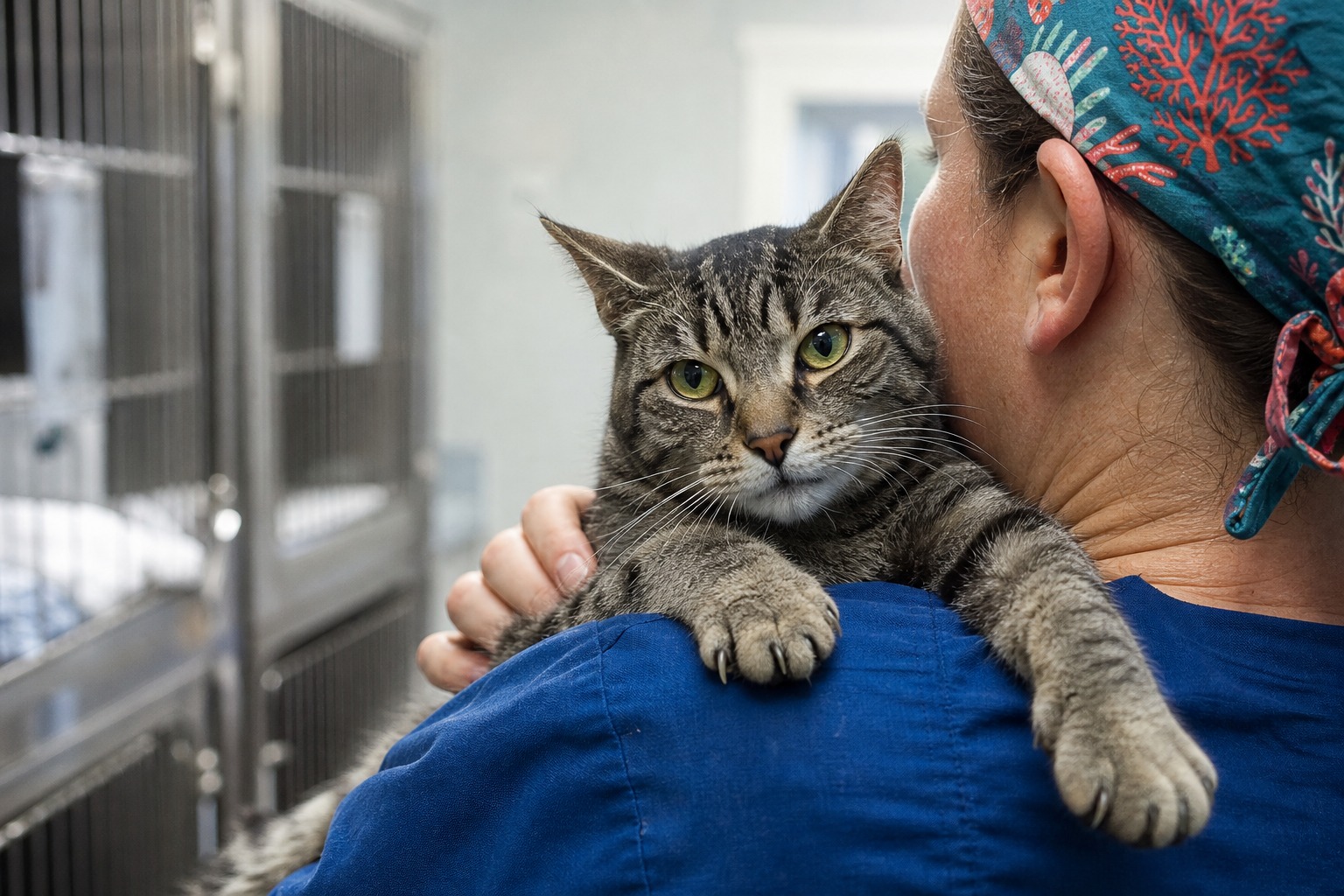
Ask most people how to bond with a cat and they will describe adding things: more holding, more lap time, more affection aimed at the cat until it takes. With dogs, that enthusiasm often works. With cats, it usually backfires. A cat is a small predator who is also, in the wild, prey, and prey animals do not hand their trust to whoever is trying hardest to get it. They give it to whoever makes them feel safe. Which means the fastest route to a close cat is counterintuitive: you build the bond by taking pressure away, not by piling affection on.
That single reframe, subtraction over addition, sits underneath every real technique below.
Start with what you cannot change
Every cat arrives with a history, a personality, and a set of preferences you did not write. Some crave contact and will sprawl across you for hours; others are content to share a room from across it. Neither is broken. The most damaging thing you can bring to a new relationship is a fixed expectation, the demand that a particular cat become a particular kind of cuddler. Go in with none, set the conditions for safety, and let the cat become whoever they already are. The people who insist a cat “turn cuddly or else” tend to be the ones who never bond at all.
There is also no clock. Bonding can take days or years, and cats with a rough past, former strays, cats who were neglected, can need a long runway. That is not failure. It is simply the timeline, and each small sign of progress deserves to be counted.
Eight ways to build the bond
I have trimmed the usual sprawling list to the eight that actually move the needle. Each one is a form of removing pressure.
1. Build a genuinely safe environment. Safety for a cat is more than food, water, and a closed door. It is spreading resources, bowls, litter, resting spots, across the home so nothing has to be defended; keeping outdoor cats away from the doors and windows that stress an indoor cat; and smoothing tension with other pets. A cat who feels secure lowers their guard, and a lowered guard is where bonding begins.
2. Respect their boundaries, especially about touch. You may adore the belly and the paws. Your cat very likely does not. Learn what each individual enjoys and stop there. For a nervous cat, stick to the head and shoulders. Nothing earns trust faster than being the person who never pushes a touch they dislike.
3. Learn their body language. Cats broadcast discomfort long before they hiss, growl, or swat. A flattened whisker, a twitching tail, a shift in weight, these are the early “please stop” signals. Read them and back off before your cat has to shout, and you become predictable and safe in their eyes.
4. Manufacture positive shared experiences. Make good things happen whenever you are near each other. For a shy cat, that might be sitting across the room tossing the occasional treat. For a bolder one, a play session or a snuggle. As long as you never push past their comfort zone, each pleasant moment deposits a little warmth in the account.
5. Use positive reinforcement, on purpose. Reward the behaviors you want more of, drifting over to you, answering when you call, staying loose while another pet walks past, with treats, play, or affection in the moment they happen. You are teaching your cat that being near you reliably pays.
6. Play every day, like it is medicine. Play that mimics hunting is one of the most powerful tools you have. It burns energy, drains stress, and satisfies a deep instinct, all of which make a cat more open to connection. A wand toy that moves like prey is ideal. The correct frequency is daily.
7. Kill the boredom. Boredom breeds stress in a cat, and a tense, under-stimulated one has little bandwidth left over for connection. Rotate food puzzles, hide treats to hunt, and add training or scent games so that formidable brain and those incredible senses have real work. Enrichment is not a luxury; it is part of the emotional groundwork.
8. Try clicker training. Training is bonding in disguise. It is hands-on, cooperative, and stuffed with rewards, and it is especially good for fearful cats, who can pour their focus into the task instead of worrying about the person. A few short sessions a week build confidence on both sides.
Getting a cat to choose you
A cat choosing to approach is one of the clearest signs a bond is forming. You cannot force it; you can only make it worthwhile. If your cat is still keeping their distance, do not chase the interaction, play from across the room, toss treats, let them set the range. Once they are comfortable enough to drift toward you, reinforce it every time with something they love, and pair their arrival with a soft cue or their name so the word itself starts to mean “good things are here.”
What not to do
The bond is easy to set back, and the setbacks all share a theme: pressure. Never force an interaction unless it is a true emergency; a cat remembers a bad experience and will not volunteer for a repeat. Do not handle the body parts they have told you they dislike. Do not grab or hold a cat against their will, which reads to a prey animal as danger itself. And do not try to interact with a cat who is already stressed by something else, wait, let them reset, and try again when they are calm.
Boiled down, remember three things: your cat is an individual with their own likes and fears, your job is to notice and honor those, and security comes from never shoving them past the point where they feel safe. Lead with respect, and the affection tends to arrive on its own.
What newer research adds
The subtraction principle now has a tidy piece of science behind it. Researchers at the Universities of Sussex and Portsmouth, publishing in Scientific Reports, found that cats are more likely to approach and reciprocate warmth from a person who “slow blinks” at them, a slow narrowing and softening of the eyes, than from a person with a neutral, staring face. In other words, the gesture that builds trust is the deliberately low-intensity one: you soften your gaze, you ask for nothing, and the cat reads it as safe. It is the whole thesis of this piece compressed into a blink. Try it. Catch your cat’s eye, let your lids drop slowly, and watch what a little less often gets you a little more.
References
- Humphrey, T., Proops, L., Forman, J., Spooner, R., & McComb, K. “The Role of Cat Eye Narrowing Movements in Cat-Human Communication.” Scientific Reports, 2020. www.nature.com
- Vitale, K. R., Behnke, A. C., & Udell, M. A. R. “Attachment Bonds Between Domestic Cats and Humans.” Current Biology, 2019. www.cell.com
- American Association of Feline Practitioners. “Feline Environmental Needs Guidelines.” catvets.com