


Yes, Female Cats Spray. Spaying Doesn't Always Stop It.
Spraying isn't a male-cat problem, and it isn't a broken litter box. It's a message. Here's how to read what your female cat is telling you and shut the spraying down.

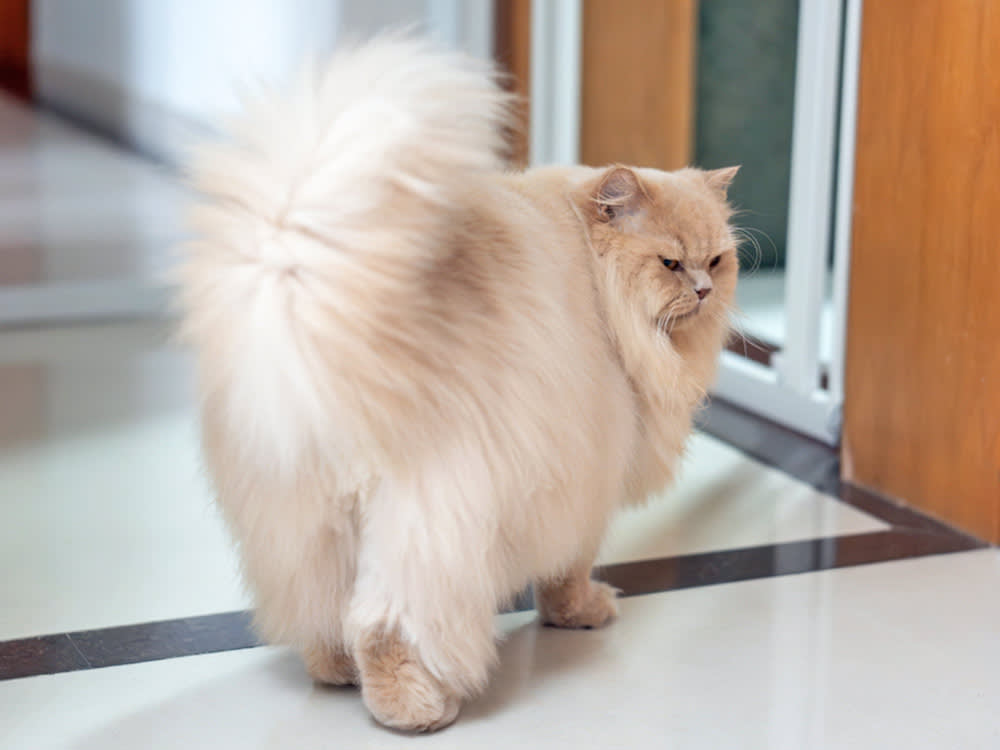
Let’s clear up the single most common myth in one sentence: female cats spray, spayed females spray, and if yours is doing it, she is not broken and she is not being spiteful. She is communicating in the oldest language cats have, and the good news is that once you learn to read it, you can almost always turn it off.
Spraying gets buried under misinformation, and the female-cat version gets it worst. So here is what your cat is actually saying, and what to do about it.
Spraying is not peeing, and the difference tells you everything
Urinating is a plumbing act: the bladder is full, and then it isn’t. Spraying is communication, a deliberate deposit of scent and pheromone meant to be read by somebody. There can be overlap, but the body language and location usually give it away. The marks land high and flat: a wall, the side of a couch, anything standing upright. Watch the posture and it’s unmistakable. She reverses into the surface, holds her back end up rather than dropping into a squat, and fires backward down. Her tail often points up and quivers, and she may knead with her back paws. She will usually sniff around beforehand but not afterward, because she wants that fresh scent to stay put, which is also why she will not try to cover it the way she buries urine in the box.
Reading those signs matters, because spraying and inappropriate urination have different causes and different fixes. Guess wrong and you will chase the wrong solution for weeks.
This is more common than you think
Indoor spraying is one of the most common feline behavior complaints there is, displayed by more than 20 percent of house cats at some point. So if you are dealing with it, you are far from alone, and it does not mean you have done something wrong. It means you have a normal cat running a very old program.
Why female cats spray
Spraying is an instinctual response to a situation or an emotional state, hardwired into cats over thousands of years. Awful for us, completely reasonable from her point of view. Finding the specific trigger is the whole game, because once you change the situation or the feeling, the instinct to spray fades.
The common triggers:
She’s in heat. An unspayed cat, or one with an incomplete spay, can go into heat and spray to advertise that she is receptive to males.
She’s marking territory. Scent is a cat’s billboard, and spraying is the boldest version. It tells other cats the space is claimed, and even signals recency, a strong scent means she was here lately. An indoor cat who sees outdoor cats through a window may spray inside as a precaution to keep those interlopers back.
She’s stressed, scared, or anxious. Scent marking is not only for other cats, it is self-soothing. Being surrounded by her own smell comforts a cat, so any stressor, a new pet, a new baby, a change in routine, or the stress of a medical problem, can tip her into spraying.
Litter box pressures. A cat rarely sprays because of the box itself, but box-adjacent stress counts: feeling unsafe while using it, getting ambushed by a new kitten, or arthritis pain jumping in and out. Those can all drive stress spraying.
Lower urinary tract issues. Infections, stones, and other urinary conditions cause discomfort, and discomfort causes stress, and stress causes spraying. Any medical issue is a plausible trigger.
Yes, spayed females still spray
This one bears repeating because people bank on it: spaying does not guarantee an end to spraying. A spay addresses exactly one trigger, going into heat. Everything else, stress, fear, territorial instinct, pain, remains fully in play. Spraying stays a useful tool in your cat’s kit whether or not she is fixed.
Owners come in convinced that because she’s spayed, the spraying must be medical, or because there’s no medical problem, it must be behavioral. It’s almost never that clean. Stress and a low-grade bladder problem can drive the exact same behavior, which is why I want a urinary workup and a look at the home before anyone decides which one it is.
What newer research adds on stopping it
The core plan, find the trigger and address it, has not changed, but there is now better evidence behind one piece of it: feline pheromone products. Cats naturally deposit a “familiar and safe” facial pheromone (the F3 fraction) on objects to mark territory as secure, and synthetic versions of it are sold to help control marking. In clinical work, cats using a synthetic F3 product dropped from an average of nearly 15 marks a day to under 2 within a week, and by day 28 the majority of cats in one study had stopped marking entirely, with no relapse over the following weeks. Evidence quality varies and it is not a magic wand, but as one low-risk layer in a broader plan, the pheromone approach has real support, especially since the same products help with feline idiopathic cystitis, a stress-driven bladder condition that can itself cause marking.
How to shut it down
Do not punish her. No amount of punishment undoes thousands of years of instinct. It only adds stress, damages your relationship, and hands her fresh reasons to spray.
If she is not spayed, start there. Spaying removes the heat trigger and offers other health benefits, including protection against mammary cancer and pyometra.
Then work the plan: remove the stressors you can (block the view of outdoor cats, use a humane motion-activated deterrent outside, mend a rocky relationship between pets, treat any pain), deep-clean every sprayed spot with a quality enzymatic cleaner, and then, crucially, give her better ways to leave her scent. This is the step people skip. Because she sprays to deposit scent, stripping it all away with cleaner just invites a re-spray. So put the scent back on your terms: rub her with a soft cloth and dab it around the area, set up scratchers and a wall-mounted grooming brush, encourage cheek-rubbing with catnip, and add a pheromone product nearby. Finally, tune the litter box setup to reduce stress, and try a high-sided box in the sprayed zone so any marking lands inside it, moving it to a better spot once things settle.
When to call in help
Spraying has a lot of moving parts. If you cannot solve it yourself, a feline behavior professional can spot triggers you missed and build a tailored plan to lower stress and rebuild confidence. And loop in your vet regardless, to rule out the medical causes that so often hide underneath. Between the two, most female-cat spraying can be understood and resolved.
Common questions
Why is my spayed female cat spraying?
Spaying removes only one trigger, going into heat. A spayed female can still spray from stress, fear, territorial pressure from other cats, or pain from a medical issue like a urinary tract problem.
How do I stop my cat from spraying?
Find and fix the trigger. Rule out medical causes with your vet, reduce stressors, clean sprayed spots with an enzymatic cleaner, give your cat better ways to leave their scent, and consider a feline pheromone product. Never punish a cat for spraying.
Not a substitute for your vet. Our guidance is educational. For urgent symptoms, contact a vet or emergency clinic right away. Editorial standards
Dr. Park is a board-certified emergency and critical care specialist. She reviews our health and safety content for clinical accuracy and contributes guides on recognising urgent conditions. Her focus is helping owners act quickly and correctly when it matters most.
Meet our experts ↗Keep reading
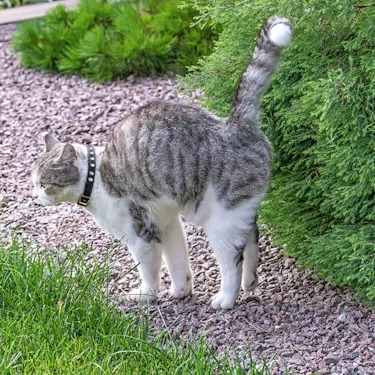 Health & WellnessYour Male Cat Isn't Being Spiteful. He's Leaving You a Note.Dr. Mara Chen · 7 min
 TrainingYour Cat Screams at 3am Because You Never Let It Finish the HuntDr. Mara Chen · 8 min
 TrainingYour Cat Isn't Attacking You. You Live on a Hunting Route.Dr. Amara Solis · 9 min
 TrainingThat Sound Isn't a Meow. And It Isn't Good News.Dr. Lena Park · 8 min
 TrainingYour Cat Isn't Being Naughty. The Chewing Is a MessageDr. Nina Kohl · 9 min
 Health & WellnessThe Cat Loaf Has a Dark Version. It's in the Face, Not the Paws.Dr. Mara Chen · 8 min