


Your Two Dogs Used to Be Best Friends. Here's Why That Cracked, and Why It Won't Just Pass.
When a peaceful two-dog household suddenly gets tense, owners hope it's a phase. Usually it's a real shift in age, resources, or hidden pain, and pretending it will blow over is how it gets worse.

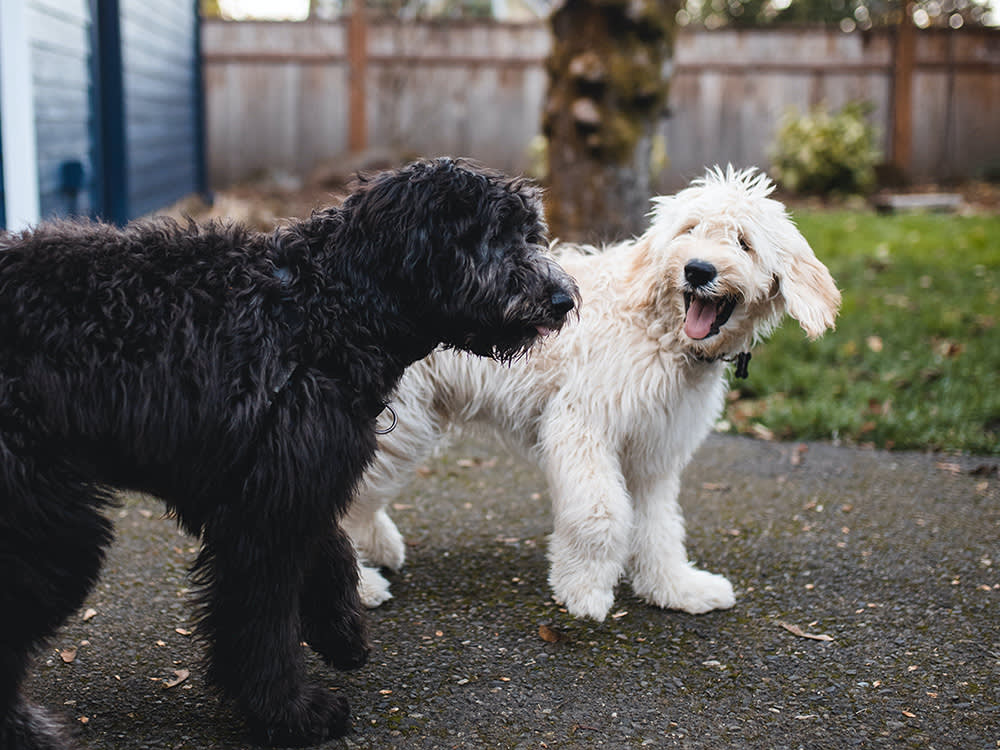
Two dogs, three years of easy friendship, and then something shifts. The younger one starts getting pushy with your older dog. Little tensions become bigger ones. It seems to be escalating, and you keep waiting for it to sort itself out. Here’s the hard part first, so the rest makes sense: it probably won’t sort itself out on its own, and understanding why is the whole game.
A household is a living social system, and relationships inside it change. That’s true of nearly every social species, dogs very much included, so a shift in a bond that used to be smooth is common, not freakish. But “common” doesn’t mean “temporary.” Below are the real forces usually behind it, ordered by how much they should move you to act.
Start with the possibility that someone hurts
If one dog’s behavior has changed, the first question isn’t behavioral, it’s medical. An older dog dealing with arthritis, hip trouble, or stiff, aching joints is often irritable and short-tempered, the same way any of us get when we’re in constant low-grade pain. That discomfort also wrecks sleep, and a tired, sore dog is an even crankier one. A senior who used to be endlessly patient can become unpredictable or even a little scary to the younger dog, who naturally starts acting differently in return.
Aging bodies cause a second, subtler problem: communication breakdown. A dog losing vision or hearing may miss the younger dog’s body-language signals, or send muddled ones of their own. The younger dog reads that as confusing or rude and responds in kind. Because pain and sensory decline are both invisible and both fixable-or-manageable, a vet exam for the dog whose behavior changed should come before any training plan. You cannot train your way out of a medical problem.
The age gap is quietly rewriting the rules
Even with two healthy dogs, age changes everything about how they treat each other. A younger dog who spent puppyhood deferring to an older housemate often starts asserting themselves as they mature into full adulthood and confidence. Meanwhile your older dog is easing into their senior years, a little slower, a little quicker to tire, a little less able to command the respect they once did.
Developmental stage is a genuinely big deal in how dogs relate. As a broad generalization, dogs in the young-adult-to-middle-aged range tend to be on the receiving end of deference from others, and there are always exceptions based on the individual, but the pattern is real. Your younger dog is demanding more and offering less at exactly the moment your older dog can back it up less. Neither is misbehaving. They’re just standing at opposite ends of the same escalator.
Resources become worth fighting over
When two housemates start clashing, guarding of valued things is one of the first culprits to check. As a dog moves from adolescence into young adulthood, it’s common for them to develop a stronger urge to hoard or defend valued things, food, toys, a favorite spot, your attention. A younger dog who used to happily let the older one take the good bone may simply stop being willing to defer. It looks like disrespect. Functionally, he’s just decided his own interests are worth defending now, and challenges over resources are one of the most common flashpoints in multi-dog homes.
Sometimes what looks like the younger dog “starting it” is actually the younger dog saying “enough.” If an older dog has spent years controlling access to everything, a maturing younger dog may quit going along with it. Rejecting that arrangement reads as rude, but it can be a perfectly reasonable response to never getting a turn.
Personalities collide as they change
Individual temperament shapes how all of this plays out, and, like people, dogs’ personalities shift over time. Maybe one loves to wrestle and the other has decided they’re over roughhousing. Maybe one cares deeply about toys, food, space, or attention while the other is indifferent. When a dog has a strong stake in something, they’re more likely to assert themselves about it, and two dogs whose priorities have drifted apart will bump into each other more often than they used to.
So what do you actually do
The first move is that vet check, to catch or rule out pain and sensory loss. After that, this is a management problem as much as a training one. Feed the dogs separately. Pick up the high-value toys and chews that trigger guarding, and hand them out in separate spaces. Give your older dog protected zones, a bed or a room the younger dog doesn’t get to barge into, so a senior who tires easily can actually rest. Don’t force interactions, and don’t punish the tension itself, which tends to make dogs more anxious around each other, not less.
And let go of the hope that time alone will settle it. One dog keeps maturing while the other keeps aging, so the dynamic between them is far more likely to keep shifting than to snap back to how it was. That’s not a doomsday sentence, it’s a reason to get ahead of it. A qualified veterinary behaviorist can help you build a plan for your specific pair, especially if you’re seeing anything beyond mild friction.
The phrase I hear most is ‘we’re hoping he’ll grow out of it,’ and that hope is usually what lets a small problem become a bite. Two dogs whose relationship is changing need you to change the environment around them, not wait for the calendar to fix it. Feed them apart, manage the flashpoints, and get the older one checked for pain. Do that early and most of these households settle. Wait, and you’re doing damage control instead.
The goal isn’t to force your dogs back into the friendship they used to have. It’s to read the real reasons the friendship changed and build a household where both of them, the confident young adult and the slowing senior, can feel safe.
Dr. Chen is a small-animal veterinarian who leads health and safety coverage at The Pet Times. She writes and reviews the bulk of our illness, condition, and safety content, translating clinical guidance into clear, practical advice owners can act on at home.
Meet our experts ↗Keep reading
 TrainingYour Dog Nibbles You Like Corn on the Cob. Two Experts Disagree About What to Do.Dr. Nina Kohl · 8 min
 TrainingThe One-Word Diagnosis Is Ruining Your Dog's TrainingMarcus Webb · 7 min
 TrainingYour Dog Isn't Being Rude. He's Cornered.Dr. Amara Solis · 8 min
 TrainingYour Dog Isn't Being 'Bad' During Play. Their Brain Is Overloaded.Dr. Nina Kohl · 7 min
 TrainingYour Dog Isn't Trying to Be 'Alpha.' The Science Buried That Idea.Dr. Amara Solis · 7 min
 Training8 Things 'Everyone Knows' About Dogs That Are Flat WrongDr. Amara Solis · 8 min