Bad ideas about dogs travel fast. A confident-sounding tip gets posted, reshared, and repeated at the dog park until it hardens into something “everyone knows,” and whether it is actually true almost never gets checked. Dog behavior is a prime target for this, partly because dogs are so willing to tolerate our mistakes that we rarely notice we are making them.
So here is a cleanup pass. Eight widely believed things about what dogs like and need, sorted from the ones that can get you bitten to the ones that just make life worse, with what the evidence actually says.
1. “Stick your hand out so a strange dog can sniff it.”
This is the one that can draw blood, so it goes first. Thrusting a hand toward an unfamiliar dog is fine for a confident, social dog who will sniff you and move on. For a nervous dog, it is a looming, unwelcome gesture that can deepen their fear, and most dogs who bite do it out of fear, not aggression. You are handing a frightened animal a reason.
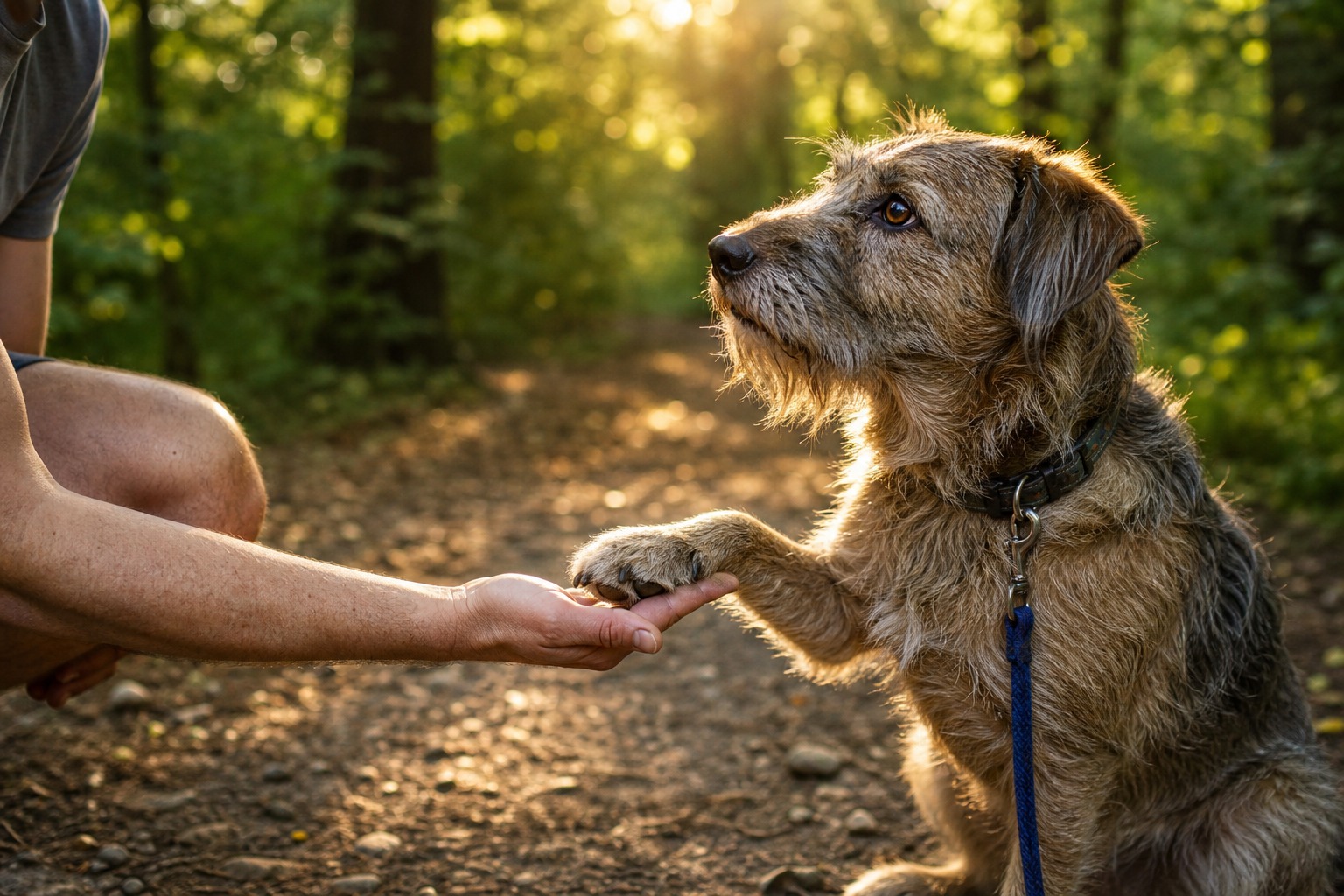
Do the opposite. Stand relaxed with your arms at your sides, turn slightly sideways, and let the dog decide whether to approach. If they come to you, great. If they don’t, that is your answer. A dog who chooses the interaction is far safer to pet than one you reached into.
2. “A wagging tail means a happy dog.”
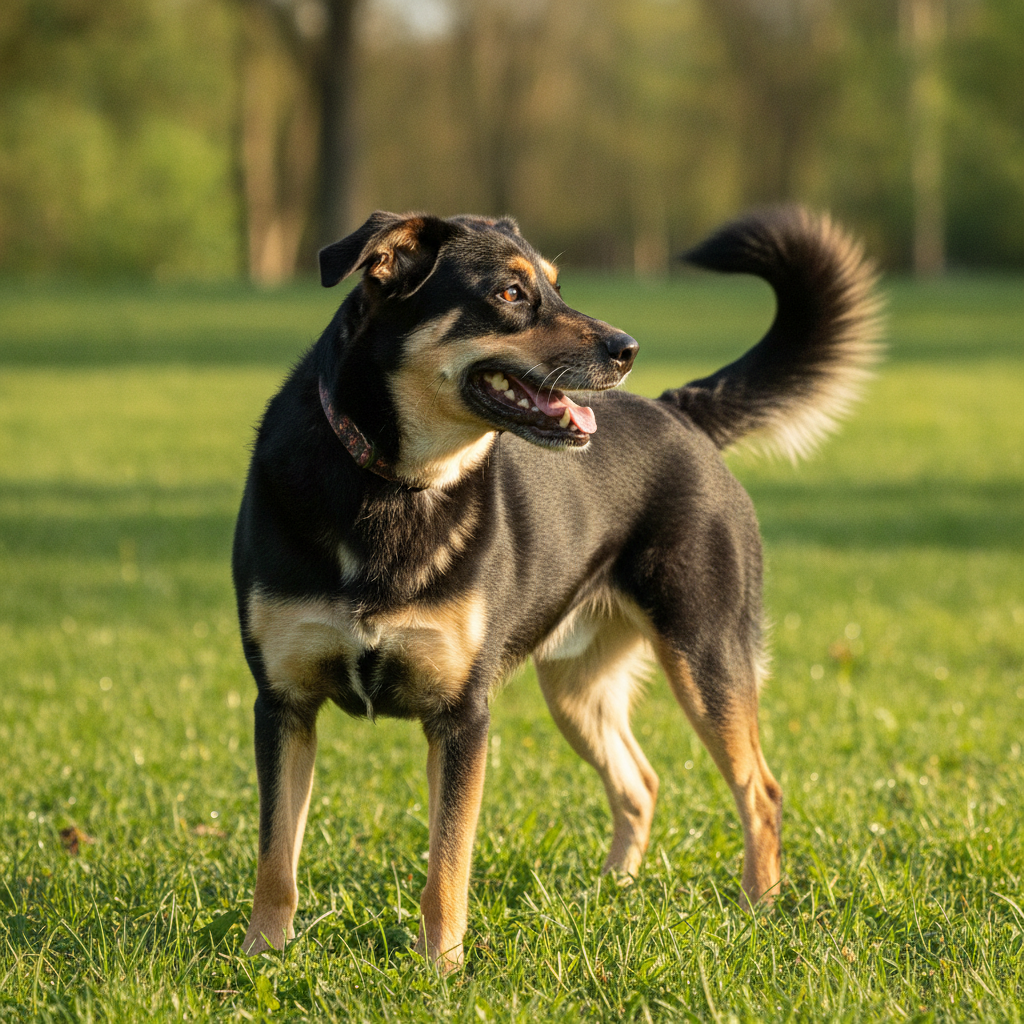
A wag does not mean friendly. It means the dog is willing to engage, and engagement comes in unfriendly flavors too. The details are what matter. A loose wag that swings the whole back end, or a fast, fluid tail, or a helicopter circle from the base, those read friendly. A slow, stiff wag, especially just the tip, on a stiff body, is a warning. Plenty of people have been bitten by a dog whose tail was technically moving.
3. “Dogs love a pat on the top of the head.”
Most dogs tolerate it. Very few enjoy it. Watch closely and you will see dogs duck, lean away, or subtly dodge the hand coming down over their eyes. A hand descending on the skull is a lot to accept on faith. Aim instead for the chest, the side of the neck behind the ears, or the back near the base of the tail, and watch the dog lean in or step away to tell you if you got it right.
4. “See that guilty look? He knows what he did.”
He almost certainly does not. In a well-known 2009 study, cognition researcher Alexandra Horowitz set up dogs to look guilty or not, independent of whether they had actually broken a rule. The finding: the “guilty” look tracked the owner’s scolding, not the dog’s behavior. The most dramatic guilty faces came from dogs who had done nothing wrong but got reprimanded anyway because the owner assumed the worst. That hangdog expression is an appeasement signal aimed at your tone and body language, not a confession. Scold a dog for a mess they made an hour ago and you are not teaching a lesson, you are just frightening them.
5. “You have to show him who’s alpha.”
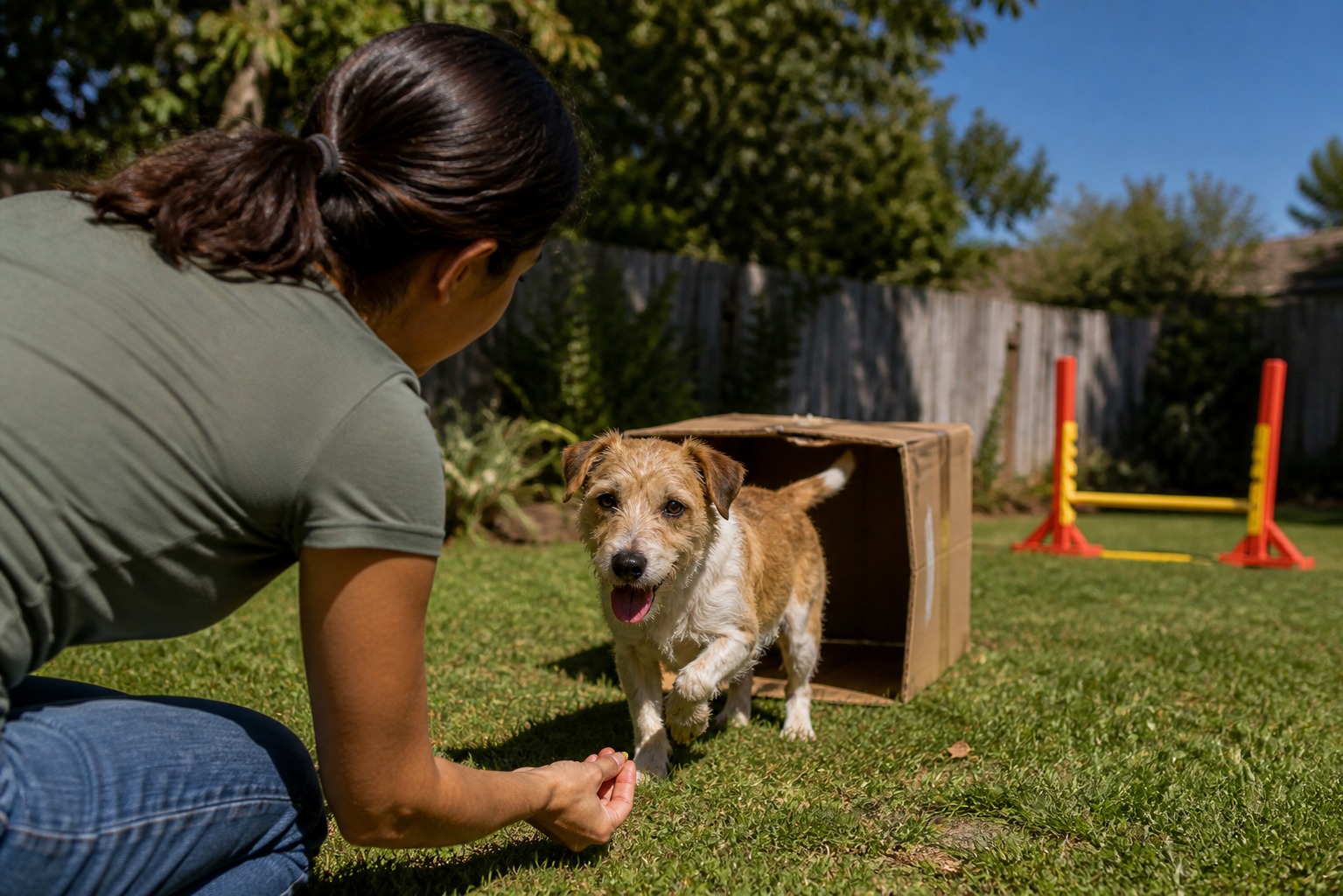
This one refuses to die, and it deserves to. The idea that dogs misbehave to climb a dominance hierarchy, and that you must therefore assert yourself as pack leader, is not supported by current behavioral science. The American Veterinary Society of Animal Behavior has a position statement specifically warning against dominance-based training, noting that forcing a dog into submission tends to increase fear and aggression rather than fix it, and recommending reward-based methods for everything from basic manners to serious behavior problems.
“When an owner tells me they’ve been ‘alpha rolling’ a dog that growls, I know exactly what’s coming next, because the growling gets worse, not better,” says Dr. Amara Solis. “Growling is information. Punish the warning and you don’t remove the fear underneath it, you just delete the dog’s way of telling you it’s there. Reward the behavior you want and the whole relationship changes.”
6. “He gets plenty of exercise out in the yard.”
He probably doesn’t. Left alone in a yard, most dogs do a lap, sniff a bit, and then lie down. Dogs do not self-exercise the way we imagine. Worse, a yard skips the part of a walk that a dog actually needs most: the flood of new smells, sounds, and sights that a walk delivers and a familiar yard cannot. For dogs who can handle and enjoy them, walks are enrichment, not just cardio.
7. “You can’t teach an old dog new tricks.”
You absolutely can. Dogs stay capable of learning their entire lives, and plenty pick up new skills well into their gray-muzzle years. What changes with age is not the ability to learn but the conditions around it. An older dog with joint pain may resist a move because it hurts, and a dog with real cognitive decline will struggle. Absent those, a senior dog is often a calmer, more focused student than a puppy.
8. “If your dog is a mess, you must have raised them wrong.”
This is the cruelest myth, because it aims guilt at people who are already struggling. How you raise a dog matters, but it is not the only thing that shapes them. Genetics are enormous: some dogs are simply wired to be shy, noise-sensitive, or wildly high-energy. A single bad experience outside your control can derail a dog no matter how carefully you trained them, and health problems, especially early ones, leave a mark. The telling pattern behind the couch: people who have raised many dogs well, and are calling a behavior professional about exactly one of them. That one is not a referendum on the owner.
The through-line
Notice what all eight have in common. The popular version treats the dog as either a rank-climbing adversary or a tiny guilty human. The accurate version is duller and kinder: dogs are animals with fears, preferences, and a body language we can learn to read. Assume the boring explanation, watch the dog in front of you, and most of this “common knowledge” quietly falls apart.
References
- Horowitz, A. “Disambiguating the ‘guilty look’: Salient prompts to a familiar dog behaviour.” Behavioural Processes, 2009. pubmed.ncbi.nlm.nih.gov
- American Veterinary Society of Animal Behavior. “Position Statement on the Use of Dominance Theory in Behavior Modification of Animals.” avsab.org
- American Veterinary Society of Animal Behavior. “Position Statement on Humane Dog Training.” avsab.org