


Your Cat Wants Your Salad. Here's What Lettuce Actually Does.
Lettuce is safe for cats, and also nearly useless to them. The more interesting question is why an obligate carnivore keeps eyeing your greens in the first place.

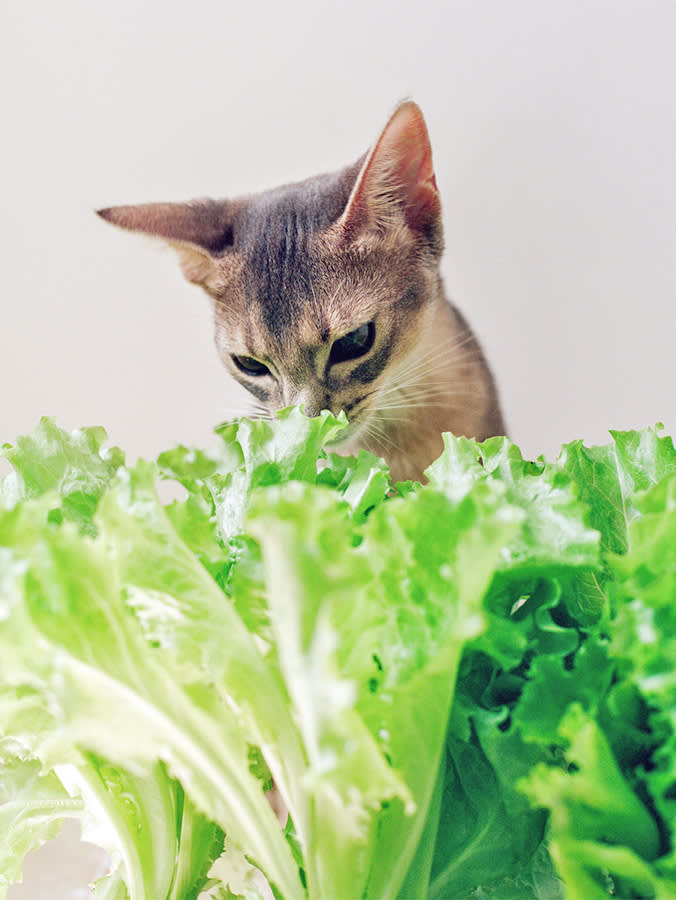
Cats are obligate carnivores. Their bodies are built, top to bottom, to run on meat. So there is something genuinely funny about a creature that turns its nose up at a fancy wet food deciding your bowl of romaine is fascinating. The short answer to “can cats eat lettuce” is yes, it is safe. The more useful answer is that lettuce does almost nothing for your cat, and understanding why tells you more about feeding cats than the yes or no does.
Safe, yes. Nutritious, not really.
Lettuce is non-toxic. If your cat steals a shred, there is nothing to worry about. It is low in calories and made up mostly of water, with small amounts of fiber and vitamin A along for the ride.
The problem is the math. To pull any meaningful nutrition from lettuce, a cat would have to eat a volume of it that no cat is ever going to eat. Their digestive system is designed to extract what it needs from animal protein and fat, not leafy greens. This is the same reason a vegetarian diet is genuinely dangerous for cats: they cannot manufacture certain nutrients the way plant-eaters can, and going without them leads to serious, sometimes life-threatening deficiencies. Lettuce is not harmful, but it is not doing your cat any favors either. Think of it as a texture experience, not a food group.
So why is your cat so interested?
If lettuce is nutritionally beside the point, why do so many cats sniff, bat at, and nibble it? A few reasons, none of them alarming:
- Curiosity and texture. Cats explore the world with their mouths, and a cool, crisp, crunchy leaf is a novel thing to investigate.
- A mild fiber pull. A little roughage can feel satisfying and may help things move along in the gut.
- You’re eating it. Cats notice what their people find interesting, and your food is automatically more interesting than theirs.
One thing worth filing away: an occasional nibble is normal, but a sudden, intense drive to eat plants or greens can be a sign that a cat’s stomach is bothering them. Cats sometimes seek out plant material when they feel nauseated. If your usually meat-focused cat abruptly becomes a salad fiend, that shift is worth mentioning to your vet.
If you want to share, do it right
There is no harm in offering a small piece of lettuce to a cat who is curious. Just handle it sensibly. Wash the leaf thoroughly to remove any residue, cut it into small, manageable pieces, and skip the tough central core, which is harder to chew and digest. Keep the portion tiny. This is a taste, not a serving.
A better green to offer
If your cat clearly enjoys grazing, cat grass is a smarter target than your salad. It is grown specifically for cats, safe to nibble, and satisfies the same crunch-and-graze urge without competing with their real food. A small tray of it also gives indoor cats a legal outlet, which can spare your houseplants, some of which are far from harmless.
The foods that actually matter, both ways
Since the real point is knowing what belongs near your cat and what does not, here is the short version.
Genuinely fine in small amounts: plain, cooked lean chicken, beef, or fish with no seasoning or skin; a couple of blueberries, cut up; a bit of strawberry if your cat is into it.
Keep well away from your cat: grapes and raisins, which can cause severe kidney damage even in small amounts; cherries, which contain cyanide compounds and whose pits are a choking hazard; and onions and garlic in every form, including powders, which damage red blood cells and can cause anemia. Read labels, because onion and garlic hide in a lot of seasoned human food.
Lettuce sits far down at the harmless-but-pointless end of that spectrum. Let your cat have their crunchy little moment if they want it, then get back to the meat that actually keeps them healthy.
References
- ASPCA. “Toxic and Non-Toxic Plants” and “People Foods to Avoid Feeding Your Pets.” aspca.org
- Cornell Feline Health Center. “Feeding Your Cat.” vet.cornell.edu
- Merck Veterinary Manual. “Nutrition in Cats.” merckvetmanual.com
Common questions
Does lettuce have any nutritional value for cats?
Very little. It's mostly water with a bit of fiber and vitamin A. A cat would have to eat an unrealistic amount to get any real benefit, and they should be getting their nutrition from a complete cat food anyway.
Why does my cat try to eat lettuce and other greens?
Usually curiosity, the crunchy texture, and a bit of a fiber instinct. It's normal. But a sudden, urgent interest in eating plants can sometimes mean a cat feels queasy, so it's worth noticing a change.
Not a substitute for your vet. Our guidance is educational. For urgent symptoms, contact a vet or emergency clinic right away. Editorial standards
Dr. Solis is a board-certified veterinary dermatologist with over twelve years of clinical experience. She advises on skin conditions, allergies, and grooming practices that affect coat and skin health. All dermatology and allergy content at The Pet Times is reviewed by her team before publication.
Meet our experts ↗Keep reading
 FoodYour Cat Can Eat Dog Food. One Missing Nutrient Means They Can't Live on ItDr. Ravi Mehta · 7 min
 FoodPeas Off Your Plate Are Fine for Cats. Peas in the Bag Are the Ones to Read AboutDr. Amara Solis · 6 min
 FoodFor a Carnivore, 'Is It Safe?' Is the Wrong Question About Human FoodDr. Priya Nair · 6 min
 FoodYour Cat Isn't a Picky Diva. It's a Supertaster Built for MeatDr. Mara Chen · 5 min
 Health & WellnessWet Food Rarely Gives a Cat Diarrhea. The Way You Switched It Usually DoesDr. Mara Chen · 9 min
 FoodYour Cat Isn't Hungry. Unless These Three Things Are Also True.Dr. Priya Nair · 10 min