


For a Carnivore, 'Is It Safe?' Is the Wrong Question About Human Food
Most human-food guides for cats sort everything into safe and toxic. But a cat is an obligate carnivore, and the more honest filter is whether a food earns its place at all. Here's how to think about sharing, what's genuinely fine, and what's truly dangerous.

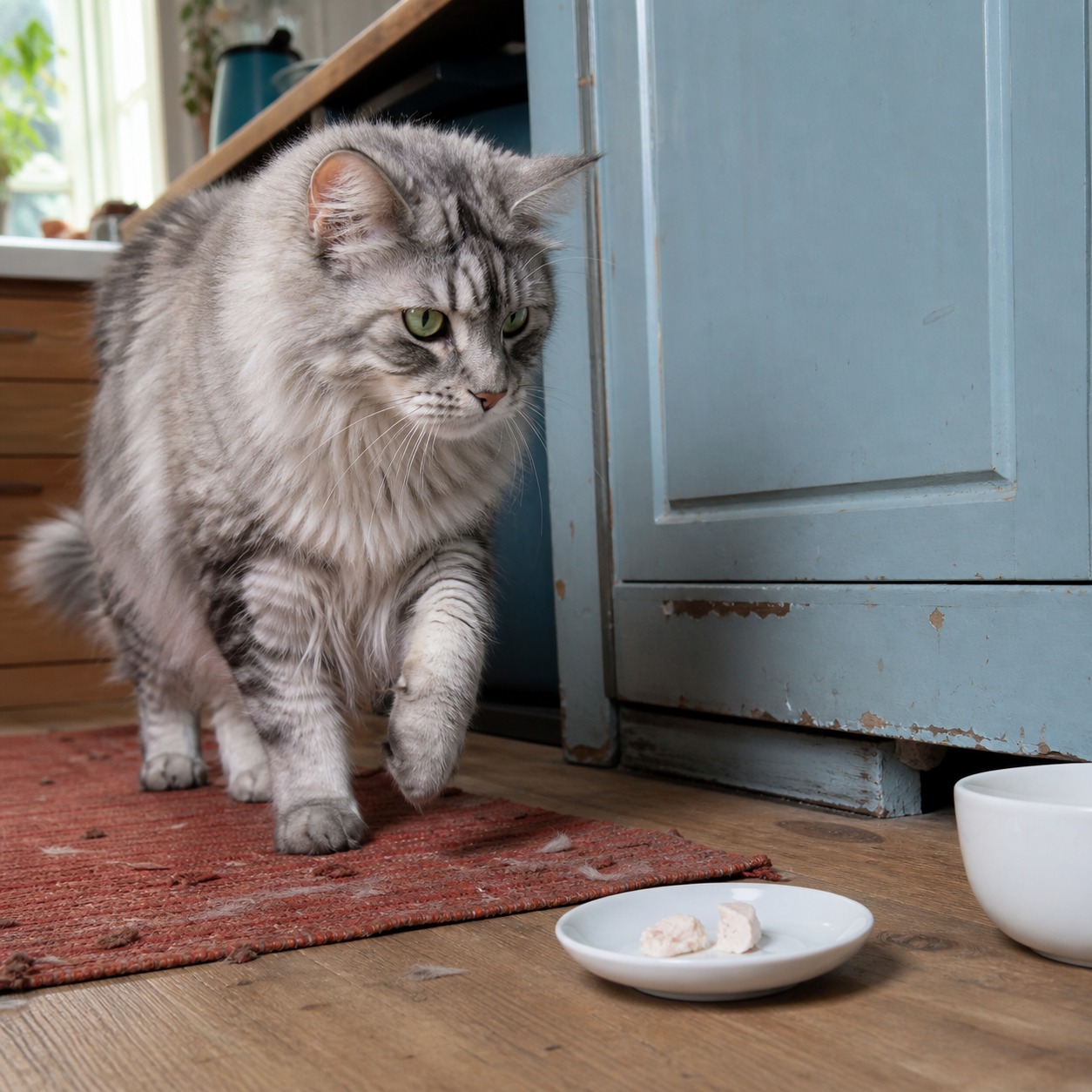
Almost every guide to feeding cats human food works the same way: a long list sorted into “safe” and “toxic,” as if the only thing standing between your cat and the dinner table is a list of landmines to avoid. That framing is not wrong, exactly, but it quietly answers the wrong question. For a cat, the useful filter is not only is this safe? It is does this food earn a place in the diet of an obligate carnivore at all? Run human food through that second question and most of it falls away, not because it is dangerous, but because it is pointless. What is left is a short list of foods worth sharing and a real list of foods to fear, and the difference between them matters more than any cheat sheet.
Start with what a cat actually is
There is an old line in veterinary medicine: cats are not small dogs. It exists because people keep treating them like one, and nowhere does that go wrong faster than at the food bowl.
The defining fact about a cat is that it is an obligate carnivore. Not a carnivore by preference, the way a dog mostly is, but by hard biological requirement. A cat cannot meet its nutritional needs without nutrients that come from animal tissue, and a wild cat eating whole prey gets those nutrients from every part of the animal, muscle, organs, bone, even the contents of the prey’s gut. Recreating that balance from a plate of human leftovers is nearly impossible, which is the entire reason a complete, balanced cat food exists.
When people ask me what human foods their cat can eat, I always reframe it. A cat isn’t missing anything that a piece of your dinner is going to provide. Their food is already engineered to cover needs ours never could. So sharing isn’t about nutrition, it’s about the moment, and once people see it that way they stop overthinking the list and start keeping the portions tiny.
A few of those needs are worth naming, because they explain why a cat can’t freelance its diet the way we can:
- Protein, and lots of it. Cats require more dietary protein than omnivores, and the requirement climbs higher for kittens and for pregnant or nursing cats.
- Taurine. An essential amino acid cats can’t make in sufficient quantity. A shortfall damages the heart and the retina, which is why taurine deficiency, common in unbalanced homemade diets, can blind or kill a cat.
- Arginine. Another amino acid cats can’t synthesize and must eat, found in meat, fish, poultry, and dairy.
- Vitamin A and vitamin D in animal form. Cats can’t convert beta-carotene from vegetables into vitamin A the way we do, and they can’t make vitamin D from sunlight. Both have to arrive pre-formed, from animal sources.
- Very few carbohydrates. Cats have no carbohydrate requirement and don’t metabolize carbs efficiently, which is why a carb-heavy diet nudges them toward obesity and diabetes.
The takeaway is not that you need to memorize biochemistry. It is that a cat’s diet is a precise instrument, and human food is, at best, a rounding error on top of it.
The short list that’s actually worth sharing
If sharing is about enrichment and bonding rather than nutrition, then the best foods to share are the ones a carnivore is built to appreciate and that carry the least risk.
Plain, cooked lean meat and fish top the list. A few small, bite-sized pieces of plain chicken, turkey, or cooked fish, no skin, bones, oil, salt, or seasoning, give a cat something it genuinely recognizes as food, and the protein actually suits its body. This is the one category where “human food” and “cat food” meaningfully overlap.
A little fruit or vegetable can work as a novelty. Watermelon (seedless) is hydrating, blueberries are a fine antioxidant nibble, and a bit of cooked, softened carrot offers a satisfying low-calorie crunch. None of these are needed, and many cats will sniff and decline, which is completely normal.
Whatever you offer, three rules keep it safe: serve it plain, serve it in small, easy-to-chew pieces to avoid choking and blockages, and keep all treats and scraps combined under 10 percent of daily calories so the real food still does its job.
The list that actually deserves fear
Some human foods are not pointless but genuinely dangerous, and these are worth committing to memory in a way the “safe” list never will be:
- Onions, garlic, leeks, chives, shallots, the whole allium family. They damage red blood cells and can cause a serious, sometimes fatal anemia. This is why a piece of plain meat is fine but a bite of garlic-roasted chicken is not, the seasoning is the hazard.
- Chocolate. Toxic to cats as it is to dogs, due to theobromine and caffeine.
- Grapes and raisins. Linked to kidney damage in pets and best treated as off-limits.
- Alcohol, caffeine, and xylitol (the sweetener in sugar-free gum and many “skinny” products). All toxic, sometimes at small doses.
- Raw dough, and anything heavily salted, buttered, or spiced. Even when the base ingredient is safe, the additives cause real trouble.
When you are unsure about a food, the safe move is to not share it and to call your vet or an animal poison control line. Erring toward caution costs your cat nothing.
What’s changed worth knowing
The most important recent shift for cat owners is not about table scraps at all, it is about raw food. Beginning in 2025, the FDA strengthened its guidance for pet foods made with uncooked poultry or unpasteurized milk, directing manufacturers to treat H5N1 bird flu as a known hazard after multiple cats became seriously ill, and some died, from contaminated raw products, prompting several recalls. The practical lesson reinforces everything above: if you share meat or dairy with your cat, the safest version is cooked and pasteurized.
Veterinary nutrition research, meanwhile, keeps reinforcing the carnivore basics. Essential nutrients like taurine and arginine are most reliably supplied by a complete, balanced diet, which is precisely why casually assembled homemade or all-meat diets remain risky unless they are carefully formulated with professional input.
The bottom line
Can cats eat human food? Some of it, in tiny amounts, sure. But the better question, the one that actually changes how you feed your cat, is whether a given food is worth offering at all. For an obligate carnivore whose every nutritional need is already met by a complete diet, the answer for most human food is “harmless but unnecessary,” and for a short, memorable list it is “genuinely dangerous.” Keep the worthwhile shares small and plain, keep the dangerous list firmly in mind, and let the real nutrition come from the bowl that was built for it. Shared that way, the occasional nibble becomes what it should be: a small ritual between you and your cat, not a second diet running alongside the first.
References
- Merck Veterinary Manual: Nutritional Requirements and Related Diseases of Small Animals
- Journal of the American Veterinary Medical Association: Evaluation of the Nutritional Adequacy of Recipes for Home-Prepared Maintenance Diets for Cats
- ASPCA Animal Poison Control: People Foods to Avoid Feeding Your Pets
- FDA: Cat and Dog Food Manufacturers Required to Consider H5N1 in Food Safety Plans
Common questions
What human foods are safe for cats?
Small pieces of plain, cooked lean meat or fish are the most worthwhile, since they suit a carnivore. Tiny amounts of certain fruits and vegetables, like watermelon, blueberries, or cooked carrot, are also fine. Plain is the rule: no garlic, onion, salt, butter, or seasoning.
What human foods are toxic to cats?
Onions and garlic (and the rest of the allium family) can cause a dangerous anemia, chocolate is toxic, grapes and raisins can harm them, and alcohol, caffeine, and xylitol are all off-limits. When in doubt, don't share it and check with your vet or a pet poison hotline.
Why does my cat beg for human food they don't even need?
Cats are drawn to the smell, texture, warmth, or simple novelty of what you're eating, and to the social ritual of sharing. The wanting is real, but it isn't a nutritional signal. A cat begging at the table is asking for the moment as much as the food.
Not a substitute for your vet. Our guidance is educational. For urgent symptoms, contact a vet or emergency clinic right away. Editorial standards
Dr. Nair is a veterinarian focused on diet and feeding. She covers everyday nutrition, treats, and the many "can they eat this?" questions owners ask, grounding each answer in what is actually safe and sensible for dogs and cats.
Meet our experts ↗Keep reading
 FoodYour Cat Wants Your Salad. Here's What Lettuce Actually Does.Dr. Amara Solis · 4 min
 FoodRaw Chicken for Cats Got Measurably More DangerousDr. Mara Chen · 6 min
 FoodYour Cat Can Eat Dog Food. One Missing Nutrient Means They Can't Live on ItDr. Ravi Mehta · 7 min
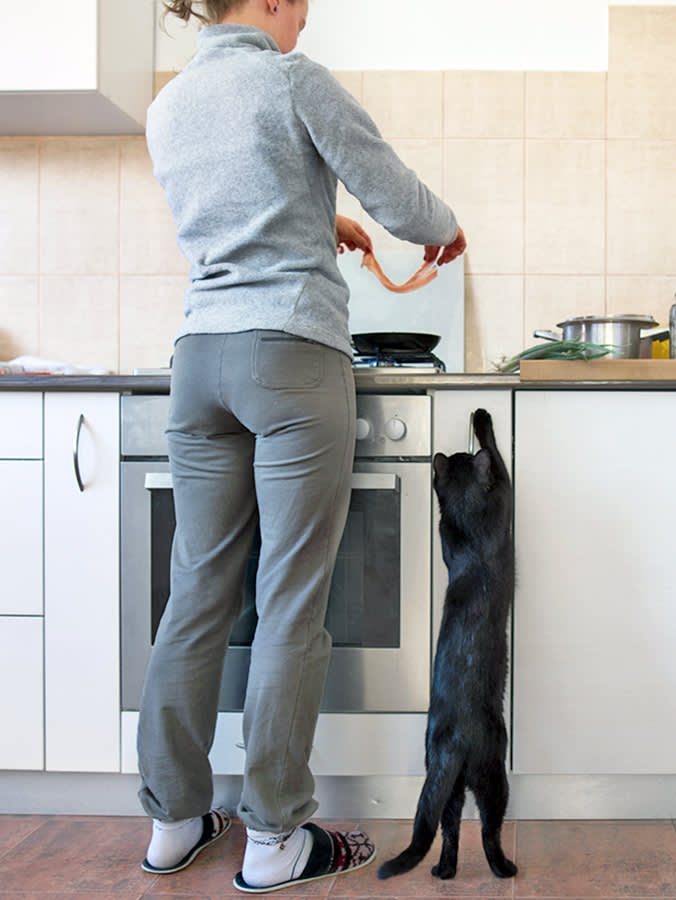 FoodThe 'Natural' Raw Diet Is Failing Cats on Two FrontsDr. Amara Solis · 7 min
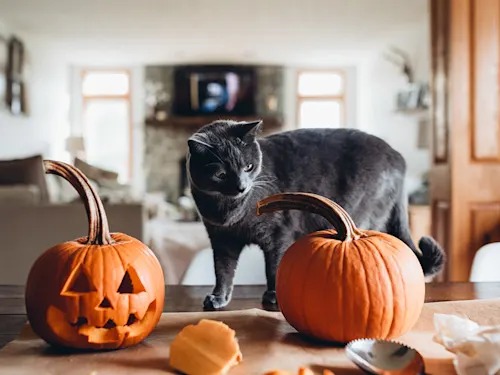 FoodPumpkin Is the Rare 'Human Food' Your Cat Might Actually NeedDr. Lena Park · 5 min
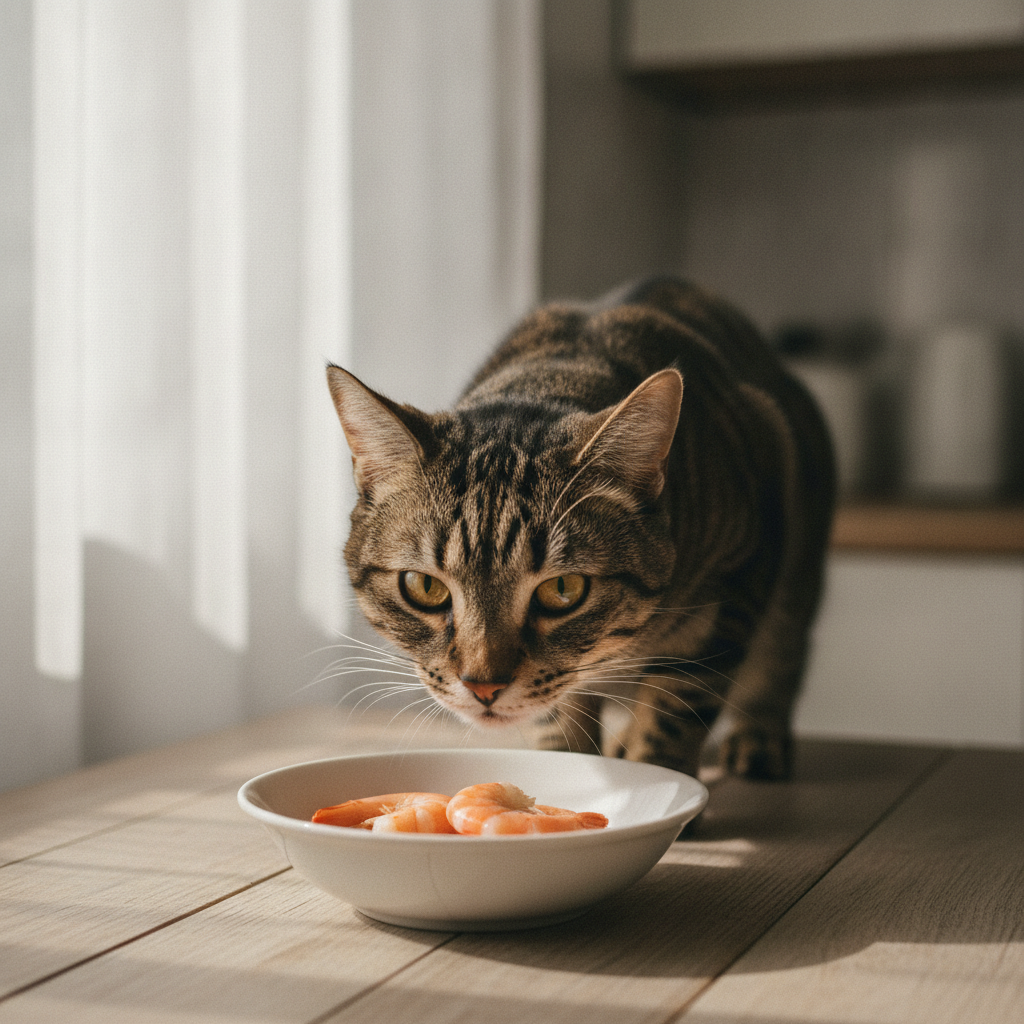 FoodShrimp Is the Rare Cat Treat That's Actually Lean, If You Lose the ShellDr. Priya Nair · 6 min