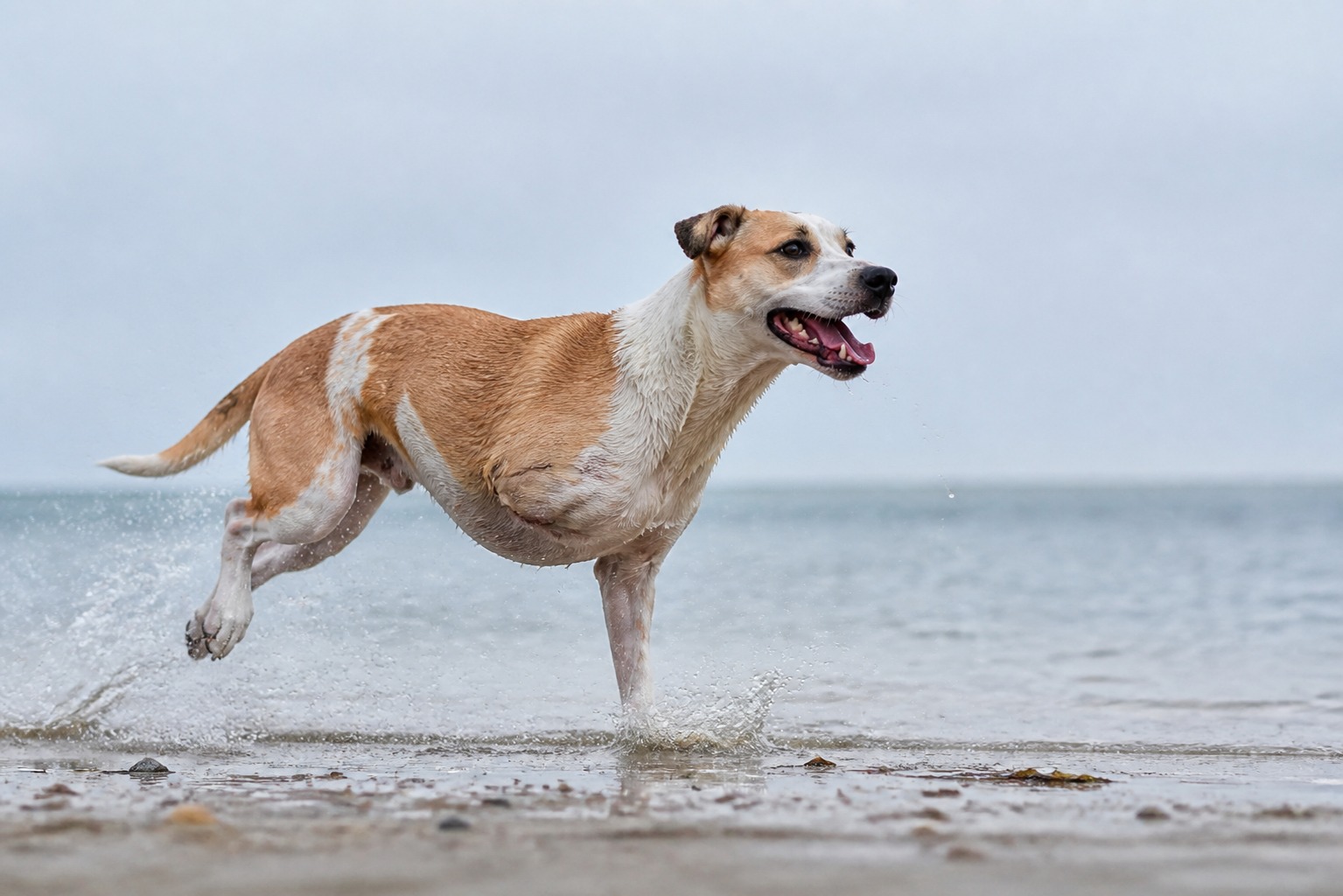
The first thing that surprises people about a three-legged dog is how fast they stop being a three-legged dog.
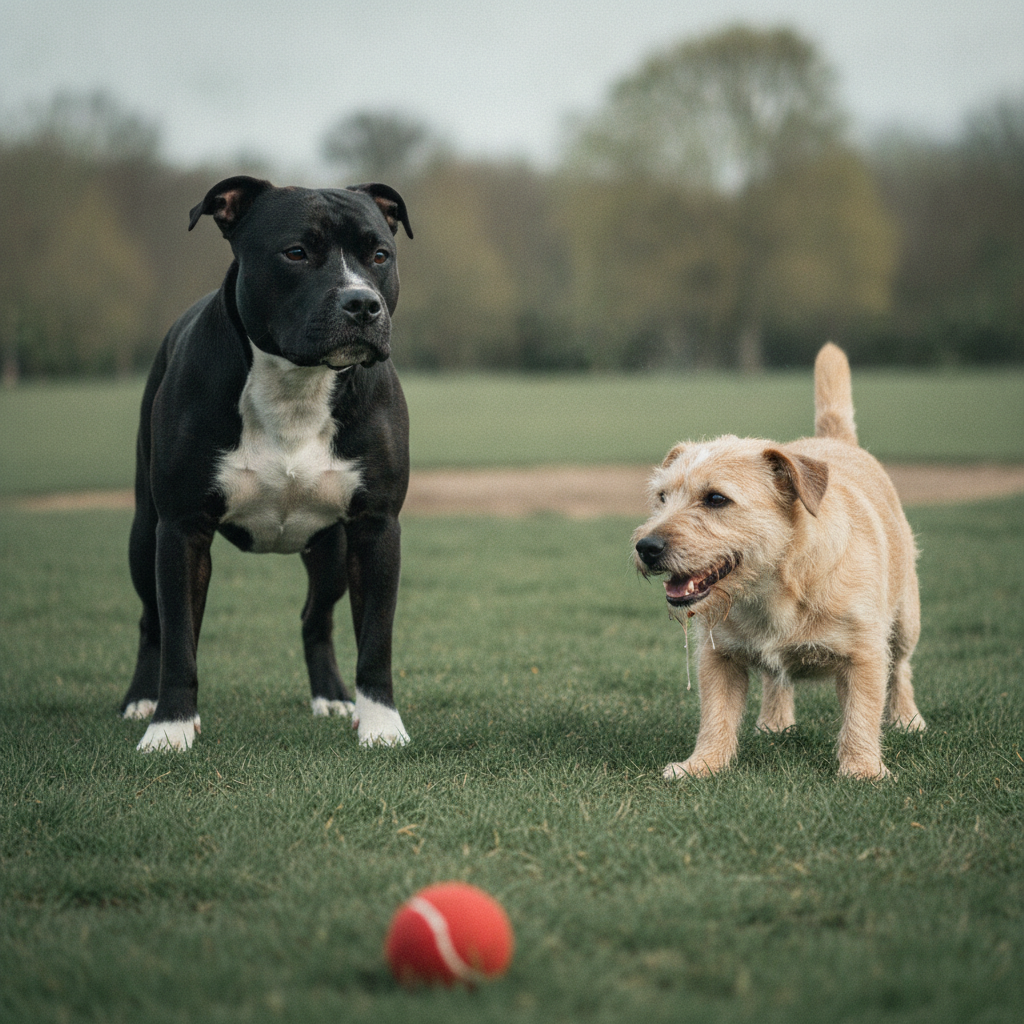
Take one to a dog park and within a minute they are tearing around the run at least as fast as the four-legged animals they just met, and everyone watching relaxes. The tripod is fine. The tripod is, in fact, showing off.
And that easy adaptation is precisely what makes people complacent, because the real risk to a three-legged dog has almost nothing to do with the leg they lost. It is what the other three are quietly absorbing, every day, for the rest of their life.
A dog who used to distribute their weight across four limbs is now distributing it across three. That load does not vanish. It gets redistributed onto joints that were never designed to carry it, and the bill arrives years later, as arthritis, as a torn cruciate, as a dog who is suddenly, at eight, reluctant on the stairs.
So the job here is not rehabilitation. Your dog will handle that themselves, and quickly. The job is rationing. Everything below is about protecting the three legs you still have.
Why they adapt so fast (and why the front is harder)
Two things are going on.
The first is that the leg they lost had usually been hurting for a long time. Amputation is rarely a bolt from the blue; it follows cancer, a shattered joint, or a chronic injury. In a lot of cases the dog had already stopped using that limb, and had already worked out how to move without it. What the surgery removes is the pain, and the change in demeanor afterward can be startling. There is no reason a three-legged dog has to be a disabled dog.
The second is that the mechanical problem, though real, is solvable. What a dog has to relearn is proprioception: their internal map of the body, and how to keep it upright now that a corner of it is gone. That is a genuine relearning task, and it takes some dogs weeks. But dogs come to it with none of the psychological baggage humans carry into limb loss. They are not grieving the leg. They are solving a movement problem, and there is no rule that says the solution has to leave them disabled.
How hard that problem is depends on which end it happened to. The front limbs carry the majority of a dog’s weight, do most of the braking, and initiate every movement. So losing a front leg means losing part of the steering, and that is a harder puzzle than losing part of the engine. Rear-leg amputees tend to bounce back faster.
The other predictors are size and age. Smaller dogs have less mass to redistribute and generally do better. So do younger dogs, and dogs without pre-existing joint disease.
“Nobody brings me a tripod because of the missing leg. They bring me a tripod at eight because the shoulder on the other side has finally given out,” says Dr. Mara Chen. “That appointment is bookable years in advance, and almost nobody books it.”
The five rules of rationing
1. Guard the remaining limbs like they are irreplaceable, because they are
This is the whole game, and it is the thing most owners get wrong out of sheer generosity.
Your dog feels great. Your dog wants to run for an hour. So you let them, because who are you to say no to a dog who is this happy. And every one of those hours is being paid for by joints carrying more than they were built to.
Practical protections:
- Keep them lean. Aggressively lean. This is the single highest-impact thing you will ever do for a three-legged dog, and it is free. Every extra pound is disproportionate load on three joints instead of four. Ask your vet for a body condition score and a target, and hold the line even when the eyes are doing the thing.
- Pad the pressure points. Tripods take more weight through their elbows, hocks, and chest when lying down and getting up. Socks, sleeves, or elbow pads over the “elbow” of the remaining limbs prevent calluses and pressure sores from forming.
- Traction, everywhere. Hard floors are the enemy. A dog with three legs cannot catch a slip the way a four-legged dog can, and a single splayed slide on tile can do real damage. Rugs and runners along the routes they actually use are cheap insurance.
- Get ahead of arthritis. Joint support (glucosamine, omega-3 fish oils, and other anti-inflammatories your vet recommends) is not a nice-to-have in a tripod. It is a load-management tool, and it belongs in the plan early, not after the limp appears.
2. Keep them moving, but change what “exercise” means
Inactivity is not the answer. A stiff, unfit, overweight tripod is worse off than an active one, and muscle is what protects joints.
What changes is the kind of exercise. Impact is the thing you are budgeting.
Swimming is the best exercise a three-legged dog can get, and it is not close. The water carries the body weight, so the muscles work hard while the joints take almost nothing. Hydrotherapy pools, canine rehab centers with underwater treadmills, and any safe body of water your dog enjoys all count. If there is a canine swim therapy provider near you, use them.
Otherwise: regular, moderate, frequent walks beat occasional heroics. Little and often is the shape you want. Steady sniffing walks on soft ground, several times a day, are gentler than one long fetch session at the weekend, and they tire a dog out just as well.
3. Do not let them overdo it, because they will
Your dog has no idea they are rationing anything. They will take a flight of stairs at speed, hurl themselves off the sofa, and skid on the kitchen floor, and they will do it happily right up until something goes.
So you set the limits.
Watch the stairs. Watch uneven ground. Watch the getting on and off furniture. This matters most in the early post-amputation months, when they are still calibrating, but it never fully stops mattering.
And learn what fatigue looks like in your specific dog, because you cannot rely on them to tell you. The signs to stop are: the gait shortens, the head starts bobbing more heavily with each stride, they start taking breaks they were not taking, or they lie down and do not want to get back up. Stop at the first one, not the third.
4. Consider the gear, but ask before you buy
There is a lot of equipment sold to owners of three-legged dogs, and some of it is genuinely useful while some of it is an expensive way to feel proactive.
Prosthetics and orthotics. These have improved enormously. Custom-fitted prosthetic and orthotic devices for dogs are a real field now, and the underlying logic is exactly the one this article is built on: by distributing the dog’s weight more evenly, a prosthetic can protect the remaining limbs from arthritis and injury. The catch is anatomy. A prosthetic needs a residual limb to attach to. If the leg was removed at the shoulder or hip, which is common in cancer cases, there may be nothing to fit. Get an assessment before you get attached to the idea.
Carts and wheelchairs. Excellent for dogs who are weak, unstable, or losing function in more than one limb. Less obviously necessary for an otherwise strong dog missing a single leg, who is generally better off building their own muscle. Custom carts are built to a dog’s measurements, including counterbalanced designs for dogs with weak forelimbs and specific designs for amputees.
Harnesses and support slings. Genuinely useful and often overlooked. For front-leg amputees, a car harness with wide chest bands distributes force over a bigger area and avoids concentrating it on a single working shoulder. A lifting sling or handled harness helps with stairs, cars, and the days when they are tired.
5. Build the team before you need it
Your regular vet is the hub, but a three-legged dog benefits from people your vet is not.
- A certified canine rehabilitation practitioner. This is the single most useful referral. Rehab vets and physios build strengthening programs, spot compensatory patterns before they become injuries, and provide the underwater treadmill work that is so hard to replicate at home. Look for a CCRP or CCRT credential.
- A hydrotherapist, if there is one within reach. Swim therapy and massage build confidence, increase range of motion, hold weight down, and improve circulation to the affected area.
- A prosthetics and orthotics provider, for an assessment, even if you decide against a device.
- A cart maker, if mobility declines later. Several build custom carts to a dog’s measurements, including designs specifically for amputees.
One note on choosing help. This is a field with a lot of well-meaning fringe offerings attached to it, and a three-legged dog is a vulnerable customer. Prioritize evidence-based rehabilitation with real credentials over anything promising a holistic cure. The interventions with the best support are unspectacular: weight control, muscle, hydrotherapy, pain management, and joint protection.
What newer research adds
The most useful development is that we now have actual gait data rather than intuition.
Force-plate and kinematic studies of amputee dogs have confirmed what the old advice guessed at: the remaining limbs take a significant, measurable increase in peak load, the compensation patterns differ depending on whether the amputation was fore or hind, and the spine and pelvis get recruited into the workaround. That gives real weight to what used to be a hunch, which is that the arthritis risk in the remaining joints is the central long-term concern.
The practical consequence has been a shift in veterinary rehabilitation toward proactive load management from day one, rather than waiting for a limp: early weight control, early muscle-building, early joint support, and early traction in the home, all before there is a problem to treat.
Which comes back to the same place. Your dog will handle the missing leg. You handle the other three.
References
- Jarvis, S.L., et al. Kinematic and Kinetic Analysis of Dogs During Trotting After Amputation of a Thoracic Limb. American Journal of Veterinary Research.
- Kirpensteijn, J., et al. Adaptation of Dogs to the Amputation of a Limb and Their Owners’ Satisfaction with the Procedure. Veterinary Record.
- American Association of Rehabilitation Veterinarians. Find a Rehabilitation Veterinarian.
- OrthoPets: Custom Orthotic and Prosthetic Devices for Animals.
- Walkin’ Pets: Mobility Products for Disabled Pets.
- Eddie’s Wheels for Pets.