


Not All Toxic Succulents Are Equal: The One Cat Owners Underestimate
Most succulent danger to cats is a bad stomachache, not an emergency. But one popular plant is a genuine heart risk. Here is how to sort the merely irritating from the truly dangerous, and what to do at each level.

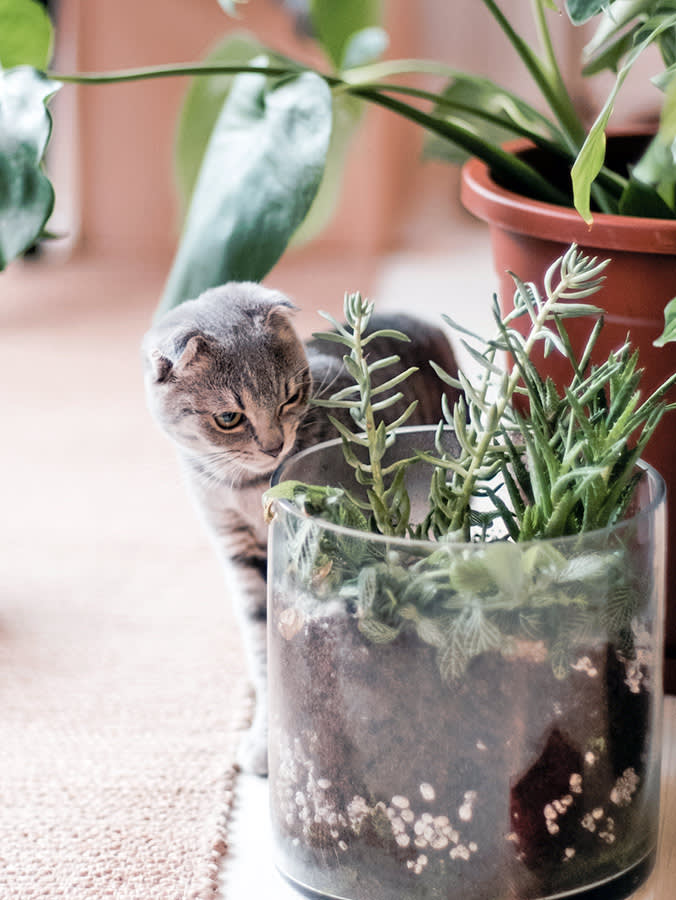
Here is the thing most “toxic plants” lists get wrong: they sort succulents into two bins, safe and dangerous, as if every poisonous plant in your home is equally likely to land your cat at the emergency vet. That framing makes you either paranoid about every leaf or numb to all of it. Neither is useful.
The truth is that succulent toxicity in cats comes in tiers. The large majority of “toxic” succulents cause an unpleasant but self-limiting stomachache. A smaller group can reach the nervous system if a cat really overdoes it. And exactly one common, easy-to-buy, grocery-store succulent is a true cardiac risk that owners routinely underestimate because it looks as innocent as the rest. If you know which tier a plant falls into, you know whether to grab a towel and clean up or grab your keys and your vet’s number.
The plant cat owners get most wrong: kalanchoe
Kalanchoe is everywhere. It is the cheerful little plant with clusters of tiny red, orange, pink, or yellow flowers that garden centers and supermarkets stack near the registers around the holidays. It looks harmless, and that is exactly the problem.
Kalanchoe contains compounds called bufadienolides, which are cardiac glycosides. In plain terms, they act on the heart the same family of way that foxglove and oleander do. Eat a little and a cat usually just gets the standard gut upset, drooling, vomiting, and diarrhea. Eat more, and the picture can shift to an abnormal heart rhythm, weakness, difficulty breathing, collapse, and in rare severe cases seizures.
When a cat eats kalanchoe, I am not waiting to see how the stomach settles, I am thinking about the heart. It is the one common succulent where I would rather examine the cat and watch the rhythm than tell an owner to monitor at home.
That is the single most important distinction in this whole topic. Everything below is graded against it.
Tier one: the stomach-upset succulents
These are the plants that show up on every toxic list and account for most real-world incidents. They contain irritating saponins or sap that inflame the mouth and digestive tract. A cat that nibbles one will likely drool, paw at its face, then vomit or have diarrhea and go off its food for a bit. Unpleasant, worth a call to your vet, rarely an emergency on its own.
Aloe vera
The fleshy green spears we keep for sunburns are a problem for cats. The trouble lives in the latex layer just under the leaf skin, which carries saponins and anthraquinones. Expect vomiting, diarrhea, and lethargy. Note that this includes store-bought aloe gels and lotions, so skip applying any aloe product to your cat.
Jade plant (Crassula)
A bite or two of jade brings on vomiting, lethargy, loss of appetite, and sometimes a wobbly, uncoordinated gait. The reassuring part is that most jade cases settle on their own with supportive care.
Pencil cactus and crown of thorns (Euphorbia)
The euphorbia family, including the pencil cactus sometimes sold as “Sticks of Fire,” carries a milky sap that irritates on contact. A cat that chews one may drool heavily, paw at its mouth, and vomit. The same sap can sting skin and eyes, so this is one of the few that causes trouble even without a full meal.
String of pearls (Senecio)
Those trailing strands of bead-like leaves have an irritating sap. Brush against it and a cat can get skin or eye irritation; eat it and the result is the familiar drooling, vomiting, diarrhea, and lethargy. The upside is that string of pearls is happiest as a hanging plant, which conveniently keeps it out of reach.
Tier two: when the irritation goes deeper
A few toxic succulents can push past the gut and reach the nervous system, but, kalanchoe aside, this almost always requires a cat to eat a substantial amount of plant rather than a curious nibble. The signs to watch for are incoordination, muscle tremors, and in the worst cases seizures. These are far less common than the stomach signs because most cats stop well before they have eaten enough. Still, if you see a cat staggering, twitching, or seizing after any plant contact, treat it as an emergency regardless of which plant was involved.
How to read the symptoms
Symptoms tend to arrive in the order the plant travels through the body, which helps you gauge severity.
The first signs are oral: drooling, pawing at the face, gagging. That is contact irritation and, by itself, usually means a mild exposure. Next come the gastrointestinal signs as the plant works downstream: vomiting, diarrhea, lethargy, and a skipped meal. This is the most common stopping point. Beyond that, neurological signs (tremors, incoordination, seizures) or any sign of heart trouble (weakness, labored breathing, collapse) move the situation from “call the vet” to “go now.”
When to call, and when to go
Use a simple rule. Any kalanchoe ingestion, any neurological sign, or any breathing or collapse sign is a same-hour emergency, call ahead and head in. For the tier-one stomach-upset plants, call your veterinarian or a poison line for guidance even if your cat seems fine, because they can tell you whether the amount and the plant warrant a visit.
Two numbers are worth saving before you ever need them. The ASPCA Animal Poison Control Center is at (888) 426-4435, and the Pet Poison Helpline is at (855) 764-7661. Both are staffed around the clock, both charge a consultation fee, and both can give you a plant-specific plan in minutes. If you can, snap a photo of the plant or grab the nursery tag, because identifying the exact species changes the advice.
Build a cat-proof plant shelf with these
You do not have to give up succulents. Stock your collection with non-toxic varieties and the worst case becomes a chewed leaf, not a vet bill. These are all considered safe around cats:
- Haworthia and zebra haworthia
- Echeveria
- Hens and chickens (Sempervivum)
- Hardy sedum
- Burro’s tail
- Prickly pear pads (Opuntia), spines aside
Keeping curious cats out of the risky ones
If you keep any toxic succulent, height is your only dependable defense. Hang it well above where your cat can jump or stretch, or give it a room your cat cannot enter. High shelves work only if there is no lower furniture your cat can use as a staircase, because they will find the staircase.
Do not lean on scent or bitter-taste deterrents as your main strategy. A determined cat plows right through them, and you will not be in the room to referee. The reliable move is to make the plant physically unreachable, then enjoy it.
References
- ASPCA. “Toxic and Non-Toxic Plants.” ASPCA Animal Poison Control Center. https://www.aspca.org/pet-care/animal-poison-control/toxic-and-non-toxic-plants
- Pet Poison Helpline. “Kalanchoe.” https://www.petpoisonhelpline.com/poison/kalanchoe/
- PetMD. “Are Succulents Poisonous to Cats and Dogs?” https://www.petmd.com/dog/emergency/poisoning-toxicity/are-succulents-poisonous-cats-and-dogs
- Catster. “Are Succulents Toxic to Cats? Vet-Approved Facts & Safety Guide.” https://www.catster.com/cat-health-care/are-succulents-toxic-to-cats/
Common questions
What happens if a cat eats a succulent?
For most toxic varieties, expect drooling, vomiting, diarrhea, loss of appetite, and lethargy as the plant irritates the mouth and gut. These usually resolve. The exceptions are kalanchoe (heart effects) and, in large quantities, plants that can cause tremors or incoordination.
Are any succulents safe for cats?
Yes. Haworthia, echeveria, hens and chickens, hardy sedum, and burro's tail are all considered non-toxic to cats. Building a plant collection around these lets you keep succulents without the worry.
How do I keep my cat away from toxic succulents?
Height is the only reliable deterrent. Hang plants well above jumping range, or keep them in a room your cat cannot enter. Scent and taste repellents fail with determined cats, so do not rely on them as your only defense.
Is aloe vera gel from the plant dangerous to cats?
Yes. The latex layer just under the skin of an aloe leaf contains saponins and anthraquinones that cause vomiting, diarrhea, and lethargy. Store-bought aloe products are also a risk, so do not apply them to your cat.
Not a substitute for your vet. Our guidance is educational. For urgent symptoms, contact a vet or emergency clinic right away. Editorial standards
Dr. Nair is a veterinarian focused on diet and feeding. She covers everyday nutrition, treats, and the many "can they eat this?" questions owners ask, grounding each answer in what is actually safe and sensible for dogs and cats.
Meet our experts ↗Keep reading
 Health & WellnessYour Essential Oil Diffuser Could Be Poisoning Your Cat. Here's the Part Nobody Tells You.Dr. Amara Solis · 6 min
 Health & WellnessOne Common Bouquet Flower Can Put a Cat in Kidney Failure. Here's the Full List.Dr. Amara Solis · 8 min
 LivingYour Party's Biggest Risk Isn't the Cat Getting Scared. It's the Front Door.Dr. Amara Solis · 7 min
 Health & WellnessThe Bird Flu Blind Spot Isn't Your Cat. It's That Nobody's Watching CatsDr. Mara Chen · 5 min
 Health & WellnessCats Don't Always Land on Their Feet. Scientists Just Found the Part That Does the WorkDr. Priya Nair · 6 min
 Health & WellnessPine Needles Aren't the Scariest Thing on Your Cat's Christmas TreeDr. Mara Chen · 7 min