A cat vanishes and the internet has an answer for you: find a stray, crouch down, describe your cat in loving detail, offer a treat as payment, and wait for the message to travel down the feline grapevine. It is called the Japanese Missing Cat Method, and it is, on the face of it, absurd.
Here is the uncomfortable part. People who try it keep reporting that it worked.
That is worth taking seriously, but not for the reason the folklore suggests. The ritual is a placebo wrapper around three behaviors that genuinely raise your odds of recovery, and the frantic default it replaces, storming the block screaming a cat’s name, actively lowers them. The method is nonsense in its mechanism and quietly correct in its practice.
The origin story is thinner than the legend
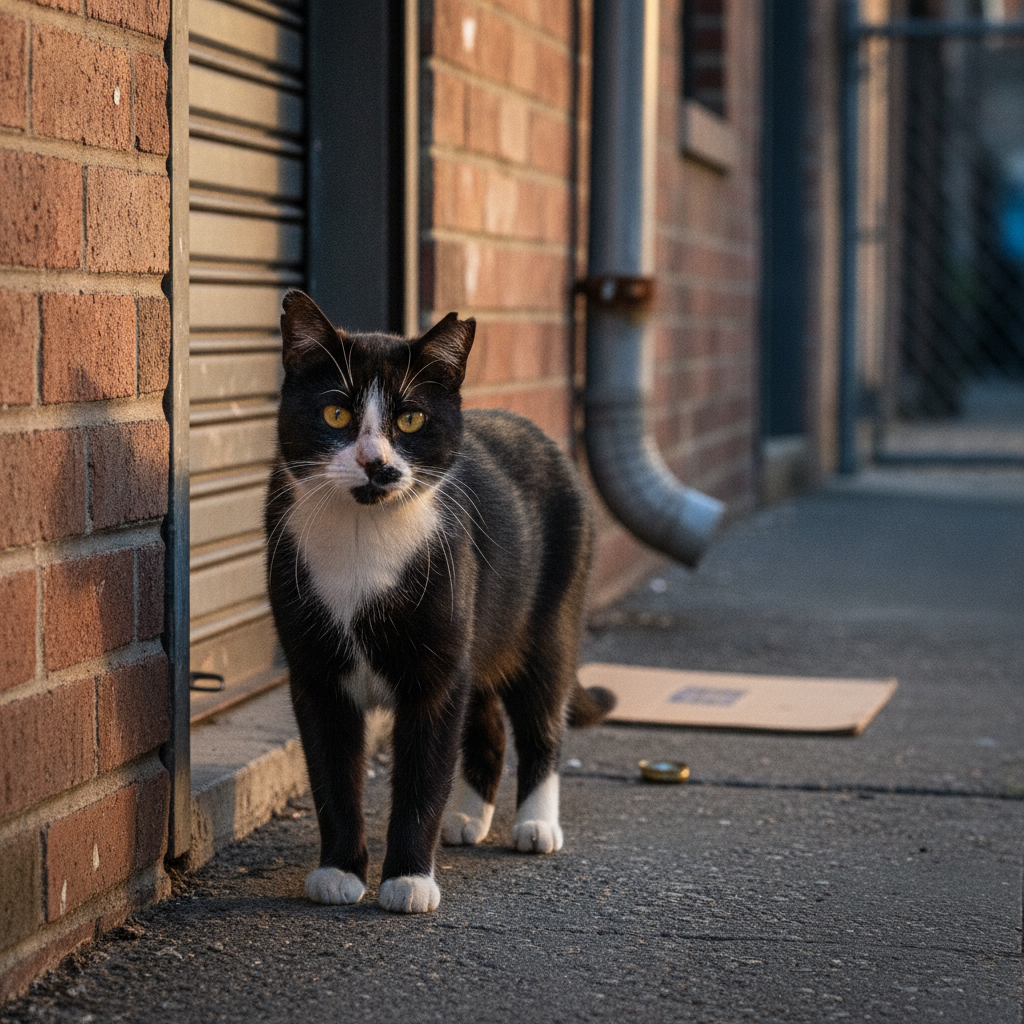
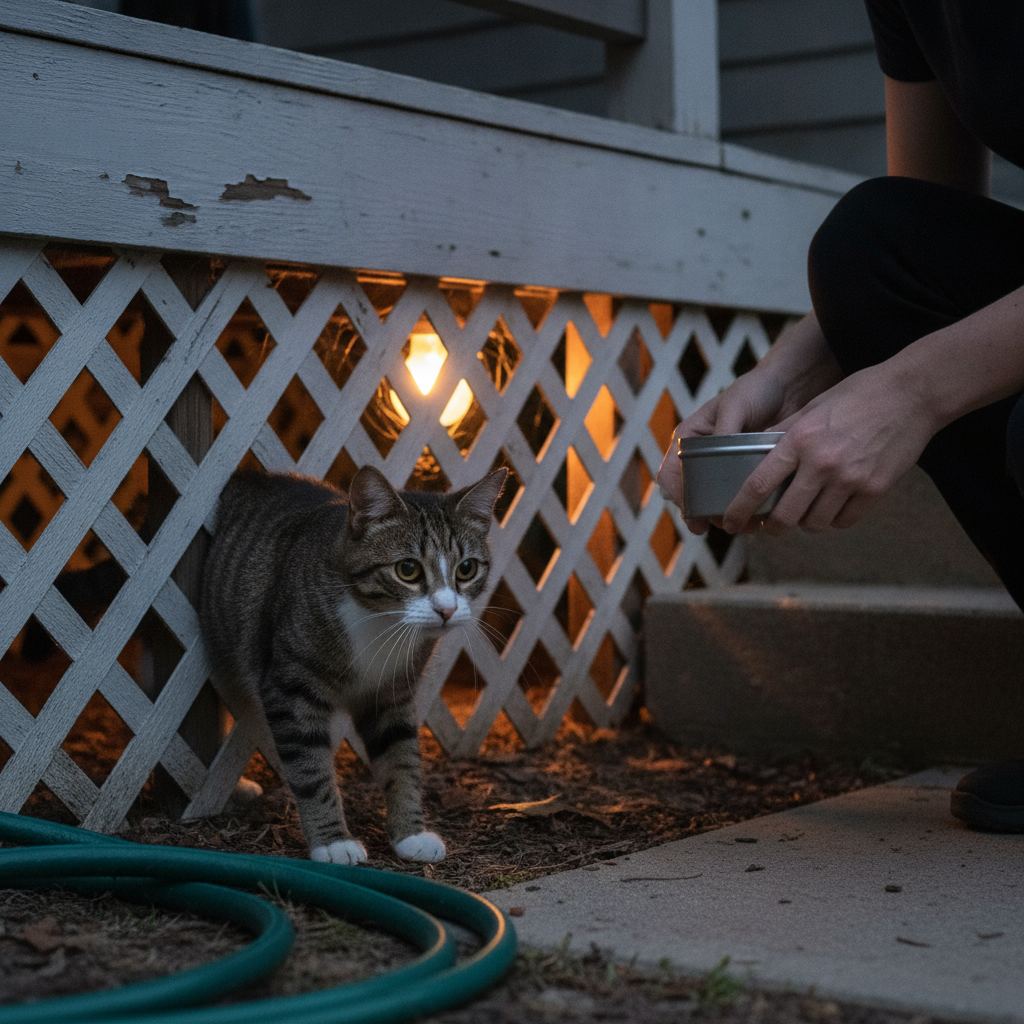
The trail goes back to 2019, when Japan Today wrote up a cat parent (posting as @charlie0816) who said they recovered a missing cat after asking local strays for help. The steps were simple: find a stray, describe your cat by name, appearance, and personality, say how much you miss them, hand over a treat as payment, then wait for word to spread.
Charlie credited the advice to another anonymous poster. Nobody has ever established that the practice is Japanese at all. That did not stop it from traveling through Reddit, Facebook, and TikTok, picking up an “ancient Japanese legend” backstory along the way, a legend that no one who cites it can actually name.
The testimonials are real, though, and they are strangely specific. Reddit users describe a stray calmly escorting their cat to the front gate. Another says a frail senior cat did the asking and the missing nephew turned up a day later. A TikToker reports her cat reappearing within minutes. Others say it took days, weeks, four months. And at least one person is honest enough to note that it worked more than once and then, on a later occasion, did not.
The mechanism is anthropomorphism, plainly
Cats can learn their own name and a small set of loaded words: dinner, vet, no. They pick those up through repetition and consequence, not comprehension. Nothing in that skill set adds up to receiving a heartfelt speech from a stranger, encoding it, locating a specific cat across a neighborhood, and delivering the emotional content of your appeal.
Even if a cat somehow could take the message, empathy is the wrong lever. A cat who is out hunting, napping in a crawlspace, or being quietly fed by the neighbor two doors down is acting on their own interests, not yours. That is not a character flaw. It is a cat.
I am also with the pet trackers who point out the obvious operational flaw: most street cats will not let a stranger get within whispering distance. If your neighborhood is full of strays who let you crouch, murmur, and hand over a treat, you have a different situation than the one this method describes.
“The story people tell themselves about a lost cat is that they are gone. Usually they are close, quiet, and waiting for the noise to stop,” says Dr. Nina Kohl. “The mistake isn’t believing in a stray-cat network. It’s believing your cat is far away, and then searching like they are.”
Why it looks like it works
Strip out the magic and look at what the ritual makes you do.
It puts you outside, on foot, near home. This is the whole ballgame. In a study of hundreds of missing-cat cases, physical searching was associated with a meaningfully better chance of finding a cat alive, and about three quarters of the cats who were found turned up within roughly 500 meters of where they disappeared. Indoor-only cats were found much closer still, often within a stone’s throw of the door. A method that walks you slowly around your own block is aiming at exactly the right search radius.
It lowers your volume and your heart rate. The single most common instinct, standing in the yard shouting a name, is close to the worst thing you can do. A stressed, loud, fast-moving human reads to a hiding cat as a threat, and a cat who is already frightened enough to hide will hide harder. Approaching a stray gently, speaking softly, moving slowly, is a script for the exact behavior that lets a spooked cat feel safe enough to break cover.
It spreads your scent. Walking the neighborhood repeatedly lays down a trail of the most familiar smell in your cat’s world. Cats navigate by scent far more than we credit, and a cat within a few hundred meters can often work their way back to a scent they know.
It buys time, calmly. Most cats who come home come home on their own schedule, usually at night, usually when the street is quiet. The method converts a panicked, exhausting hunt into a patient, repeatable evening walk. That is not mysticism. It is a search protocol with better adherence.
What to do instead, in order
If you want the method’s benefits without the folklore, run this:
- Search close, and search low. Under decks, in sheds, under cars, behind the recycling bins. Indoor cats who slip out tend to freeze within a very short radius, not run.
- Search at 2 a.m. Quiet street, no dogs, no engines. Bring a flashlight and sweep at ground level for eyeshine.
- Be boring. No calling in a raised voice. Sit, open a can, shake a treat bag, and wait ten minutes in silence. Repeat at the same spots each night.
- Put out a scent anchor. The litter box, a worn t-shirt, their bed by the door.
- Work the humans, not the strays. Talk to the neighbor who feeds cats. That person is the actual local network, and they are the reason a lot of “missing” cats turn out to be double-dipping on dinner.
- Check the shelter in person, every few days. Descriptions get logged badly. Your eyes are better than a database.
- Microchip, and update the registration. This is the one that changes the math. Cats who arrive at a shelter with a working chip are reunited with their families at a rate roughly twenty times higher than stray cats generally. The chip is only as good as the phone number attached to it, and a large share of chips are never registered at all.
What newer research adds
The best data we have on this does not come from folklore, it comes from case studies of real searches. When researchers looked at how missing cats were actually located, the picture that emerged was blunt: cats are usually found near home, physical searching helps, and time matters enormously. The chance of a happy ending is highest in the first week and falls off steadily after that.
The other number worth carrying around is the microchip one. Shelter data has consistently shown that stray cats without identification are returned to their families at dismal rates, low single digits, while microchipped cats are returned at something closer to four in ten. Nothing else you can buy moves the odds like that, and it costs less than a bag of good treats.
So try the ritual if it helps you stay hopeful. Whisper to the stray. Leave the treat. Then go do the unglamorous version: walk slowly, talk quietly, look under the deck, and get the chip registered before you ever need it.
References
- Huang, L., et al. “Search Methods Used to Locate Missing Cats and Locations Where Missing Cats Are Found.” Animals, 2018. https://www.ncbi.nlm.nih.gov/pmc/articles/PMC5789300/
- Lord, L.K., et al. “Search and identification methods that owners use to find a lost cat.” Journal of the American Veterinary Medical Association, 2007. https://pubmed.ncbi.nlm.nih.gov/17223754/
- Lord, L.K., et al. “Characterization of animals with microchips entering animal shelters.” Journal of the American Veterinary Medical Association, 2009. https://news.osu.edu/microchips-result-in-higher-rate-of-return-of-shelter-animals-to-owners/
- American Society for the Prevention of Cruelty to Animals. “How Many Pets Are Lost? How Many Find Their Way Home?” https://www.aspca.org/about-us/press-releases/how-many-pets-are-lost-how-many-find-their-way-home-aspca-survey-has-answers