


Your Dog's Sore Nail Is Rarely 'Just a Fungus'
A limping dog and one ugly nail sends most people reaching for antifungal cream. That's usually the wrong call. Here's how to read a bad nail, from a simple trauma infection to the immune problem that fakes one.

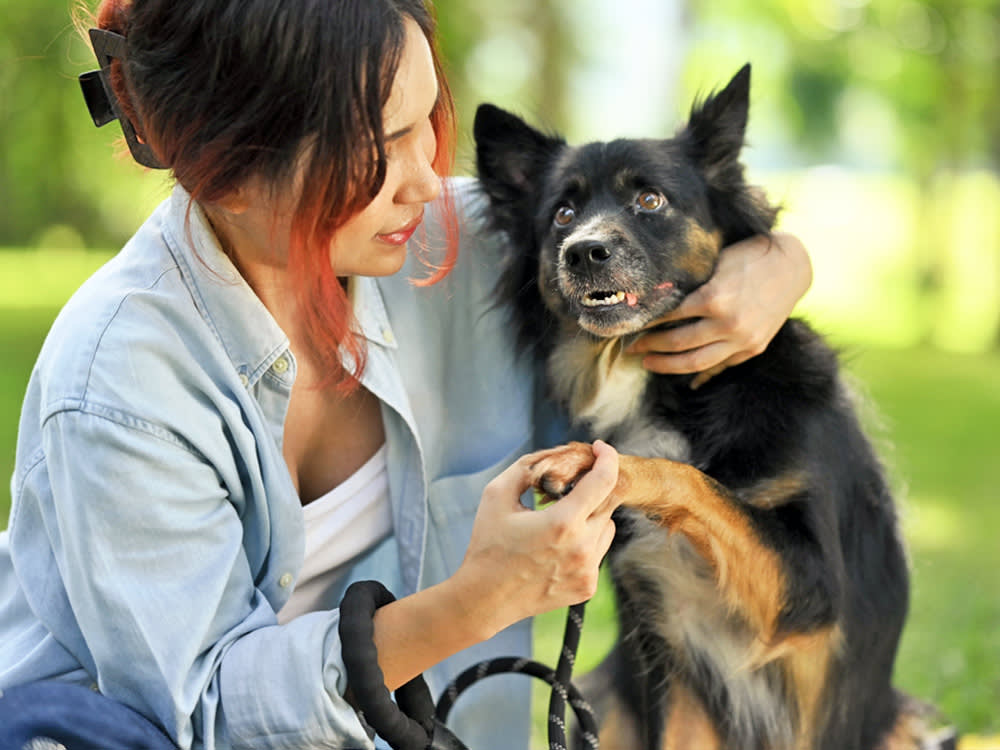
The story is almost always the same. Your dog comes up limping, you turn the paw over, and one nail looks wrong: swollen at the base, oozing, maybe discolored. Somewhere in the back of your mind a word surfaces, the same word people reach for with their own nails, and you find yourself standing in the pet-store aisle holding a tube of antifungal cream.
Put it back. Most sore dog nails are not fungal, and treating a bacterial or immune problem as if it were fungus is how a two-week nuisance becomes a months-long one. A dog does not care what their nails look like. They care whether the foot hurts. Your job is to figure out why it hurts, and the fastest way to do that is to stop assuming and start reading the paw.
First question: one nail, or several?
Before you think about bacteria or yeast or anything else, count. This single question sorts most nail trouble into the right lane.
One bad nail almost always means something happened to it. A dog snags a claw on a root, cracks it on pavement, or a groomer trims a hair too short, and the living tissue underneath, which is packed with nerves and blood vessels, gets exposed. Infection is the second event, not the first. Fix the injury and control the bug, and that nail recovers.
Several bad nails at once, spread across different paws, with no injury you can point to, is a completely different animal. Bacteria and trauma do not politely infect the same nail position on four separate feet. When nails all over the dog turn brittle, split, and start sloughing off over a few weeks, the problem is usually coming from the inside, and no cream is going to touch it. More on that below, because it is the case people miss most.
The infections that actually happen
When a nail does get infected, it falls into one of a few buckets. The source of the bug and the fix are different for each, which is exactly why a diagnosis matters more than a guess.
Paronychia: the common one
Paronychia is a bacterial infection that sets up in the skin folds cradling the nail, and it tops the list of nail infections vets actually see. The trigger is usually an injury or relentless licking, which lets a staph organism already living on the skin move in. Expect inflamed, puffy nail folds, a crusty or pus-filled base, and a dog who won’t leave one foot alone and winces when you touch it. Caught early it clears up well. Left alone, especially in an allergic or immune-compromised dog, it settles in and keeps coming back.
Onychomycosis: the rare one everyone assumes
Here is the myth-buster. Onychomycosis, a genuine fungal infection of the nail itself, is uncommon in dogs. It is usually caused by a dermatophyte such as Trichophyton, and when it does show up it typically travels as part of a broader ringworm-type skin infection rather than appearing on its own as a single funky nail. The nail turns thick, brittle, yellow-brown, and deformed, sometimes detaching. It is stubborn to treat and often needs months of medication. But it is the exception, not the rule, and that is the whole point: the condition people reach for the antifungal to treat is the one their dog is least likely to have.
Pododermatitis: inflammation, not always infection
Pododermatitis means inflammation of the skin of the toes and paws, and it can drag the nails into the mess. Allergies, parasites, foreign bodies, and autoimmune disease can all set it off. You will see puffy, reddened pads, thinning fur between the toes, a hitch in the walk, and crusting around the nails. Because it has so many possible drivers, treating it blind rarely works. You have to find out what is inflaming the paw in the first place.
The impostor: when the immune system attacks the nails
This is the case that hides behind the word “fungus,” and it deserves its own spotlight, because a pet parent staring at three or four crumbling nails is often looking at it without knowing.
Symmetrical lupoid onychodystrophy, mercifully shortened to SLO, is an immune-mediated nail disease. The dog’s own immune system attacks the nail bed, and over a short window the nails on multiple paws go dry, split, deform, and shed, often peeling away entirely and leaving raw, painful quicks behind. It is thought to be idiopathic, meaning the trigger is usually unknown, and certain breeds are predisposed, including German Shepherds, Rottweilers, Gordon Setters, and Bearded Collies.
SLO is what vets call a diagnosis of exclusion. There is no single test that lights up and says “this is it.” Instead, the vet rules out the infections and other causes first, which is one more reason the home antifungal is a dead end here.
The tell I train new owners to watch for is the pattern. One ugly nail after a rough hike is almost never an emergency. But when the nails on several different paws start crumbling and lifting at the same time, and there’s no injury to explain it, that’s not a bug you can wipe off. That’s the immune system, and it needs a real workup, not a cream.
How a vet actually sorts this out
Because the causes look alike from the outside, your vet leans on a few tools to tell them apart. A physical exam comes first, checking for swelling, discharge, and signs of trauma. From there they may reach for cytology, examining scrapings or discharge under a microscope to spot bacteria, yeast, or fungi; a culture and sensitivity test to identify the exact organism and the drug that will beat it; a fungal culture or PCR to confirm the rare true fungal case; a biopsy of the nail bed for chronic or strange presentations, which is often how SLO gets confirmed; and bloodwork to rule out systemic or immune disease. It looks like a lot, but each test is there to keep the treatment from being a guess.
Treatment follows the cause
Once the vet knows what they are fighting, the plan usually combines a topical and a systemic approach.
For bacterial infections, that means antibacterial ointments such as mupirocin or a chlorhexidine gel, antiseptic soaks with Epsom salts or dilute chlorhexidine, and, when it has gone deeper, an oral antibiotic like cephalexin, clindamycin, or amoxicillin-clavulanate. For a confirmed fungal case, antifungal creams such as ketoconazole or miconazole, and oral itraconazole or terbinafine for the long haul. Autoimmune or inflammatory disease, including SLO, is managed differently, often with anti-inflammatory or immune-modulating medication rather than antimicrobials at all, which is precisely why nailing the diagnosis matters. Supportive care runs across all of them: trimming or debriding the damaged nail, bandaging, and an e-collar so your dog cannot undo the healing with their own tongue.
And the part people skip: managing the underlying cause. If allergies, an immune disorder, or poor paw hygiene set the whole thing in motion, controlling that is the only thing that stops the cycle from repeating.
What newer research adds
For SLO specifically, there is encouraging, non-drug-heavy evidence worth knowing about. A treatment study of dogs with symmetrical lupoid onychodystrophy found that high-dose omega-3 fatty acids, delivered through fish oil supplementation on top of an omega-3-rich diet, helped manage the condition, in some dogs comparably to cyclosporine, an immune-suppressing drug. It is not a cure-all and it is not a reason to skip the vet, but it reframes SLO as a manageable chronic condition rather than a hopeless one, and it means the plan for a dog with recurring nail loss often looks more like long-term diet-and-supplement management than a course of antibiotics.
The broader shift in veterinary dermatology is the same message this whole article is built on: match the treatment to the confirmed cause. The reason “just try an antifungal” fails so often is that the antifungal is aimed at the least likely diagnosis.
Keeping nails healthy in the first place
Prevention is unglamorous and it works. Trim nails regularly so they are not catching and cracking. Keep dogs off scorching pavement and rough terrain when you can. Rinse and, importantly, fully dry the paws after wet or muddy outings, because a warm damp foot is where trouble grows. Check between the toes for foxtails, thorns, and splinters. Treat allergies promptly instead of letting an itchy dog chew their feet raw. A paw balm helps dogs whose pads run dry and cracked. And keep up routine vet visits, which is often how a nail problem gets caught while it is still small.
The bottom line
A nail problem is never purely cosmetic on a dog; it hurts, it can spread, and it can turn chronic. Watch for swelling, discharge, discoloration, and relentless licking of one foot, and get a limping dog seen rather than self-treating. Above all, resist the reflex to call it fungus. Count the nails first. One bad nail after a mishap is usually a straightforward fix. Several failing at once is a signal from deeper in the body, and the sooner it is properly diagnosed, the sooner your dog is comfortable on all four feet again.
Common questions
Which dogs are most prone to nail infections?
Dogs with allergies or a suppressed immune system top the list, because inflamed, over-licked paws give bacteria and yeast an opening. Certain breeds show up often with the immune-driven nail disease SLO, including German Shepherds, Rottweilers, Gordon Setters, Bearded Collies, and some retrievers.
Is a fungal nail infection common in dogs?
No. True fungal nail infection (onychomycosis) is genuinely uncommon and usually rides along with a wider ringworm-type skin infection. Most sore, infected nails are bacterial and started with an injury, which is why reaching straight for an antifungal often misses the mark.
What does a nail infection look like?
Watch for a swollen red nail fold, pus or crust at the base, a nail that has turned yellow, brown, or black, plus limping and constant licking or chewing of one foot. When several nails on different paws go bad at once with no injury, that points away from a simple infection.
Not a substitute for your vet. Our guidance is educational. For urgent symptoms, contact a vet or emergency clinic right away. Editorial standards
Dr. Nair is a veterinarian focused on diet and feeding. She covers everyday nutrition, treats, and the many "can they eat this?" questions owners ask, grounding each answer in what is actually safe and sensible for dogs and cats.
Meet our experts ↗Keep reading
 TrainingA Shelter Dog Predicted a Stranger's Seizure With No Training. How?Dr. Lena Park · 6 min
 Health & Wellness'Natural' Won't Cure Your Dog's Seizures. But These Add-Ons Actually Help.Dr. Lena Park · 9 min
 Health & WellnessBone Cancer in Big Dogs: Don't Wait Out the LimpDr. Mara Chen · 7 min
 Health & WellnessYour Dog Keeps Gagging but Nothing Comes Up. Don't Wait It Out.Dr. Lena Park · 8 min
 Health & WellnessYour Dog Eating Dirt Is Two Problems, Not OneDr. Priya Nair · 7 min
 Health & WellnessYou Cannot Tell a Lump Is Harmless by Touching ItDr. Mara Chen · 7 min