


Every 'Service Dog Registry' Is a Scam. Here's What Actually Makes One Legal.
In the U.S., you cannot register or certify a service dog, because no official registry exists. A service dog is made by a disability and trained tasks, not a purchased ID card. What the law actually requires, how to get a real service dog, and why faking one can be a crime.

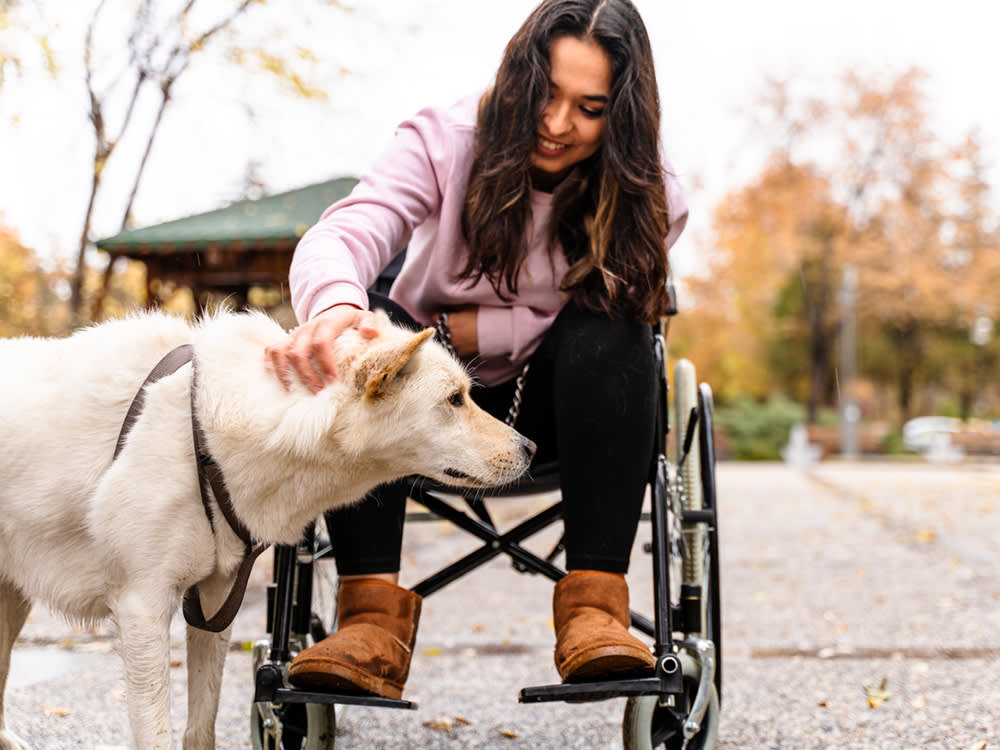
Type “how to register my dog as a service dog” into a search bar and you’ll get a wall of official-looking registries, certificates, ID cards, and vests for sale. Here is the whole truth about every one of them: they are selling you nothing. In the United States, there is no registry, no certification, and no official body that recognizes service dogs, which means there is literally nothing to register with. The paperwork you can buy is decorative at best and a scam at worst.
This article is general information, not legal advice; disability and access laws vary by state, so check your local rules or a qualified advocate for your specific situation.
What actually turns a dog into a service dog is not a card. It’s a combination of a person’s disability and a dog’s training. Let’s walk through what the law really requires, how to get a legitimate service dog, and why the fake-it shortcut can land you in real trouble.
What actually makes a dog a service dog
Under the Americans with Disabilities Act, a service dog is a dog individually trained to perform specific tasks that help a person with a disability. That definition, not any document, is the whole test. To qualify, a dog needs to meet a short, strict set of criteria:
The dog has to be trained to do at least one concrete task that directly addresses the handler’s disability; plenty of service dogs handle several. The dog must also be well-trained and well-behaved in public generally, comfortable around crowds and loud noises and completely focused on their handler rather than the environment. And the dog should be healthy and well-groomed. That’s it. Meet those conditions and you have a service dog in the eyes of the law, with no registry entry required. Fail them, and no certificate on earth makes your dog a service animal.
Note the emphasis on a trained task. A dog that comforts you simply by being present, however genuinely helpful that is, is not performing a task in the legal sense. That distinction is the line between a service dog and an emotional support animal, and it matters enormously for your rights.
What service dogs actually do
The range of tasks is nearly endless, and it’s what separates a service dog from a well-loved pet. Common examples include alerting a person to an oncoming seizure or a blood-sugar drop, guiding a blind handler safely through public spaces, detecting a life-threatening allergen in food, stabilizing someone with balance problems, alerting a deaf person to alarms, doorbells, and other sounds, retrieving items or operating lights and doors for someone using a wheelchair, redirecting and calming a person during anxiety or a PTSD episode, and alerting when an autistic child tries to elope, or run off.
Those tasks cluster into recognized types you may encounter: guide dogs, hearing dogs, mobility-assistance dogs, medical-alert dogs (for diabetes, seizures, and more), and psychiatric service dogs (for PTSD, anxiety, and other conditions). Different job, same legal footing.
Service dog vs. emotional support animal
This is the distinction people get wrong most often, sometimes expensively. A service dog is trained to perform tasks and carries broad public-access rights. An emotional support animal requires no specialized training at all; its comfort comes from its presence, which can genuinely help people managing anxiety, phobias, depression, PTSD, bipolar disorder, and more.
Two legal consequences follow. First, any kind of pet, dog, cat, rabbit, bird, can serve as an emotional support animal, but under the law only dogs (and, rarely, miniature horses) can be service animals. Second, ESAs do not get the public-access rights service dogs have. What ESAs are covered by is the Fair Housing Act, which lets them live with their owner even in “no pets” housing, typically on the strength of a letter from a licensed mental-health professional. Service dogs are covered by the FHA too, and can live in any housing regardless of pet policies.
How to actually get a service dog
If you have a disability and want a service dog, you have two legitimate paths, and neither runs through a registration website.
The first is to train your own pet dog into the role, either yourself or in partnership with a knowledgeable trainer. This is fully legal; the training can be done by absolutely anyone, a pro, an organization, or the handler themselves. It takes serious, sustained work, both to teach the disability-specific tasks and to build the rock-solid public manners a working dog needs.
The second path runs through an organization that breeds, raises, and trains dogs for handlers with your particular disability. Some hand over the finished dog free of charge; others charge a substantial fee reflecting the real cost of a year or more of raising and training. Either way, what you get is a trained working dog, not a piece of paper.
Your real rights, and one real risk
A legitimate service dog comes with strong protections. Under the ADA, a business cannot turn away a disabled handler and their service dog from spaces open to the public, and the dog may enter places pets are barred from, including restaurants, stores, and public transportation like buses, trains, subways, and taxis. Under the Fair Housing Act, the dog can live with their handler in any housing, even where pets are prohibited.
Now the risk. Because those access rights are valuable, some people try to pass a pet off as a service dog to bring it where dogs aren’t allowed, often buying one of those meaningless vests or ID cards to sell the act. Beyond being dishonest, this is illegal in many places: depending on where you live, faking a service dog can bring anything from a fine to community service to, in some jurisdictions, jail. It also erodes public trust in the vests real handlers depend on, making life harder for people with genuine service dogs. The fake credential doesn’t just waste your money; it can cause real harm.
What newer rules and research add
A few current specifics are worth knowing. First, when you enter a business with a service dog, staff are legally allowed to ask only two questions: is the dog required because of a disability, and what work or task has it been trained to perform? They cannot demand documentation, ask about your disability, or require the dog to demonstrate the task. Knowing those two questions protects you from overreach, and it’s a useful reminder that “show me your registration” is not a request the law backs.
Second, air travel changed significantly. A U.S. Department of Transportation rule that took effect in 2021 stopped requiring airlines to treat emotional support animals as service animals, so ESAs now fly as pets, subject to normal pet policies and fees. Trained service dogs, including psychiatric service dogs, still fly in the cabin, but airlines may require you to complete a DOT Service Animal Air Transportation Form attesting to the dog’s training, behavior, and health. If you fly with a working dog, fill that form out ahead of time.
Finally, the case for service dogs isn’t just anecdotal. Research on people with physical disabilities and chronic conditions has found that having a trained service dog is associated with better psychosocial health and wellbeing, higher social and emotional functioning, and lower rates of certain difficulties, evidence that the training and the bond do measurable good.
The scam works because people assume there must be an official list somewhere, and there just isn’t. A service dog is proven by what the dog can do and how it behaves in public, not by a card in your wallet. If you’re doing the real training, you already have everything the law asks for. And if a business only asks the two questions they’re allowed to ask, that’s not them doubting you, that’s the system working as designed.
Save your money, skip the registry, and put the effort where it counts: into a dog that’s genuinely trained to help.
References
- U.S. Department of Justice, ADA.gov. Frequently Asked Questions about Service Animals and the ADA.
- U.S. Department of Transportation. Service Animals (air travel).
- Rodriguez, K. E., Bryce, C. I., Granger, D. A., & O’Haire, M. E. (2018). The effects of service dogs on psychosocial health and wellbeing for individuals with physical disabilities or chronic conditions. Disability and Rehabilitation.
Common questions
Do I have to register my service dog?
No. In the United States there is no official registry or organization that recognizes service dogs, so there is nothing to register with. A dog qualifies as a service dog if its handler has a disability and the dog is trained to perform tasks that help with that disability. Any website selling 'registration' or 'certification' is selling you something you don't need.
What's the difference between a service dog and an emotional support animal?
A service dog is trained to perform specific tasks for a person with a disability and has broad public-access rights under the ADA. An emotional support animal requires no task training; its presence alone provides comfort. ESAs do not have public-access rights, though both are protected under the Fair Housing Act for housing.
Can any breed be a service dog?
Yes. Service dogs can be any breed or mix, of any size. Labs, Golden Retrievers, and German Shepherds are common, but the breed doesn't matter, the training and temperament do. Legally, only dogs (and rarely, miniature horses) can be service animals.
Is it illegal to fake a service dog?
Often, yes. Passing a pet off as a service dog is dishonest, and in many states and municipalities it's a crime that can bring fines, community service, or in some places jail. It also makes life harder for people who rely on legitimate service dogs.
James Okafor covers rescue, adoption, and the causes shaping animal welfare. His work follows the people and organisations working to give more pets a home, and the issues owners and advocates care about most.
Meet our experts ↗Keep reading
 TrainingYour Dog Isn't Trolling You. They're Playing, or Trying to Tell You Something.Dr. Nina Kohl · 7 min
 TrainingYour Dog Picked the Person Who Ignores It. Here's Why.Dr. Priya Nair · 7 min
 LivingThe 'Love Hormone' Loop With Your Dog Is Real. The Famous Part Keeps Falling Apart.Dr. Mara Chen · 9 min
 LivingYou Can't Make Your Partner's Dog Like You. So Ignore It.Dr. Ravi Mehta · 5 min
 LivingYour Dog Isn't Predicting Your Pregnancy. They're Reacting to It, and That's UsefulDr. Lena Park · 7 min
 TrainingYour Dog Tolerates Your Hugs. That's Not the Same as Liking Them.Dr. Ravi Mehta · 7 min