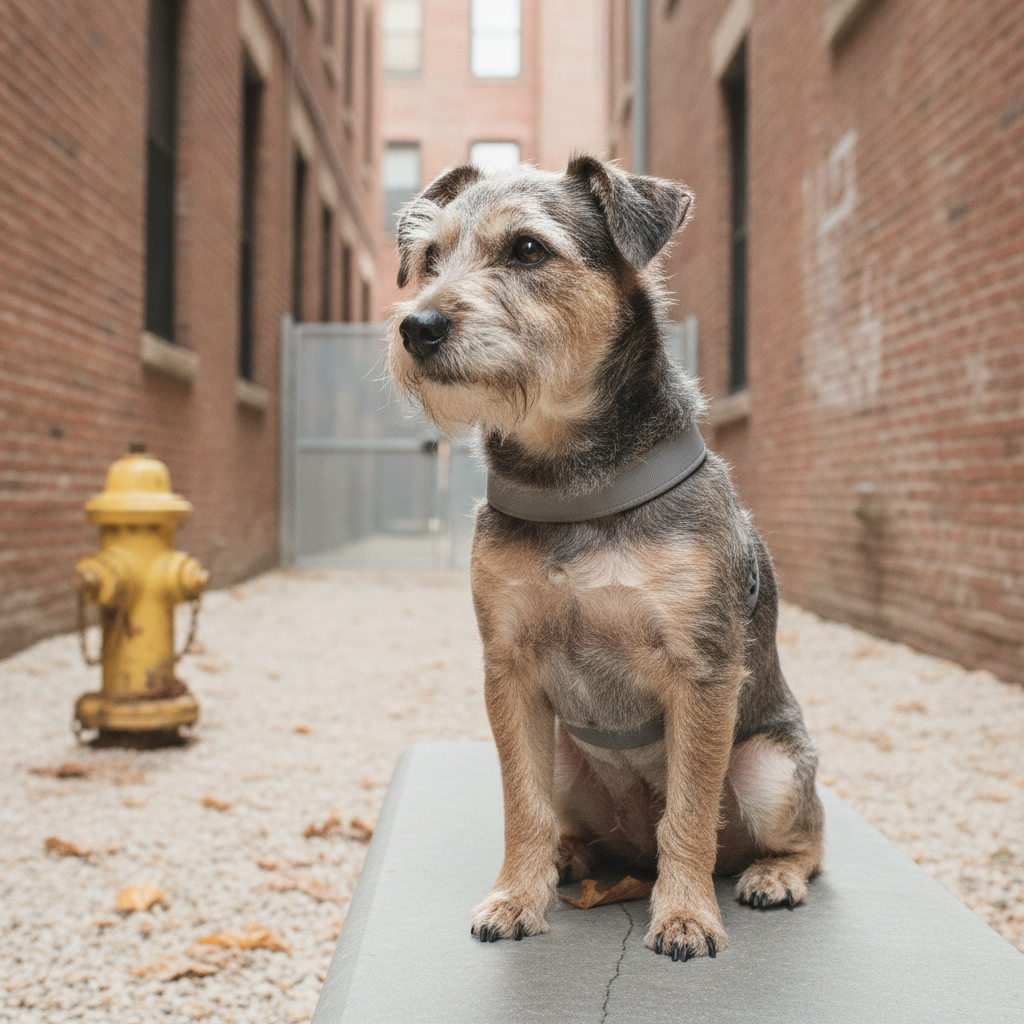

Every dog owner has a story. You ask for the toy and they proudly deliver a live spider. You finish suiting them up for a walk and they immediately shake off both booties. You rinse them in the bath and they launch out the second before the soap is gone. It genuinely feels like your dog is messing with you, running some private bit at your expense. The comforting and slightly deflating truth is that they aren’t, because dogs don’t have the machinery for it. Deliberate trolling requires plotting against someone’s expectations, and that’s not how a dog’s mind works. What you’re seeing is almost always one of two other things: play, or a message you haven’t decoded yet. Learning to tell them apart is the whole game.
It’s usually just play, and the science backs that up
Some animals really do seem to have a sense of humor. Rats chirp when tickled; apes tease each other. But your dog is far more likely to be playing than pranking. The clearest tell is the play bow, that classic front-end-down, rear-in-the-air pose, often thrown while clutching a toy to make the invitation unmistakable. Dogs offer it to people and to other dogs as a way of saying “none of this is serious, let’s romp.”
Here’s the part that reframes the “trolling” feeling entirely. A 2024 study of how humans and dogs play together found that dogs lean on the play bow most during exactly the games that feel frustrating: keep-away, tug, fake-throws, the whole genre of “I have the thing and you don’t.” In other words, dogs seem to file a little frustration under fun. That maddening keep-away with your slipper isn’t your dog needling you. It’s your dog running the same delighted program they run with a tennis ball, and the aggravation is, to them, part of the appeal.
And you probably helped build that association. Think about how you actually play with your dog: the fake throws, the ball hidden behind your back, the keep-away. That’s you trolling them, gently, and they loved it. So when they turn around and prance off with your sock, they’re not getting even. They learned the game from a very good teacher.
(As for the strategically aimed fart, that one’s just bad timing. Let it go.)
The exception that actually matters
Not every mixed signal is a joke, and this is where reading your dog carefully earns its keep. Behavior can be genuinely confusing to interpret, and the fix is to stop watching one body part and start watching the whole animal. A wagging tail paired with a low growl is not a happy dog. Ears pinned back during a game of keep-away can mean anxiety, not excitement. The signals only make sense together.
Two questions cut through most of the confusion. Does the behavior follow any pattern, cropping up at the same times or in the same situations? And could your dog be angling to get you to do something else entirely, like let them out, refill the water, or move off a sore spot? Attention-seeking that keeps escalating, especially when it comes bundled with signs of discomfort like growling, flinching, or guarding a body part, can mean your dog is physically hurting rather than fooling around.
The behavior people laugh off as their dog being a goofball is usually just play, and that’s fine to enjoy. What I want owners to catch is the version that isn’t a joke, the repeated odd bid for attention that comes with a growl or a tense body. That’s not a personality quirk, that’s a dog asking for help, and it’s worth a vet visit to rule out pain before you call it mischief.
So what do you do about a incorrigible little troll?
Honestly, most owners aren’t mad about any of this. We tend to love our dogs more for the hijinks, not less. But if the slipper thefts are wearing on you, the answer isn’t to out-scheme your dog, it’s to understand them better. Remember that your dog’s grasp of context is thinner than yours. To them, keep-away is keep-away whether the prize is a ball you offered or a shoe they swiped; they don’t register the difference in ownership that drives you up the wall.
The most useful move is training, ideally a class built on positive reinforcement. Beyond being fun and strengthening your bond, a good class teaches you to read what your dog is actually saying with their body, which is the real skill underneath all of this. Local shelters often run affordable, reward-based classes worth seeking out. Learn your specific dog’s signals, redirect the games you don’t want onto toys you do, and the “trolling” mostly resolves into what it always was: a dog trying to play, or trying to tell you something.
What newer research adds
The bigger picture from recent behavior science is a useful gut-check on how much intent we hand our dogs. The same instinct that makes us see a prankster also makes us see a guilty conscience in the “sorry” face after a chewed couch, and researchers have shown that look is a response to our body language, not evidence of remorse or a plan. Dogs live far more in the moment than the trolling story implies. Newer work has also found that people are worse than they assume at reading dogs’ emotions, missing fear and frustration especially often. Put those together and the lesson is humbling in a good way: your dog isn’t scheming against you, and the times you’re most sure you know what they’re feeling are exactly the times worth double-checking. Watch the whole dog, learn their signals, and give them the benefit of the doubt. They’ve almost certainly earned it.
References
- Byosiere, S.-E., et al. “Investigating play behavior and the play bow in human-dog play.” Behavioural Processes / animal-behavior literature, 2024.
- Horowitz, A. “Disambiguating the ‘guilty look’: Salient prompts to a familiar dog behaviour.” Behavioural Processes, vol. 81, 2009.
- Bekoff, M. “Play signals as punctuation: The structure of social play in canids.” Behaviour, foundational play-bow research.
- ASPCA. “Understanding dog body language.” aspca.org.