


My Cat Has Never Once Felt Awkward. I'm Taking Notes.
A humor guide to re-entering social life, as dictated by an animal who has never apologized for leaving a room. Plus what cat behavior science says she's actually right about.

I have spent months being bad at people. Declining things and then feeling terrible. Accepting things and then feeling worse. Standing at the edge of a party running an internal audit of my own face.
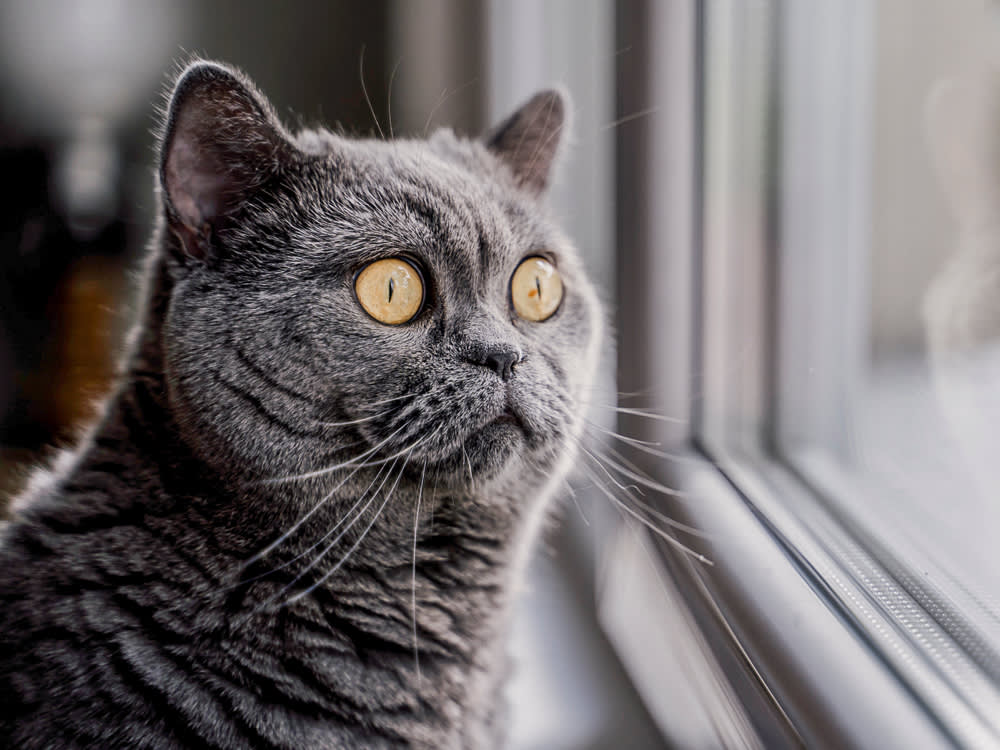
My cat has never experienced any of this. She has never once wondered whether she came on too strong. She leaves rooms mid-sentence. She is, socially, the most confident creature I have ever met, and her entire method is available to me for free.
So I have written it down.
Arrive with your paperwork in order
Be up to date on your shots. Nothing kills a comeback like a preventable illness. She takes this very seriously, or at least she screams about it in the car, which I assume is the same thing.
Greet the people you love like it’s an emergency
Do not open with “how have you been.” Open with your entire skull, delivered at speed, directly into their sternum. Nibble a finger. Roll over, expose your soft underside, and then immediately punish anyone who touches it. This is called being emotionally available.
Guard your calendar like it contains state secrets
Commit to nothing. A morning nap is a prior engagement. An afternoon nap is a prior engagement. A third nap wedged between the first two is not greed, it is maintenance. Say no to brunch. Say no to it again, more slowly, while making eye contact.
Remember that other people can see you
You are in public now. This is a difficult adjustment after a long stretch of unsupervised living, and it means certain habits must be retired for the duration. Some things belong in a small enclosed space with a door. Other things belong on the rug, in full view, while making unbroken eye contact with a guest. Learn which is which. She has not, but you should.
Say the uncomfortable thing before it becomes an incident
Do not simmer. Do not go quiet and hope someone notices. State the boundary immediately and physically: hair up, tail enormous, one clear warning noise. Then, if ignored, follow through exactly as promised. Nobody has ever been surprised by my cat. That is the whole point of my cat.
Establish where you rank, then sit above it
Enter the room. Assess the hierarchy. (You are at the top of it.) Locate the highest available surface, install yourself on it, and say nothing for forty minutes while everyone else talks. Observation is a personality. Silence is a power move. The bookshelf is load-bearing in more ways than one.
Eat with total commitment or not at all
Twice a day, dine as though rescued from a shipwreck. In between, graze on thirteen small nothings. Forget that water exists until you have knocked a single crumb into the bowl, at which point the water is ruined forever and someone must be told.
Leave before you want to leave
The single greatest skill. Not a goodbye, not a coat, not a lap of the room. Simply: gone. Under the bed, behind the sofa, inside the wall. The party continues without you and you feel nothing about it. This is not rudeness. This is a nervous system that has never once been asked to explain itself.
Come back when it suits you
And then, an hour later, walk back into the middle of the gathering, sit down in the exact center of the rug, and accept adoration as your due. No apology. No explanation. Everyone is thrilled. This works, inexplicably, every single time.
The annoying part: she’s mostly right
Here is where the joke stops being a joke.
Almost everything on that list is a real, documented feature of how cats manage social pressure, and almost all of it is something people are bad at.
Cats give notice before they escalate. The flattened ears, the twitching tail, the low warning sound, the skin rippling along the back: those are not tantrums, they are a sequence, and it runs in order. A cat who bites you “out of nowhere” is nearly always a cat who told you three times and was overruled. Learning to read the sequence is the single most useful thing you can do for a cat’s welfare and for your own hands.
Cats also default to opting out rather than fighting it out. Given a choice, a stressed cat leaves. The reason hiding spots matter so much in shelters and in homes is that the ability to withdraw is what keeps stress from becoming aggression or illness. A cat with somewhere to go is a calmer cat. A cat with nowhere to go is a problem waiting to happen.
And the greeting stuff is real too. That slow, deliberate blink cats do at people is not a coincidence: research published in Scientific Reports found that cats are more likely to slow-blink back at a human who slow-blinks at them, and more likely to approach a stranger’s outstretched hand after that exchange. It is, functionally, a way of saying “I am not a threat” without touching anyone. There is a lesson in there for the party.
“The signals cats give are unusually honest, and we override them constantly because we’ve decided the interaction is happening,” says Dr. Amara Solis. “Give a cat a clear exit and let them decide when to come back, and you get a friendlier cat, not a more distant one.”
So: get vaccinated. Say no to brunch. Blink slowly at the people you like. Leave before you want to.
And come back on your own terms, or not at all.
References
- Humphrey, T., Proops, L., Forman, J., Spooner, R., & McComb, K. (2020). The role of cat eye narrowing movements in cat–human communication. Scientific Reports, 10, 16503.
- International Cat Care. Understanding feline body language. Accessed September 2026.
- Ellis, S. L. H., et al. (2013). AAFP and ISFM Feline Environmental Needs Guidelines. Journal of Feline Medicine and Surgery, 15(3), 219–230.
Sasha Ford is a certified cat behaviour consultant who has worked with shelters, catteries, and private clients across the country. They review all feline behaviour content at The Pet Times, with expertise in multi-cat households, indoor enrichment, and stress-related disorders.
Meet our experts ↗Keep reading
 LivingThey Scheduled a Date Just So the Cat Could Meet the DogLeila Torres · 8 min
 LivingYou Bought the Bed. She Sleeps in the Drawer. She's Not Being Rude.Dr. Nina Kohl · 6 min
 LivingYour Cat Has Been Asking for the Same 7 Things. You Keep Hearing 'More Cuddles.'Dr. Priya Nair · 8 min
 TrainingThat 'Come Here' Cat Video Works. Your Own Voice Works Better.Dr. Lena Park · 7 min
 TrainingScience Gave Your 'Unknowable' Cat Five Personality Traits. Here's How to Read Yours.Dr. Mara Chen · 6 min
 TrainingIntroducing Two Cats? Go Slower Than You ThinkDr. Nina Kohl · 7 min