


You Bought the Bed. She Sleeps in the Drawer. She's Not Being Rude.
A designer made her cat a blanket from her own fabrics. The cat sleeps in the third drawer instead. What cats actually optimize for when they pick a spot, and how to make the bed you bought win.

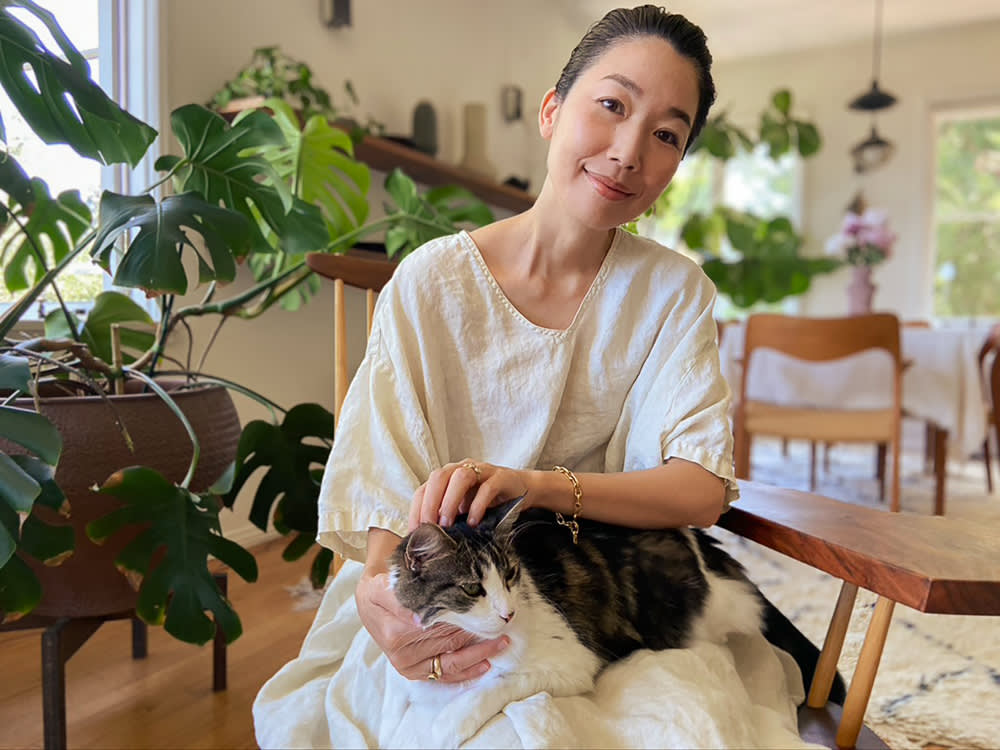
Momoko Suzuki designs clothes for a living. Her label, Black Crane, is built on billowy, architectural shapes cut from biodegradable linen and dyed in muted, low-impact colors. She has produced locally for over a decade and deliberately limits how much she makes. She is, by any measure, a person with excellent taste in fabric.
She made her cat, Coco, a blanket out of her own materials.
Coco sleeps in the third drawer.
Specifically, the drawer where Suzuki keeps her cotton double-face gauze pieces. Coco slips in undetected, and the only evidence surfaces later, in the form of hair on the clothes. Suzuki’s verdict on this is admiring rather than annoyed: when it comes to picking a place to sleep, her cat has expert judgment, exercises it entirely independently, and lands somewhere other than wherever her human hoped.
This is the most universal experience in cat ownership, and it is not, as every cat owner privately suspects, a critique of their purchasing decisions. Cats are optimizing for something. It just is not what the pet store is selling.
What a cat is actually solving for
When a cat picks a sleeping spot, they are running a short list of requirements, and comfort is not at the top of it.
Warmth. Cats are wildly heat-seeking. Their thermoneutral zone, the temperature range at which they do not have to spend energy to stay warm, sits meaningfully higher than ours. Which is why they choose the laptop, the sunbeam, the top of the fridge above the motor, and the airing cupboard. A closed drawer full of cotton is a heat-trapping box. Your open-topped bed on the floor is a cold plate.
Enclosure. A drawer has walls. A cardboard box has walls. Research on shelter cats found that giving them a hiding box measurably reduced their stress compared to cats with no box. Being enclosed on multiple sides means fewer directions to monitor while unconscious, which is the entire safety calculation of a small predator who is also prey.
Height, or a defensible spot. Coco’s other favorite place is the top of a mid-century stereo console by the window. Elevated, with a view, near warmth, and not on the floor where the traffic is.
Your smell. This is the one people miss. The drawer of gauze is not just soft. It is saturated in Suzuki. A cat sleeping in your clothes is doing something socially meaningful, not just tactilely pleasant.
The plush bed you bought, sitting open in the middle of a room, on the ground, smelling of a factory, satisfies none of those four.
The bed isn’t wrong, it’s badly placed. Move a rejected cat bed somewhere warm, high, enclosed, and next to your smell, and it will often start getting used within a week. Cats aren’t refusing your gift. They’re refusing your interior design.
How to make the bed win
You do not have to accept the drawer. You have to make the bed better on the axes the cat is actually scoring.
Move it up. Off the floor. A shelf, a windowsill, the top of a low bookcase, near a radiator or a sun patch.
Give it walls. A donut bed, a covered bed, or a plain cardboard box set inside a corner will out-perform an open pad almost every time.
Put your smell in it. A worn t-shirt you have slept in, laid inside the bed, is the single highest-leverage move available and it costs nothing.
Follow the sun. Watch where the afternoon light lands and put the bed there. You are not choosing the location; the sun is.
Do not force it. Never carry a cat to a bed and place them in it. Choice is the whole mechanism. A cat who discovers a good spot owns it. A cat who is deposited in one has been handled.
Then let it go. Sometimes the drawer just wins. Suzuki’s approach, and it is the correct one, is to accept that Coco decides.
The rest of what Coco has going for her
The reason Coco is not clawing the vintage furniture or breaking the artisan ceramics, and she never has, is almost certainly the backyard.
Suzuki takes her out to it consistently. Coco climbs the trees and does her scratching on them. That is not luck, that is an outlet: a cat with access to a genuinely satisfying scratching substrate, tree bark, does not need to reinvent one out of your sofa. If your cat is destroying the furniture, the honest question is what alternative you have offered that is as good as bark.
Coco came from Pasadena Humane in 2014, after Suzuki lost her previous cat, Lani, and spent two years unable to go back to a shelter. When she finally walked into the adoption room, one cat spoke up before any of the others. Suzuki’s read is that the selection went the other way: Coco picked them, and did it without any fuss.
She is independent and affectionate by turns, and Suzuki thinks that blend is the trick, an unconscious alternation between the two that leaves people helpless. Most of the time, called by name, she comes and sits on a lap or drapes across a shoulder. Sometimes she flatly ignores it and goes about her business.
Asked whether they share any traits, Suzuki’s answer is the best line in the whole interview: they both love a nap.
What newer research adds
The most useful development for anyone in the rejected-bed situation is the growing body of work on cats and choice.
The consistent finding, across shelter and home studies, is that cats do better when they get to select their own resting and hiding places rather than being assigned one. Hiding boxes reduce stress. Multiple options reduce conflict in multi-cat homes. Vertical space matters more than floor space. Under-stimulated indoor cats do better with elevated perches, window access, and a genuine outdoor-adjacent option, a catio, a leashed yard visit, a screened porch, when it can be done safely.
Which puts the drawer in a different light. Coco choosing her own spot, every day, against her human’s intentions, is not a failure of the blanket. It is a cat exercising the one thing that reliably makes cats less stressed: the ability to decide something for herself.
Buy the bed. Put it somewhere warm and high with your shirt in it. And then let her sleep wherever she wants.
References
- Vinke, C.M., et al. “Will a hiding box provide stress reduction for shelter cats?” Applied Animal Behaviour Science, 2014. https://www.sciencedirect.com/science/article/abs/pii/S0168159114000811
- Ellis, S.L.H., et al. “AAFP and ISFM Feline Environmental Needs Guidelines.” Journal of Feline Medicine and Surgery, 2013. https://journals.sagepub.com/doi/10.1177/1098612X13477537
- International Cat Care. “Providing Cats with Choice and Control.” https://icatcare.org/
- Pasadena Humane. https://pasadenahumane.org/
Dr. Kohl is a board-certified veterinary dentist with a particular interest in preventive oral care. She reviews all dental health content at The Pet Times and contributes practical guides on home dental routines, professional cleaning, and oral disease prevention.
Meet our experts ↗Keep reading
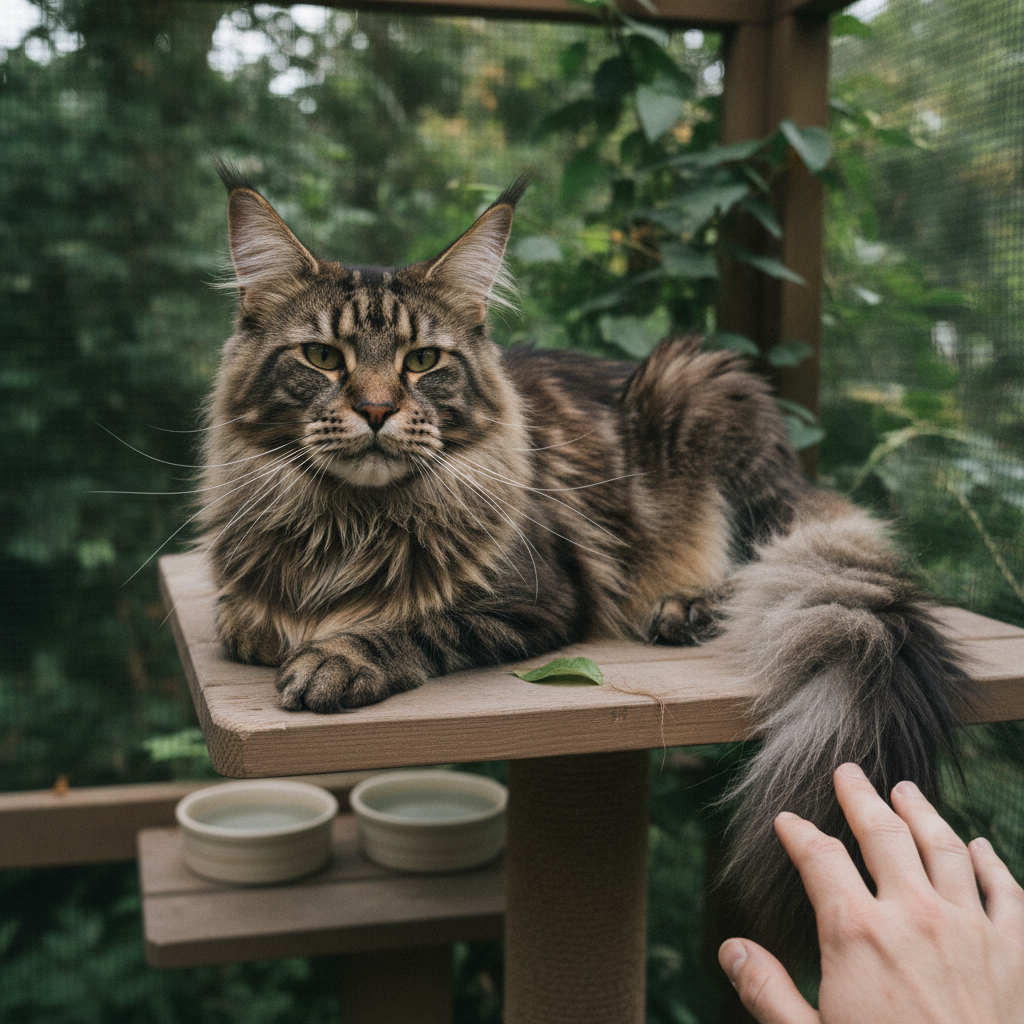 Product PicksThe 9 Best Outdoor Cat Trees of 2026, Reviewed for CatiosSasha Ford · 15 min
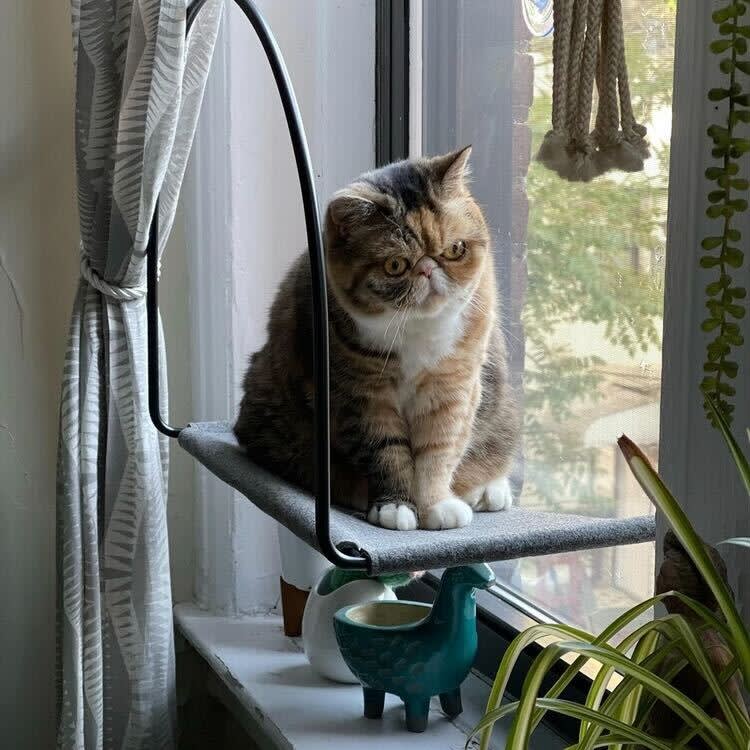 Product PicksThe Window Hammock That Ends the Cat-Versus-Houseplant WarSara Lim · 3 min
 Product PicksYour Cat Doesn't Want a Present. She Wants Territory.Sara Lim · 6 min
 Product PicksThe 5 Cat Window Perches That Actually Hold, and the Spec That Decides ItSasha Ford · 5 min
 Product Picks8 Cat Hammocks Worth the Wall Space, Sorted by the Cat You HaveSasha Ford · 5 min
 Product PicksThis Brand Tests Cat Furniture in Cat Cafés. One Week There Equals a Year in Your Home.Sasha Ford · 6 min