Every “what your cat wishes they could tell you” list I have ever read eventually turns into a shopping list. More toys. A fancier bed. A window perch.
That is not what the experts say when you actually ask them. Ask cat behaviorists and veterinarians what a cat would request, given a voice, and the answers cluster somewhere much less flattering to us: stop touching me so much, clean my bathroom, stop picking me up, and take me to the doctor even though I will hate it.
Almost every item is a boundary. The requests are not for more love. They are for love delivered differently. Here are seven of them, ending with the one that reframes all the others.
1. A yearly checkup, especially the one you think you can skip
Your cat would not actually ask for this, but they would if they understood the math.
Indoor-only status is not a health plan. An annual exam is how dental disease and obesity get caught early enough to fix, before the first is causing pain your cat will never show you and the second is quietly setting up diabetes and arthritis. For senior cats, add annual bloodwork.
The reason is a single fact about the species: cats hide illness for as long as they physically can. That is not stoicism, it is prey-animal wiring. By the time the change is obvious to you, the disease has usually had a long private run. Bloodwork does not care about the performance.
“Owners tell me their cat seemed completely fine last week, and they are almost always telling the truth,” says Dr. Priya Nair. “Fine is what the cat does. It is not what the kidneys are doing.”
2. Fewer surprises
Cats are both predator and prey, and the prey half runs the nervous system. That is why noise, change, and strangers can land as genuine fear rather than mild inconvenience.
Travel is the sharpest version of this. Motion sickness affects plenty of cats, and the ones it spares have still worked out where the car ends up: a building full of strangers in white coats who touch them everywhere. The carrier itself becomes the villain long before the car door opens.
Two things help more than anything else. Leave the carrier out year-round as furniture rather than dragging it from a closet twice a year, and keep the shape of the day predictable. A cat who knows when things happen has a smaller list of things to fear.
3. Twice-a-day scooping
The single most common complaint behaviorists hear from cats, translated, is about the bathroom.
Daily scooping is the floor. Twice daily is better. The comparison worth sitting with is a housemate who never flushes, and then imagine you also have to stand in there barefoot.
While you are at it: stop switching litter. Moving a cat from an unscented clay to something with a novel texture and a strong smell, pine, say, is not an upgrade to them. It is a renovation of the only room they cannot opt out of. The same goes for abruptly changing food brands or flavors, or even changing how a meal is presented. Some cats are so particular that a lukewarm dish instead of a warm one counts as a formal complaint.
4. A gentler hand, and a much shorter one
Assume your cat is tolerating affection rather than reveling in it, and you will be right more often than you would like.
Behaviorists ask people to stop overhandling: tails, bellies, and honestly any body part your particular cat has quietly decided is off-limits. There is also what one calls corporal squeezing, the hug-and-hold that people find irresistible and many cats find like being trapped. And there are two things people do constantly that cats rank somewhere between rude and alarming: petting against the direction of the fur, and kissing them on the mouth.
The fix is not to stop touching your cat. It is to touch less, in fewer places, for less time, and to stop before they ask you to.
5. A safe space, including from the other cat
“Danger” sounds like an outdoor-cat word. Outdoor cats do face more of it: cars, predators, toxins, getting lost. But the indoor list is real too, and it is mostly furniture and roommates.
Toxic houseplants. Medications left on a counter. String, which is not a toy, it is a surgery waiting to happen. And the threat people never see: another cat in the household.
One cat standing in a doorway is a complete sentence. Blocking access to food, water, the litter box, or a favorite sleeping spot is how one cat quietly controls another’s entire day, and it happens in homes where the owner is certain everybody gets along. The countermeasure is resources everywhere: multiple food and water stations, multiple boxes in multiple rooms, and several separate places to nap out of view. If a cat never has to walk past a rival to eat or urinate, the rival loses the leverage.
6. Vertical space, not just more toys
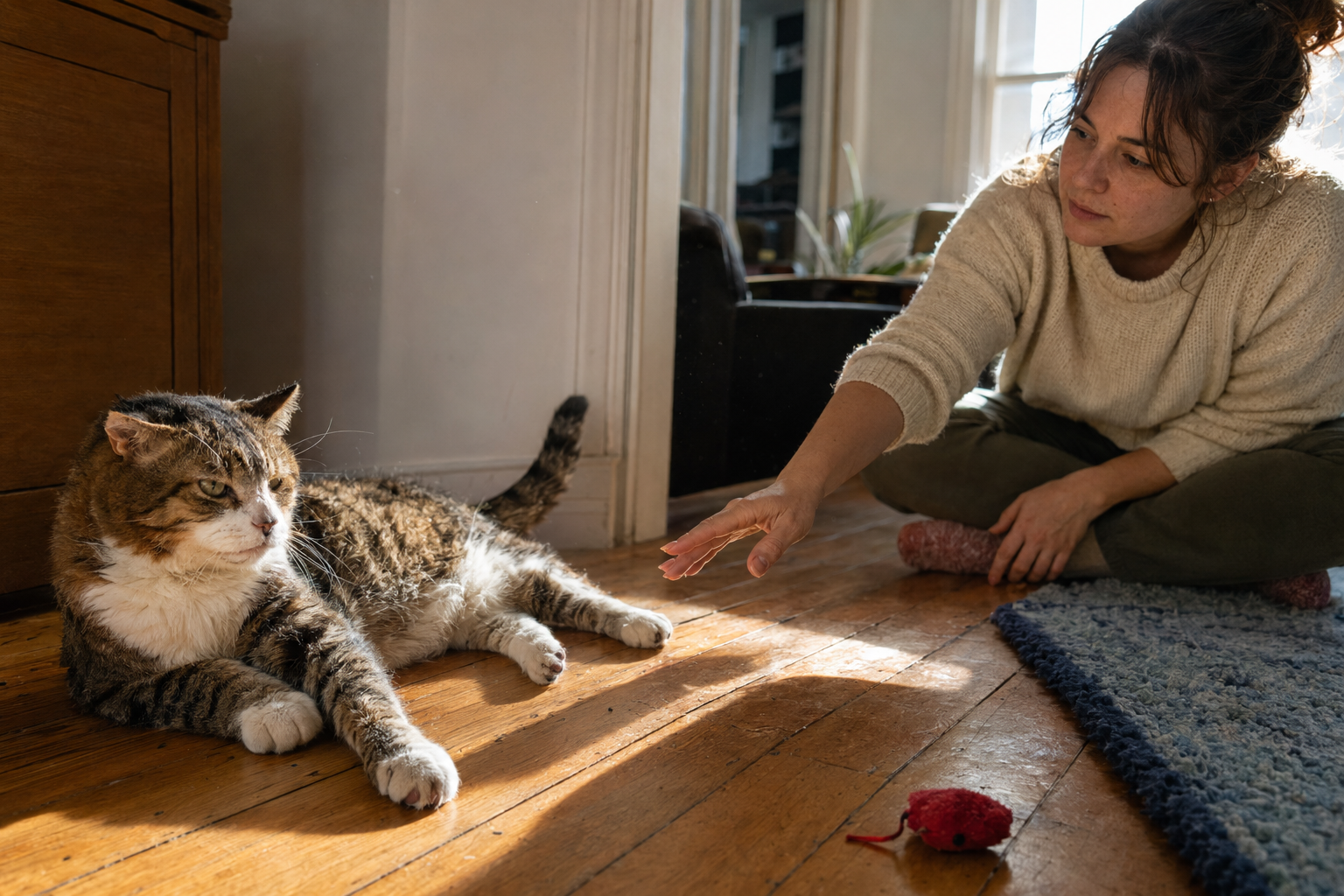
Yes, toys. Soft toys, catnip toys, wand toys, the automatic ones that keep a bored cat busy while you are at work. Play is not optional.
But the higher-value request is architectural. Catify the house: window seats that catch sun at different hours, sleeping perches, high shelves for both napping and traveling across a room without touching the floor, and scratching posts in the open where the cat actually wants to scratch, not hidden in a corner where you want them.
A catio, if you can build one, is the version of “outside” that does not involve traffic.
Height is not a luxury for a cat. It is how they feel safe enough to relax.
7. And the one that explains the other six: respect
Ask a certified cat behavior consultant what cats would ask for first, and the answer tends to be personal boundaries. Not more food. Not more play. Boundaries.
Watch how cats greet each other. A touch of noses. A brief cheek rub. If they want more, maybe a quick flank rub in passing. The entire exchange takes a few seconds and then everyone moves on with their lives. Now compare that to a human greeting: scooping, squeezing, kissing, and a full-body rub that continues for several minutes.
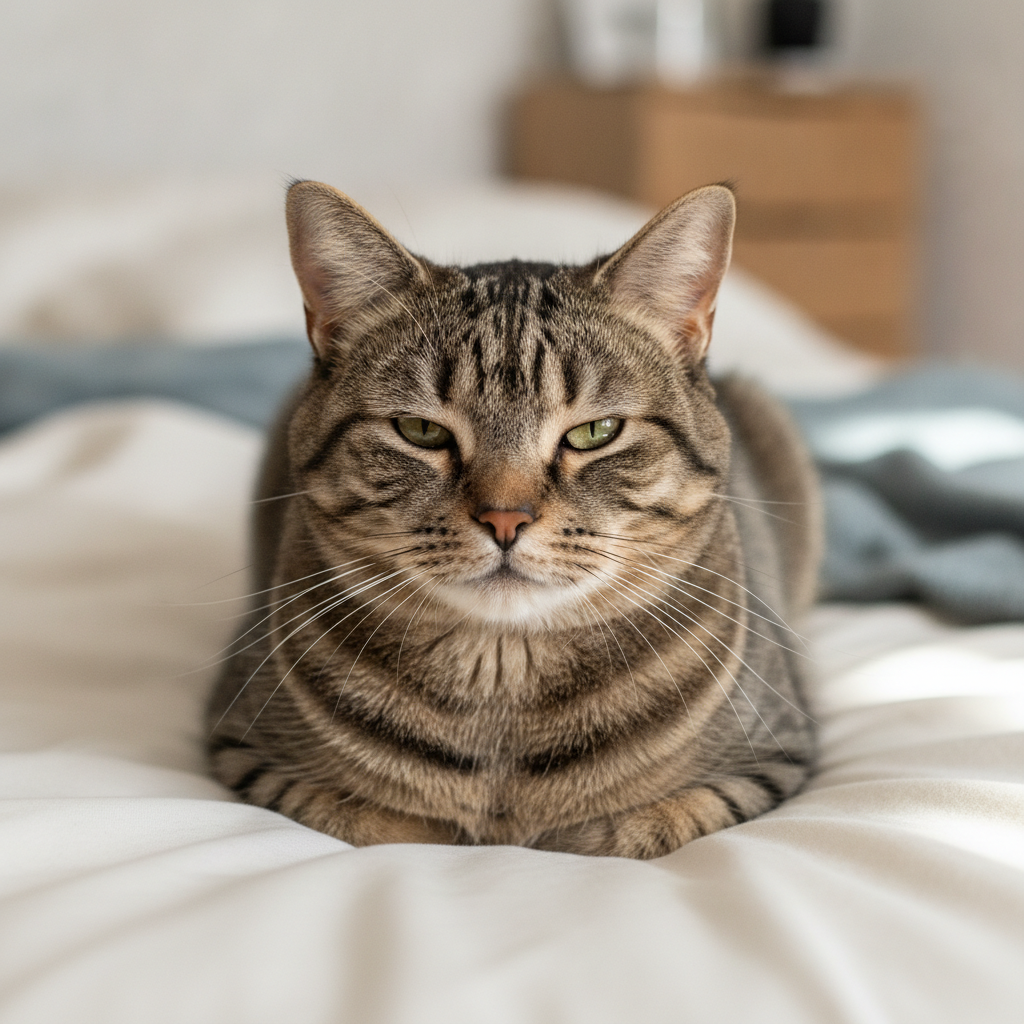
Your cat is trying to tell you it is too much, and they are telling you before the bite. The signs are consistent:
- Tail swishing or thumping
- Tense muscles, a still body
- A ripple through the skin along the back
- Ears rotating sideways or flattening back
- Head whipping around toward the hand that is petting them
Every one of those is a request. The bite is only what happens when the requests fail.
The paradox is the whole point: the cat who is petted less is usually the cat who seeks you out more. Respect the exit, and they stop needing one.
What newer research adds
The idea that cats are aloof has taken a real beating in the research. Studies of feline attachment have found that roughly two-thirds of cats show a secure attachment to their person, a pattern that resembles what is seen in dogs and in human infants. Your cat is bonded to you. They just express it in a vocabulary you were never taught.
Work on human-cat interaction points in the same direction: cats tend to prefer interactions that they get to start and end, with contact concentrated around the cheeks and the base of the ears rather than the belly and the tail. The cats who get that kind of handling are the ones who initiate contact more often.
Which is a strange, slightly funny conclusion to land on. The way to get the affectionate, cuddly cat you wanted is to stop grabbing the one you have.
References
- Vitale, Kristyn R., et al. “Attachment Bonds Between Domestic Cats and Humans.” Current Biology, vol. 29, no. 18, 2019, pp. R864–R865. https://doi.org/10.1016/j.cub.2019.08.036
- American Association of Feline Practitioners. “Feline Environmental Needs Guidelines.” https://catvets.com/guidelines/practice-guidelines/environmental-needs-guidelines
- American Association of Feline Practitioners. “Feline Life Stage Guidelines.” https://catvets.com/guidelines/practice-guidelines/life-stage-guidelines
- Cornell Feline Health Center. “The Special Needs of the Senior Cat.” https://www.vet.cornell.edu/departments-centers-and-institutes/cornell-feline-health-center/health-information/feline-health-topics/special-needs-senior-cat