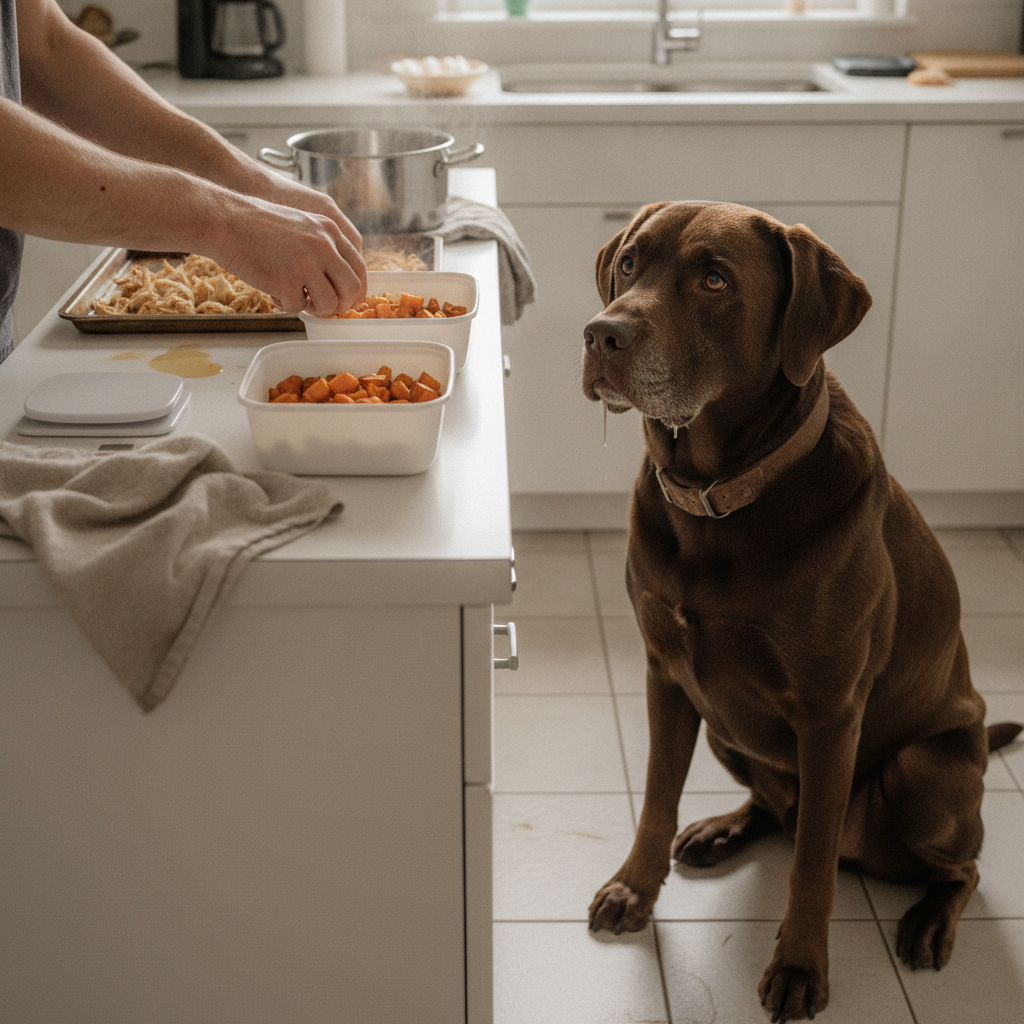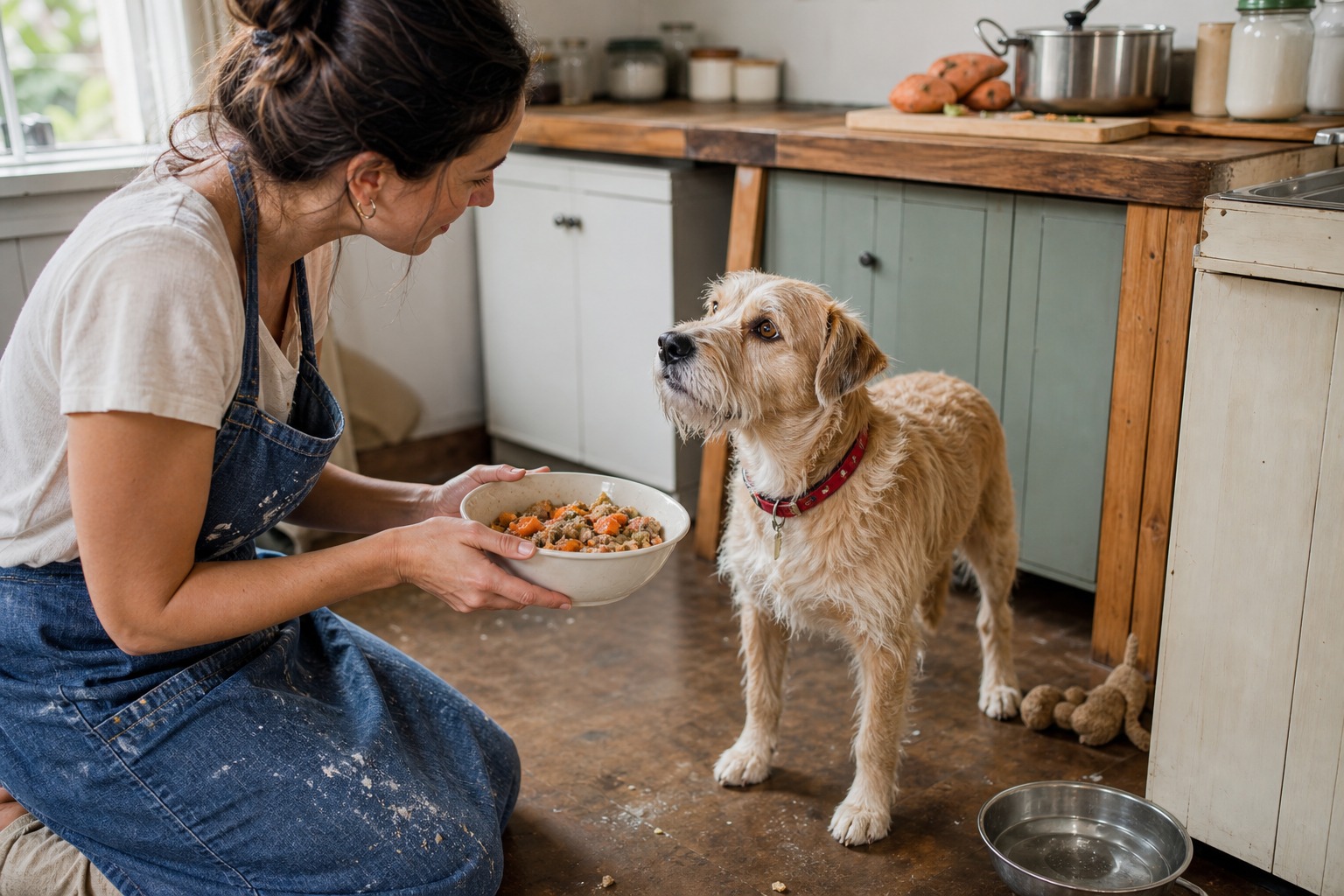
There is a version of home cooking for dogs that is genuinely one of the best things you can do for them, and there is a version that quietly hurts them. The difference is not the recipe. It is how far you take it.
The good version is partial. You cook real food, you use it as part of the day’s calories, and your dog’s complete commercial food keeps doing the boring work of covering the nutrient math. The bad version is total. You replace every meal with a recipe you found online, feed it for a year, and slowly run your dog short on something you never thought about, like zinc or vitamin D.
That is not a hypothetical risk. When researchers at UC Davis evaluated 200 recipes for home-prepared maintenance diets for dogs, including 129 written by veterinarians, 95 percent of them came up short on at least one essential nutrient, and only nine recipes met the standards outright. So cook. Cook enthusiastically. Just be honest about which version of home cooking you are actually doing.
Here are five real reasons to get started, and then the one thing that determines whether it goes well.
1. Your kitchen is already equipped for it
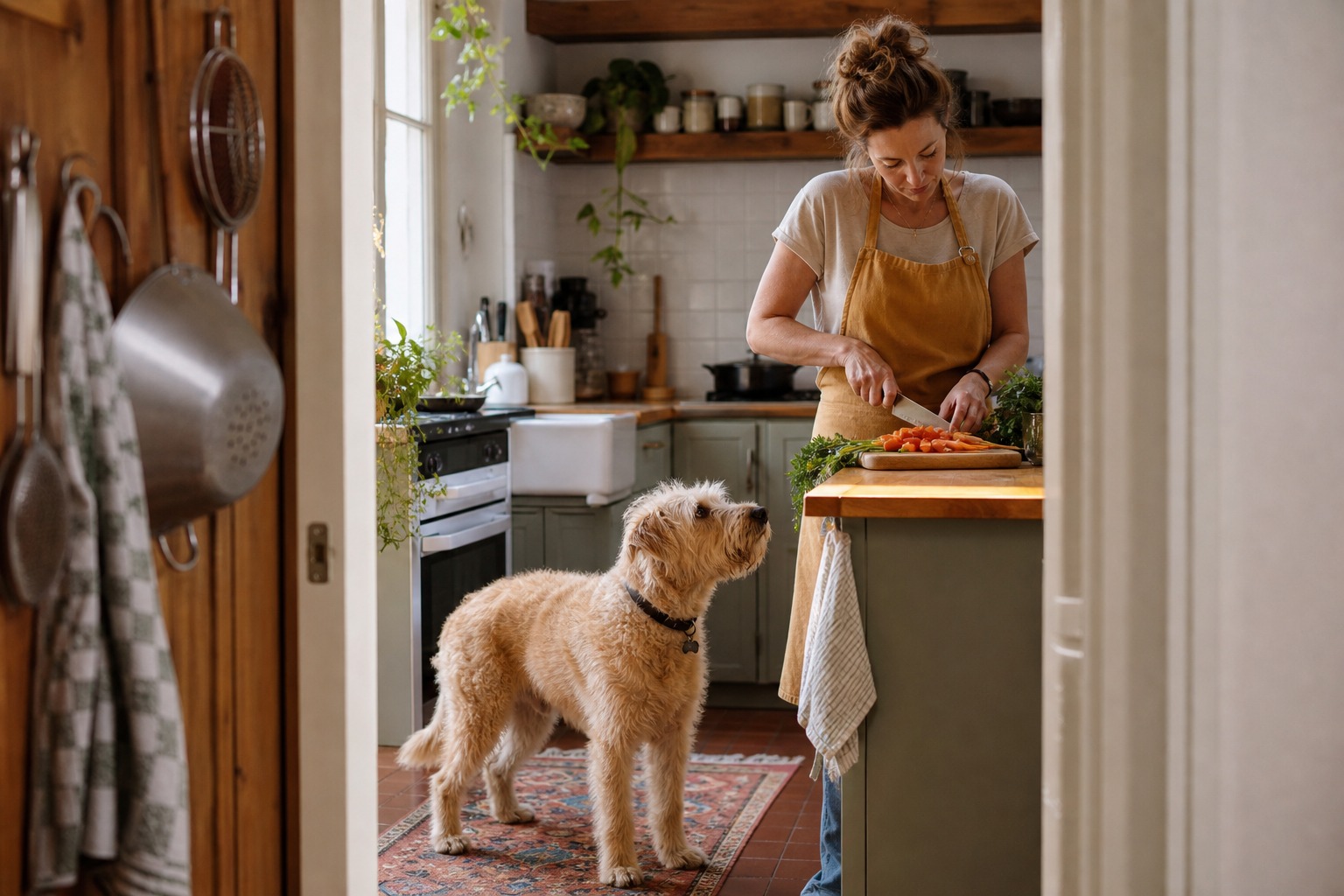
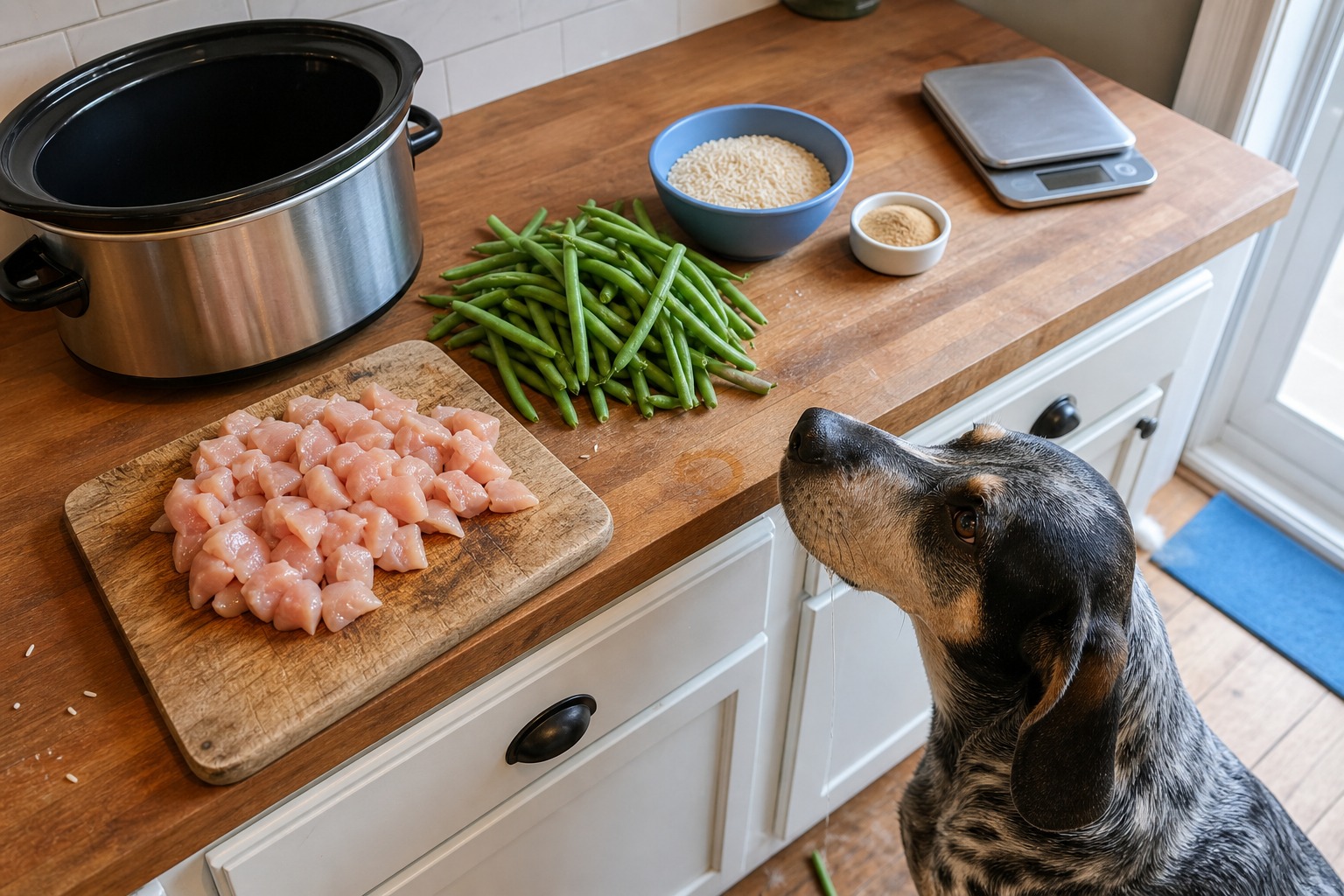
Cooking for a dog used to mean a stockpot and a lot of guesswork. It does not anymore. Electric pressure cookers, sous vide circulators, food processors, and cheap digital scales have all landed in normal home kitchens alongside the old reliable slow cooker. Precision that used to belong to restaurants is now a $40 appliance.
That matters more than it sounds. Most home-cooked dog food goes wrong because of sloppy measurement, not bad intentions. A scale turns “a handful of rice” into 120 grams of rice, and 120 grams of rice is a thing you can actually build a diet around.
2. Picky dogs stop being picky
Fresh food is more palatable, full stop. If you live with a dog who stares at their bowl, sighs, and walks away, a spoonful of warm cooked meat or a bit of sweet potato stirred in will usually end the standoff. Warming the food slightly releases more aroma, which is most of what a dog is judging.
This is the reason a lot of owners start, and it is a perfectly good one. A dog who eats is a dog you can keep at a healthy weight.
3. You decide what goes in
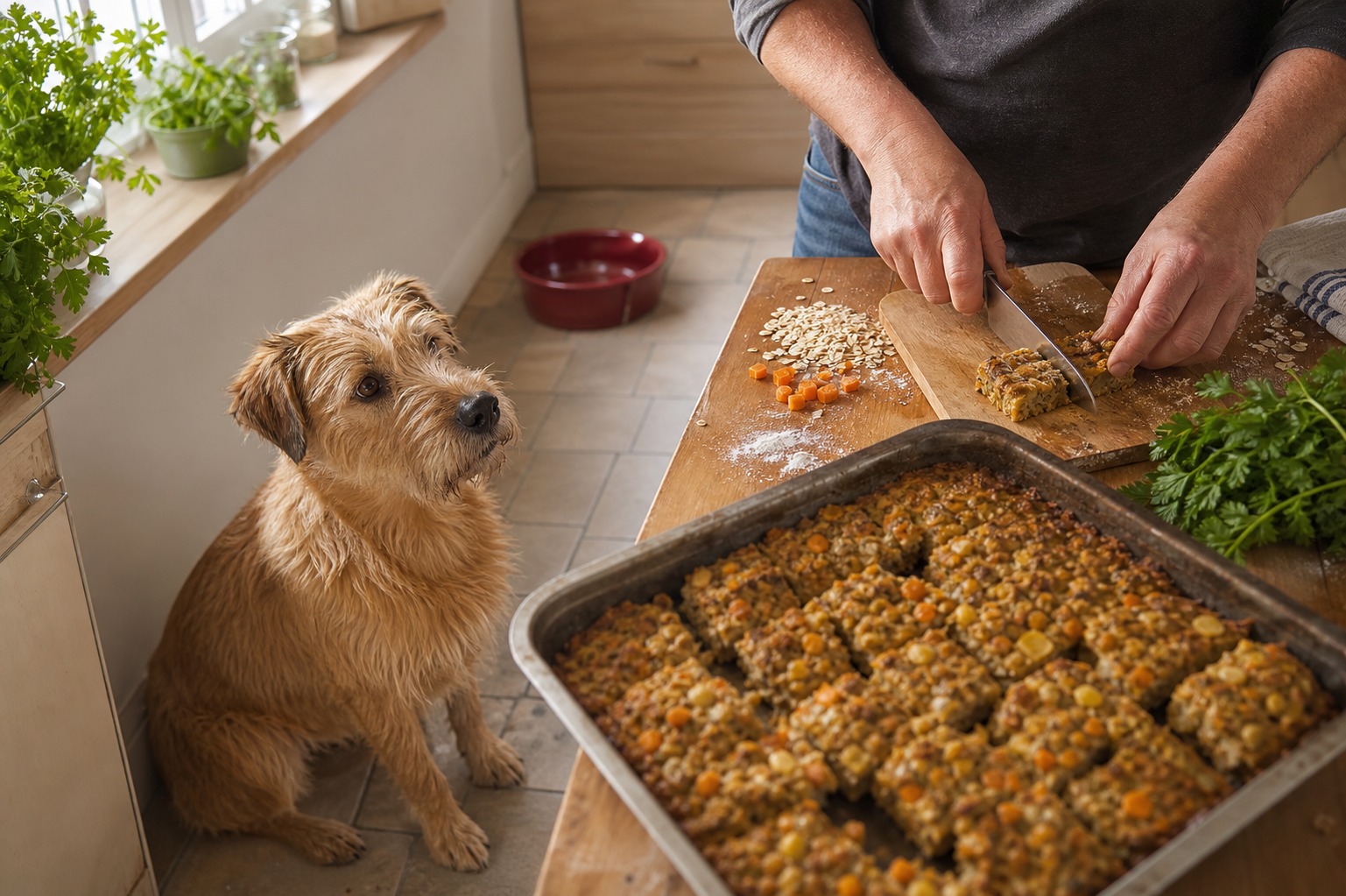
When you cook, you choose the protein, the fat source, the carbohydrate, and the produce. You can lean into better protein, widen the range of safe produce in the bowl, and leave out preservatives and additives you would rather not feed. Ingredient sensitivities, which most often trace back to a protein, are also far easier to pin down when the ingredient list is short. Fewer variables, fewer suspects, when the itchy ears and the loose stool show up.
4. It makes the food you buy last longer
This one is unglamorous and useful. If you keep buying your dog’s usual food and add homemade food alongside it, the bag lasts longer and you make fewer emergency runs to the pet store. Half a bowl of kibble plus a cooked topper is still a meal, and it stretches your supply through the week.
5. Whole ingredients genuinely add something
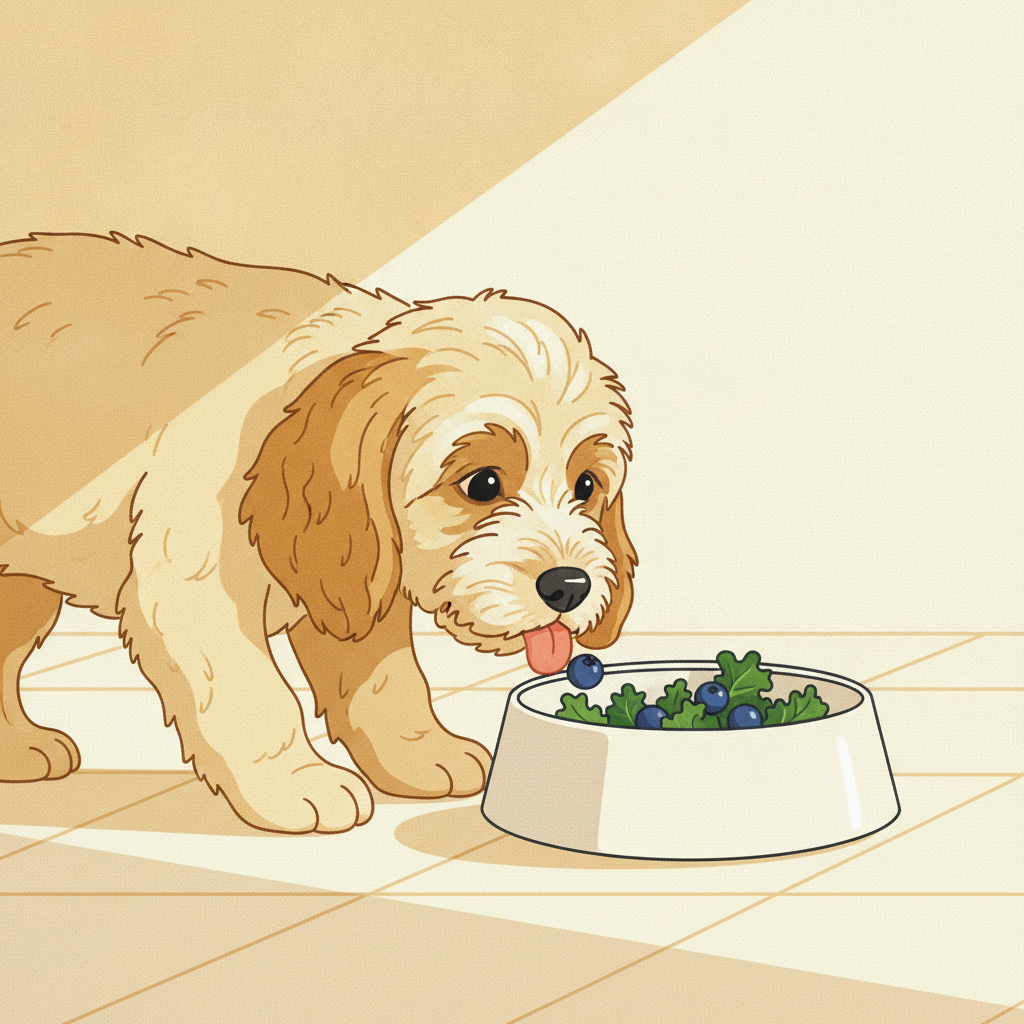
Green beans, sweet potato, and carrot are all safe for most dogs, and they carry vitamins and fiber in a form a dry diet only delivers after processing. Fruit works too, and a dog who treats vegetables as an insult will often accept fruit without complaint. Protein can occasionally come from cottage cheese, yogurt, tofu, or beans, with two warnings attached: dairy defeats plenty of dogs, and legumes or soy will make some of them extremely gassy. Try any of these in a small amount before you build a meal around it.
The one way this backfires: going all in without a formulated recipe
Here is the fork in the road.
If home-cooked food is a topper or a partial meal on top of a complete commercial diet, you are in low-risk territory. The commercial food is carrying the nutrient load. You are adding freshness, palatability, and variety. You do not need to supplement calcium, because commercial food already contains adequate and sometimes generous amounts of calcium and phosphorus.
If home-cooked food becomes the entire diet, everything changes. Now you are the one responsible for hitting every requirement, and dogs are not small humans. They need high-quality protein, and proportionally more calcium and minerals than we do. Calcium is the classic failure point: a healthy, moderately active adult dog of roughly 35 to 40 pounds needs about 1,800 mg of calcium a day, and you can scale that at roughly 600 mg per 12.5 pounds of body weight. Almost no home recipe supplies that without a deliberate calcium source.
The fix is not to give up. It is to get the recipe formulated. Board-certified veterinary nutritionists build custom home-cooked diets for a fee, and services like BalanceIT and PetDiets exist precisely because “cook your dog’s dinner” and “balance your dog’s diet” are two different skills.
Cooking for your dog is one of the most loving things you can do, and it is also one of the easiest places to accidentally shortchange them. If you want fresh food in the bowl tomorrow, start with a topper on top of a complete diet. If you want to replace the whole diet, get the recipe formulated first. There is no third option that ends well.
What is actually true, and what is myth
Myth: home-cooked food cannot be complete and balanced. It can. It just is not automatically. Protein, carbohydrate, fat, vitamins, and minerals can all be delivered at home when the recipe is built correctly.
Myth: changing your dog’s diet is dangerous. For most healthy dogs, it is not. Dogs tolerate variety, or at least gentle variation, better than the “never switch foods” folklore suggests. Introduce new food gradually, substituting a small proportion of the new for the old over several days, and most dogs are fine.
Real caveats, though:
- Ingredient sensitivities are real, and proteins are the usual offender. Start with a short ingredient list so you can actually identify the problem.
- Puppies, seniors, and dogs with medical conditions that require a controlled diet, such as pancreatic or kidney disease, need a veterinarian or veterinary nutritionist involved before you change anything.
- Calories count. Obesity is as unhealthy for dogs as it is for people, and enthusiastic toppers are an easy way to overfeed. Ask your vet how much your dog should be eating and subtract the topper’s calories from the day’s total rather than adding them on top.
- Food safety applies. Dogs have defenses against bacteria and parasites, but they are not immune. Keep utensils clean, refrigerate perishables, and cook ingredients to safe internal temperatures. This matters most for puppies, old dogs, and dogs with compromised immune systems.
What newer research adds
The best current evidence does not say “do not cook for your dog.” It says “do not improvise the whole diet.” The UC Davis recipe analysis found not just occasional gaps but multiple nutrient imbalances in 84 percent of the recipes it looked at, with zinc, choline, vitamin D, vitamin E, and vitamin B12 turning up short again and again. That study included recipes written by veterinarians, which tells you this is hard, not careless.
The practical takeaway for a pet owner is simple and kind of freeing. The part of home cooking that gives your dog the most joy, fresh warm food they are excited to eat, is also the part that carries the least risk. The part that carries real risk, replacing a formulated diet with an unformulated one, is the part you can hand to a professional for the price of one bag of premium food.
Cook. Just do not cook everything, unless someone with a nutrition credential has checked your math.
This article is for information. Every dog is different, and not every vet or nutritionist will agree on every point here. Talk to your veterinarian before making meaningful changes to your dog’s diet.
References
- Stockman, J., Fascetti, A. J., Kass, P. H., & Larsen, J. A. (2013). Evaluation of recipes of home-prepared maintenance diets for dogs. Journal of the American Veterinary Medical Association, 242(11), 1500–1505.
- University of California, Davis. Homemade dog food recipes can be risky business, study finds.
- American College of Veterinary Nutrition. Find a board-certified veterinary nutritionist.
- U.S. Food and Drug Administration. Pet Food Labels.
Common questions
Can I just add cooked food on top of kibble?
Yes, and this is the approach most owners should start with. Keep the topper to a small share of the day's calories, use dog-safe ingredients, and you get the benefits without having to balance a whole diet yourself.
Do I need to add calcium?
If you are feeding home-cooked meals as the main diet, yes. Calcium is the single most common gap in home-prepared food. If you are only adding a small topper on top of a complete commercial food, you generally do not need to supplement, because the commercial food already carries adequate calcium and phosphorus.
Will switching foods upset my dog's stomach?
It can if you switch abruptly. Most healthy dogs tolerate variety fine when you introduce new food gradually, swapping a small portion of the new food for the old over several days.