


This Homemade Kibble Looks Complete. Almost No Recipe Actually Is.
A warm, real-food recipe your dog will lose their mind over, plus the part most recipe posts leave out: why 95 percent of homemade dog foods come up short on nutrients, and how to serve this so it helps your dog instead of quietly shorting them.

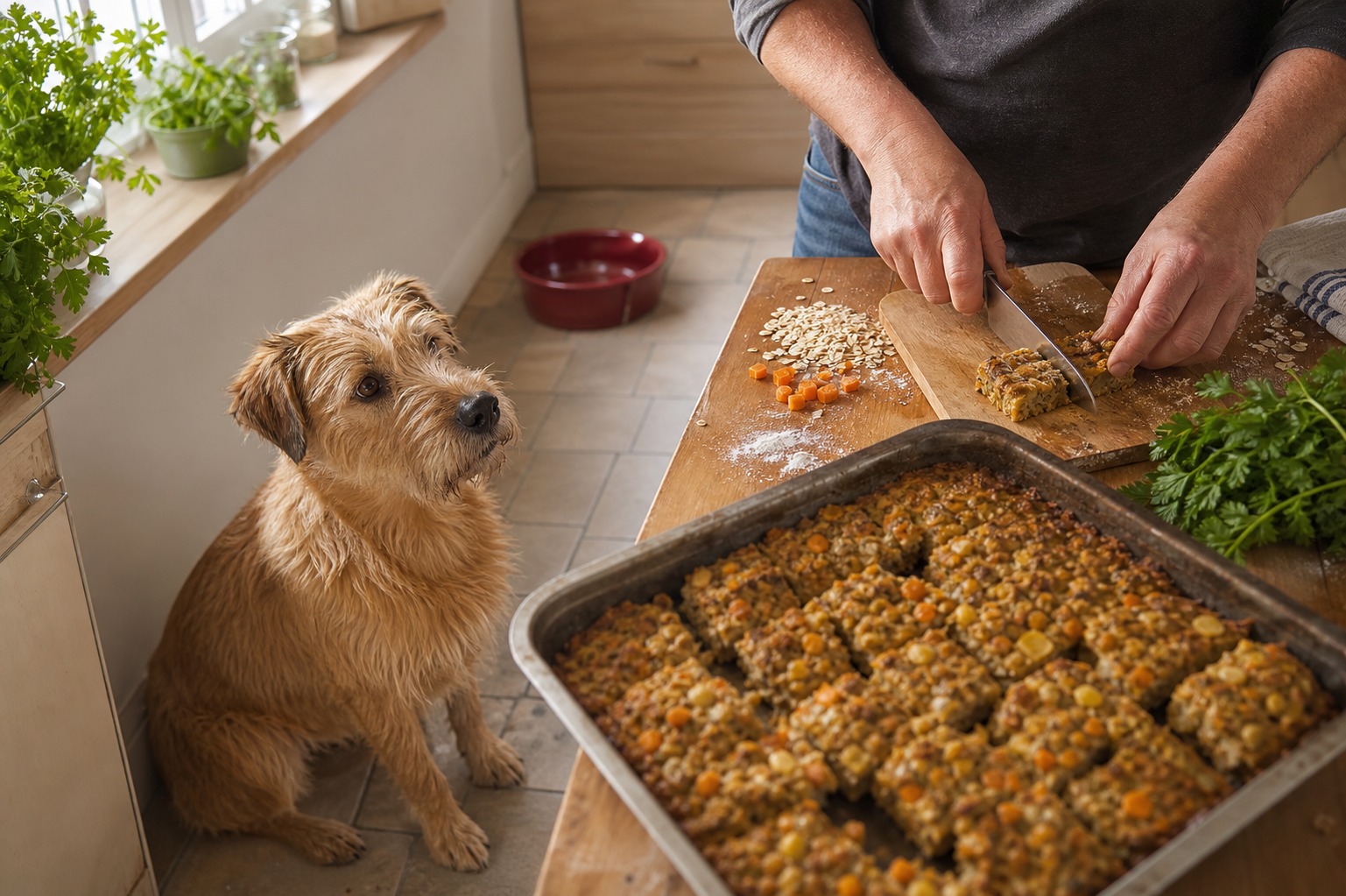
There is a whole genre of homemade dog food recipes online that look wholesome, photograph beautifully, and are quietly missing nutrients your dog needs to stay healthy. This is one of the good recipes, genuinely, and I am going to give it to you in full. But I am also going to tell you the thing most recipe posts skip: unless a recipe was built by a veterinary nutritionist, you should treat it as a topper, not a full replacement for your dog’s diet. Here is why, and how to serve this so it does your dog good.
The problem with “homemade and complete”
Cooking for your dog is a lovely impulse, and for some dogs it solves real problems. The recipe below comes from Henrietta Morrison, founder of the U.K. pet food company Lily’s Kitchen, who started cooking for her own dog, Lily, when worsening skin allergies weren’t responding to anything else. Her early meals leaned on simple whole foods, oat flour, blueberries, squash, sweet potato, and she found the homemade route noticeably calmed Lily’s itchy, irritated skin. She later developed her recipes, including this one, alongside veterinarians for her cookbook Dinner for Dogs.
That last detail matters, because it is the exception, not the rule. When researchers at UC Davis analyzed 200 homemade dog food recipes from books and websites, 95 percent produced food lacking the necessary level of at least one essential nutrient, and 83 percent were short on several. Common gaps included choline, vitamin D, zinc, and vitamin E, deficiencies that over time can contribute to immune problems, fat buildup in the liver, and musculoskeletal issues. Of all 200 recipes, only four were written by board-certified veterinary nutritionists, and those were the only ones with a solid nutrient profile across the board.
The takeaway is not “never cook for your dog.” It is that a single home recipe, however healthy its ingredients, is unlikely to be complete and balanced on its own. So use this one as a fresh, high-quality addition to your dog’s bowl and variety they will genuinely enjoy, alongside a complete diet, unless you are working with a nutritionist to build a full homemade plan with the right supplements.
The ingredients in a good homemade recipe are rarely the problem. The math is. Getting calcium, phosphorus, and the trace nutrients balanced for a specific dog is genuinely hard, which is why I love these recipes as a topper and only trust them as a full diet when a board-certified nutritionist has run the numbers.
Two quick safety notes before you cook: keep onions and garlic out of anything you make for your dog, and talk to your vet before switching a dog with a medical condition onto any significant amount of homemade food.
Homemade Dog Kibble
This makes a crunchy, real-food kibble you can crumble over meals or hand out as a hearty treat. You can also run it low and slow in a dehydrator for an even better texture.
Ingredients
- 1 cup and 1 tablespoon (200 g) brown rice
- ½ cup (100 g) lentils
- 5 cups (1¼ liters) water
- 3 medium carrots (200 g), peeled and chopped
- 1 medium sweet potato (200 g), scrubbed and chopped
- 1 apple, peeled, cored, and chopped, or ½ cup (100 g) unsweetened applesauce
- ¾ cup (100 g) steel-cut oats
- 1¼ tablespoons finely chopped fresh parsley
- 2 small sprigs of fresh rosemary, finely chopped
- 2¼ cups (500 g) ground turkey, about 18 ounces
- ¼ cup (50 ml) olive, sunflower, or canola oil, plus additional oil for greasing
Directions
- Combine the rice and lentils in a saucepan, cover with the water, bring it up to a boil, then drop to medium heat for 20 minutes.
- Once those have softened, stir in the carrots, sweet potato, apple, oats, parsley, and rosemary. Let everything simmer gently another 20 minutes, splashing in a little more water if it starts to look dry.
- While that simmers, heat your oven to 350°F/180°C and oil two baking sheets.
- In a second pan, cook the ground turkey through, roughly 10 minutes, stirring the whole time. It’s very lean, so it will want to catch on the pan.
- Working in two batches, drop half the vegetable-and-grain mixture and half the turkey into the food processor, pour in half the oil, and blitz to a thick paste.
- Scrape each batch onto a sheet and flatten it to about ¼ inch (5 mm), leaving a little margin since it expands in the oven.
- Bake both sheets for 45 minutes.
- Flip the slabs to dry the underside and give them another 30 to 45 minutes; you’re after two big, firm cookies. Add up to 20 minutes more if they’re still soft.
- Turn the oven down to 325°F/160°C. Pull the slabs out, let them cool enough to handle, and cut them into small nuggets.
- Return the nuggets to the sheets and bake about an hour longer, until they’re crisp and dry but not scorched. Cool completely.
Done right, the pieces look like shards of broken pita and hold in the fridge for roughly 10 days. Each 4-ounce (100 g) serving runs about 365 calories, with roughly 20 percent protein and 9 percent fat, so count it toward your dog’s daily total instead of piling it on top.
Recipe adapted from Dinner for Dogs by Henrietta Morrison, The Experiment Publishing, 2013. Every dog reacts differently to new foods; check with your vet before making changes to your dog’s diet.
References
- Homemade dog food recipes can be risky business, study finds — UC Davis (Stockman, Fascetti, Kass & Larsen), JAVMA (2013)
- Homemade Pet Food Guidance — American Animal Hospital Association
- Dinner for Dogs — Henrietta Morrison, The Experiment Publishing (2013)
This article covers canine nutrition; consult your veterinarian before making homemade food a large part of your dog’s diet.
Not a substitute for your vet. Our guidance is educational. For urgent symptoms, contact a vet or emergency clinic right away. Editorial standards
Dr. Nair is a veterinarian focused on diet and feeding. She covers everyday nutrition, treats, and the many "can they eat this?" questions owners ask, grounding each answer in what is actually safe and sensible for dogs and cats.
Meet our experts ↗Keep reading
 FoodThis Homemade Dog Stew Is a Hit. Here's How to Keep It From Hurting Your Dog.Dr. Amara Solis · 6 min
 FoodCooking for Your Dog Is the Easy Part. Balancing It Is Where People Fail.Dr. Priya Nair · 7 min
 FoodA Beef-and-Veggie Dog Topper That Follows the 10% RuleDr. Lena Park · 5 min
 FoodDump-and-Go Crockpot Dog Dinner: Chicken, Rice, and Almost No EffortDr. Priya Nair · 4 min
 FoodRaw Dog Food's Real Danger Isn't the Meat. It's What You Skip.Dr. Priya Nair · 6 min
 FoodOnly 6% of Homemade Dog Diets Are Complete. Yours Is Probably in the Other 94%.Dr. Amara Solis · 12 min