


Are Essential Oils Safe for Your Dog? You Can't Actually Know.
The problem with essential oils and dogs isn't that every oil is poison. It's that you can't trust what's in the bottle or the dose, and a few common oils are genuinely toxic. A vet on where the real risk lives.

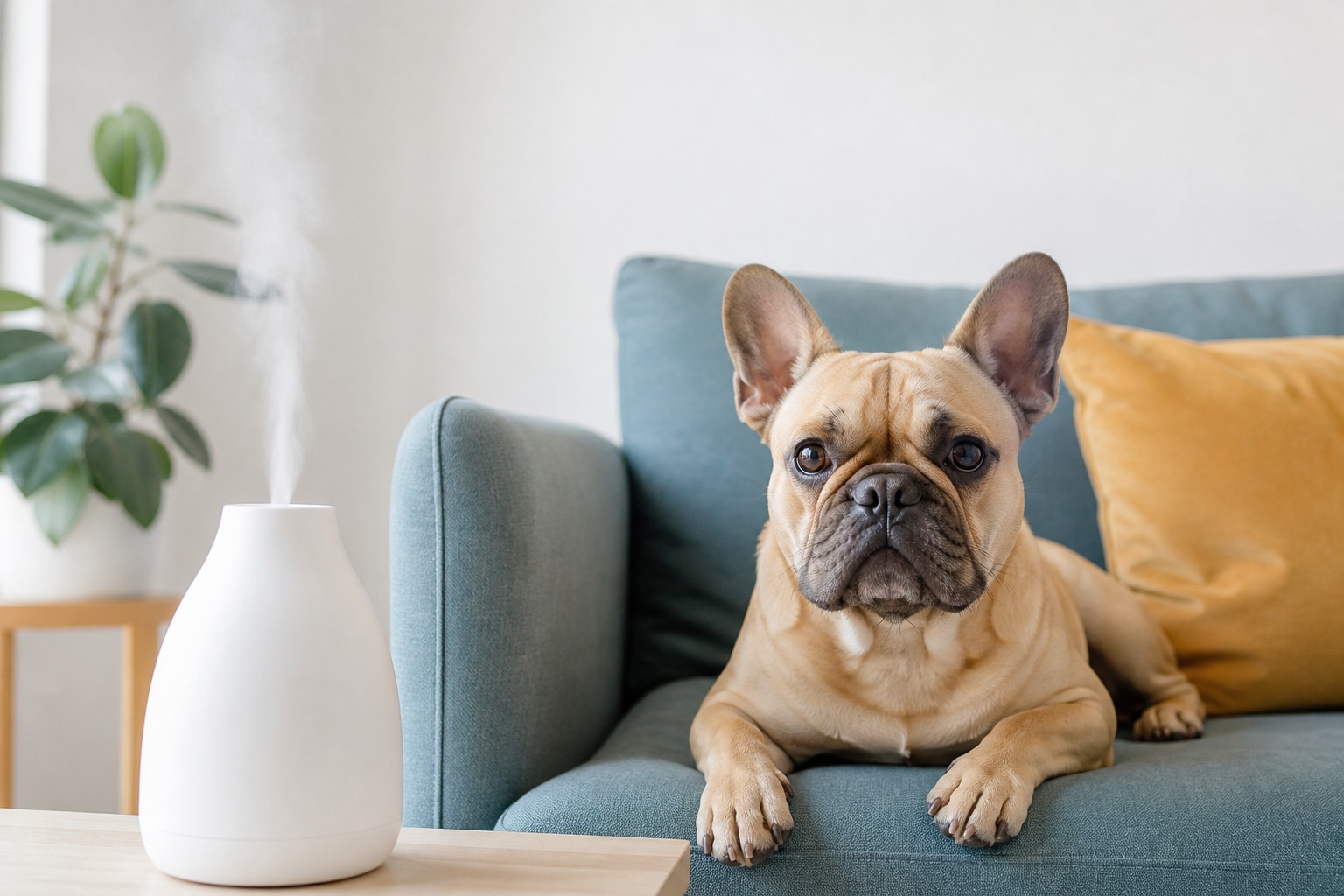
Essential oils are marketed as gentle, natural, and good for what ails you, so it’s no surprise dog owners wonder whether a little lavender might calm an anxious pup or a dab of something might soothe a skin issue. The honest answer isn’t a clean yes or no. It’s this: with dogs and essential oils, the biggest hazard isn’t any single oil. It’s that you usually can’t know what’s really in the bottle, or at what strength, and a handful of popular oils are outright toxic to dogs. Once you see the problem that way, the cautious default makes a lot more sense.
The problem you can’t smell: no one’s checking the bottle
Essential oils are concentrated plant extracts, distilled down to the “essence” of a plant’s scent. Despite the wellness glow, their benefits are largely unproven even in people, and the data in dogs is thinner still. But the deeper issue is quality control, because the industry barely has any.
The research that has looked puts the mismatch at roughly 50 to 80 percent: that’s the share of products that don’t actually hold the oils on the label, at the strengths on the label. Oils that are expensive to make get quietly cut with cheaper stand-ins. Toxicity depends on dose, and a dog might tolerate a truly diluted oil while a stronger one turns irritant or poisonous, but if you can’t trust the label, you can’t judge the dose. That single fact undercuts most confident advice about “safe” oils for dogs.
People ask me which essential oils are safe for their dog, and the truthful answer frustrates them. I can’t tell you a safe dose of a product when I can’t verify what’s in it. That uncertainty, more than any one oil, is why I steer owners away unless a vet is directing it.
There’s also the dog’s nose to consider. Dogs navigate the world through smell, and flooding that sense with an overpowering aroma is likely disorienting and unpleasant. Think of being spritzed with a perfume you hate, then wearing it all day with a nose many times more sensitive than yours.
The oils that are genuinely dangerous
Some oils are notorious for causing trouble in dogs. Steer clear of:
- Cinnamon oil
- Peppermint oil
- Tea tree oil (melaleuca)
- Eucalyptus oil
- Pine oil
- Wintergreen oil
- Clove oil
- Pennyroyal oil
- Sweet birch oil
- Hyssop oil
And don’t assume ingestion is the only route to poisoning. Essential oils can harm a dog whether inhaled, swallowed, or absorbed through the skin. Many are chemically built to soak through skin fast, so a spill your dog walks through or a product applied to the coat can cause a toxicity all on its own.
Signs of essential oil poisoning, and what to do
Because there are so many oils, symptoms vary widely, but watch for:
- Vomiting, diarrhea, or drooling
- Labored breathing
- Tremors, loss of balance, or seizures
- Pale gums
- Skin irritation
- Acting dull, “out of it,” or otherwise off
- A body temperature that’s too high or too low
If your dog seems off in any way following contact with an oil, don’t sit on it. Call your vet or the ASPCA Animal Poison Control Center at (888) 426-4435, which runs 24/7. They can help you figure out whether the oil is to blame and what to do about it.
The safest way to use oils in a dog’s home
If you’re going to keep essential oils in the house, the goal is to keep exposure low and put distance between the product and the dog.
Passive diffusers are the safer category. Reed diffusers, candles, or heated bowls simply let the scent evaporate into the air. For a dog without breathing problems, these are unlikely to cause short-term toxic effects, though a strong scent may still bother some dogs or make their eyes water.
Active diffusers are riskier. These use pressure to fling microdroplets of oil into the air. Those droplets can be fine enough to reach deep into the lungs and inflame them, and they settle onto the coat, where a dog can lick them up or take them in through the skin.
Never apply oils to your dog’s coat. Because oils are hydrophobic, they slip through skin easily and travel into fat and nerve tissue, which is why so many of the serious reactions show up as neurological ones. Don’t count on an oil to just sit harmlessly on the surface.
Don’t feed oils. The safety of dogs ingesting concentrated essential oils isn’t established, so this is a hard no outside of veterinary direction.
Store them out of reach. Even a spill your dog never licks can be a hazard. Keep bottles somewhere your dog physically can’t get to.
A special warning for multi-pet homes
Cats are far more sensitive to essential oil toxicity than dogs. If you share your home with a cat, keep essential oils off your dog altogether, because a cat can be exposed by contact, by breathing them in, or by grooming your dog. In a mixed household, the cat sets the safety bar.
What’s new worth knowing
The specifics from poison-control data make the “just be careful” advice concrete. The ASPCA notes that as few as 7 to 8 drops of concentrated (100%) tea tree oil can cause serious toxicity in a dog, with signs appearing anywhere from 2 to 12 hours after exposure and potentially lasting up to three days. That’s why 100% tea tree oil should never go on an animal, even though some veterinary-formulated products safely include it at very low concentrations (under 1 to 2 percent). It’s a useful illustration of the whole point: a tiny amount of a concentrated, mislabeled, or misused oil is where dogs get hurt. When in doubt, keep the oils for yourself and give your dog the clean air.
References
- The essentials of essential oils around pets — ASPCA
- Concentrated tea tree oil toxicosis in dogs and cats: 443 cases (2002–2012) — Journal of the American Veterinary Medical Association
- Adverse reactions from essential oil-containing natural flea products exempted from EPA regulation in dogs and cats — Journal of Veterinary Emergency and Critical Care
- Adulteration of essential oils: a multitask issue for quality control — Molecules, 2021
- Lavender essential oil market integrity: commercial adulteration and industrial standards — Industrial Crops and Products, 2024
Not a substitute for your vet. Our guidance is educational. For urgent symptoms, contact a vet or emergency clinic right away. Editorial standards
Dr. Chen is a small-animal veterinarian who leads health and safety coverage at The Pet Times. She writes and reviews the bulk of our illness, condition, and safety content, translating clinical guidance into clear, practical advice owners can act on at home.
Meet our experts ↗Keep reading
 Health & WellnessLyme Doesn't Announce Itself. It Fakes a Limp Months Later.Dr. Ravi Mehta · 7 min
 Health & WellnessSummer Grooming Isn't About the Haircut. It's a Health Check.Tom Hadley · 5 min
 Health & WellnessThe FDA Says Toss This Raw Dog Food Now. The Recall Has Only Gotten Bigger.Dr. Priya Nair · 5 min
 Health & WellnessYour Dog Scavenges on Walks. That Napkin Could Be Cocaine.Dr. Lena Park · 5 min
 LivingThe Age of the Emotional Support Peacock Is Over. Here's What Replaced It.Dr. Priya Nair · 6 min
 Health & WellnessEvery Reason to Buy an Antler Chew Is the Reason Not ToDr. Mara Chen · 7 min