


A Red, Goopy Dog Eye Is the One Symptom You Never Wait Out
Pink eye in dogs isn't a home-remedy problem. A dozen different conditions look almost identical, and guessing wrong is how a fixable eye turns into a lost one. Here's what you can safely do at home, and what has to go to the vet today.

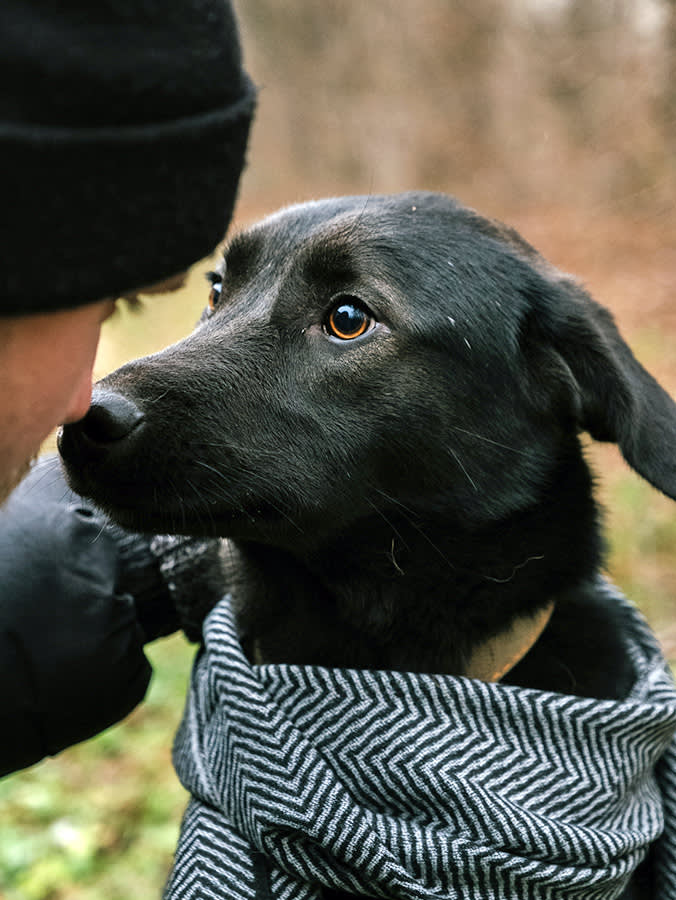
There is one rule about dog eyes worth tattooing on the inside of your eyelid: a red, squinty, or gunky eye is never a wait-and-see situation. Almost every other lump, limp, or sniffle earns a day or two of watching. An eye does not. The tissue is delicate, problems escalate fast, and the thing that makes pink eye genuinely tricky is not the redness itself. It’s that a dozen unrelated conditions all show up wearing the same red, weepy costume.
Pink eye is the everyday name for conjunctivitis, which just means inflammation of the conjunctiva, the thin membrane covering the white of the eye and lining the eyelids. The word describes a symptom, not a single disease. Allergies, a scratched cornea, a grass seed lodged under the lid, a rolled-in eyelid, glaucoma, and a genuine infection can all read as “pink eye” from the couch. They need wildly different treatments, and a few of them can cost your dog the eye if they’re handled as if they were something milder.
The mistake I see most often is treating a red eye like a red flag you can lower yourself. Owners try a home rinse, wait a few days, and by the time they come in, a simple scratch has turned into an ulcer. With eyes, the safest move is almost always the fastest one: get it looked at before you decide what it is.
Why you can’t diagnose it by looking
You genuinely cannot tell these conditions apart by eye, and neither can most vets without the right tools. A drop of fluorescent stain reveals corneal scratches you’d never see. A tear test catches dry eye. A pressure reading catches glaucoma. What you can do at home is gather clues that help your vet move faster, and there are a handful worth noting before you go.
Start with how many eyes are involved. Many conditions hit both eyes together, while others, especially trauma and foreign objects, strike just one. Look at the skin and fur around the eye, the periocular area, for swelling, redness, or hair loss. Check the eyelids themselves for lumps or a rim that seems to roll inward. Note the discharge: watery, mucousy, pus-like, or bloody are all different signatures. Glance at the surface of the eyeball for cloudiness, a dull spot, or any dent in what should be a smooth, shiny dome. And check the rest of your dog. An eye problem paired with fever, low appetite, lethargy, or vomiting can point to a whole-body illness that needs attention right away.
What’s actually behind it
Conjunctivitis in dogs traces back to a short list of usual suspects, and the cause is the whole game.
Allergies are common. If your dog already has itchy, seasonal-allergy signs, or the eye flares alongside a specific trigger like an insect bite, allergic conjunctivitis is a strong candidate. It usually hits both eyes, tends to be itchy, and can thin the fur around the eyes from rubbing.
Eyelid and eye-shape quirks a dog is born with can cause chronic irritation. The classic is entropion, where the eyelid rolls inward and the lashes drag across the surface of the eye with every blink. That’s a mechanical problem, and no drop fixes it.
Trauma is a your-dog-slammed-an-eye-into-something problem. Scratches and punctures are intensely painful, so an injured dog usually holds the eye shut tight and won’t let you near it. That clamped-shut eye is a same-day emergency, and it’s almost always just one side.
Environmental irritants are everywhere: dust, pollen, and especially foxtails and other grass awns, which can both inflame and physically injure the eye. Depending on the exposure, one or both eyes may be affected.
Infection is worth understanding precisely, because it’s less common as a primary cause in dogs than people assume. Cats get infectious pink eye far more often. In dogs, bacteria, viruses, or fungi usually move in as a secondary problem after something else, like an irritant or an injury, has already opened the door. Most canine eye infections are bacterial, and a swab can identify the culprit, though that’s rarely necessary.
Some dogs are simply more prone to trouble. Flat-faced breeds with prominent eyes, like Pugs, French Bulldogs, Shih Tzus, Boston Terriers, and Chihuahuas, have more eyeball exposed and less protection, so they land in the higher-risk group. Dogs with chronic conditions such as allergies or autoimmune disease are more vulnerable too. And age brings its own set of changes, including cataracts, glaucoma, and reduced tear production (dry eye), each of which can trigger secondary inflammation.
What you can safely do at home (and what you can’t)
Here’s the honest boundary: there is no home cure for conjunctivitis. Everything on this list is comfort care to hold your dog over until treatment starts, not a substitute for it.
You can gently wipe away crusting and discharge with a clean, damp washcloth or paper towel, working around the eye and never touching the surface. Go slowly, and if your dog is in real pain, respect that and stop. A cool compress can soothe: chill a damp cloth in the fridge for a few minutes and, if your dog tolerates it, hold it over the closed eye for ten to fifteen minutes a couple of times a day. Sterile saline made for flushing eyes can rinse debris, but ask your vet first, since it can interfere with medicated drops, and the bottle tip must never contact the eye. If your dog is pawing or rubbing, a recovery cone is the single most effective way to stop them making it worse.
What you should skip: human redness or allergy drops, leftover medication from a past problem, and any “wait and see” plan. The general health basics still matter for healing, a complete diet, low stress, and up-to-date routine care, but none of that treats the eye in front of you.
When it’s a same-day call
Every eye problem deserves a prompt vet visit, full stop. Move faster than “prompt” if you see an eye held shut, obvious cloudiness or a change to the eyeball’s surface, a sudden increase in green or pus-colored discharge, or signs your dog is in significant pain. Recurrence shortly after treatment is its own red flag: it usually means the underlying cause was never resolved and needs a deeper look, sometimes from a veterinary ophthalmologist.
For dogs with long facial fur, keep it trimmed and clean around the eyes so mats and gunk don’t compound the problem, and if you hike in foxtail country, consider protective eyewear.
What newer guidance adds
The old advice to “try a rinse and see how it goes” has fallen out of favor for good reason. Current veterinary teaching leans hard on diagnostics first, because the tools that distinguish a harmless irritation from a sight-threatening ulcer, corneal stain, tear testing, pressure checks, are quick, cheap, and decisive. The other shift worth knowing: vets now actively warn against reaching for human over-the-counter eye drops at home. Several common formulas can worsen a canine eye or hide the very signs a vet needs to see. When in doubt, the modern answer is the same as the old one, only more firmly: hands off the drugstore shelf, and into the clinic.
References
- Delgado, Esmeralda, et al. “Diagnostic Approach and Grading Scheme for Canine Allergic Conjunctivitis.” BMC Veterinary Research, vol. 19, no. 35, 3 Feb. 2023, https://doi.org/10.1186/s12917-023-03593-5.
- Ledbetter, Eric C. “Diagnosing, Treating, and Managing Causes of Conjunctivitis in Dogs and Cats.” Today’s Veterinary Practice, May/June 2021.
- Maggs, David J., et al. Slatter’s Fundamentals of Veterinary Ophthalmology. 6th ed., Elsevier, 2018.
- American College of Veterinary Ophthalmologists. “Conjunctivitis.” ACVO Public Resources, acvo.org.
Common questions
Is one red eye different from two?
Often, yes. Injuries, foreign objects, and foxtails usually hit a single eye, while allergies and many infections tend to affect both at once. It's a useful clue for your vet, not a diagnosis on its own, so note which eyes are involved before your visit.
Can I use human eye drops on my dog?
Not without your vet's okay. Many human drops, especially anything for redness or allergies, can be harmful to dogs or can mask signs your vet needs to see. Plain sterile saline to rinse debris is the only thing to reach for on your own, and even that should never touch the eye's surface with the tip.
How fast does a dog eye problem need to be seen?
Treat every eye issue as time-sensitive. A dog holding an eye clamped shut, an eye that looks cloudy, or a sudden gush of green discharge should be seen the same day. Eyes rarely improve on their own, and small problems can snowball into vision-threatening ones within a day or two.
Not a substitute for your vet. Our guidance is educational. For urgent symptoms, contact a vet or emergency clinic right away. Editorial standards
Dr. Nair is a veterinarian focused on diet and feeding. She covers everyday nutrition, treats, and the many "can they eat this?" questions owners ask, grounding each answer in what is actually safe and sensible for dogs and cats.
Meet our experts ↗Keep reading
 Health & WellnessOne Raw Fish Can Kill a Dog in Two Weeks. Most Owners Have Never Heard of It.Dr. Ravi Mehta · 6 min
 Health & WellnessYes, Dogs Get Headaches. The Real Question Is Which Ones Are EmergenciesDr. Amara Solis · 7 min
 Health & WellnessCircling, Head Tilts, Stumbling: When a Dog's 'Off' Day Is Actually Their BrainDr. Ravi Mehta · 9 min
 Health & WellnessYour Dog Is Panting at 3 a.m. Here's How to Know If It's Nothing.Dr. Mara Chen · 7 min
 Health & WellnessMichigan's 'Mystery Dog Illness' Was Parvo All Along. The Test Was the Liar.Dr. Lena Park · 7 min
 Health & WellnessYour Dog's Poop Is a Daily Health Report. Here's How to Read ItDr. Lena Park · 8 min