


Your Dog Is Panting at 3 a.m. Here's How to Know If It's Nothing.
Nighttime panting can be a cute dream or an early warning. The difference is in the details, whether your dog is asleep, what else has changed, and how fast it came on.

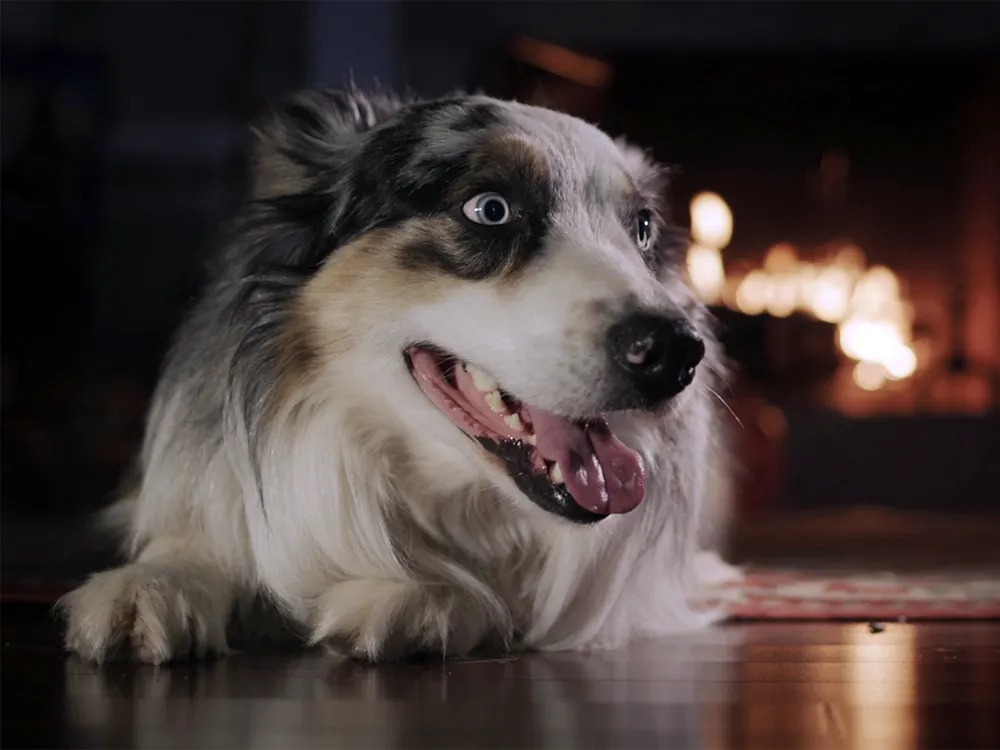
At 3 a.m., panting sounds the same whether it is harmless or serious, and that is exactly the problem. You wake to your dog’s fast breathing, or the bed gently shaking, and your brain jumps to the worst case. Usually it is nothing. Sometimes it is an early signal worth catching. The good news is that you do not have to guess in the dark, because the clues that separate the two are specific, and once you know them you can triage the moment calmly.
The single most useful question is this: is your dog asleep or awake? Nearly everything else follows from the answer.
The reassuring explanation: dreaming
One of the most benign reasons for nighttime panting is also one of the cutest. Watch a dog deep in a dream and you’ll see the whole performance: paws paddling, muscles twitching, small muffled noises, breath coming quick, sometimes a full pant, and the dog never wakes for a second of it. That is REM sleep doing exactly what it does. It is ordinary sleep architecture and should fade as the deep-rest period continues.
The tell is context. If your dog is completely normal while awake and only pants occasionally during sleep, this is almost certainly just an active dreamer, and nothing to worry about. The panting is tied to the sleeping, not to how your dog feels the rest of the time.
The most common explanation: cooling off
Panting is, first and foremost, how dogs regulate temperature. Most of the time a panting dog is simply warm. Dogs pant on hot days, when they have thick coats, or after activity, and they combine panting with a few other cooling tricks. Panting itself moves air rapidly across the respiratory tract so moisture can evaporate and carry heat away. Vasodilation widens blood vessels near the skin so more blood cools at the surface. Dogs also sweat, but only a little, from the nose and paw pads, so it contributes modestly. And over longer timescales, some dogs grow and shed coat with the seasons to adjust, though indoor dogs, less exposed to the changing light and temperature, often shed steadily year-round instead.
You can help a warm dog sleep by keeping up with grooming so matted or clumped fur is not trapping heat (though do not shave double-coated breeds, whose coats actually help trap cool air), giving them a cool place to sleep with AC or a fan, keeping fresh cool water available, and helping an overweight dog slim down safely, since extra weight makes cooling and breathing harder.
The line you must not miss is overheating. If your dog is panting hard even at rest in a cool space, that can signal trouble, especially with other signs: excessive drooling or vomiting, lethargy and unwillingness to move, or, in severe heat exhaustion and heatstroke, disorientation, uncoordinated movement, seizures, or collapse. Those last signs are a veterinary emergency, immediately.
The question I always ask owners is whether the panting is new and whether it happens when the dog is just lying still. A dog panting after a summer walk is doing its job. A dog panting at rest in a cool room, night after night, is telling us something, and I would much rather see that dog early than have it dismissed as a quirk.
Panting from anxiety
Dogs also pant for emotional reasons, fear, anxiety, or stress, which is another reason it pays to note what else is happening when it starts. A sound, a change in routine, or another trigger may be behind it. Dogs experience anxiety in many forms: some are generally anxious and handle change poorly, others have specific issues like noise phobias or separation anxiety. Senior dogs deserve special mention, because a form of dementia called cognitive dysfunction can make them disoriented and anxious, often worse at night, where they may pace, whine, and pant. Because “anxiety” covers so many different syndromes, the fix depends on identifying your dog’s specific triggers, often with help from a vet, trainer, or behaviorist, and may combine behavior work, a calm and predictable routine, exercise and enrichment, and sometimes medication.
When panting points to a medical problem
Panting is a general-purpose distress signal, not just a cooling mechanism, which means a sick dog can pant for reasons that have nothing whatever to do with how warm the room is. The common medical drivers:
Pain, which announces itself plainly with a visible injury and hides almost completely in the slow grind of arthritis or a sour gut. Fever, which raises body temperature and prompts cooling, though dogs run warmer than us so it is hard to judge by touch; pair it with other illness signs. Hormonal conditions like Cushing’s disease, which classically causes excess panting alongside other changes. Heart disease, which can interfere with breathing and circulation and, when advanced, brings coughing, faster breathing, and difficulty breathing. Respiratory conditions affecting the lungs or airways, with coughing, rapid breathing, or labored breaths. Brachycephalic syndrome, in flat-faced breeds like Pugs, Pekingese, and French Bulldogs, whose narrow nostrils, elongated soft palates, and small tracheas make breathing inefficient, so they pant more and overheat more easily, demanding extra caution in heat and exercise. And medication side effects, since steroids, opioids, and certain antidepressant-type drugs can increase panting; flag any new medication and new panting to your vet.
The rule that ties it together
Here is how to hold all of it. Occasional panting that lines up with something sensible, exercise, a hot day, or a dream, is nothing to fear. What earns a vet visit is a sudden uptick in how often your dog pants, panting at rest, or panting bundled with any other change in health or behavior. Because so many of these conditions are far easier to manage when caught early, before they snowball into secondary problems, the safe move is to treat a persistent change as a signal rather than a quirk. And when panting arrives with the emergency signs, overheating, or the coughing, labored breathing, and pale or bluish gums of a breathing or heart crisis, do not wait for morning.
Read the situation, not just the sound. Asleep and occasional usually means sweet dreams. Awake, at rest, and new means it is time to call your vet.
This article covers a health topic and is for information only. If your dog’s breathing changes suddenly or is paired with other symptoms, contact your veterinarian promptly; the emergency signs above warrant immediate care.
References
- Hall, Emily J., et al. “Proposing the VetCompass Clinical Grading Tool for Heat-Related Illness in Dogs.” Scientific Reports, vol. 11, no. 6828, 2021.
- Salonen, M., et al. “Prevalence, Comorbidity, and Breed Differences in Canine Anxiety in 13,700 Finnish Pet Dogs.” Scientific Reports, vol. 10, no. 2962, 2020.
- Bódizs, R., et al. “Sleep in the Dog: Comparative, Behavioral and Translational Relevance.” Current Opinion in Behavioral Sciences, vol. 33, 2020, pp. 25–33.
Common questions
How do I tell dreaming from a problem?
Dream panting happens while your dog is asleep, often with twitching or soft vocalizing, and stops when they wake up and settle. Panting that continues while your dog is awake and resting, especially with other changes, is the kind to have checked.
When is nighttime panting an emergency?
Get immediate care if panting comes with signs of overheating (excessive drooling, vomiting, weakness, disorientation, collapse) or of a breathing or heart problem (coughing, labored or very rapid breathing, blue-tinged gums). These are not wait-until-morning situations.
Not a substitute for your vet. Our guidance is educational. For urgent symptoms, contact a vet or emergency clinic right away. Editorial standards
Dr. Chen is a small-animal veterinarian who leads health and safety coverage at The Pet Times. She writes and reviews the bulk of our illness, condition, and safety content, translating clinical guidance into clear, practical advice owners can act on at home.
Meet our experts ↗Keep reading
 Health & WellnessThat Red, Squinty Eye Isn't Nothing. It Could Be Uveitis.Dr. Mara Chen · 6 min
 Health & WellnessThat Goose-Honk Cough Is a Warning. Here's What a Collapsing Trachea Really Needs.Dr. Ravi Mehta · 9 min
 Health & WellnessYour Dog Is Having a Seizure. Here's Exactly What to Do in the Next 90 SecondsDr. Mara Chen · 6 min
 Health & WellnessThe Most Dangerous Vomit Is the One That Never Comes UpDr. Mara Chen · 8 min
 Health & WellnessYour Dog's Cough Has a Sound. Learn to Read It Before You Panic.Dr. Ravi Mehta · 9 min
 Health & WellnessVets Call It the '$1,000 Sock.' The Size of What Your Dog Swallowed Isn't the Real Danger.Dr. Priya Nair · 8 min