Sophie Gamand has photographed a great many dogs who needed homes, and her Pit Bull Flower Power series helped hundreds of them find one. She has heard the same complaint from the open-intake shelters and lost-and-found pages she works with, and it is not what you would guess.
Their biggest problem is not funding or space or bad luck. It is that when a family loses a dog, they cannot produce a usable photo of it.
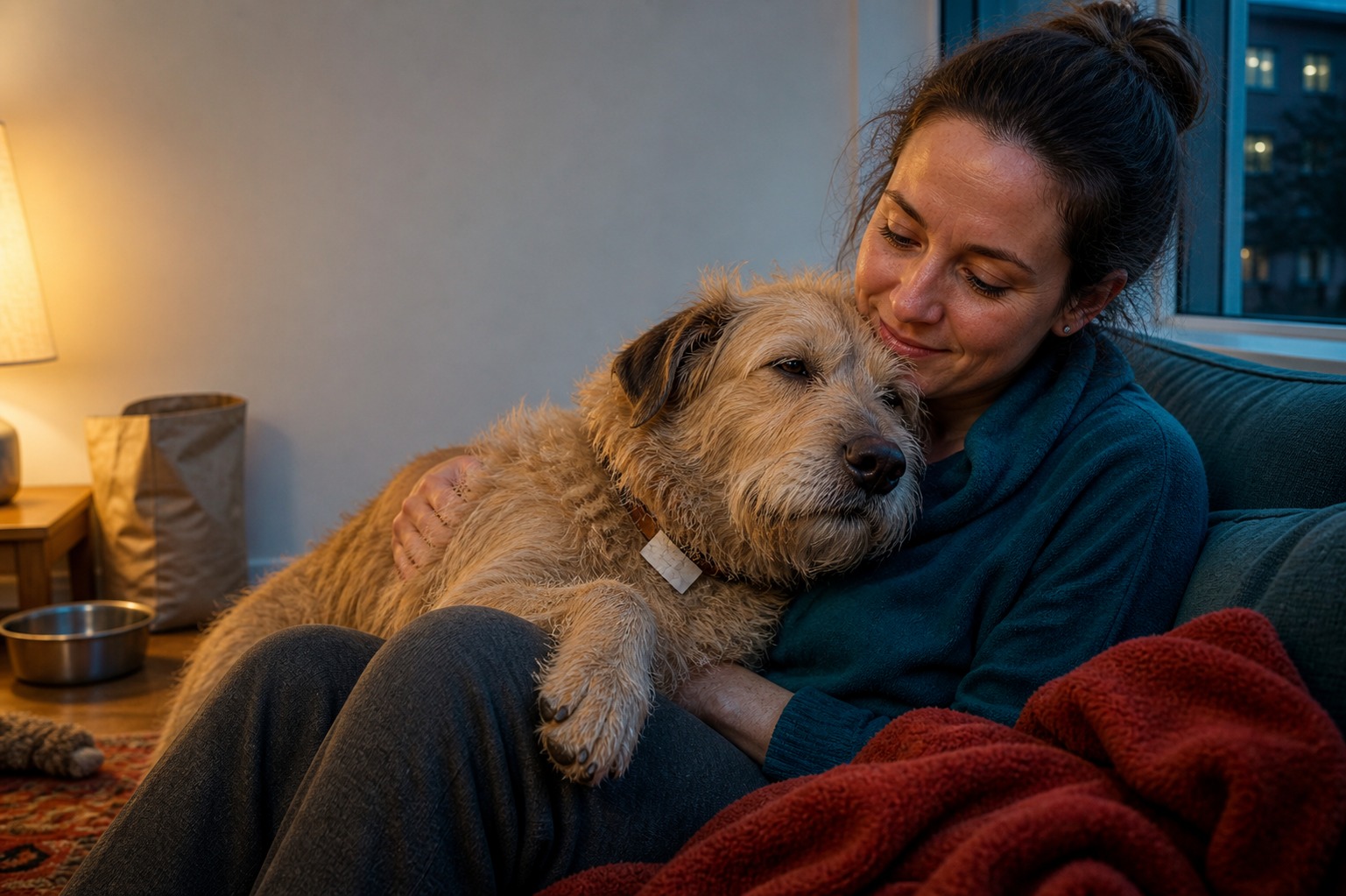
Not a single clear, well-lit, eye-level picture of the whole animal. What they have is four hundred images of a blurred brown shape on a sofa, a dark smear that used to be a face, and one very good shot taken from directly overhead in which the dog is mostly nostril.
So here is the actual argument for learning to take a decent photo of your dog. Yes, it will make your grid better. But the picture you take on a boring Sunday, while your dog is safe and bored and sitting in the yard, is the picture that goes on a flyer if the gate is ever left open. That is not a morbid thought. That is a five-minute insurance policy.
Start with sit and stay, because everything else depends on it
This is the first thing anyone teaches a dog, and if you have not done it, it is never too late.
A reliable sit-stay makes walks better, especially with a reactive dog. It makes dinnertime less chaotic. And for photography, it is the difference between a session and a pursuit. You cannot compose a frame around an animal who will not stay in it.
Then handle the background, because it will ruin you
More good photos are wrecked by what is behind the dog than by anything the dog does.
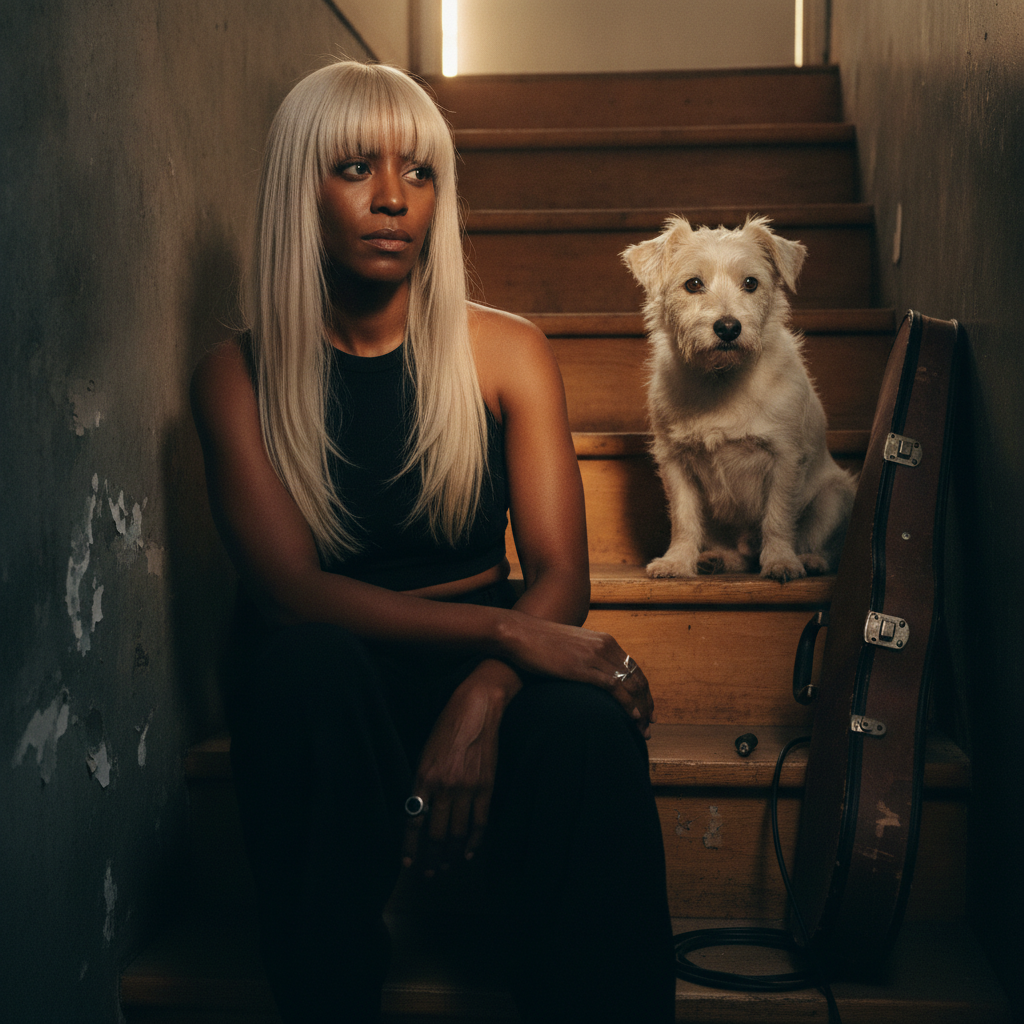
Before you shoot, actually look at the frame. Trash bins. Laundry. A stray shoe. Then find something better: a solid-color wall, a flowering bush, a wall of greenery, brick. The sky works beautifully. So does an open landscape, provided you keep the horizon level.
If you want to build a setup, almost anything works as a backdrop: paper, fabric, vinyl, a tablecloth, a bedsheet, butcher paper. For a polished result, make sure the material is not creased or wrinkled, which reads instantly as amateur.
Now think about color. If you like a colorful photo, spend ten minutes with basic color theory, or simply experiment with what suits your dog. It gets genuinely fun once you start accessorizing with a bandana or a leash.
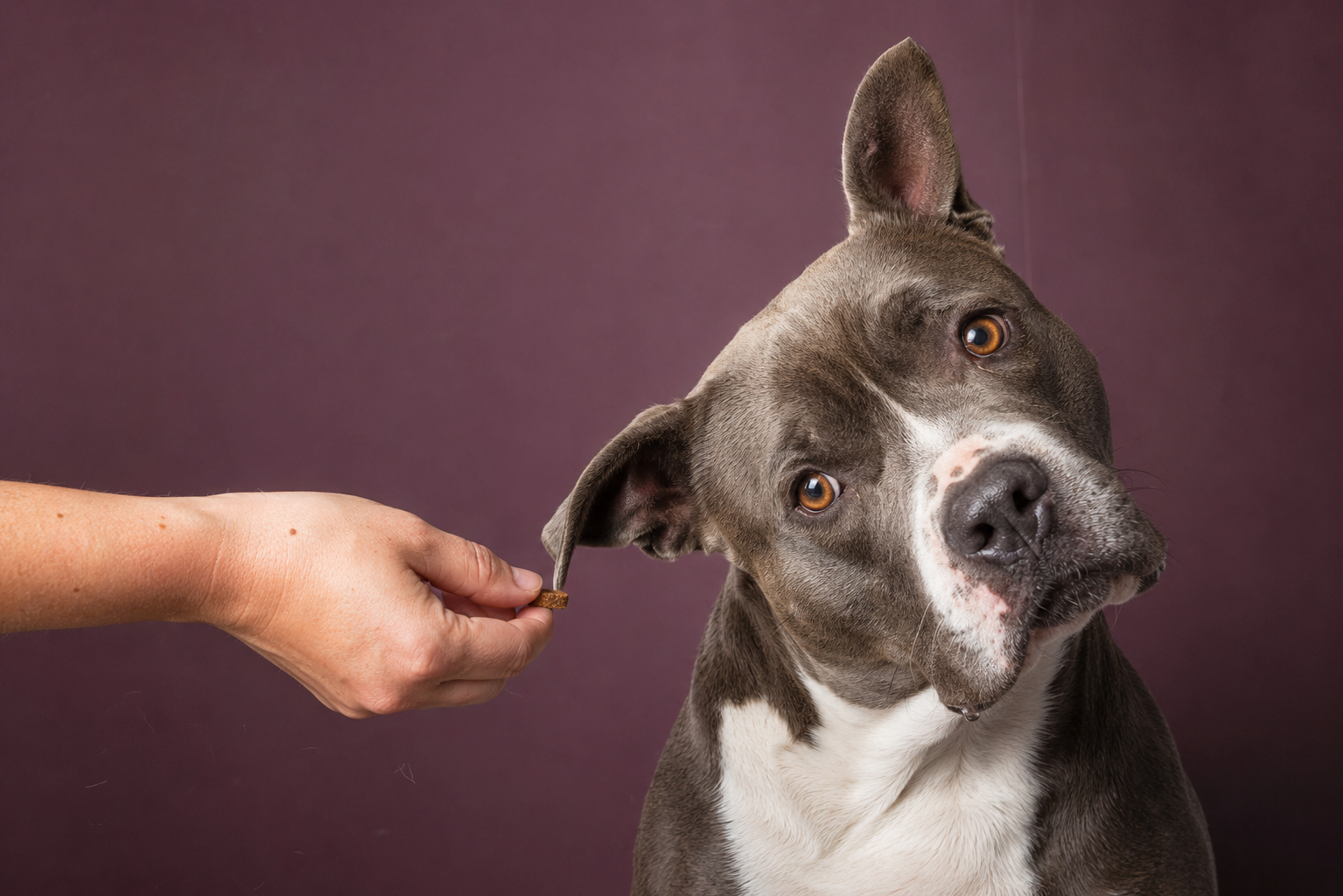
For a close-up, look at your dog’s eyes. If there is amber or yellow in them, you can echo it with a background in the same family, or set it against purple, which is amber’s complement and will make the eyes leap off the screen.
Do not wind your dog up
This is the mistake almost everyone makes.
Unless you are specifically going for goofy shots, start from a calm place. It is much easier to raise a dog’s energy during a session than to talk an overexcited one back down. A photo shoot that begins at full pitch has nowhere to go and quickly becomes overwhelming for the animal.
The tell that you have overcooked it: the dog stops taking treats, or stops responding to the noises you are making. When that happens, do not double down. Do not keep shoving a treat under their nose or squeaking a toy into their face. Find something else that interests them, or stop. Read the dog in front of you.
Getting their attention, in order of escalation
Many dogs shy away from a camera and show displacement or avoidance behaviors: looking away, yawning, turning the head. If your dog is camera-shy, desensitize rather than push. Lift the phone briefly, give a treat, lower it. Once or twice a day, slowly increasing the duration. Start at a distance, use the zoom, and close the gap over weeks.
For a dog who is not camera-shy, less is more. Escalate only as far as you need to:
Your voice. Whisper. Talk calmly. Use a favorite word, “do you want to go for a walk?” And a warning attached to that one: if you say it, you have to deliver it. Do not promise a walk you are not going to take.
A sigh. Underrated, and frequently all it takes.
A squeak. Once or twice, not continuously.
Food. Now you are into the good stuff, so do not waste it early.
Sound effects. Birdsong or whining puppies played from your phone will get a head tilt. Use sparingly, because the novelty is the entire mechanism.
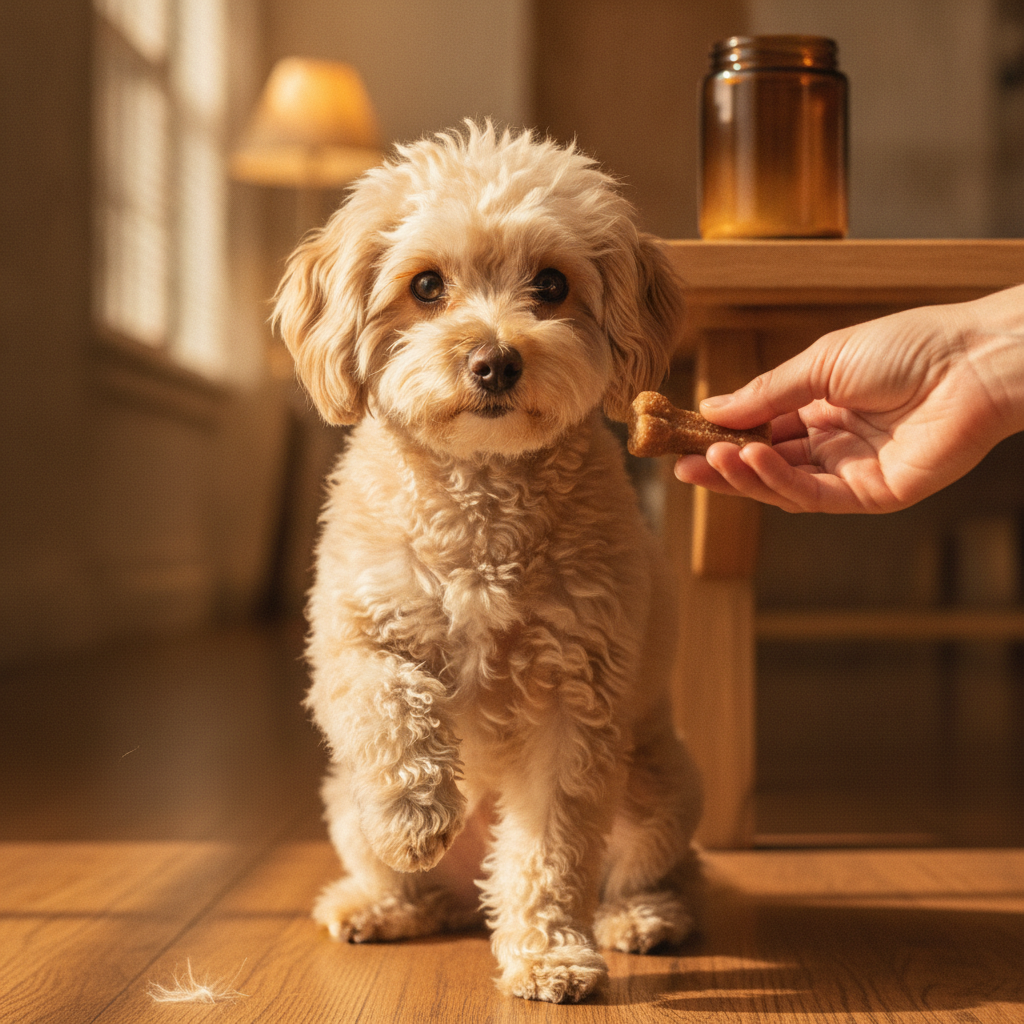
For a shy dog, there is a lovely alternative: ask for a trick they already know and enjoy, a paw wave or anything else, and reward it. You get charming photos, and the dog gets to do something familiar and successful instead of being stared at by a lens.
Get down. All the way down.
Photograph from the dog’s eye level. That means knees, and often belly.
This is the single largest improvement available to most people, and it costs nothing. Shooting down at a dog from human height produces the photo everyone already has: a small creature looking up at a giant. Dropping to their level gives them their own presence in the frame. It lets them look like a subject rather than a possession.
“Every phone in America is full of pictures of the tops of dogs’ heads,” says Marcus Webb. “Lie on the floor once and you will never go back.”
Black dogs need light, not luck
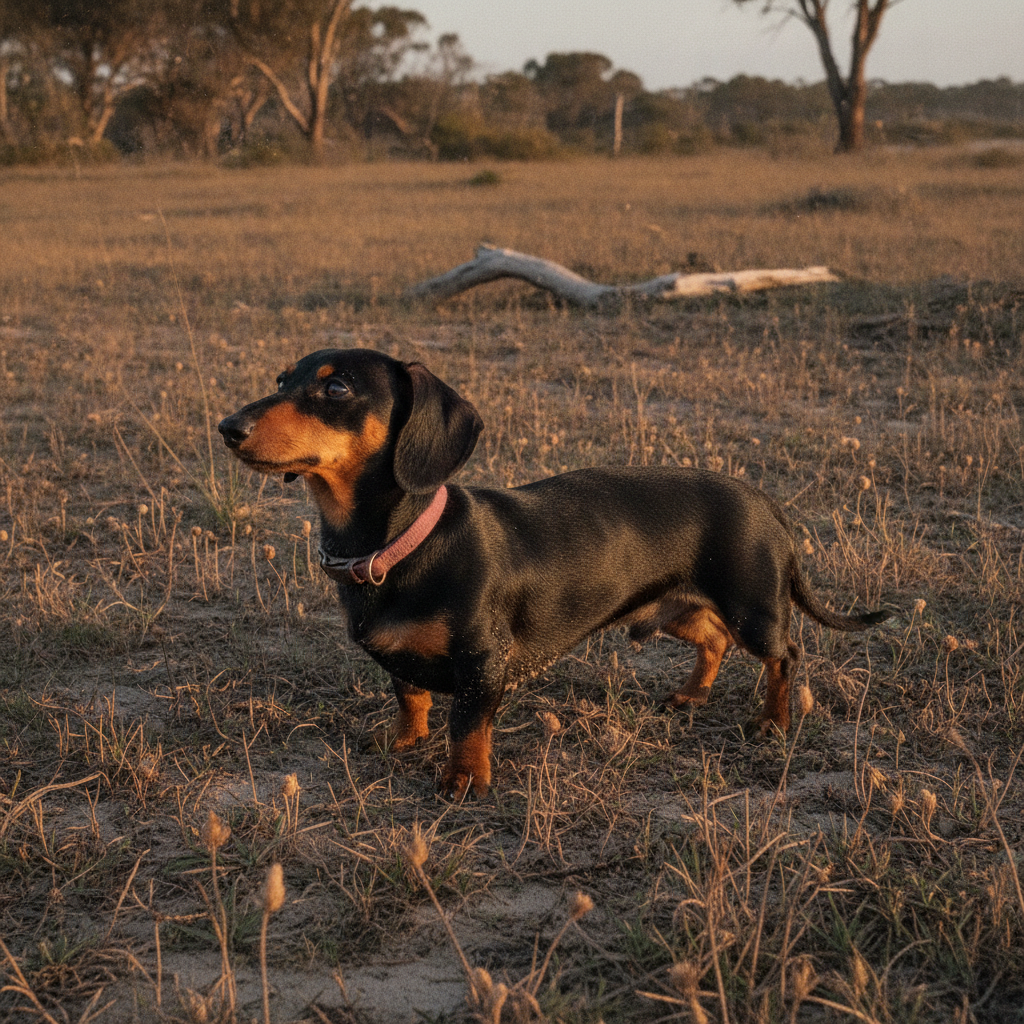
Black pets are notoriously hard to photograph, and it is not your fault. Black fur simply requires more light before a camera can resolve any features in it, which is why so many black-dog photos come out as a silhouette with two eyes.
The fixes, in order of effort:
Go outside, into shade. Open shade on a bright day is soft, plentiful light without harsh contrast.
Bounce light back in. Hold a large sheet of white paper or foil between you and the dog, angled to throw ambient light onto them. It is slightly technical and it works.
Raise the exposure. On a phone, tap the dog and slide the exposure up before you shoot.
Rescue it afterward. Even a dark frame usually has more information in it than you think. Open the edit screen and lift the shadows.
Shoot, then be ruthless
Once the dog is settled and cooperating, go. Change angles, change perspective, get closer, get lower. The wide lens on recent phones is genuinely fun for this and produces the goofy, big-nosed, enormous-paw portraits that people love.
Then comes the part that separates good photographers from people with a lot of photos: selection.
Browse what you shot and pull only the images that hit you immediately. If a frame produces an actual emotional reaction, keep it. If you are talking yourself into one, it is not the one. Most of a photographer’s craft is knowing which picture to keep.
Then post it. There are far too many pictures of human babies on the internet, and it is our duty to correct the imbalance.
What newer research adds
Two things have changed the calculation since this advice was first written, and both make the safety case stronger.
The first is that lost-pet recovery has gone algorithmic. Several services now use image-matching to compare photos of found animals against photos of missing ones, and shelters increasingly run intake photos against those databases. That technology is only as good as the photo you feed it. A clear, front-facing, well-lit shot of your dog’s face, in daylight, against a plain background, is now a machine-readable asset, not just a flyer. A blurry sofa photo is nothing.
The second is that microchips remain the single most reliable reunification tool, and they are still routinely undermined by the same failure: the chip is registered to an old phone number or an old address. A chip nobody can trace is a bead of glass.
So the complete version of this article’s advice takes about ten minutes on a Sunday. Take one clear head shot, in daylight, at eye level, against a plain wall. Take one full-body shot showing any distinguishing markings. Confirm your microchip registration is current. Then go back to taking four hundred blurry photos of your dog asleep, which is, after all, the real point of having one.
References
- American Veterinary Medical Association. “Microchipping of Animals.” avma.org/resources-tools/pet-owners/petcare/microchipping-animals
- ASPCA. “Lost Pet Prevention and Recovery.” aspca.org/pet-care/general-pet-care/lost-pet-prevention-tips
- American Animal Hospital Association. “Universal Pet Microchip Lookup.” petmicrochiplookup.org
- Sophie Gamand. “Pit Bull Flower Power” and rescue photography resources. sophiegamand.com