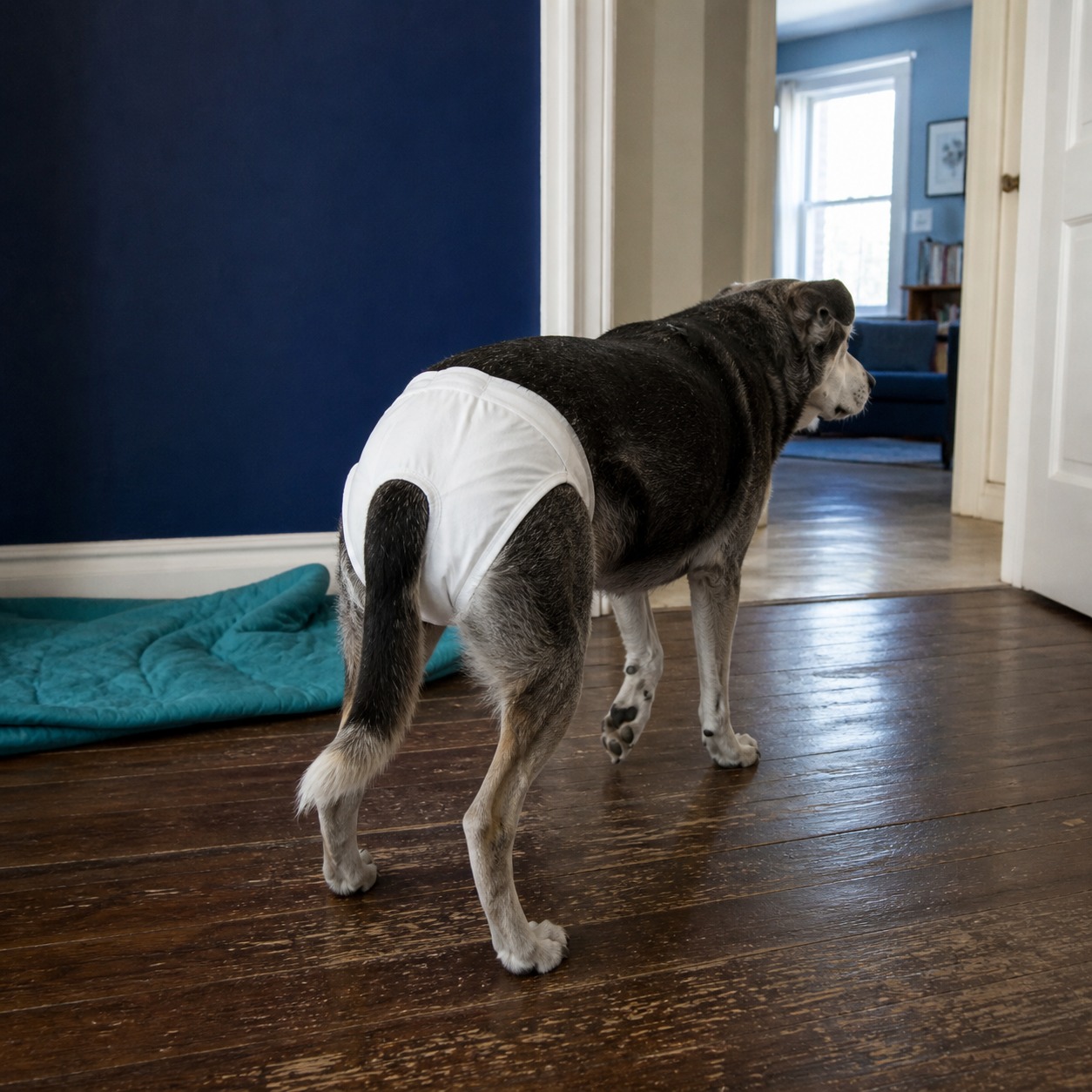
There is a certain fantasy attached to dog diapers: your dog has accidents, you put on a diaper, problem solved. The reality is closer to the opposite. A diaper does not fix the underlying issue, it manages the mess while adding a fresh set of risks, rashes, infections, pressure sores, that demand real work to prevent.
That is why the honest starting point is this: a dog diaper is a last resort, not a first response. For the specific dogs who truly need one, it can genuinely improve life. But the goal is always to rule out better solutions first, and then, if a diaper really is necessary, to use it with the round-the-clock care it requires. Here is how to think it through.
First, is a diaper even the right answer?
In a healthy dog who can be potty trained, a diaper should never be a substitute for training, it only causes complications. The dogs who legitimately need diapers fall into a few categories.
Incontinence is the main long-term reason. A dog with true urinary or fecal incontinence has no control and cannot be trained to hold it, so without containment they will have accidents.
Neurological problems, spinal injuries, or severe joint disease can leave a dog unable to stand, posture, or control the nerves that run the bladder and rectum. This includes senior dogs with advanced arthritis or cognitive decline. Depending on the specifics, there may be alternatives to diapering.
Heat cycles in intact female dogs bring bloody discharge that a diaper can contain short-term, though spaying resolves the issue entirely and protects long-term reproductive health.
Two situations that are often assumed to call for diapers usually do not. Post-surgical care generally should not rely on diapers, given the infection risk, alternatives are preferred. And potty training is actively undermined by diapers, because a dog in a diaper never learns to associate eliminating outdoors with a reward.
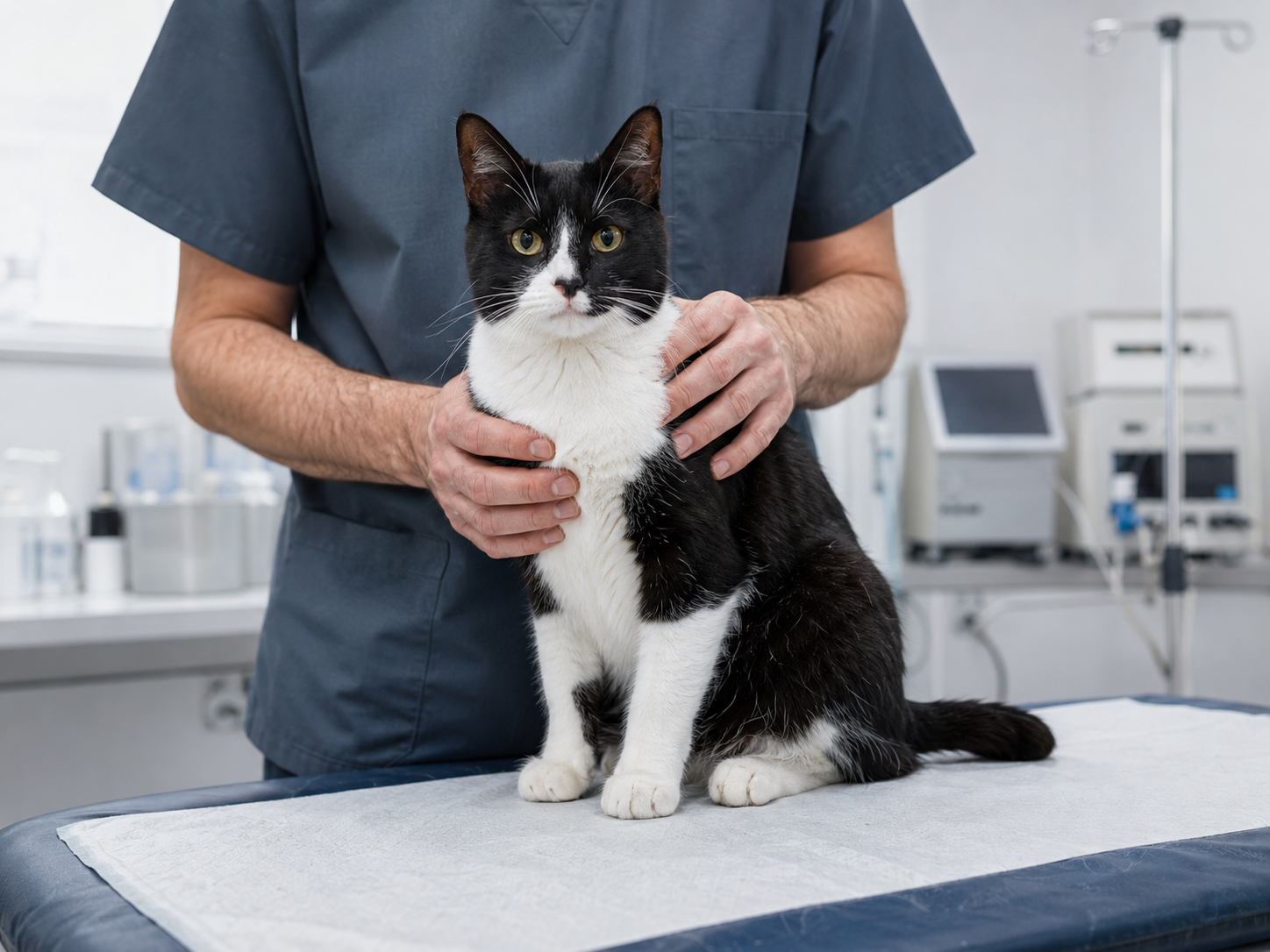
If you are unsure, this is a vet conversation. Many apparent diaper situations have a better fix.
“Before I sign off on diapers, I want to know we’ve exhausted the alternatives, because the complication rate is real,” says Dr. Priya Nair. “For a lot of incontinent dogs, medication, surgery, or teaching an owner to express the bladder solves the problem without a diaper ever touching the skin. When a diaper truly is the answer, the family has to be ready for the workload, or we’re trading one problem for a worse one.”
Choosing and fitting the diaper
If a diaper is the right call, the fit determines whether it helps or harms, and the care burden is part of the decision. Plan on changing the diaper every time your dog pees or poops, or at least six to eight times a day for continuous leakers, plus extra baths to protect the skin, which can mean more frequent vet visits and expense.
Types of diaper vary by need. Disposables skip the cleaning and suit homes without easy laundry, or heavy soiling, at the cost of waste. Reusable cloth diapers are more sustainable and cost-effective long-term and can be gentler on skin, though heavy urine may need a disposable insert and odor can linger. Thicker medical or incontinence diapers suit dogs who leak large volumes. Belly bands wrap around a male dog’s midsection and cover only the penis, a good option for male dogs with urinary-only issues, but useless for poop. And for oddly shaped or very large dogs, DIY modifications of existing products are sometimes necessary.
Sizing and fit start with measuring: waist circumference, the narrowest and widest parts of the belly and hips, and waist-to-tail length. Most diapers come in size ranges with Velcro and elastic for adjustment. Female-style diapers are full-coverage with a tail hole and work for either sex when full hind-end coverage is needed; male belly bands do not cover the rear, so a male dog with poop accidents needs the full-coverage style. Test placement carefully, cover everything without gaps, avoid tight spots, and confirm your dog can move all four limbs and their tail freely. Long-coated dogs often do better with the fur around the belly, hind end, and rear trimmed short, which improves the seal and reduces mess stuck in the coat. Expect to buy a few styles to find the right one.
Keeping the diaper on
Active dogs and oddly shaped dogs test your ingenuity here. A snug, correctly sized diaper is the foundation. Suspenders that strap over the shoulders can stop a diaper sliding off, but they pose a tangling risk and should be used only under supervision. A dog onesie can hold a diaper in place like a bodysuit, but only if your dog tolerates clothing and the garment stays clean and dry, damp fabric against skin is its own hazard.
The part that actually matters: care and hygiene
This is where diapering succeeds or fails. Diapers trap urine and feces against the skin, and that is a recipe for trouble unless you stay ahead of it.
Change diapers the moment they are soiled and every few hours regardless. The complications to watch for build on each other: rash and irritation are the most common and nearly inevitable with long-term use, starting as redness and progressing if ignored. The delicate skin around the genitals and anus irritates easily and can become painful or infected. Bladder and urinary tract infections are common because fecal bacteria reach the urinary tract, and these need urgent veterinary attention. Broken-down skin invites deeper skin infections and pressure sores, which also require urgent care. And even a well-fitted diaper causes chafing over time, hair loss and irritation that can escalate to sores, and once that cycle starts it is hard to heal while the diaper stays on, so you may need to switch styles or take a diaper break entirely.
Protecting the skin is the whole game. Limit diaper use to only the necessary times of day, give the skin long breaks out of the diaper, and bathe your dog regularly and after any soiling. If irritation appears, your vet may recommend topical protectants, but always check first. One specific warning: many human diaper-rash creams contain zinc oxide, which is toxic to dogs if licked and ingested, so never use zinc-containing products if your dog can reach the area, and only use any cream in consultation with your vet. Dogs in long-term diapers need regular vet check-ups to catch complications early.
Introducing the diaper without a fight
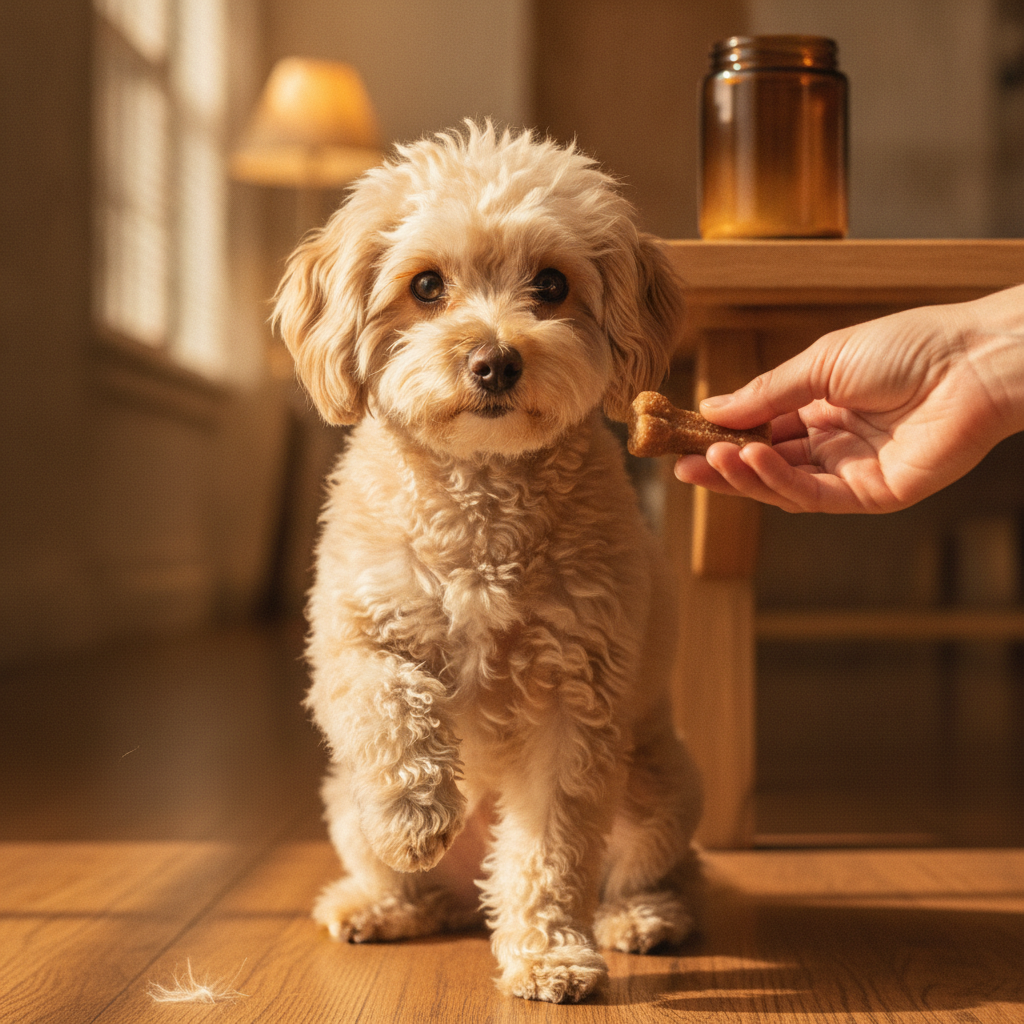
Like anything new, a diaper usually needs a patient, gradual introduction, though dogs paralyzed in the hind end may not feel it and accept it easily. The step-by-step approach: pick a calm environment, let your dog sniff and investigate the diaper first, use redirection once it is on to stop biting or pulling, keep the first sessions short and end on a good note, reward heavily with praise and treats, and extend wear time slowly.
Don’t skip the alternatives
Even when diapers seem obvious, it is always worth confirming there is not a better path, ideally with your vet or a veterinary rehabilitation specialist. Dogs recovering from surgery or with temporary mobility issues who struggle to posture may do better with supportive slings, gripping booties, or other assistive devices. Dogs with certain spinal or neurological conditions who cannot urinate on their own can often have their bladder expressed manually several times a day, a skill your vet can teach, avoiding diapers entirely. And some forms of incontinence improve with medication or surgery. A thorough exam should come before any long-term commitment to diapering.
Bottom line
Many situations tempt owners toward dog diapers, but they belong at the end of the list, not the start. Consult your vet about whether medication, surgery, mobility aids, or bladder expression could spare your dog a diaper altogether. If a diaper genuinely is needed, test several sizes and styles for a proper fit, and go in prepared for the frequent changes, baths, and vigilant skin care that keep a diapered dog healthy. Used with that level of care, a diaper can be a real quality-of-life tool for the dog who truly needs one.
References
- Kennall, A., et al. “ACVIM consensus statement on diagnosis and management of urinary incontinence in dogs.” Journal of Veterinary Internal Medicine, 2024.
- Granger, N., et al. “Bladder and Bowel Management in Dogs With Spinal Cord Injury.” Frontiers in Veterinary Science, 2020.
- Ambar, N., et al. “Suspected hemolytic anemia secondary to acute zinc toxicity after ingestion of zinc oxide diaper rash cream.” Journal of Veterinary Emergency and Critical Care, 2021.