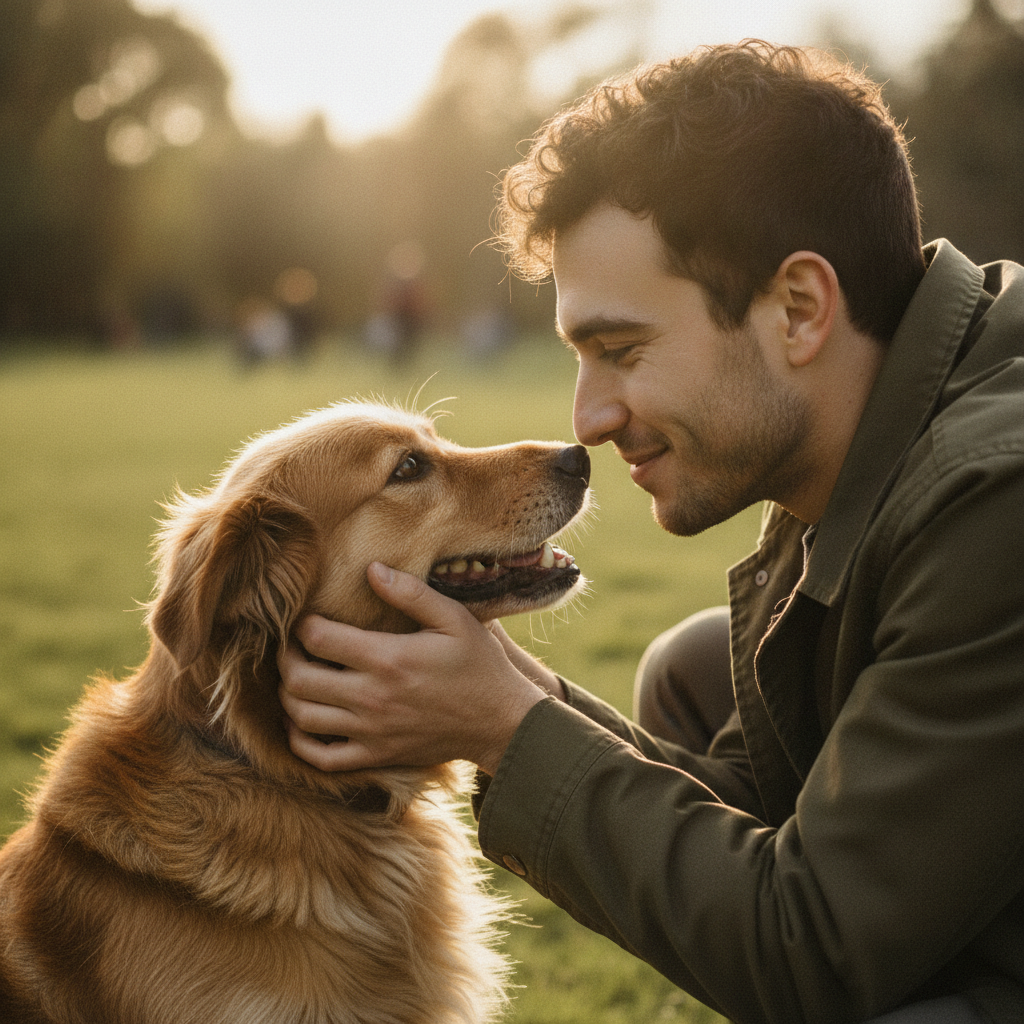
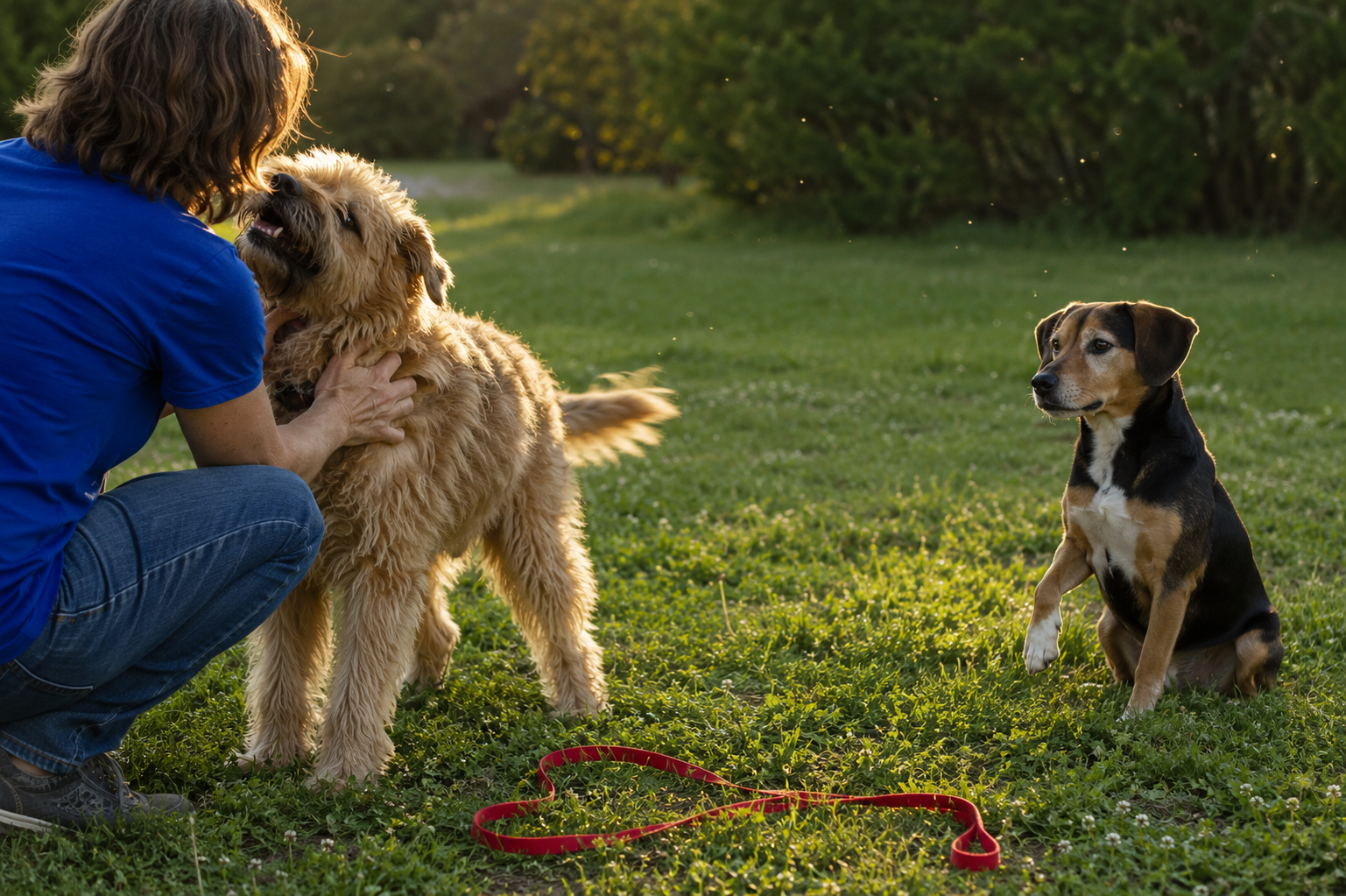
You sit down to pet the neighbor’s dog and your own dog materializes, wedging between you two like a jealous ex. It sure looks like jealousy. Headlines agree; every couple of years a new study announces that science has “proven” dogs get jealous. But if you actually read how those studies measured the emotion, a more honest and more interesting picture appears, one where the popular conclusion might be right for the wrong reasons.
Here is the thesis worth holding onto: the evidence that dogs feel true jealousy is thinner than the headlines suggest, but the evidence that they experience something real when your attention goes elsewhere is solid. The label is up for debate. The behavior, and your job managing it, is not.
What the studies actually did
The research on canine jealousy is genuinely mixed, and it helps to see why.
A widely cited 2014 study got the ball rolling by adapting a test used on human infants and finding jealous-looking behavior when owners cooed at a realistic fake dog. Then a 2018 study published in Animal Cognition went looking for the same effect and did not find compelling evidence for it, though its small sample and the wide variation between individual dogs could easily have masked a real effect. So already the picture is muddy.
The most talked-about entry came in 2021, in the journal Psychological Science. Researchers studied 18 dogs watching their owners interact with a lifelike fake dog. Then they dropped a barrier so the dog could no longer see the fake rival, and had the owner reach behind it to “pet” the hidden fake dog. In a comparison trial, the owner instead petted a fleece tube, with the fake dog present but ignored. The measure of jealousy was blunt but clever: how hard the dog pulled on a leash toward its owner in each situation.
The dogs pulled hardest, more than twice as hard, when their owner appeared to be petting the rival dog, even when they could not see it happening. They did not pull much for the inanimate fleece tube, or when the fake dog was merely nearby but ignored. The researchers concluded this was jealousy, and, notably, that dogs can form a mental picture of an interaction they cannot actually see.
Where the interpretation gets shaky
That last finding, dogs reacting to an interaction hidden behind a barrier, is genuinely striking and hard to explain away. It suggests real cognitive sophistication. But “jealousy” is a big claim to hang on one measurement.
The obvious problem is that pulling toward your owner has more than one explanation. A dog straining toward a person who is petting another dog might be jealous, or might just want to join a fun social moment. Plenty of dogs love company and pull toward any interaction that looks like it involves attention, dogs, or both. The pull could reflect simple attention-seeking, or plain FOMO, rather than the specific ache of jealousy. The 2021 study measured the behavior well but did not fully rule out these simpler stories, and one measure, leash force, is a thin thread to hang a complex emotion on.
So the fair verdict is split. The research makes a strong case that dogs track and react to their owner’s social interactions, including ones they cannot see. It makes a weaker case that the specific emotion involved is jealousy rather than something more general.
“I tell owners not to get too hung up on the vocabulary,” says Dr. Nina Kohl. “Whether we call it jealousy or resource-guarding-of-you or just wanting in on the moment, the dog is telling you the same thing: your attention is a resource, and they noticed it went somewhere else. That’s the part you manage, and you can manage it without settling the philosophy.”
Why “jealousy” may still be the right word
None of this means dogs are emotionless calculators. The behaviorist Patricia McConnell has argued, in her writing on canine emotion, that jealousy is not actually a complicated feeling, and that the tension she sees between dogs when one gets attention and the other does not looks a great deal like what we would unhesitatingly call jealousy in a young child. Her point lands: it would be strange to grant the emotion to a toddler and deny it to a dog showing the same behavior, especially when a dog plainly registers that it is being left out of something good.
That is probably the most defensible position. Dogs almost certainly experience a jealousy-like state, an unhappy awareness of “you have it, I don’t,” even if the laboratory proof is not as airtight as the headlines imply. Viewing jealousy as uniquely human has never made much sense.
What newer research adds
The 2021 Psychological Science study remains the strongest experimental evidence to date, and it nudged the scientific consensus toward accepting that dogs have some jealousy-like capacity, while methodological arguments about how to measure it are ongoing. The broader trend in animal-emotion research points the same way: over the past decade, scientists have grown more comfortable attributing real emotional lives to dogs, not less. Expect the debate to keep refining how to test it rather than relitigating whether dogs feel something when your affection wanders.
What to do with a jealous-seeming dog
The practical part does not wait on the science. If your dog crowds in, nudges, or gets tense when you give attention elsewhere, treat it as ordinary and manageable behavior rather than a character flaw. Make sure the jealous-seeming dog gets reliable one-on-one attention of their own, so your affection feels abundant rather than scarce. Reward calm behavior when you are petting another dog or person, so staying relaxed becomes the thing that pays. And watch for tension tipping into genuine guarding or aggression between dogs in the home, which is the point to bring in a professional.
Call it jealousy, call it FOMO. Your dog knows when the good thing is happening to someone else, and a little deliberate reassurance goes a long way.
References
- Harris, C. R., and C. Prouvost. “Jealousy in Dogs.” PLOS ONE, 2014. journals.plos.org/plosone/article?id=10.1371/journal.pone.0094597.
- Bastos, A. P. M., et al. “Dogs Mentally Represent Jealousy-Inducing Social Interactions.” Psychological Science, 2021. journals.sagepub.com/doi/10.1177/0956797620979149.
- McConnell, Patricia B. For the Love of a Dog: Understanding Emotion in You and Your Best Friend. Ballantine Books, 2007.