


A Skipped Meal Won't Hurt Your Dog. A Skipped Water Bowl Might
Everyone panics about the missed dinner. But a healthy dog can coast a day or more without food, while going without water starts an emergency clock fast. Here's what actually matters, and when to call the vet.

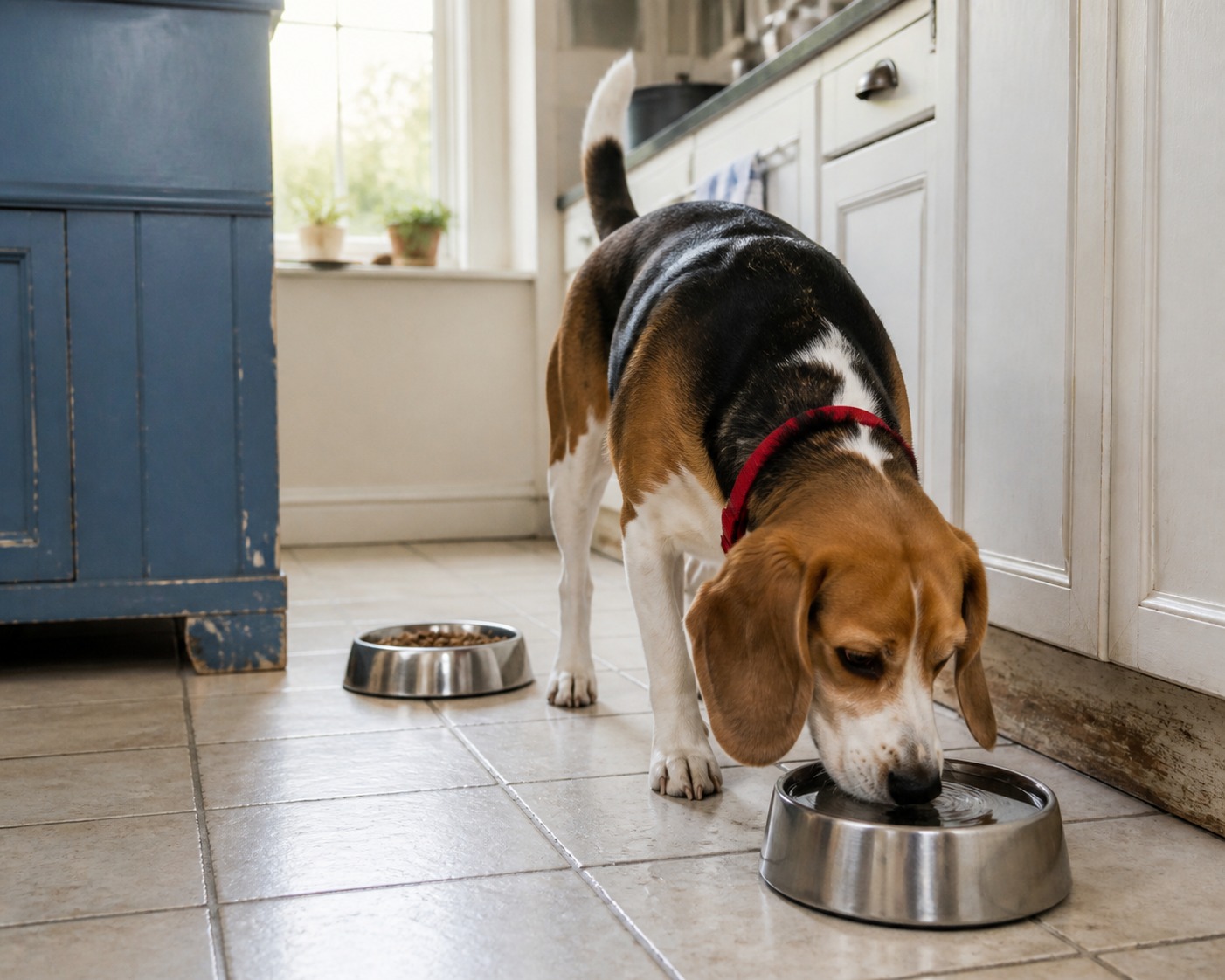
When a dog turns their nose up at dinner, the whole house tends to react like it’s a five-alarm fire. But if you ask most dogs, they believe they should be eating constantly, always, forever, so a little dramatic fasting is not the crisis it feels like. Here is the reframe worth pinning to the fridge: the scary number in this situation is almost never about food. It is about water.
A healthy adult dog can miss a meal, or even coast through a day or more without food, and be genuinely fine as long as they keep drinking. Water is the part that runs on a much shorter, much less forgiving clock. So the real questions are not “how long can my dog technically survive without eating,” but “is my dog still drinking,” and, more importantly, “why did they stop eating in the first place?” That second question is the one that actually protects your dog.
Food: more forgiving than it feels
For most dogs, an occasionally skipped meal is not a big deal. A healthy adult can go a few days without food without major harm, provided they are still drinking water. In fact, vets sometimes recommend briefly withholding food, for example while a dog recovers from surgery or a bout of severe gastrointestinal upset.
That said, “they’ll be fine” comes with fine print. Some dogs get queasy on an empty stomach and may throw up bile, a pattern called bilious vomiting, which can happen in the long stretch between dinner and breakfast. And after roughly three to five days with no real nourishment, the body starts breaking down less-than-ideal protein sources for fuel, which can lead to complications. The takeaway is not “wait five days.” It is that the true margin is wider than panic suggests, but you should never let it run that far before getting help.
Age and health shrink the margin. Young puppies, senior dogs, and tiny toy breeds carry smaller energy reserves and can run into trouble, such as dangerously low blood sugar, much sooner. Dogs with conditions like diabetes can be destabilized by missing meals. So a robust three-year-old Lab skipping breakfast is one thing; a diabetic senior or an eight-week-old puppy skipping meals is another entirely.
Water: where the real deadline lives
Going without water is far more dangerous than going without food, and the timeline is short. A single day without drinking can leave a dog dehydrated. The body depends on water for nearly everything, and dehydration sets in whenever a dog loses more fluid than they take in.
Mild dehydration shows up as lethargy, tacky or dry gums, and less urine. As it worsens, the volume of blood circulating drops, which means less oxygen reaching tissues and organs, a spiral toward hypovolemic shock. Dogs losing extra fluid through vomiting, diarrhea, or heavy urination on top of not drinking are at especially high risk. Warning signs of shock include:
- A racing heart rate
- Pale gums
- Low blood pressure
- Sunken eyes
- Weakness
- Collapse
Any of those is an emergency. This is the clock that should drive your urgency, not the untouched food bowl.
Why won’t your dog eat?
Since the “why” matters more than the “how long,” here are the usual suspects behind a lost appetite:
- Picky eating. Dogs develop real preferences for flavor, texture, and moisture. A recent diet switch, or a dog holding out for whatever is on your plate, can look like illness but isn’t.
- Stomach upset. New or inappropriate food can cause nausea and gas and briefly kill the appetite. It should pass quickly.
- An underlying illness. Almost any medical problem can suppress appetite, and in a dog with a chronic condition, a new refusal to eat may mean that condition is progressing.
- Pain when eating. Dental or throat problems make mealtime hurt, so the dog opts out.
- Anxiety. A stressed dog may not feel safe enough to let their guard down and eat.
The length of the fast tells me far less than the reason behind it. A healthy dog who skips one meal and is bright, playful, and drinking is usually just being a dog. A dog who suddenly won’t eat and also seems off, or who won’t touch water, needs to be seen, and I’d much rather see them early than after they’ve gone downhill.
The danger at the other extreme
At the far end, prolonged lack of food causes malnutrition, and chronic malnutrition becomes starvation. As it progresses, the liver, kidneys, and heart begin working at reduced capacity. Signs of a truly starving dog include weight loss, loss of muscle and body fat, a poor coat, poor stool quality, and low energy.
Counterintuitively, feeding a severely starved dog is also dangerous if done wrong. Refeeding syndrome can strike when a malnourished dog is given a large amount of food too quickly. It seems like kindness, but it can trigger severe electrolyte imbalances, the destruction of red blood cells, and organ failure. If you are caring for a very underweight or rescued dog, do not free-feed them back to health. Get a veterinarian’s guidance on a safe, gradual plan.
How to coax a reluctant eater
Eating comes naturally to dogs, and most need no convincing at all. But if yours is being finicky, a few gentle nudges can help:
- Engage their nose. Add a little warm water to the food to release the aroma. Smell drives canine appetite.
- Offer privacy. An anxious dog may need a quiet, low-traffic spot to feel safe enough to eat.
- Try hand-feeding. Some dogs perk up when food comes straight from you.
- Don’t stall on real symptoms. A sudden, out-of-character loss of appetite is worth a vet call, not a wait-and-see week.
- Ask about medication. A dog battling a long-term illness such as kidney disease, cancer, or heart disease can lose their appetite, and prescription appetite stimulants may help them skip fewer meals.
What’s new since this was written
That last point has firmer footing than it used to. The go-to appetite stimulant vets now reach for is capromorelin, a ghrelin-receptor agonist, meaning it works on the same “I’m hungry” signaling the body uses naturally. It’s an FDA-approved medication sold as Entyce for dogs (approved back in 2016) and as Elura for cats with chronic kidney disease. It comes as a liquid you give by mouth, and for a dog battling a chronic illness that has flattened their appetite, it can be a genuinely useful tool rather than a last resort. It is prescription-only, so it’s a conversation to have with your vet, not something to try on your own, but it’s worth knowing the option exists if your dog’s poor appetite is becoming a real problem.
This article covers a health topic. It’s general information, not veterinary advice. A sudden or persistent loss of appetite, or any refusal to drink water, warrants a call to your veterinarian.
References
- Bosch, Guido, et al. “The Effects of Dietary Fibre Type on Satiety-Related Hormones and Voluntary Food Intake in Dogs.” British Journal of Nutrition, vol. 102, no. 2, 2009, pp. 318–325. Link
- U.S. Food and Drug Administration. “FDA Approves Entyce (Capromorelin Oral Solution) for Appetite Stimulation in Dogs.” Link
- U.S. Food and Drug Administration. “FDA Approves Elura (Capromorelin Oral Solution) for Managing Weight Loss in Cats With Chronic Kidney Disease.” Link
Common questions
How long can a dog go without eating after surgery?
Often several hours to a day. Appetite is usually blunted while anesthesia wears off, and food is frequently withheld on purpose. Depending on the procedure, most dogs can start eating again roughly six to 24 hours afterward.
How do I stop my dog from constantly begging for food?
Consistency. Resist the puppy eyes, keep a regular feeding schedule, and avoid handing over table scraps, which reward the begging. Feeding your dog before or during your own meals can also help settle the routine.
Not a substitute for your vet. Our guidance is educational. For urgent symptoms, contact a vet or emergency clinic right away. Editorial standards
Dr. Nair is a veterinarian focused on diet and feeding. She covers everyday nutrition, treats, and the many "can they eat this?" questions owners ask, grounding each answer in what is actually safe and sensible for dogs and cats.
Meet our experts ↗Keep reading
 FoodFiber for Dogs Isn't One Thing. That's Why It Backfires.Dr. Priya Nair · 7 min
 Health & WellnessThere's a Number for 'Drinking Too Much.' Most Dog Owners Don't Know It.Dr. Lena Park · 8 min
 Health & WellnessMucus in Your Dog's Poop Is Not the Problem. Its Company Is.Dr. Amara Solis · 8 min
 FoodRaw Feeding Promises a Lot. The Evidence Delivers a Lot Less.Dr. Amara Solis · 8 min
 FoodRice Isn't a Superfood for Dogs. It's Something More Useful.Dr. Nina Kohl · 8 min
 Health & WellnessYour Dog Becomes an Adult Three Separate TimesDr. Ravi Mehta · 9 min