 Medically reviewed
You pick up after your dog, and something is off. The stool is glazed, wrapped in something jelly-like and slick.
The instinct is to treat that coating as the diagnosis. It is not. Mucus is the wrapping paper, and the gut wraps things in it all day long, in every healthy dog, on every ordinary walk. The gastrointestinal tract makes, secretes, and reabsorbs mucus continuously. It is 74 to 95 percent water, with proteins, fats, and enzymes mixed in, and it exists to do two boring, essential things: keep the contents sliding along, and lay down a protective film between the intestinal wall and everything unpleasant passing through it, bacteria included.
So mucus in the stool is not a symptom on its own. It becomes information only when you read what is next to it.
The three questions that decide everything
Before you look anything up, run these.
Is it new, or is it every day? A one-off slick stool in a dog who is bouncing around, eating, and behaving normally is almost never the beginning of a story. Mucus that shows up on most stools, week after week, is a different animal, and it points toward chronic inflammation rather than a bad afternoon.
Is it traveling alone? Mucus by itself in a happy dog: watch and wait. Mucus with a companion, and the companions are the ones that matter, means it is time to call. Those companions are diarrhea, frequent bowel movements, sudden urgency, straining to go, nausea, vomiting, a dropping appetite, and weight loss.
What color is it? This is the one owners never think to note, and it is the fastest read in the whole article.
The color read
- Clear or slightly cloudy. The ordinary kind. This is normal digestion doing its job, and on its own it does not need a phone call.
- Green-tinged. Often means a lot of bile is coming through, which happens with gallbladder trouble, or means your dog has been grazing on grass like a goat. Context usually tells you which.
- Black and tarry. This is the one to take seriously. Dark, tarry material is digested blood, which means bleeding somewhere upstream, in the stomach or small intestine. Do not wait it out.
- Red. Fresh blood, which points to significant inflammation or bleeding lower down, in the colon or rectum.
- With or without diarrhea. Mucus can coat a perfectly formed stool, which is the version most people notice. Mixed into diarrhea it is easy to miss entirely, which is why the color and the other signs carry more weight than the mucus itself.
Why it showed up: the usual suspects
When mucus goes from trace to obvious, the usual explanation is colitis, meaning inflammation of the colon. What lit the fire is the real question, and the list is shorter than you would think.
A diet change made too fast. The single most common and most preventable cause. Swapping foods overnight jolts the gut into inflammation, and inflammation cranks up mucus output. Any food transition should be spread across a week or two.
Food intolerance, or a true allergy. Dogs can develop either at any age, and the two behave differently. A genuine food allergy is an immune response to a specific protein, and it tends to show up on the skin: red, itchy, flaky. An intolerance is a digestive reaction, and it is the one that produces gas, loose stool, and slime.
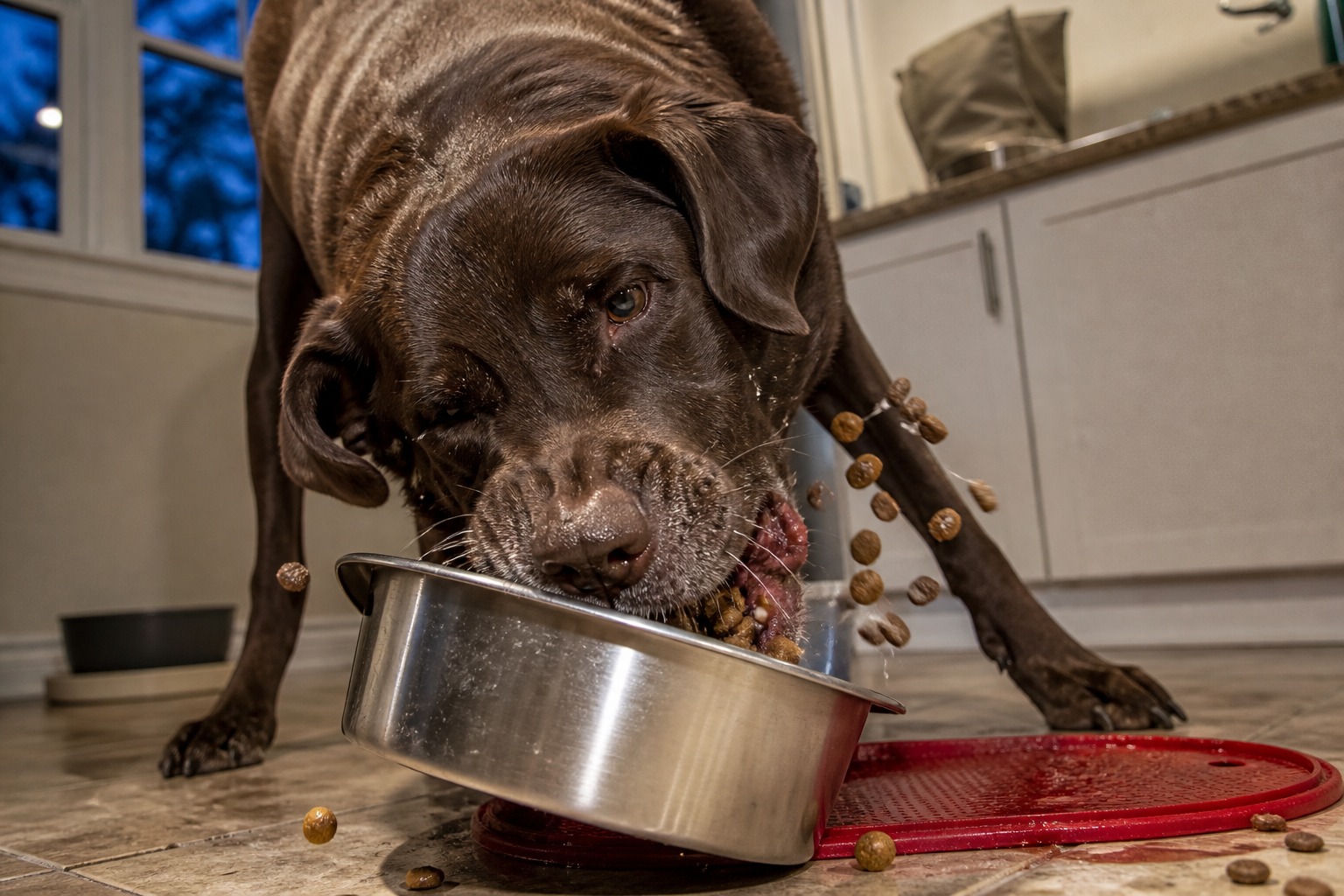
Dietary indiscretion. The technical term for the trash can. Spoiled food and garbage carry bacteria that can inflame the intestines anywhere from mildly to severely, bringing vomiting, mucusy diarrhea, nausea, and belly pain along with them.
Inflammatory bowel disease. Chronic inflammation of the GI tract, with vomiting, diarrhea, weight loss, and persistent mucus. This is the diagnosis behind a lot of the “it never really goes away” cases.
Intestinal parasites. Giardia and roundworms in particular are excellent at producing diarrhea absolutely loaded with mucus.
Dysbiosis. An imbalance in the gut’s bacterial population, either too few of the helpful species or an overgrowth of the unhelpful ones, which tips the intestine into inflammation. Recent antibiotic courses are a classic setup.
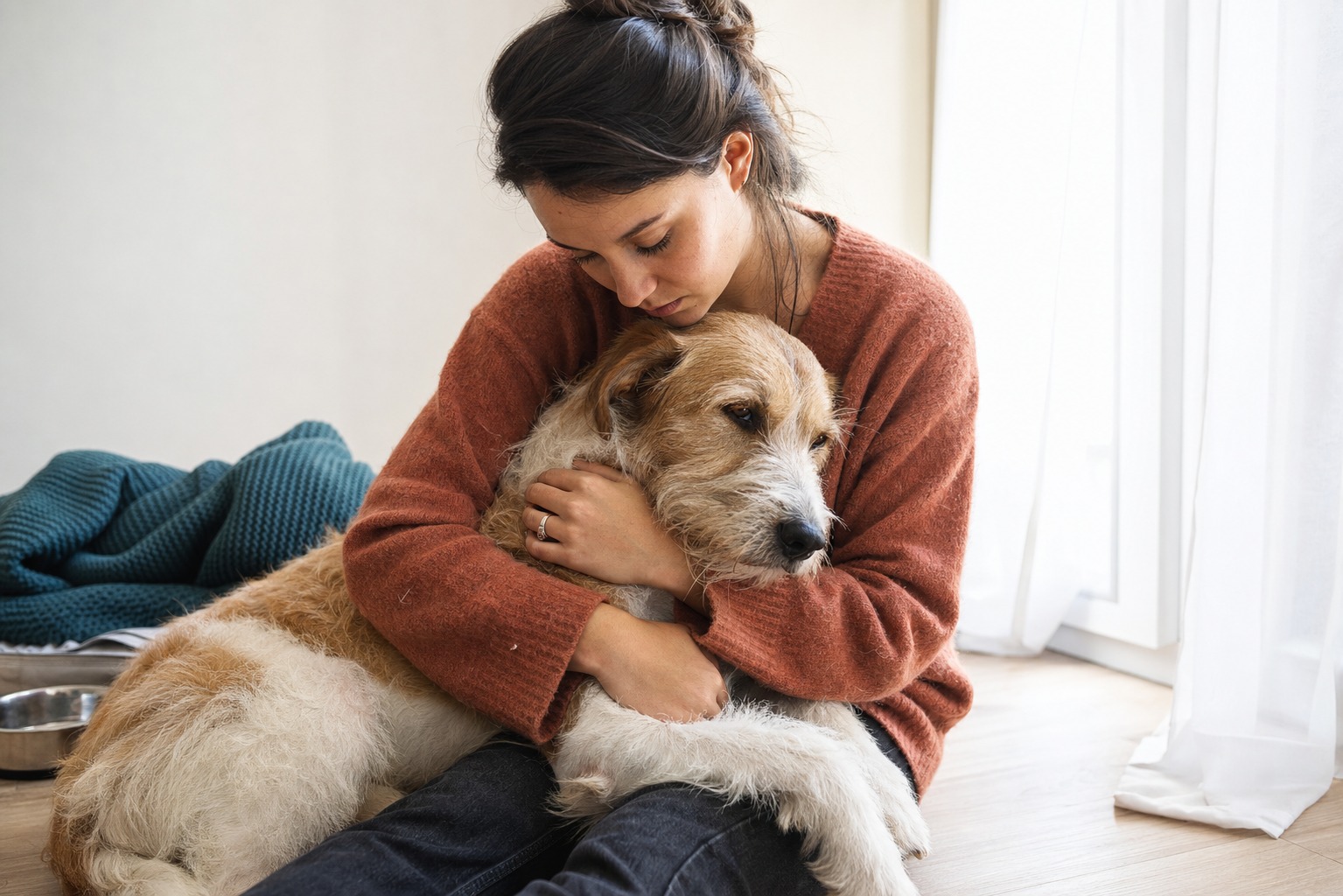
Stress. Genuinely, and more often than people expect. Travel, boarding, a house move, a new baby, or a hard day of overexertion can all trigger colitis in a susceptible dog. The gut listens to the nervous system.
Call the vet now if
These are the hard stops, and they do not require a waiting period:
- Blood in the stool, either dark and tarry or bright red
- Pain when defecating
- Frequent or large-volume diarrhea
- Persistent vomiting
- Weakness and lethargy
Anything on that list buys you a same-day call. Persistent GI signs of any kind, even mild ones, buy you an appointment this week.
The mucus is rarely what I am worried about. I am worried about the dog attached to it. A slick stool and a wagging tail is a very different visit than a slick stool and a dog who has gone quiet and stopped finishing dinner.
What actually happens at the appointment
There is no test for “mucus.” Your vet is working backwards from it, and the sequence is fairly standard.
It starts with history, which is where you earn your keep. Recent food change? Trash raid? Boarding, travel, a new home? A course of antibiotics in the last month? These questions are not small talk, and a good answer can save your dog a workup.
Then the physical exam, looking for abdominal pain, dehydration, weight loss, and the signs of malnutrition that tag along with parasites and long-running digestive disease.
From there, testing is targeted rather than shotgun: a fecal exam or culture, bloodwork, and imaging like radiographs or ultrasound when the picture warrants it. If the story sounds chronic, and food allergy or inflammatory bowel disease is on the table, expect a structured food trial and, in some cases, an intestinal biopsy. Biopsy sounds dramatic and is often the only way to separate diagnoses that look identical from the outside.
Treatment follows the cause, not the symptom
The good news buried in all of this is that recovery is usually quick, because most cases are the boring kind.
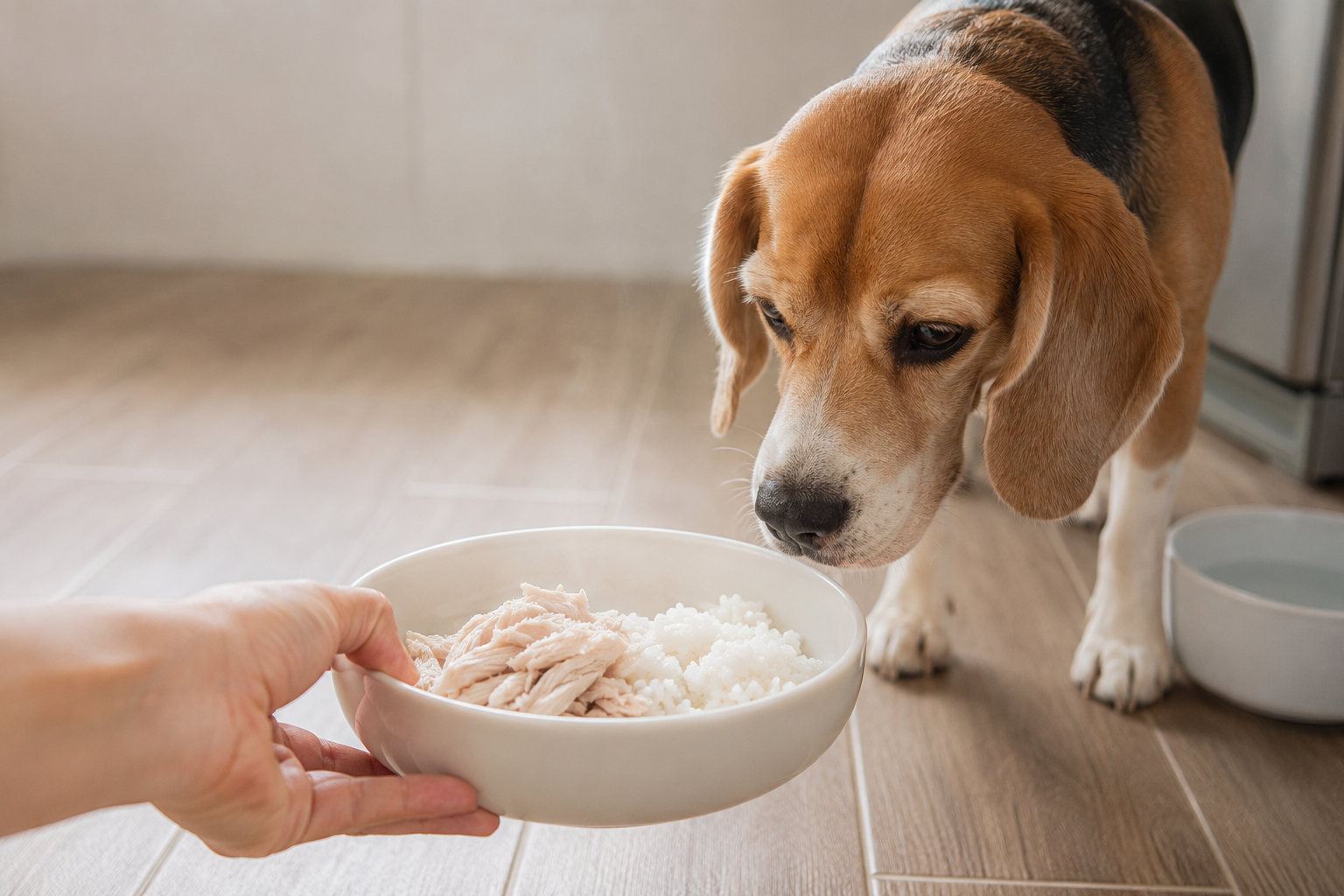
Mucus from stress or a rushed diet change generally resolves on its own. A short run of a bland diet, whether a prescription GI formula or plain unseasoned chicken and rice, is often all the support the gut needs.
Garbage gut may also need the bland diet, but it frequently comes with extras: anti-nausea medication and fluid therapy for the dogs who got properly sick.
Parasites need deworming, chosen based on what the fecal exam actually finds rather than a guess.
Dysbiosis is where probiotics do real work, particularly in a dog who has recently finished antibiotics.
And the chronic cases, the inflammatory bowel disease and food allergy dogs, usually need a long-term dietary change. That often means a prescription diet built to be highly digestible, or one built around a protein the immune system has never encountered before. Duck, rabbit, and fish are the usual candidates. On top of the diet, a subset of IBD dogs need drugs held for the long term: an antibiotic, something anti-inflammatory, or a medication that suppresses the immune response driving the damage.
What newer research adds
The chronic end of this has moved recently, and it is worth knowing about if your dog is the one who never quite gets better.
In January 2026, the American College of Veterinary Internal Medicine endorsed an updated consensus statement on chronic inflammatory enteropathy in dogs, laying out a stepwise diagnostic approach rather than the old habit of trying everything at once. Practically, that means your vet has a clearer roadmap for what to try, in what order, before reaching for a biopsy or a strong drug.
The other shift is the gut microbiome. There is now a validated dysbiosis index, a single number calculated from a stool sample that tells your vet how far your dog’s bacterial population has drifted from normal. It has moved “your dog might have a gut imbalance” from a hunch into something measurable, and it is starting to guide which dogs actually benefit from microbiome-directed treatment rather than getting a probiotic thrown at them out of habit.
Both changes point the same direction: if your dog’s mucus has been a monthly event for a year, there is a real diagnostic path now, and “just feed the bland diet again” is no longer the whole answer.
Bottom line
Mucus is normal plumbing. A little of it in your dog’s stool, in a dog who is otherwise thriving, is not a problem to solve.
Start worrying when it stops traveling alone: when the stool turns bloody, dark, or red, when your dog stops eating, drops weight, strains, vomits, or goes flat, or when the slick stool becomes the everyday stool. That is your signal, and it is a good one. Take it to your vet with the details, including the color, and you will get to an answer faster than most owners do.
References
- ACVIM-endorsed consensus statement: guidelines for the diagnosis and treatment of chronic inflammatory enteropathy in dogs (Journal of Veterinary Internal Medicine, January 2026)
- Microbial Gene Profiling and Targeted Metabolomics in Fecal Samples of Dogs With Chronic Enteropathy With or Without Increased Dysbiosis Index (Journal of Veterinary Internal Medicine)
- Canine chronic enteropathy: current state of the art and emerging concepts
- Colitis in Small Animals (Merck Veterinary Manual)