Search for grooming advice and you’ll drown in technique: which brush, which blade, how to hold the clippers. That’s the easy part, and it’s also not where dogs get hurt. The genuinely important skills are quieter. Knowing which jobs belong at home and which belong to a professional. Knowing how to screen that professional in an industry that, in most of the country, requires no license at all. Get those two things right and the rest is just hair.
So let’s start where the real decisions are, not at the clipper.
Drawing your line: DIY versus the pro
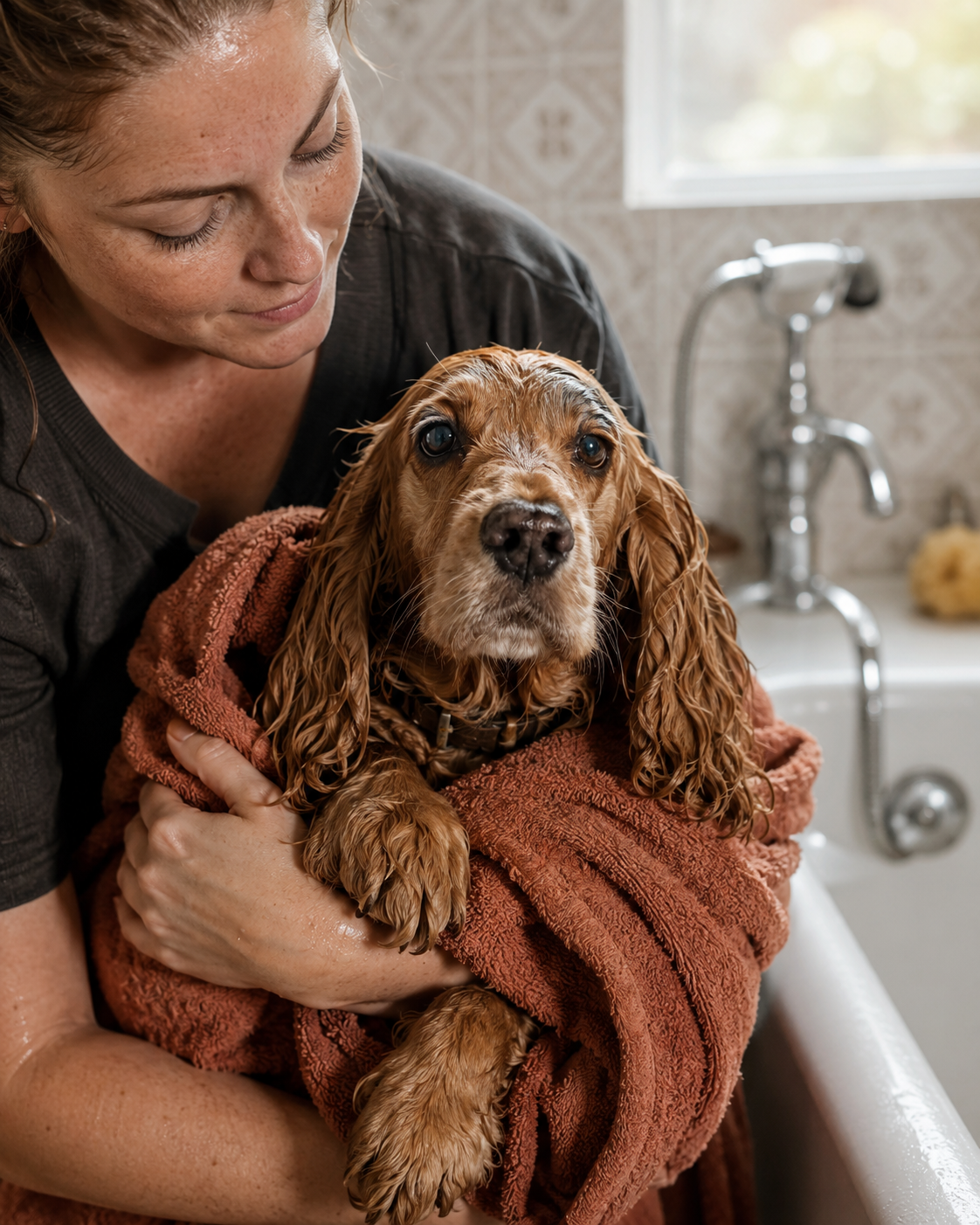
The first question isn’t “how do I groom my dog,” it’s “how much of this should I even be doing myself?” For a short-haired dog, or when regular salon trips aren’t in the budget, a lot of upkeep is reasonable to handle at home: baths, brushing, nail trims, and ear cleaning.
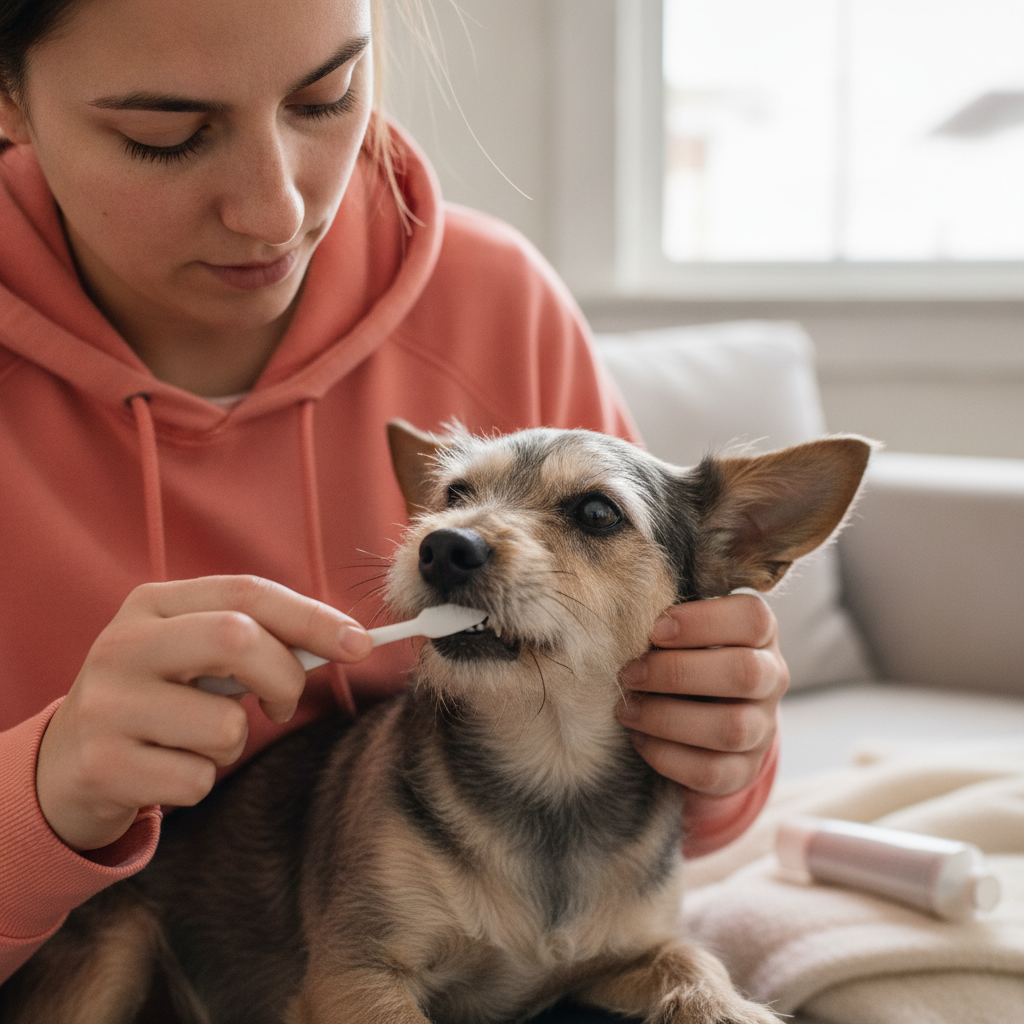
To do that well you’ll want a brush that clears the undercoat without irritating the skin, a shampoo matched to your dog’s coat (an oatmeal-based formula, for instance, is soothing for sensitive skin), fragrance-free paw wipes for tidying up between baths, and either clippers or an electric nail grinder. If you’re adding dental care, a dog toothbrush and enzymatic toothpaste round it out.
Two honest cautions on the at-home stuff. Most dogs tolerate a bath, but if getting yours into the tub is a battle, a smear of peanut butter on the tub wall or a few well-timed treats can turn it into a positive. And nails deserve real respect: inside each one runs the quick, a nerve-and-blood-vessel bundle that bleeds freely and genuinely hurts if you cut it. It’s visible as the pink core in white or clear nails, but on black nails you’re working blind, so trim tiny slivers at a time or switch to a file or grinder (introduce the grinder slowly, since the motor noise spooks some dogs). When in doubt, watching a demonstration before your first attempt beats improvising.
Where the pros earn their fee
Here’s the line for most dogs: the trimming and shearing, especially anywhere delicate, is worth handing off. Cutting around the eyes, ears, and muzzle is precise, high-stakes work, and a slip there is a lot worse than an uneven flank. Long-haired and outdoorsy dogs need regular haircuts, and some coats are genuinely tricky. Doodle-type coats, for example, grow fast and mix textures, curly here, stringy there, dense everywhere, which makes them unpredictable to work with and easy to mat.
What you pay depends on your dog and your region, and a groom generally runs somewhere from about $25 to well over $100, with a big double-coated dog costing more than a small one. Many salons finish with a spritz of cologne and a bandana, which is the fun part.
How to screen a salon (the part most people skip)
You wouldn’t hand your own head to a stranger with scissors, so apply the same standard to your dog. Before you book, ask:
- Is the groomer certified and a member of a major grooming association?
- Does the salon require proof your dog is current on vaccinations?
- Is the space clean, tidy, and organized, with no urine or feces odor?
- Can you tour before the appointment and watch a grooming in progress?
- Does the groomer have real experience with your dog’s specific breed and coat?
- Do they show genuine concern for your dog’s health and any behavioral quirks?
There are, unfortunately, real horror stories of dogs injured or worse at grooming operations, including at some large chain locations, which is exactly why this screening isn’t paranoia. It’s due diligence.
Set your dog up for a good appointment
Once you’ve booked, a little prep goes a long way. Walk your dog beforehand so they can relieve themselves and burn off some nervous energy, and skip feeding right before drop-off. Bring their vaccination records, and flag any health or behavioral issues up front. That last part matters more than people realize: an experienced groomer will already know that flat-faced breeds like Bulldogs and Boston Terriers must be watched carefully under a dryer because of their breathing limitations, but they can’t know that your dog is terrified of the blow-dryer, or gets snappy when the clippers come out, unless you tell them.
And when you pick up, read your dog, not just their haircut. Are they their normal, happy self, or do they seem shut down and shaken? If your dog is comfortable with a particular groomer, stick with that person the way you’d stay loyal to a good stylist, so there’s a familiar face each visit. If your dog dreads the whole experience, that’s meaningful information. Grooming should feel good, closer to a spa day than an ordeal.
What’s new: the industry is largely unregulated, and dryers are the danger
This is the update that reframes everything above, and it’s why vetting a groomer is more than a nicety. As of 2025, no U.S. state requires a license to work as a dog groomer. The field is essentially self-policed, which means the burden of quality control lands squarely on you.
The most documented hazard is the cage or box dryer, an enclosed chamber a dog is placed in to dry with forced hot air. Left unattended, these have caused fatal overheating; temperatures inside can climb high enough to kill, and there are on-record deaths of dogs who overheated when a dryer’s shut-off failed. In response, some jurisdictions have acted. Los Angeles County code prohibits fully enclosed cage dryers without safety vents and requires that any dog in a cage dryer be checked at least every 15 minutes. New York has moved to restrict their use and require a person in the room. But these rules are local and patchy, not national.
The practical takeaway: ask directly how your groomer dries your dog, and whether cage dryers are used unattended. A good salon will welcome the question. In an industry with so few rules, the informed owner is the real safety system, which loops right back to the whole point of this piece. The scissors are the easy part. Choosing the hands that hold them is the skill worth developing.