


That Crunching Sound Isn't a Quirk. It's a Symptom.
Teeth grinding in dogs (bruxism) is almost never just a weird habit. It usually points at pain, nausea, dental trouble, or anxiety, and it deserves a vet visit before it damages teeth.

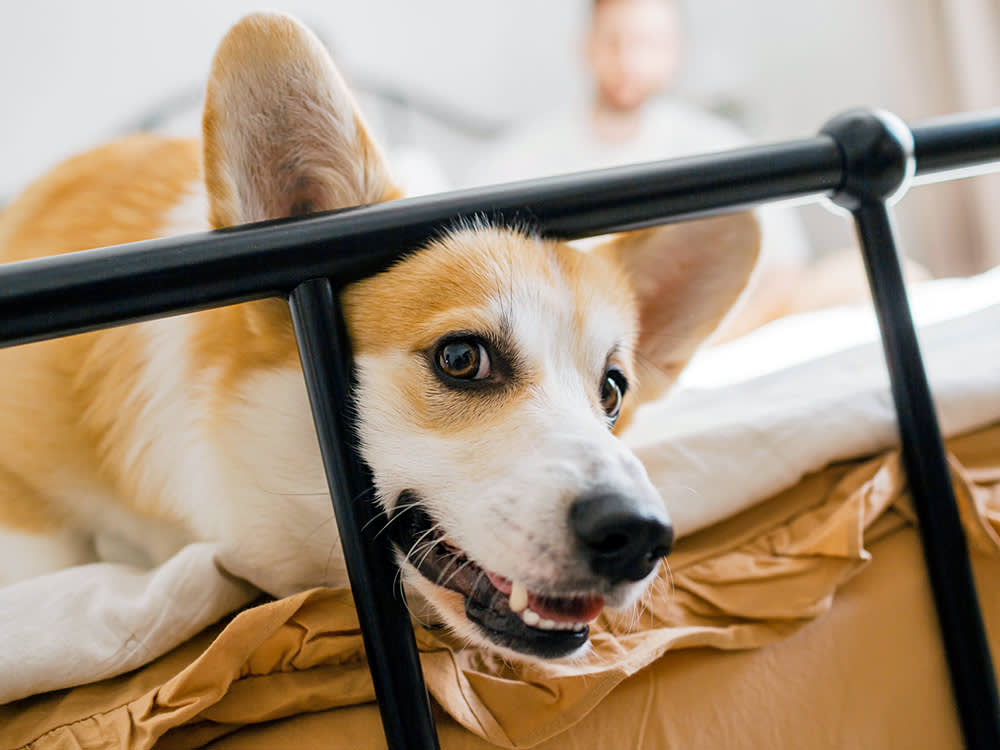
You hear it at night, usually: a slow, gritty crunch-crunch-crunch coming from a dog whose mouth is completely empty. People grind their teeth in traffic and in spreadsheets, so it is tempting to file your dog’s version under stress and move on. Here is the problem with that: in dogs, teeth grinding, which vets call bruxism, is a symptom with a cause you can usually find. Treat it as a quirk and you can miss GI disease, a painful mouth, or worse, while the grinding itself sands healthy teeth down to sensitive, fracture-prone stubs.
No need to panic over one odd episode. But if the sound keeps coming back, something is driving it, and your job is to find out what.
“A dog who grinds is telling you something hurts or something feels wrong, and they only have so many ways to say it,” says Dr. Ravi Mehta. “I would much rather examine a grinder early than meet the same dog a year later with worn-down, painful teeth.”
What bruxism actually is
Bruxism covers tooth-on-tooth grinding, jaw clenching, and sometimes teeth chattering. It can be acute, meaning it just appeared and has only happened an episode or two, or chronic, going on for weeks to months. That distinction matters to your vet: sudden-onset grinding points harder at new pain or nausea, while long-running grinding raises questions about tooth alignment, ongoing GI trouble, or an anxiety pattern that has settled in.
The usual suspects, in rough order of how often vets find them
A mouth that doesn’t line up. Malocclusion, teeth that meet where they shouldn’t, forces tooth surfaces to collide and scrape. Beyond the noise, that contact can be uncomfortable and can chip teeth or injure the gums and palate over time.
A gut that feels awful. Nausea is a quiet misery in dogs, and grinding is one of its odder expressions. Gastroenteritis, acid reflux, and other painful GI conditions all show up on the bruxism suspect list.
Pain somewhere, anywhere. Dogs with nonspecific pain, not necessarily in the mouth, may clench their jaws the way a person with a migraine clenches their fists. The grinding is the audible edge of tension.
Stress and anxiety. Some dogs do grind under emotional pressure. The catch is that anxiety is a diagnosis of exclusion here: you land on it after the mouth, gut, and nervous system check out, not before.
Neurological conditions. Less commonly, epilepsy and other neurological problems produce repetitive chewing or biting motions that sound exactly like grinding. These dogs usually show other signs, but not always.
What the vet visit looks like
Expect a genuinely thorough physical: an oral exam, abdominal palpation, plus neurological and orthopedic checks, because the cause list spans all of those systems. Depending on what the exam turns up, your vet may add bloodwork, a urinalysis, or imaging.
If the mouth is the prime suspect, the definitive workup is a dental evaluation under general anesthesia, with X-rays of the tooth roots and probing of each tooth. That is not overkill. A dog cannot point to the molar that hurts, and the worst dental pain often hides below the gumline where an awake exam cannot reach.
How treatment follows the cause
There is no grinding pill, and that is good news, because fixing the driver usually silences the noise.
- Dental causes get dental treatment, extractions, corrections, or other procedures depending on what the X-rays show.
- GI causes get managed at the source: diet changes, anti-nausea or reflux medication, or whatever the underlying condition calls for.
- Anxiety-driven grinding responds to behavior work with a qualified trainer or behaviorist, and severely anxious dogs may benefit from anti-anxiety medication alongside training rather than instead of it.
Prevention, honestly, is mostly detection. You cannot head off grinding without knowing its cause, so the preventive move is the unglamorous one: get the exam early, before tooth wear stacks up.
Why acting early beats waiting
Grinding is hard on enamel, and dogs have less margin than you would think: worn or cracked teeth expose the sensitive inner tooth, which hurts, which can drive more grinding. Meanwhile, dental disease needs no help. Around 80 to 89 percent of dogs over age three already have some degree of periodontal disease, so a mouth that is also grinding is compounding trouble. Two problems that each get worse with time do not cancel out.
The rule of thumb is simple: more than once or twice, and it earns a vet visit. Bring a video of the sound if you can capture one. Your future self, and your dog’s molars, will be glad you did.
References
- Cornell University College of Veterinary Medicine: Periodontal Disease
- Wallis, C., and L. J. Holcombe. “A Review of the Frequency and Impact of Periodontal Disease in Dogs.” Journal of Small Animal Practice, vol. 61, no. 9, 2020, pp. 529-540. doi:10.1111/jsap.13218
Common questions
Why does my dog make a crunching noise with nothing in their mouth?
Empty-mouth crunching is the classic presentation of bruxism. Common drivers include misaligned teeth, oral pain, nausea or reflux, stress, and occasionally neurological conditions. If it happens more than once or twice, have a vet take a look.
Why is my dog clenching their jaw?
Jaw clenching can accompany pain, stress, anxiety, or neurological issues. A dog who clenches persistently, or who struggles to open their mouth, needs a veterinary exam promptly, because that combination is often painful.
Not a substitute for your vet. Our guidance is educational. For urgent symptoms, contact a vet or emergency clinic right away. Editorial standards
Dr. Park is a board-certified emergency and critical care specialist. She reviews our health and safety content for clinical accuracy and contributes guides on recognising urgent conditions. Her focus is helping owners act quickly and correctly when it matters most.
Meet our experts ↗Keep reading
 Health & WellnessBlack on Your Dog's Gums: The One Question That Tells You Whether to WorryDr. Priya Nair · 6 min
 Health & WellnessBrush the Ones You Want to Keep: The Dog Dental Rule Nobody Says Out LoudDr. Nina Kohl · 6 min
 First DaysYour Puppy Wants a Bully Stick. Their Teeth Aren't Ready.Dr. Mara Chen · 6 min
 Health & WellnessPuppy Breath Doesn't Go Bad. It Goes on Schedule.Dr. Mara Chen · 6 min
 Health & WellnessAn AI Can Now Grade Your Dog's Teeth From a Phone Photo. The Catch Is What It Can't DoDr. Amara Solis · 5 min
 Health & Wellness'Dog Breath' Isn't Normal. It's the First Symptom of a Disease You Can PreventDr. Lena Park · 9 min