 Medically reviewed
Nobody wants to talk about dog farts, which is a shame, because the single most useful fact about them gets lost in the embarrassment: a large share of your dog’s gas is not something they ate. It is air they swallowed while eating. Get that one idea, and most of what follows becomes obvious.
Occasional flatulence is completely normal and a healthy sign the gut is doing its job. Excessive, relentless, eye-watering gas is a different story, and it usually traces back to some combination of how your dog eats, what your dog eats, and, less often, an underlying health problem. The good news is that the biggest lever, how they eat, is also the easiest one to pull.
Why swallowed air is the usual suspect
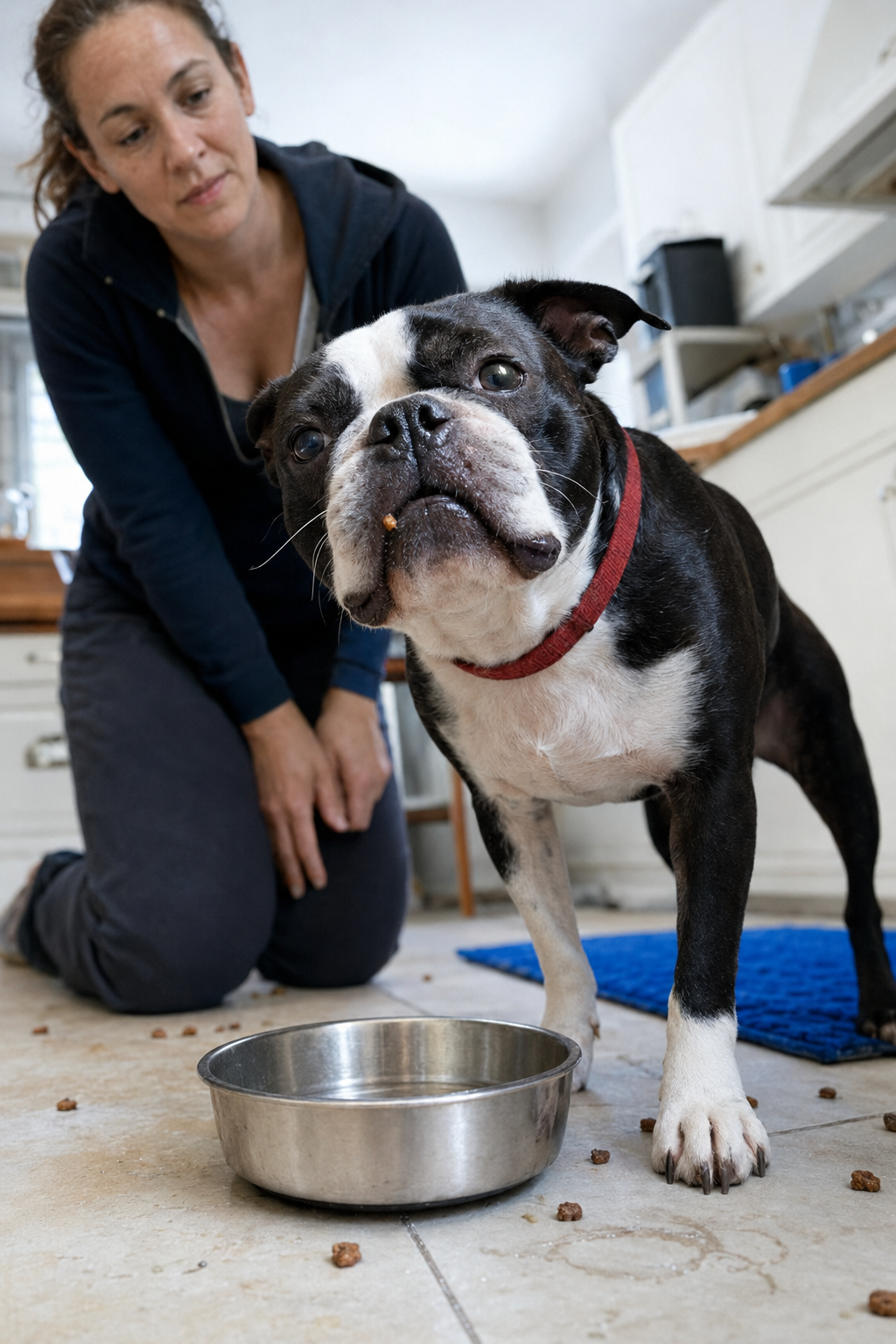
When a dog inhales their meal, they take in a mouthful of air with every gulp, and that air has to come out somewhere. This is why the gassiest dogs are so often the fast eaters and the flat-faced breeds.
Brachycephalic dogs, the Boxers, Pugs, and Bulldogs of the world, are built to swallow air. Their shortened muzzles mean they gulp as they eat and breathe, and mixed breeds with a flat-faced parent tend to inherit the tendency. Labrador Retrievers land on the gassy list for a different reason: they eat like the bowl is about to be taken away, hoovering food and air together. Weight matters too, since overweight dogs have more trouble with gas, and so do senior dogs, whose digestion simply runs less efficiently with age.
When gas comes on suddenly
Sometimes a dog who is normally fine turns gassy overnight, and the cause is usually something that hit the gut recently. The likely triggers include an abrupt change in food, spoiled food, a raid on table scraps or the trash, and gastrointestinal upsets such as parasites, an infection, a food intolerance, or irritable bowel syndrome. Travel and boarding can do it too, both from stress and from a shift in the gut’s bacterial balance when a dog is dropped into a new environment.
Most sudden gas is benign and passes. But a few serious conditions, intestinal obstruction, a swallowed foreign object, or impaired gut motility, can drive up flatulence, so if your dog seems genuinely unwell rather than just windy, get them checked.
What to actually do about it
If your dog is healthy and just gassy, you have real options, and they stack. Start with the mechanics of eating, then adjust the diet, then consider a supplement.
Slow the eating down. This is the highest-value change for most dogs. Feed smaller, more frequent meals, and swap the open bowl for a slow feeder or puzzle feeder so your dog physically cannot inhale the food. A raised feeder helps some dogs eat more calmly. Less gulping means less swallowed air, which means less gas.
Upgrade and simplify the food. What goes in shapes what comes out. Many budget foods lean on fillers like corn or soy that some dogs digest poorly, so a high-quality, easily digestible food with real meat and a limited ingredient list can cut gas noticeably. If your dog seems sensitive, a novel protein such as duck or venison may sit better, and for dogs with genuine food allergies, a vet-guided elimination diet, sometimes landing on a hypoallergenic or prescription gastrointestinal food, is the way to pin down the offending ingredient.
Mind the specific foods. Some foods calm the gut and some inflame it. Pumpkin, sweet potato, and cooked carrots are gentle and fiber-rich, and a spoonful of pumpkin or sweet potato mixed into a meal can help settle things (pumpkin has the bonus of easing constipation, too). On the other side of the ledger, beans, broccoli, cauliflower, and dairy are classic gas producers and worth cutting.
Consider the OTC options, carefully. A dog-specific probiotic can rebalance gut bacteria and improve digestion, supporting nutrient absorption and immune function along the way; the strains most used in pets are Enterococcus faecium and Lactobacillus acidophilus. Activated charcoal can absorb gas from the digestive tract and works as a short-term measure, for instance after your dog got into something spoiled, but you should confirm the dose with your vet and never use it long-term. One important pairing note: do not give charcoal and a probiotic at the same time, because the charcoal will bind up the beneficial bacteria and cancel the probiotic out. Space them apart. A little live-culture yogurt (with no xylitol, which is toxic to dogs) offers gentle probiotic support, and goat’s-milk yogurt is often easier on lactose-sensitive dogs. Ginger, used sparingly, can soothe the stomach, but too much causes its own upset.
There is even some hard evidence behind the classic anti-fart combo. A study in the Journal of the American Veterinary Medical Association tested activated charcoal together with Yucca schidigera and zinc acetate in dogs, and found the combination sharply reduced the worst-smelling component of the gas. So the “charcoal for odor” folk remedy is not baseless, though it is a management tool, not a cure.
Prevention beats the cure
Once the acute gas settles, a few habits keep it from coming back. Give your dog daily exercise, since a walk or a play session stimulates the digestive system and keeps things moving. Change foods gradually, over several days, rather than switching overnight and shocking the gut. Keep meals paced with a slow feeder, and keep an eye on hydration, because a dehydrated dog has a crankier gut and more frequent gas. Finally, watch the extras: trade artificial, additive-heavy treats for whole-food nibbles like a little cooked chicken, a few green beans, or a slice of apple, and do not let your dog gnaw on toys or objects they might swallow.
When to stop managing and call the vet
Most gas is a nuisance, not a diagnosis. But severe flatulence that arrives alongside bloating, a loss of appetite, diarrhea, or vomiting is a different signal entirely, and it can indicate a serious illness. In that case, your vet can sort out whether the cause is dietary, medical, or behavioral, and treat it directly. Routine windiness you can handle at home. Windiness plus a sick-looking dog is a reason to make the call.
References
- Giffard, Catriona J., et al. “Administration of Charcoal, Yucca Schidigera, and Zinc Acetate to Reduce Malodorous Flatulence in Dogs.” Journal of the American Veterinary Medical Association, vol. 218, no. 6, 2001, pp. 892–896. AVMA Journals.
- Jones, B. R., et al. “Flatulence in Pet Dogs.” New Zealand Veterinary Journal, vol. 46, no. 5, 1998, pp. 191–193. Taylor & Francis.
- American Kennel Club. “Why Does My Dog Have Gas? Causes and Remedies.” AKC.
Common questions
What can I give my dog to reduce gas?
Start with management, meaning a slow or puzzle feeder, smaller meals, and a high-quality, easily digestible food. A dog-specific probiotic can help balance the gut, and small amounts of pumpkin or sweet potato are gentle and fiber-rich. Activated charcoal can absorb gas but should only be used at a dose your vet approves, and not at the same time as a probiotic.
Which breeds are the gassiest?
Flat-faced (brachycephalic) breeds like Boxers, Pugs, and Bulldogs, because their anatomy makes them swallow air as they eat. Fast eaters like Labrador Retrievers are also prone to it, as are overweight dogs and older dogs with less efficient digestion.
When is dog gas a reason to see the vet?
When it is severe and paired with other signs, bloating, loss of appetite, diarrhea, or vomiting. Those can point to a more serious problem such as an obstruction or impaired gut motility, and they warrant a prompt exam.