


There's an Actual Number for 'My Dog Drinks Too Much Water'
Vets don't eyeball thirst, they measure it. There is a threshold that separates a hot day from a diagnosis, and you can check it at home this weekend with a measuring cup.

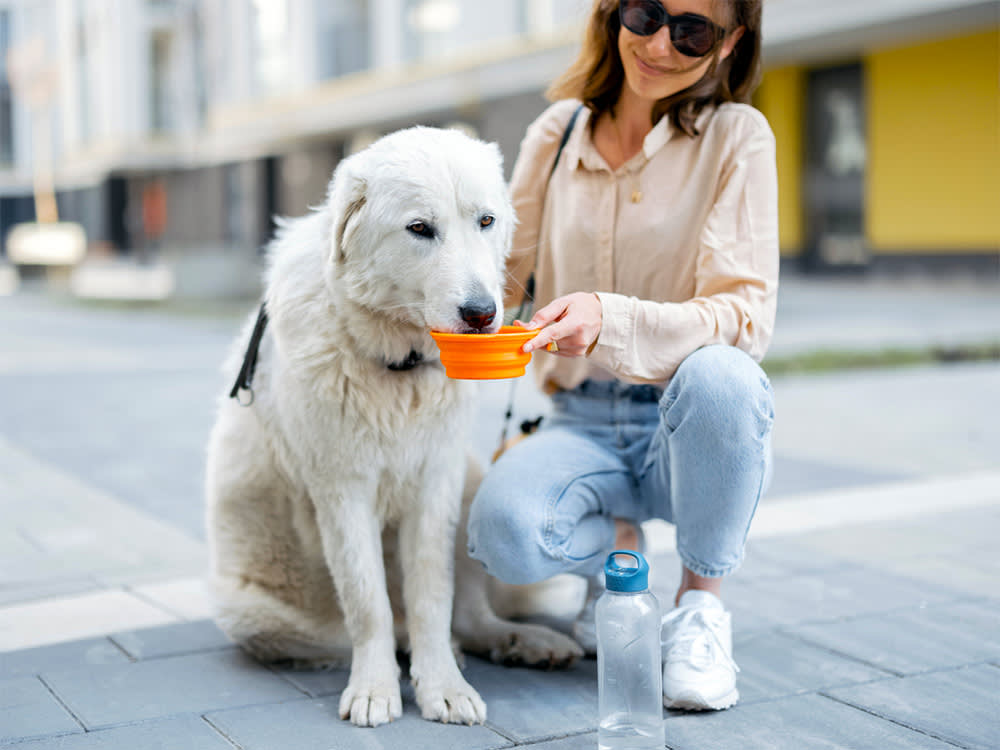
Everyone has had the moment. The bowl keeps emptying. Your dog is at the water like it’s a job. And you stand there thinking, is that a lot? Was that always a lot?
The honest problem with thirst as a symptom is that “a lot” is useless. It’s a feeling, not a fact, and it depends on the weather, the food, the walk, and how closely you happened to be watching last month.
So here’s the thing worth knowing, and it’s the thing that most articles about this topic leave out: vets don’t eyeball it. They use a number. And you can get that number at home this weekend with a measuring cup and a notebook.
The number
The clinical threshold for polydipsia, which is the medical term for excessive drinking, is water intake above roughly 100 milliliters per kilogram of body weight per day.
Its partner, polyuria, is excessive urine output, generally defined as more than 50 mL/kg/day.
For context, healthy dogs typically take in somewhere around 50 to 60 mL/kg/day, varying with how much moisture is in their food, how hot it is, and how active they are. So the threshold isn’t a hair over normal. It’s roughly double.
To make that concrete: a 20-kilogram dog (about 44 pounds) crossing 100 mL/kg would be drinking more than 2 liters a day, or a bit over 8 cups. That’s a lot of trips to the bowl and it’s a number you’d notice if you were counting.
How to actually measure it. Measure what goes into the bowl, measure what’s left at the end of 24 hours, subtract, and repeat over two or three ordinary days. One cup is roughly 240 mL. Divide your dog’s weight in pounds by 2.2 to get kilograms. Then divide.
Two caveats that make or break the test. In a multi-dog household you have to separate them for the day, or the number means nothing. And you have to count everything: canned food, broth, toilet water, puddles, the hose. Water is water.
That single measurement turns a vague worry into a data point your vet can use, and it’s the difference between “he seems thirsty lately” and “he’s drinking 130 mL/kg/day, here are three days of numbers.”
Before you panic: the boring explanations
Most increased drinking is not a disease. Look here first.
Exercise. Dogs don’t sweat the way we do. They pant, and panting evaporates water off the respiratory tract. Hard exercise means significant fluid loss and a dog who drinks hard afterward.
Heat and dry air. Same mechanism. Hot weather, dry climates, indoor heating in winter, all of it increases panting and increases drinking.
Nerves and excitement. Dogs also pant when they’re anxious, excited, stressed, or scared. Same water loss, same thirst. That post-vet, post-car-ride, post-fireworks water binge is normal.
Diet. Salt drives thirst. Jerky-style treats, salty table scraps, and some prescription diets designed to dilute urine will all push intake up. So will a switch from canned food, which is mostly water, to dry kibble, which is not. That switch alone can substantially raise how much a dog drinks from the bowl while their total water intake barely changes.
Medications. A big one, and easy to overlook. Steroids like prednisone, thyroid medication, some anti-seizure drugs, and diuretics like furosemide all increase drinking. If the thirst started within a few weeks of a new prescription, call the prescribing vet before you worry.
Puppyhood. Puppies under about four months can’t concentrate their urine as well as adults. They pee more, the urine is more dilute, and they drink more to keep up.
The common thread: these causes are episodic. A hot day, a hard hike, a salty treat. What worries a vet is thirst that is persistent and progressive, the kind that’s there every day and getting worse.
When it’s a symptom
Increased drinking is one of the earliest visible signs of several serious conditions, which is exactly why it’s worth measuring rather than shrugging at.
Diabetes mellitus. Excess glucose spills into the urine and pulls water out with it. Classic picture: drinking a lot, urinating large volumes of pale dilute urine, often eating more but losing weight anyway. Diagnosed easily on routine blood and urine tests.
Kidney disease. The kidneys lose the ability to concentrate urine, so water runs straight through. The dog drinks more to keep up with what’s being lost. One of the three most common causes of increased thirst in dogs.
Cushing’s disease (hyperadrenocorticism). Overproduction of cortisol. Increased thirst, increased urination, increased appetite, a pot-bellied look, thinning coat, panting. The other of the three most common.
Pyometra. A uterine infection in unspayed females. Increased thirst can be an early sign, and this one is a genuine emergency.
Dehydration. If your dog has been vomiting, has had diarrhea, or has run a fever, they may be drinking to replace what they’ve lost. A dog who is losing fluid and not eating is at real risk and should be seen right away.
Everything else. Certain toxins, liver disease, some cancers, urinary problems, and excessive drooling can all push water intake up. Which is the whole point of a workup: the list is long enough that guessing is a bad strategy.
What actually sends you to the vet
Not one thirsty afternoon. What matters is:
- The thirst is ongoing, not a one-day observation
- It’s progressive, more each week
- The urination changed too: more volume, more frequency, accidents in a house-trained dog, very pale dilute urine
- It comes with anything else: lethargy, appetite change, vomiting, diarrhea, weight loss, weakness
That last line is the one to tattoo on your hand. Increased drinking on its own is often nothing. Increased drinking plus one other change is a workup.
Expect your vet to run bloodwork and a urinalysis. That combination catches most of the common causes and it catches them early, which is when they’re most treatable.
The one thing I ask people never to do is take the water bowl away. If your dog is drinking that much, they’re losing it somewhere, and removing the bowl doesn’t fix the leak. It just dehydrates a sick dog. Measure the water. Don’t ration it.
Managing it at home
Your dog should have clean water available at all times, full stop. That is especially true in heat, after exercise, and for any dog on medication or with a chronic condition that drives thirst.
If you’re worried about house-training accidents or urinating indoors, the answer is more frequent trips outside, closer supervision, or temporarily restricting access to certain rooms. It is never water restriction. Talk to your vet or a certified trainer about the accidents; leave the bowl alone.
And if you’re going the other way, trying to get more water into a dog on a hot day, add canned food, offer water-rich fruit, drop a few ice cubes in the bowl, or splash a little low-sodium broth in. Most dogs don’t need convincing.
What newer research adds
The definitions themselves have held steady, and that’s useful: >100 mL/kg/day for polydipsia and >50 mL/kg/day for polyuria remain the working thresholds in current veterinary internal medicine references, and chronic kidney disease, diabetes mellitus, and hyperadrenocorticism remain the three leading causes in dogs.
What has changed is the diagnostic approach. The current stepwise workups start from a documented water intake and a urine specific gravity, a simple test on a urine sample that measures how concentrated the urine is, before running the more expensive endocrine tests. That means the single most valuable thing you can bring to your appointment is not a description. It’s a number, and a fresh morning urine sample if you can get one. Both are free, and they can cut a diagnostic path that used to take weeks down to one visit.
References
- Nichols, Rhett. “A Stepwise Diagnostic Approach to Polyuria and Polydipsia.” Today’s Veterinary Practice. https://todaysveterinarypractice.com/internal-medicine/companion-animal-polyuria-and-polydipsia/
- Merck Veterinary Manual. “Cushing Disease (Hyperadrenocorticism) in Dogs.” https://www.merckvetmanual.com/dog-owners/hormonal-disorders-of-dogs/disorders-of-the-adrenal-glands-in-dogs
- International Renal Interest Society. “IRIS Staging of CKD.” http://www.iris-kidney.com/guidelines/staging.html
- Cornell University College of Veterinary Medicine, Riney Canine Health Center. “Polyuria and Polydipsia.” https://riney.vet.cornell.edu/member-benefits-health-tips/polyuria-polydipsia-april-2024
- Zanghi, Brian M., et al. “Total Water Intake and Urine Measures of Hydration in Adult Dogs Drinking Tap Water or a Nutrient-Enriched Water.” Frontiers in Veterinary Science, vol. 5, 2018. https://www.frontiersin.org/articles/10.3389/fvets.2018.00317/full
Common questions
Do dogs drink a lot of water before they die?
Not typically. Some dogs with advanced kidney disease do have an increased urge to drink late in the illness, but many seriously ill dogs stop eating and drinking altogether at the end of life.
Should I limit my dog's water if they're drinking a lot?
No. Never restrict access to water to control drinking. If your dog is drinking excessively, they are usually losing that fluid somewhere, and taking the bowl away can cause life-threatening dehydration. Measure the intake, then take the number to your vet.
How can I get my dog to drink more water?
Most dogs don't need coaxing. If you want to top them up on a hot day, add water-rich food like canned food or juicy fruit, drop ice cubes in the bowl, or add a splash of low-sodium broth.
Not a substitute for your vet. Our guidance is educational. For urgent symptoms, contact a vet or emergency clinic right away. Editorial standards
Dr. Park is a board-certified emergency and critical care specialist. She reviews our health and safety content for clinical accuracy and contributes guides on recognising urgent conditions. Her focus is helping owners act quickly and correctly when it matters most.
Meet our experts ↗Keep reading
 Health & WellnessLeptospirosis Used to Be a Country-Dog Problem. Now It's Hunting City Dogs.Dr. Ravi Mehta · 8 min
 Health & WellnessLyme Doesn't Announce Itself. It Fakes a Limp Months Later.Dr. Ravi Mehta · 7 min
 Health & Wellness7 Tick Myths That Put Your Dog at RiskDr. Ravi Mehta · 6 min
 Health & WellnessThe 'Mystery Dog Illness' Wasn't a Mystery. Here Are 8 Ways to Keep Your Dog Out of It.Dr. Mara Chen · 7 min
 Health & WellnessYour Straining Dog Might Not Be Constipated at AllDr. Lena Park · 6 min
 Health & WellnessThe Dog Cancer You're Checking for in the Wrong PlaceDr. Mara Chen · 6 min