


Dawn Doesn't Kill Fleas. And the 5% You Can See Was Never the Problem.
The internet swears by a Dawn bath for fleas. It does something, just not what people think, and chasing the fleas on your pet ignores the 95% of the infestation that isn't on your pet at all. Here's what actually ends it.

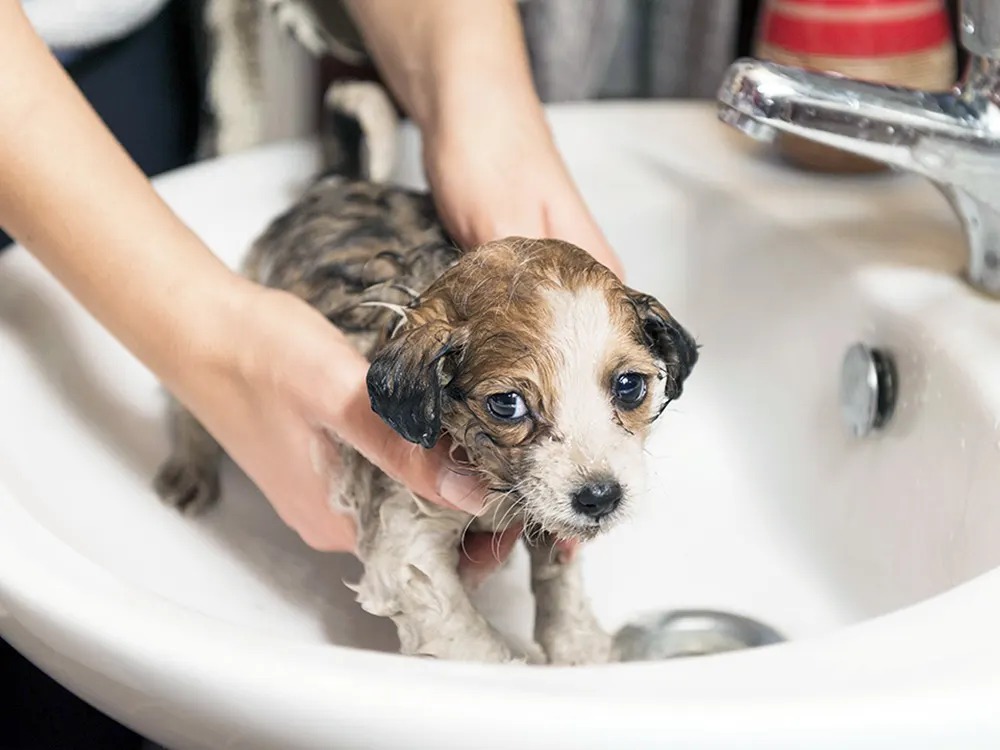
Type “fleas” into any search bar and a Dawn dish soap bath is one of the first home remedies you will meet. The pitch is tidy: lather up your pet, the fleas drown, problem solved. Half the internet swears by it and the other half insists Dawn is a degreaser, not a bug killer.
Both camps are missing the more useful truth. Even if a Dawn bath killed every flea on your pet, and it doesn’t, you would have solved about five percent of your problem. The fleas you can see were never the infestation. They are the tip of it.
What Dawn actually is
Dawn is a blend of a dozen or more ingredients built to cut grease off dishes: surfactants that bind grime so water can carry it away, solvents that break down oil, plus thickeners, cleaning agents, stabilizers, preservatives, pH adjusters, fragrances, and colorants. Nowhere in that list is an insecticide. It is a very good soap. It is not a flea treatment.
The drowning myth, examined
The most popular theory is that Dawn breaks the surface tension of water so fleas sink and drown. It sounds plausible until you learn how stubbornly hard fleas are to drown.
Forensic entomologists, who have reason to know, have found that fleas can survive submersion for astonishing stretches. A flea can revive within an hour after twelve hours underwater, and can come back even after eighteen to twenty hours submerged, though it takes several hours to rally. A bath lasts minutes. The math simply does not work. Whatever a Dawn bath is doing, it is not drowning fleas in the time your pet spends in the tub.
A second theory, that Dawn dissolves the waxy layer protecting a flea’s exoskeleton and lets water into its airway, has the same problem: it would take far longer than a bath to matter.
What the bath is really doing
There is one mechanism that holds up, and it is unglamorous: physical removal. Fleas get caught in the soapy lather, unable to jump or scramble to safety, and rinse away down the drain. That works. But it is not special to Dawn. Any pet shampoo will lather just as well and float fleas off exactly the same way, without the downsides.
A bath will knock the adult fleas off your pet, and honestly a flea comb and a sink of water will too. What a bath cannot do is touch the eggs in your carpet and the pupae in the couch. That’s why people bathe the dog, feel victorious, and see fleas again in a week.
Why Dawn is a poor routine choice
Dawn is not toxic to dogs and cats, but its whole job is stripping oil, including the protective layer that keeps skin from drying out. Bathe a pet in dish soap regularly and you risk a dry, flaky coat, or, in a frustrating twist, a greasy one, as the skin overproduces oil to compensate for the repeated stripping. Swallowed or licked while lathered, undiluted dish soap can also cause mild stomach upset or breathing irritation.
There are narrow cases where a vet might reach for dish soap on purpose, cleaning very young puppies or kittens, breaking down oily skunk spray in a de-skunking recipe, or removing a toxic oily spot-on product from a cat’s coat. Those are specific jobs that exploit its grease-cutting power. Routine flea control is not one of them.
The number that changes the strategy
Here is the fact that should reorganize your whole approach to fleas: the adult fleas living on your pet are only about five percent of the total infestation. The other ninety-five percent, eggs, larvae, and pupae, are in your home. In the carpet, the cracks between floorboards, the pet bed, the couch cushions, the baseboards.
That is why the bath-and-done approach fails so reliably. You can wash every visible flea off your dog and the house will simply restock the supply within days as the next generation hatches. Treating the pet without treating the life cycle is like bailing a boat without patching the hole.
What actually ends a flea problem
The winning move is prevention that breaks the cycle. Modern vet-recommended flea medications, oral tablets, topical spot-ons, and collars, don’t just kill adult fleas on contact; many interrupt reproduction so the eggs a flea lays never mature. Once-a-month products have been the standard for years, and newer formulations last even longer. Talk to your vet about which product suits your pet and your region, since flea pressure varies a lot by climate.
If your pet already has fleas, don’t panic, and don’t reach for the dish soap. Bathing with a proper pet shampoo, one formulated for the species in your tub, is a reasonable opening move to knock the live adults off; a flea comb catches the stragglers. Then get a real preventive going, and know that clearing the environment, washing bedding in hot water, vacuuming thoroughly and often, treating the home if the infestation is heavy, is the part that actually finishes the job.
What newer research adds
The class of drugs that reshaped flea control over the last decade is the isoxazolines, the active ingredients in many of today’s leading oral and topical products. Beyond killing adult fleas quickly, studies have shown these compounds can shut down flea reproduction: fleas that feed on a treated pet stop producing viable eggs, which is what breaks the ninety-five-percent-in-the-environment cycle at its source rather than one bath at a time.
That is the real reason the “Dawn kills fleas” debate is beside the point. The question was never how to kill the handful of fleas you can see in a given afternoon. It was how to stop the ones you can’t see from becoming next week’s problem, and dish soap has never had an answer for that. A vet-directed preventive does.
References
- Gennard, D. Forensic Entomology: An Introduction. John Wiley & Sons, 2007.
- Rust, M. K. “The Biology and Ecology of Cat Fleas and Advancements in Their Pest Management: A Review.” Insects, vol. 8, no. 4, 2017, 118. https://doi.org/10.3390/insects8040118
- Taenzler, J., et al. “Fluralaner Prevents Flea (Ctenocephalides felis) Reproduction In Vitro and in a Simulated Home Environment.” Parasites & Vectors, vol. 7, 2014, 275. https://doi.org/10.1186/1756-3305-7-275
Common questions
Is it safe to bathe my dog or cat in Dawn?
An occasional bath usually won't harm a healthy pet, but Dawn strips the skin's protective oils and can cause dryness, flaking, or, paradoxically, a greasy coat from over-produced oil. It's not toxic, but it's not a good routine shampoo. A pet shampoo does the same job more gently.
If Dawn won't fix fleas, what will?
Prevention. Vet-recommended monthly or longer-acting flea medications kill fleas and break the life cycle in your home. A bath only handles the small fraction of fleas on your pet right now. It does nothing about the eggs, larvae, and pupae in your carpet and bedding.
Not a substitute for your vet. Our guidance is educational. For urgent symptoms, contact a vet or emergency clinic right away. Editorial standards
Dr. Kohl is a board-certified veterinary dentist with a particular interest in preventive oral care. She reviews all dental health content at The Pet Times and contributes practical guides on home dental routines, professional cleaning, and oral disease prevention.
Meet our experts ↗Keep reading
 Health & WellnessStop Shaving Your Dog for Summer. Here's What It Actually Does.Dr. Nina Kohl · 5 min
 LivingA Pink Poodle Fell Into an Icy River. The Dye Job Saved Her.Marcus Webb · 6 min
 Health & WellnessNobody Licenses Your Dog's Groomer. Ask About the Dryer.Dr. Mara Chen · 7 min
 Health & WellnessMud Won't Hurt Your Dog. What's Living In It Might.Dr. Priya Nair · 6 min
 Health & WellnessYour Dog's Cracked Paws Are Trying to Tell You SomethingDr. Lena Park · 8 min
 Health & Wellness'Natural' Dog Shampoo Isn't a Safety Claim. Nobody Is Checking.Dr. Priya Nair · 7 min