


Your Dog Can't Walk Out. A Pocket-Sized Sling Can Carry Them.
A rescue harness is the piece of hiking gear big-dog owners never pack until it's too late. Here's how the Pack-a-Paw works, how to size it, and why it belongs in your pack.

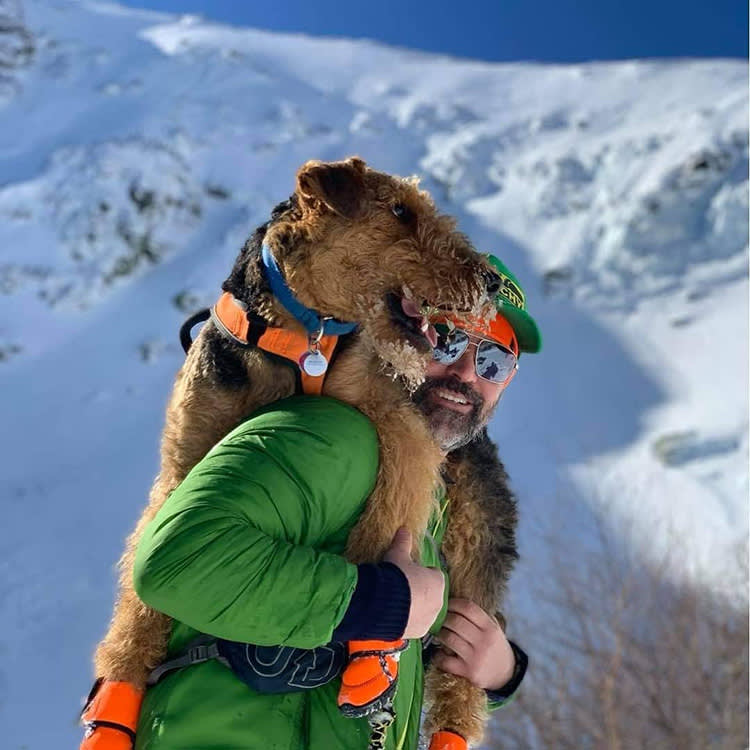
Picture the day going perfectly. You and your dog are deep into a great hike, miles from the trailhead, when it all changes in a second: a bad landing off a rock, a twisted joint, a snake strike. Suddenly your dog can’t put weight on a leg, and they’re far too heavy to cradle in your arms all the way back to the car. That is the exact scenario nobody plans for, and it is the one that leaves people stranded.
There’s a simple fix, and it weighs less than a granola bar.
A sling built out of a worst-case story
The Pack-a-Paw emergency rescue harness comes from Mountain Dogware, a family-owned company, and the idea started with a story its founder couldn’t shake. Stefan, an avid hiker and ultra-marathon runner, had heard about a dog who shattered a leg high on a summit and had to be abandoned to die, because there was simply no way to get him back down. He teamed up with the manufacturer and other like-minded people to make sure that never had to happen again.
The result folds down small enough to live in a jacket pocket, the company says, yet it’s built to carry a full-grown mountain dog. It wraps your dog in a secure, cradle-like hold that rides across your chest or your back, a bit like a baby carrier, only far simpler to rig up. The specs are refreshingly plain:
- Cradles the dog’s entire body securely
- Wearable across the chest or on the back
- Featherweight, at 6.7 ounces
- Manufactured in the USA
Getting the size right
It’s sold in two sizes, both labeled “universal fit,” a phrase doing some quiet work: any dog in the weight range is held securely, but the cut sits trimmer on some builds than others. The medium is meant for dogs 30 to 60 pounds, and the large covers 60 to 140 pounds. Weight is only a starting point, though. A better gauge is to measure the gap between your dog’s front and back legs: under 12 inches points to the medium, over 12 inches to the large.
It’s not just for the backcountry
This is not exclusively wilderness gear, either. The strap-and-handle design earns its keep in thoroughly domestic emergencies: a post-surgery dog who needs a boost into the hatchback, a senior whose hips have filed a formal complaint about the staircase, a spooked dog frozen halfway across a footbridge. It’s one of those tools that quietly earns its spot the first time you actually need it.
Practice before you need it
One piece of advice the box won’t give you: try it at home first. An injured dog on a mountainside is not the moment to read instructions for the first time. Spend ten minutes in the living room learning how the sling wraps and how your dog settles into it, and reward them for tolerating the practice run. While you’re building out your trail kit, this pairs naturally with the basics of canine trail safety, plenty of water, a way to check paws and gums, and a plan for keeping an injured dog calm and still until you reach help.
Toss it in your pack, and you can head out knowing that if the worst happens, you can get your dog off the mountain and to a vet. Adventure boldly.
References
Tom Hadley writes about training and behavior, helping owners understand what their pets are trying to tell them. His work covers everyday manners, decoding common behaviors, and the small changes at home that make dogs and cats easier to live with.
Meet our experts ↗