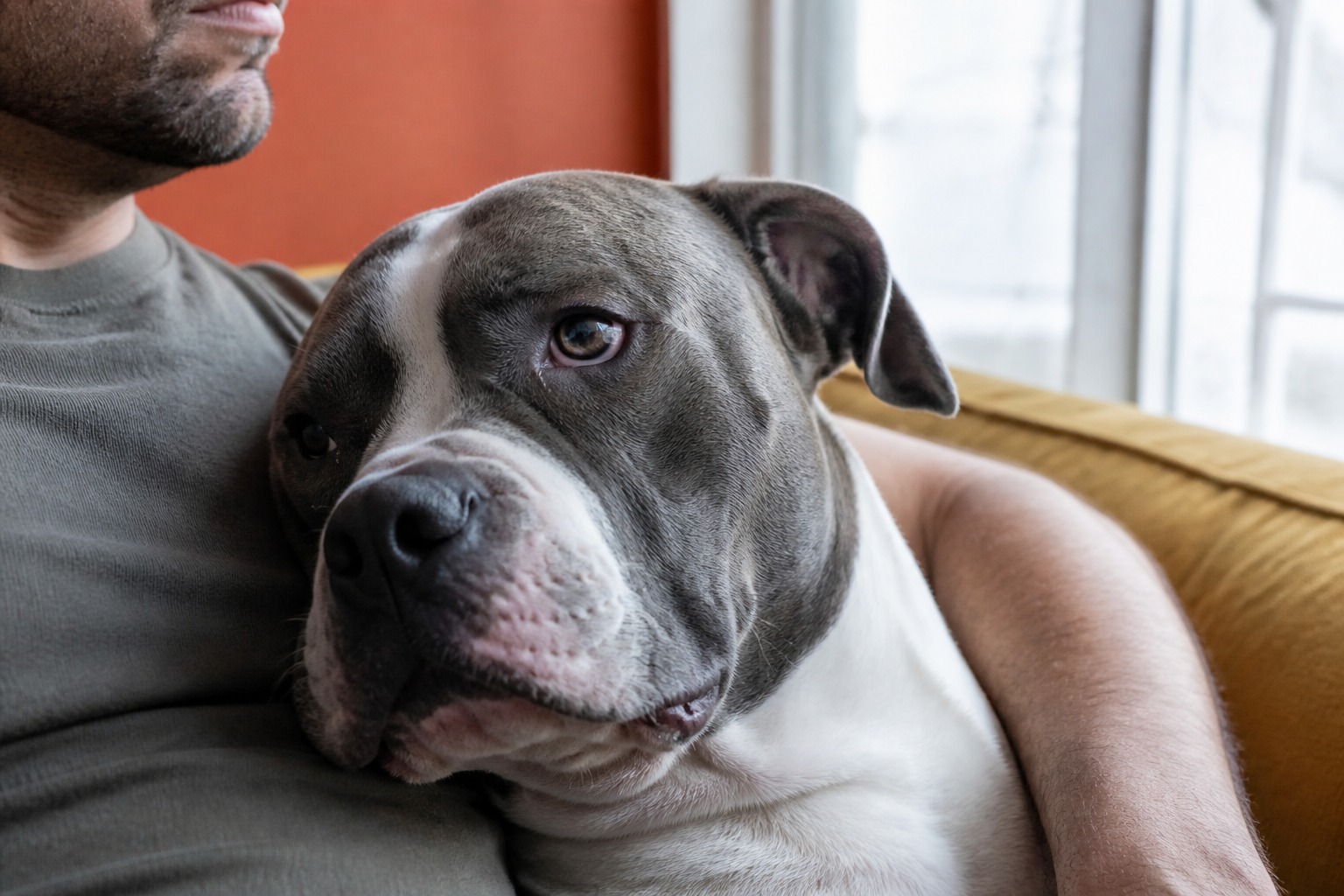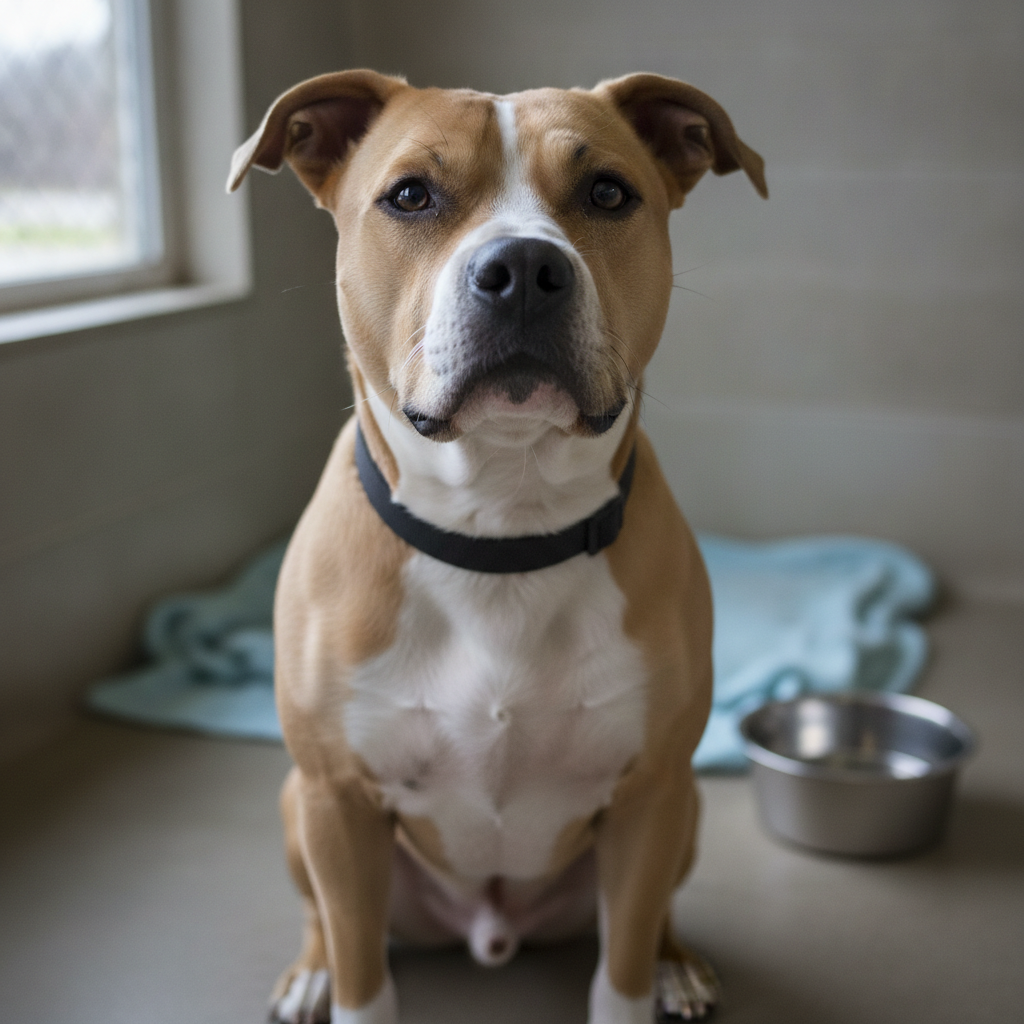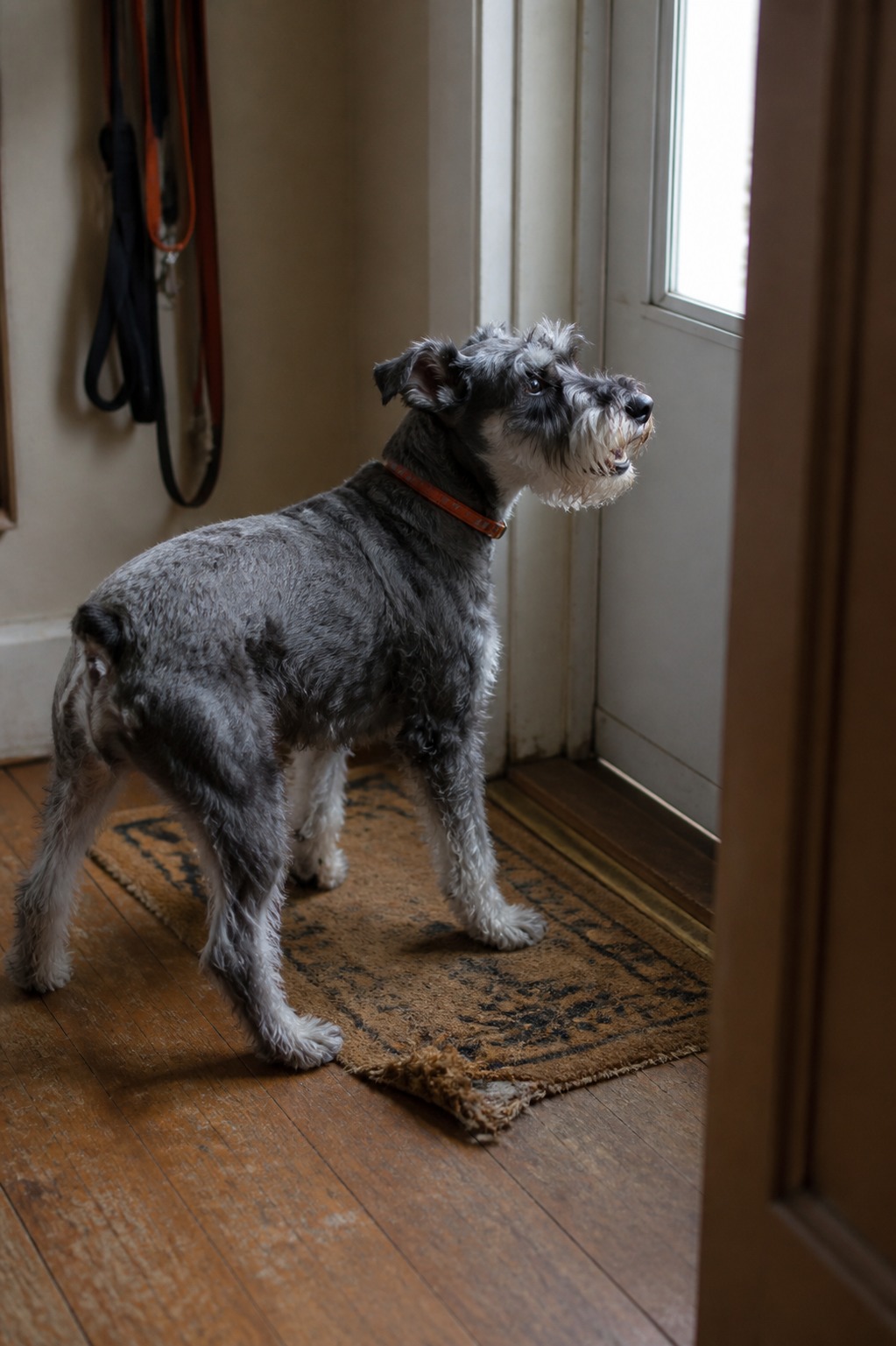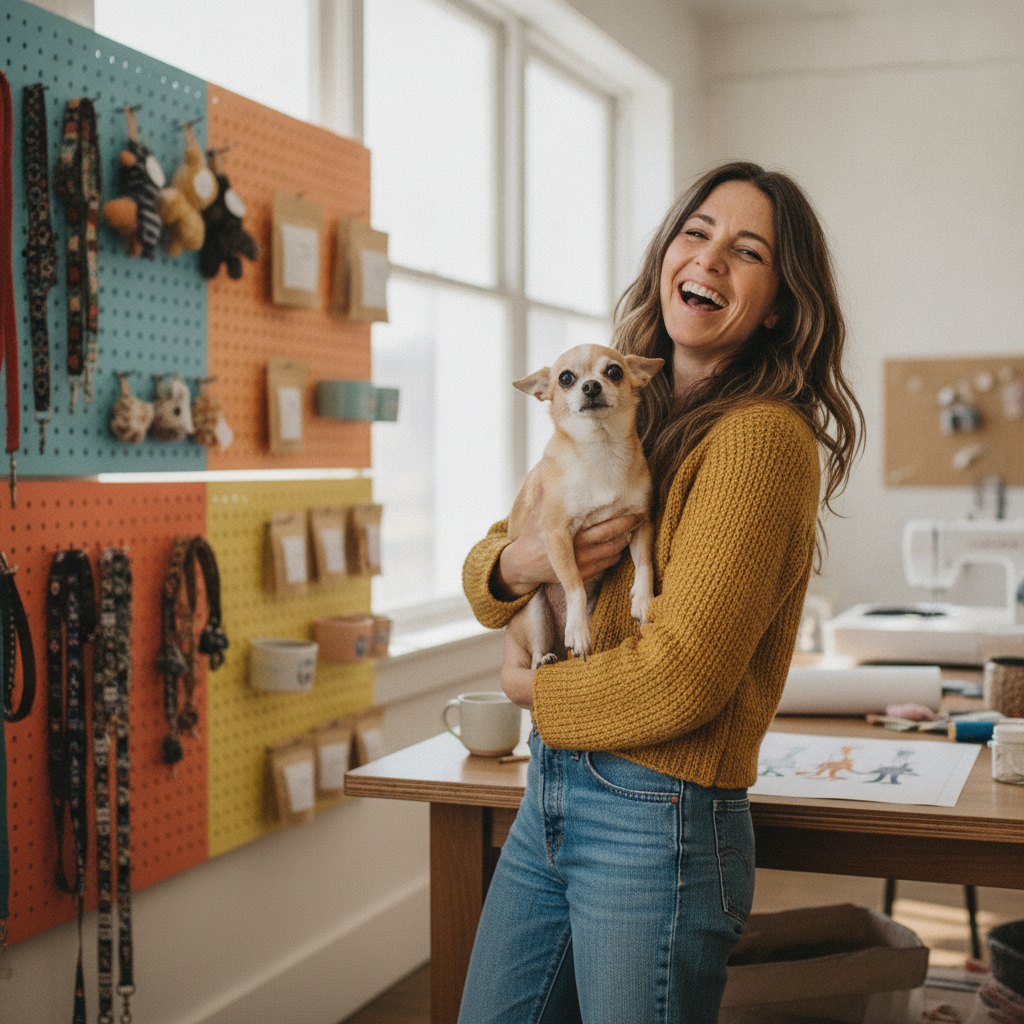

Everyone wants to be the person the scared dog finally chooses. So the instinct is to try: to reach out, coax, sweet-talk, offer the hand, win them over. With a fearful dog, that instinct is exactly backwards. You do not earn a frightened dog’s trust by being charming. You earn it by being safe, predictable, and, frankly, a little boring, again and again, until the dog concludes that nothing bad happens around you.
That’s the reframe this whole piece rests on. Trust, to a scared dog, is not the presence of something wonderful. It’s the reliable absence of anything scary. Your job is to become the most low-drama presence in their life and let them come to their own conclusion, on their own clock.
The two-sided rule everything else hangs on
Building trust comes down to a simple pair of jobs, and they matter equally.
Be the source of good, unscary things: the treats, the calm, the gentle play, the easy company. And just as deliberately, do not be the source of scary things: no staring, no looming body language, no loud chaos, no ambushes. People pour energy into the first half and forget the second, but a single frightening moment can undo a week of treats. Protecting a dog from what scares them is not coddling. It’s the foundation the trust is built on.
Everything below is really just those two rules in practice.
Become safe and predictable
Make yourself boring on purpose
Fearful dogs read a lot into human body language, and most of our default behavior reads as pushy. So shrink your footprint. Turn a little to the side instead of facing the dog head-on, shift your weight back rather than leaning in, and get low by crouching or sitting. Keep your distance and let the dog close it if they want to; don’t march over to them. Soften your eyes and avoid staring, since a direct stare is a threat in dog. And drop the props, hats, backpacks, an armful of stuff, all make you bigger and stranger to a nervous dog. The goal is to be the least intimidating shape in the room.
Be calm, and quieter than feels natural
Calm is contagious, so bring it deliberately. Move slowly, speak in a low, soothing voice, sit down in their space, and skip the sudden gestures. If you’re someone who talks with your hands, this is the part to rein in. And here’s the counterintuitive one: talk less. We tend to fill silence with a stream of high, sweet baby talk, and many fearful dogs find that anything but reassuring. Dogs don’t chatter the way we do, and a lot of anxious ones relish the quiet. You don’t have to be silent in your own home; just resist narrating at the dog.
Never surprise them
Predictability is its own kind of safety. A dog who can guess what’s about to happen handles it far better than one who’s constantly braced for the unknown. So build routines, and use cues to announce your moves. Tell the dog before you stand up. Tell them before you reach for the food bowl. When a certain word reliably predicts a certain action, the world becomes legible, and a legible world is a less frightening one. No sneaking up, no sudden loud noises, no snapping open an umbrella nearby.
Be the source of good things
Give incredible treats, with no strings
Treats are how a dog learns to pair you with good feelings, and the better the treat, the faster that happens, so experiment to find what your dog goes wild for. The technique matters as much as the treat: lob a few toward the dog, then turn and step away, leaving them to eat in peace. That teaches two things at once, that you come bearing good stuff, and that you will never pressure them to approach you to get it. For a fearful dog, being required to come close is itself scary. Removing that pressure is the gift.
Offer play, and don’t take a pass personally
Some dogs light up over toys, and play can crack open real joy in a dog who’s had a hard past. Others are still too preoccupied with the basics, food, water, feeling safe, to have any interest in a squeaky toy, and that’s fine. Calmly offer a few different types and see what lands. If nothing does today, don’t give up; interest often shows up later, once the dog relaxes. There are few things more moving than watching a shut-down rescue dog play for the very first time.
Keep moving
Standing still and staring at each other can be its own kind of pressure. Some dogs do much better with motion, so try walking in big, loose circles and let the dog trail along, or follow your other dog if you have one. Pay them no particular attention as they tag along. That low-key, side-by-side movement takes the spotlight off the dog and lets a lot of nervous ones quietly join in.
Give them an exit, and let them choose
Here’s an addition worth building into everything above: fearful dogs relax faster when they have agency. Always leave a scared dog a way out, an open path to a safe spot, a crate or quiet room they can retreat to, so they never feel cornered. Let them opt in and opt out of every interaction. A dog who learns that they can always leave is a dog who, paradoxically, chooses to stay more often. Choice itself is calming.
Be patient, and accept the dog you have
Genetics and past experience set limits you can’t override with effort, and pushing against them backfires. Respect the dog’s timeline over yours. Trust grows and fear fades, but only at the dog’s pace; rushing doesn’t speed it up, it sets you back. Keep accepting the dog as the individual they are rather than the “normal” dog you pictured, and the progress, when it comes, will be real.
A few common questions, answered plainly
Does an abused dog need a different approach? No. You help a fearful dog the same way whether or not there was abuse in their past. Protect them from what frightens them and build trust gradually, and the underlying cause rarely changes the method.
Why is my dog scared of one specific type of person? Usually because that type of person strikes them as intimidating, or because they simply weren’t exposed to that kind of person enough when young. Under-socialization leaves gaps, and dogs fill those gaps with caution.
Why is my dog scared of everything? Most often it’s a genetic tendency toward fearfulness, inadequate early socialization, or a combination. Clues to the “why” hide in a dog’s history, the temperament of their relatives, and how specific or global their fears are.
What newer research adds
Two developments should shape how you help a fearful dog today.
First, the method really matters, and gentler wins. A well-known study comparing training approaches found that dogs trained with aversive methods, leash corrections, yelling, intimidation, showed more stress signals and a more pessimistic outlook than dogs trained with rewards. For a dog who is already frightened, aversive tools don’t build respect; they deepen fear and erode the exact trust you’re trying to grow. Reward-based, choice-friendly training isn’t just kinder, it’s more effective.
Second, look for pain. Behavior specialists increasingly find that undiagnosed pain, sore joints, dental problems, gut discomfort, lurks behind a meaningful share of new or worsening fear and reactivity. A hurting dog is a defensive dog. So if a previously steady dog turns skittish, or a fearful dog stalls despite good work, put a full vet exam near the top of the list. Sometimes the fastest route to a braver dog runs through treating the ache nobody knew was there.
“The kindest thing you can be for a scared dog is predictable,” says Dr. Lena Park. “Charm doesn’t register with them; a hundred small, boring, safe moments do. And before you chalk fear up to personality or a rough past, rule out pain, because a dog who hurts can’t relax no matter how gentle you are.”
References
- Vieira de Castro AC, et al. “Does training method matter? Evidence for the negative impact of aversive-based methods on companion dog welfare.” PLOS ONE, 2020. journals.plos.org
- Mills DS, et al. “Pain and Problem Behavior in Cats and Dogs.” Animals, 2020. mdpi.com
- American Veterinary Society of Animal Behavior. “Position Statement on Humane Dog Training.” avsab.org
This article covers behavior and welfare. If your dog’s fear is severe, sudden, or includes aggression, work with your veterinarian and a qualified, reward-based behavior professional, and rule out an underlying medical cause first.