


Front Clip or Back Clip? The One Harness Decision That Actually Stops Pulling
The superlative on the box matters far less than where the leash attaches. Here is how clip position, not brand, determines whether a harness fixes pulling or quietly trains it, plus nine harnesses sorted by the dog you have.

Affiliate disclosure. This article contains affiliate links. We may earn a small commission if you buy through a link, at no extra cost to you. How we handle recommendations.
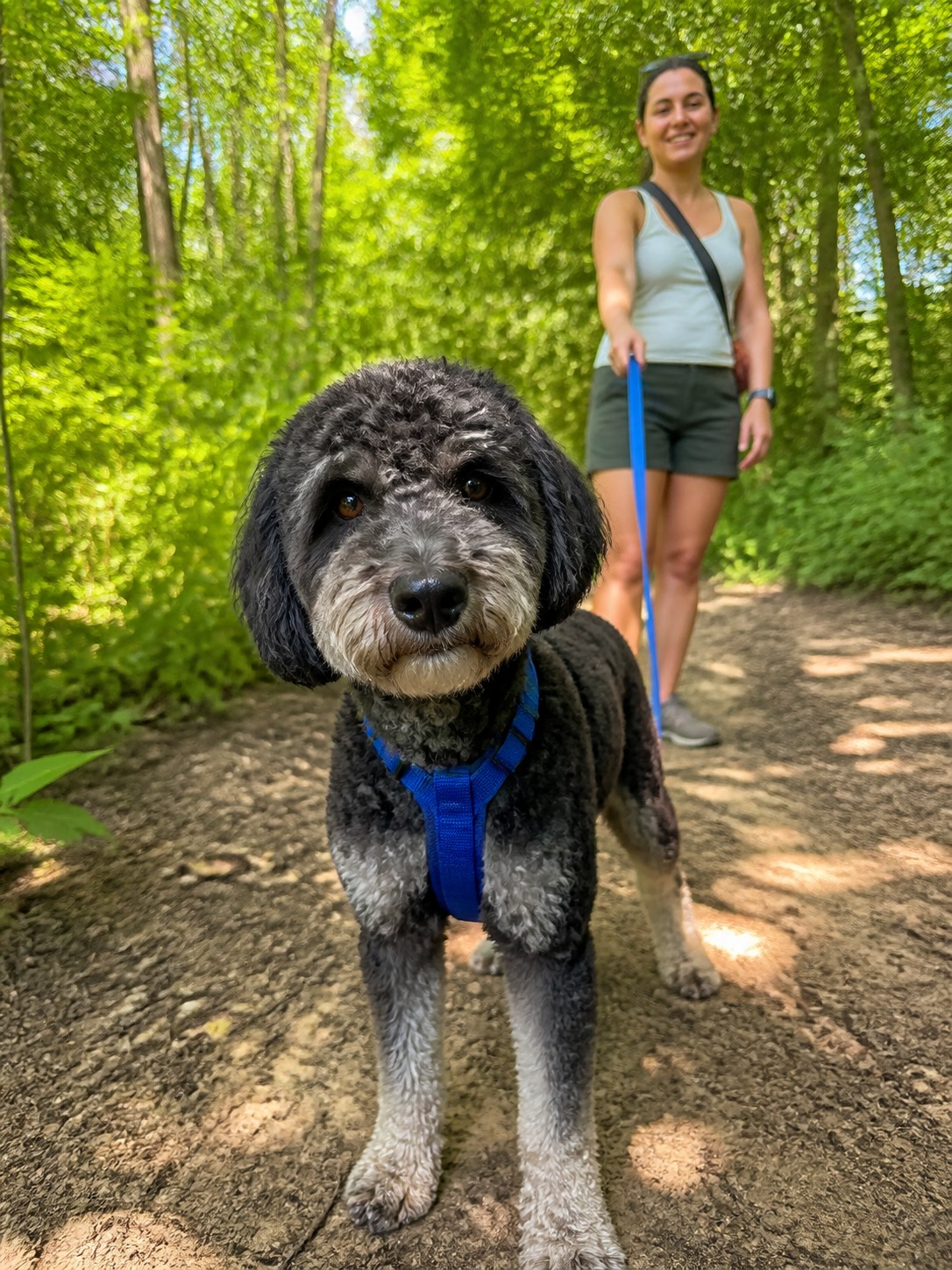
Walk down the harness aisle and every package shouts a superlative: most stylish, best tactical, ultimate no-pull. Almost none of it tells you the thing that actually decides whether the harness helps you, which is not the brand or the badge. It is where the leash clips on.
Clip position is the whole game. A back-clip harness and a front-clip harness can look nearly identical and behave like opposite tools, one of them quietly making your pulling problem worse while the other fixes it. So before you shop by adjective, learn the one distinction that matters, then pick the harness that fits the dog you actually have.
The clip decision, explained
Dogs have what trainers call an opposition reflex: push or pull against them steadily, and they instinctively push or pull back. This is exactly why sled dogs wear back-clip harnesses, the chest strap gives them something to lean into and haul against, efficiently and comfortably.
Now picture a dog that already pulls on a leash. Put it in a back-clip harness and you have handed it a sled rig. The leash pressure runs straight back along the spine, the dog leans in, and it can pull harder than ever with no discomfort to discourage it. The harness is not broken; it is working perfectly, just for the wrong goal.
A front-clip harness flips the physics. With the leash ring on the chest, a pull turns the dog gently back toward you rather than letting it power forward, which interrupts the pulling instead of rewarding it. That is why nearly every no-pull harness centers on a front clip, and why many of the best harnesses offer both a front and a back ring so you can use the front for training and the back for relaxed, trained walks.
Fit it before you trust it
Even the right harness fails if it fits wrong, and a loose harness is how dogs back out and bolt into traffic.
Measure two things: the girth (the widest part of the chest, just behind the front legs) and the base of the neck. Check both against the specific product’s chart, because a “medium” varies wildly between brands. When it is on, you should be able to slide two fingers flat under any strap, no more, no less. The harness should not rotate around the body or let the dog reverse out of it. For a growing puppy, favor a four-way-adjustable design so it keeps fitting as the dog changes shape.
The picks, by the dog you have
Nine harnesses, organized by what your dog needs rather than by superlative.
For the everyday all-rounder
Ruffwear Front Range Everyday Harness. The deserved cult favorite: lightweight, durable, four-way adjustable, with both front and back clips, reflective seams, and a tag pocket so jangling stops. The dual clips make it as good for loose-leash walks as for gentle no-pull training. Some dogs dislike the over-the-head design, so introduce it with treats.
SlowTon No-Pull Dog Harness
A heavy-duty pick with front and back attachment points, thick padded straps, reflective stitching, and Velcro patch panels, well suited to a strong, larger dog. Owners of 70-pound-plus pullers report real control improvement when using the front clip.
Heads up. Limited color range.
Canada Pooch Complete Control Harness
Front and back clips, a five-way adjustable fit, reflective seams, and a reinforced top handle for close control past distractions. A frequent favorite of owners with strong adolescent dogs.
Puppia Soft Vest Harness
Soft, light, machine-washable, and gentle on small necks, ideal for dogs roughly 5 to 10 pounds. The honest limit: the flexible mesh does little to curb a determined puller once they get bigger.
Voyager Step-In Air Harness
For the small dog who hates things going over its head, this fuss-free step-in lays flat, the dog steps in, and you lift and clip. Padded seams and dual back rings, in a huge range of sizes from XXXS up.
Heads up. Mesh can stretch over time.
For the car and the trail
Kurgo Tru-Fit Smart Harness. The one to buy if a single harness must handle both the walk and the drive: a padded chest plate, front and back clips, and a built-in seatbelt loop for vehicle securing. Bulkier than a minimalist harness, which is the trade-off for the double duty. Check it on Amazon. Rating: 4.4/5.
For the minimalist or warm climate
Ruffwear Hi & Light Front-Clip Harness. Ultra-light and breathable for active, already-well-trained dogs in hot weather, with reflective seams and a four-way fit. Because it is so light, it is not the pick for a puller. Rating: 4.6/5.
For service dogs and gear-carriers
PawPawify Custom No-Pull Harness. Heavy-duty straps, a no-choke build, a control handle, and Velcro panels for custom or “Do Not Pet” patches, useful for working dogs and reactive dogs who need space. Includes a back ring some owners use with a car seatbelt tether. Rating: 4.3/5.
For the style-first, gentle walker
Wild One Harness. A padded neoprene over-the-head harness in a dozen colors, with a front and two back clips and a neck that unhooks for dogs who dislike overhead designs. Be clear-eyed: the stretchy neoprene does little against pulling, so this is a comfort-and-looks pick for a dog that already walks well. Rating: 4.5/5.
The bottom line
Skip the badge on the box. Decide first whether your dog pulls, choose a front-clip or dual-clip harness if it does, fit it with the two-finger test until the dog cannot back out, and then let the style and color be the fun part. A correctly clipped, correctly fitted harness does more for your walks than any superlative ever printed on a package.
References
- Fear Free Pets. “Choosing Walking Equipment: Harnesses and the Opposition Reflex.”
- American Kennel Club. “Front-Clip vs. Back-Clip Dog Harnesses.”
- American Veterinary Medical Association. “Walking Equipment and Neck Injury Prevention in Dogs.”
Common questions
Does a back-clip harness make pulling worse?
It can. Dogs have an opposition reflex, meaning they instinctively pull against steady pressure. A back-clip harness puts that pressure across the chest and lets a dog lean into it like a sled dog, which is comfortable and efficient for pulling. For a dog that pulls, a front-clip harness, which gently turns the dog toward you when it pulls, is the better tool.
How should a dog harness fit?
Snug but not tight. You should be able to slide two fingers flat under any strap, and the harness should not shift sideways or let the dog back out of it. Measure the widest part of your dog's chest (the girth) plus the neck, and check those against the specific product's size chart, since sizing varies a lot between brands.
Is a harness safer than a collar for walking?
For walking, yes, especially for pullers and flat-faced or small breeds. A harness spreads pressure across the chest and shoulders instead of the throat, protecting the trachea and neck. Keep ID tags on a collar, but attach the leash to a properly fitted harness for the walk itself.
Step-in or over-the-head harness, which is better?
It comes down to your dog, not quality. Over-the-head and vest styles tend to be the most secure and hardest to escape, while step-in designs are easier to put on dogs who dislike anything going over their head. Anxious or escape-prone dogs usually do best in a secure over-the-head style with a snug fit.
Leila Torres leads our Living coverage, from home life and travel to the products and rescue stories that come with sharing a life with animals. She edits and writes across the section, with a soft spot for pieces about the bond between people and their pets.
Meet our experts ↗Keep reading
 Product PicksThe Leash Can't Stop the Pulling. It Can Stop the InjurySasha Ford · 12 min
 Product PicksThe Matching Dog-and-Owner Set That Doesn't Make You Rebuy Your Whole ClosetJordan Ellis · 3 min
 TrainingThat Bootie Wobble Isn't Funny. You Just Blindfolded Their Feet.Dr. Nina Kohl · 8 min
 Product PicksTheir First Dog Backpack Fell Apart in Two Weeks. So They Built One That Doesn't.Sasha Ford · 7 min
 Product PicksYour Puppy's First Leash Should Be Boring. Here's the Upgrade Path AfterSasha Ford · 9 min
 Product PicksWhy Every Cool Dog's Leash Suddenly Looks the SameLeila Torres · 5 min