


The Dog-Friendly Car Guide That Starts With Safety, Then Picks the Ride
An unrestrained dog is a projectile in a crash, so before the car comes the restraint. Here's the crash-tested gear that actually protects your dog, then 10 vehicles that fit them best, by lifestyle.

Affiliate disclosure. This article contains affiliate links. We may earn a small commission if you buy through a link, at no extra cost to you. How we handle recommendations.
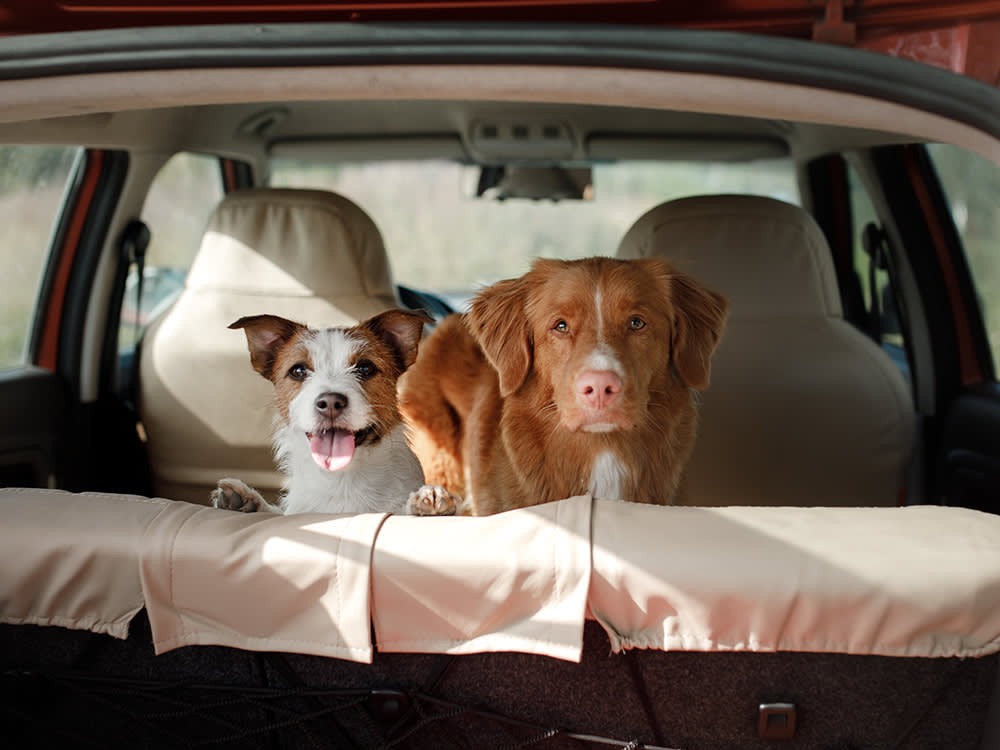
Most “best dog cars” lists jump straight to the vehicle, the rugged SUV, the plush crossover, the roomy minivan. They skip the part that actually keeps your dog alive. A dog riding loose in a car is a projectile waiting for a hard brake. In a 30 mph crash, an unrestrained 50-pound dog hits with roughly 1,500 pounds of force, enough to kill the dog and seriously injure everyone in the car.
So this guide flips the usual order. The single most important “dog-friendly” upgrade isn’t the car at all, it’s how your dog is secured inside it. Get that right and almost any roomy vehicle works. Get it wrong and the nicest SUV on the list is still dangerous. We’ll cover the safety gear first, then match the right ride to your dog’s lifestyle.
The part that matters most: restraint
There are two safe ways for a dog to travel, and they are not “on the back seat” or “in someone’s lap.”
A crash-tested harness clipped to the seatbelt, in the back seat. The catch is that “crash-tested” is mostly marketing. The Center for Pet Safety, an independent nonprofit that takes no manufacturer money, actually puts pet gear through crash testing modeled on the child-car-seat standard (FMVSS 213), and the overwhelming majority of harnesses fail. As of 2025, the Sleepypod Clickit Sport (and its Terrain sibling) were the only harnesses CPS-certified for dogs up to 110 pounds. Its energy-absorbing vest and Infinity Loop design distribute crash forces without extra straps. If you buy one thing from this article, buy a certified harness.
A crash-tested crate, secured in the cargo area. For dogs who travel better contained, a structural crate is the other gold standard, but again, certification matters. The Gunner G1 earned a five-star CPS rating; its double-wall rotomolded shell is built to hold its shape and keep the door latched through an impact. Strap any crate down so it can’t fly forward.
CPS-certification thresholds, in plain terms, require the gear to keep the dog from launching more than 32 inches (small/medium) or 36 inches (large/XL) in a test crash, and to keep the dog contained, not just “tied down.” That’s the bar. Now, the cars that make all of this easy.
What actually makes a car dog-friendly
Beyond restraint, four practical traits separate a great dog car from a merely big one:
- Room for your dog and, ideally, their crate.
- A low load height so they don’t have to jump down and stress hips, elbows, and shoulders, especially seniors and large breeds.
- Wide door or hatch openings for easy loading.
- Durable, wipeable surfaces that shrug off fur, mud, and claws.
With those in mind, here are 10 vehicles sorted by your dog’s lifestyle.
Cars for outdoorsy dogs
Built for dogs who swim, hike, and want to be where the trail is.
Subaru Crosstrek / Forester. Nothing says “let’s go outside” like a Subaru, fitting, since Colorado, one of the most dog-loving states, basically runs on them. The Crosstrek hits a right-sized sweet spot with strong ground clearance and a hybrid option, while the Forester adds interior space dogs love: big cargo area, roomy back seat, generous headroom. Worth noting, Subaru partners with the Center for Pet Safety on crash research, so the brand genuinely thinks about this.
Jeep Cherokee, Grand Cherokee, Wrangler. Built for any terrain, which makes them naturals for outdoorsy dogs. The Cherokee is a capable midsize crossover; the Grand Cherokee adds refinement and clearance; the Wrangler goes anywhere for the most adventurous dog-and-human pairs.
Nissan Frontier. Among small pickups, few are as adventure-ready as the Nissan Frontier. Standard large or crew cab gives your dog room inside (safer than the open bed, which is genuinely dangerous and illegal for unsecured dogs in many states), while the bed and roof rack haul the gear and crate.
Ram 1500. The half-ton Ram 1500 pairs a roomy cab (keep the dog in the cab, restrained, not the bed) with a big bed for gear and a massive in-cabin storage system. A capable get-there-do-that machine.
Cars for refined, upscale dogs
For the dog whose life involves the good groomer and the nice dog park.
Lexus RX 450h. Luxury for luxury’s sake, the RX 450h is refined, efficient (hybrid means fewer stops), and plush, with a large cargo area and a back seat with real stretch room. Crucially, it doesn’t sit so high that your dog has to make an undignified leap to get in or out.
Porsche Macan. For the truly upscale canine, the Macan is a well-sized crossover with space, looks, and that signature Porsche feel. Understated enough not to upstage the dog.
Volvo XC60. Luxury married to safety, very on-brand for Volvo. An upscale crossover with a stretch-out back seat, a built-in cargo-area kennel option (a real dog-travel feature), and a panoramic sunroof for stargazing.
Cars for family dogs
For the dog whose pack includes kids, humans, and maybe a cat, room and comfort for everyone.
Chrysler Pacifica. One of the best-selling minivans for a reason, the Pacifica offers comfort, style, and space for big human-and-dog families, with a low, flat load floor that’s a dog’s friend.
Hyundai Tucson. When you want minivan-like space but need all-wheel drive and clearance for snow and dirt roads, the Tucson delivers a huge cargo area and a wide interior for dogs and people to stretch out.
Mazda CX-5. The value pick: minivan-ish practicality with better fuel economy and a sleeker look. The CX-5 is right-sized, with plenty of cargo room for a dog.
Put it together before your next trip
Any of these vehicles can be the ultimate canine cruiser, but the gear is what makes the trip safe. Pick the car that fits your dog’s size and your life, then add the one non-negotiable: a CPS-certified harness or crate, used every single ride. And about that window, crack it for the breeze, but not far enough for a head to fit out. Sticking your head out is addictive for dogs and risky for everyone. Restrained, comfortable, and in the right car, your dog is ready for the road.
References
- “Crash Test Results and CPS Certification.” Center for Pet Safety. https://centerforpetsafety.org/test-results/
- “Subaru of America and Center for Pet Safety Crash Test Studies.” Subaru U.S. Media Center. https://media.subaru.com/pressrelease/790/subaru-america-center-pet-safety-studies-showcase-promising
- “Traveling in the Car With Your Dog.” American Veterinary Medical Association. https://www.avma.org/resources/pet-owners/petcare/traveling-your-pet-faq
Common questions
What's the safest way for a dog to ride in a car?
Restrained, every time. The two safest options are a crash-tested harness clipped to the seatbelt (in the back seat) or a crash-tested crate secured in the cargo area. Loose dogs, dogs in laps, and dogs with their heads out the window are at serious risk in even a minor collision, and can become a projectile that injures the humans too.
Are dog car harnesses actually crash-tested?
Most aren't, despite the marketing. The Center for Pet Safety is the independent body that crash-tests pet travel gear, and very few products pass. As of 2025, the Sleepypod Clickit Sport and Clickit Terrain were the only harnesses CPS-certified for dogs up to 110 pounds, and the Gunner G1 crate earned a five-star rating. Look for CPS certification specifically, not just "crash-tested" claims.
What makes a vehicle genuinely dog-friendly?
Enough cargo or back-seat room for your dog (and a crate if you use one), a low load height so they don't have to leap down and hurt their joints, wide door openings for easy in-and-out, and surfaces that survive fur, mud, and claws. Climate control that reaches the cargo area is a bonus for hot or cold trips.
Should I let my dog put their head out the car window?
It's riskier than it looks. Wind-blown debris can injure eyes and ears, and an unrestrained dog at the window can be ejected or thrown in a sudden stop. If your dog loves the breeze, crack the window enough for airflow but not enough for their head to fit out, and keep them restrained.
Marcus Webb writes about the gear, gadgets, and everyday choices that make life with a pet easier. His coverage runs from product picks to training and the causes worth paying attention to, always with an eye on what actually earns a place in your home.
Meet our experts ↗Keep reading
 LivingBiking With Your Dog Goes Wrong on the Pavement, Not the BikeTom Hadley · 6 min
 Product PicksTheir First Dog Backpack Fell Apart in Two Weeks. So They Built One That Doesn't.Sasha Ford · 7 min
 LivingLuxury for Your Dog, or Just for the Photo?Nina Vasquez · 10 min
 LivingForget the Sled: Your Dog Wants to Pull You Down the TrailDr. Ravi Mehta · 6 min
 LivingCharleston Is a Dog Town on a Clock. Miss the Hours and the Trip Falls Apart.Leila Torres · 10 min
 LivingA Nightlife Guy, a Stubby Bulldog Mix, and 7-Minute Trail MilesMarcus Webb · 6 min