


Biking With Your Dog Goes Wrong on the Pavement, Not the Bike
Dogs and bikes can absolutely mix, and it's a blast for both of you. But the things that hurt dogs aren't the wheels, they're hot asphalt, the wrong leash setup, and skipping the slow build. Here's how to do it right.

Affiliate disclosure. This article contains affiliate links. We may earn a small commission if you buy through a link, at no extra cost to you. How we handle recommendations.
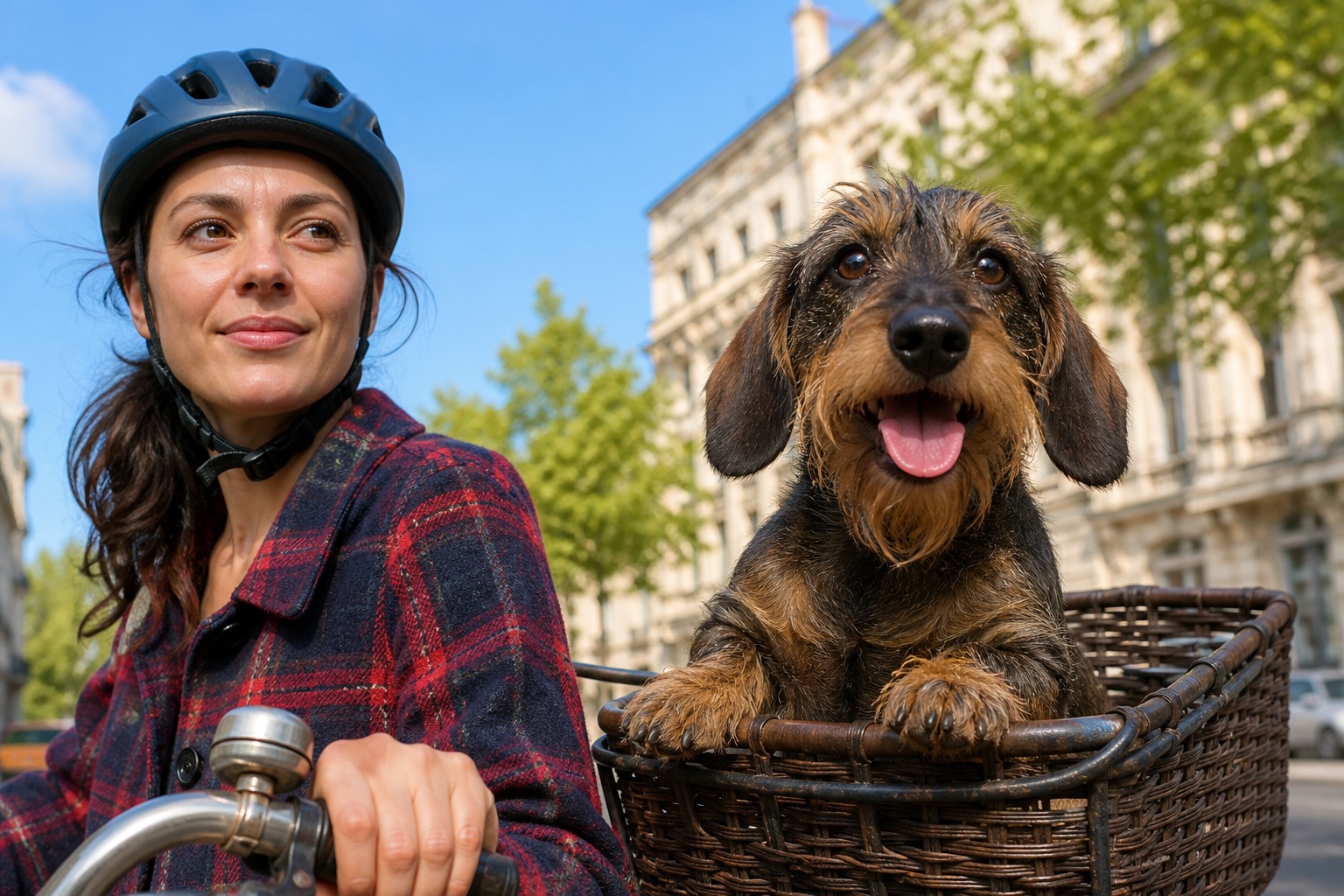
At first glance, dogs and bicycles seem like a bad combination, the kind of thing that ends with a tangled leash and a scraped knee. It does not have to. Done right, a bike ride is one of the best ways to give a high-energy dog a real workout and see more of your neighborhood together. The trick is knowing where the actual danger lives, and it is almost never the bike itself. It is the pavement under your dog’s paws, the leash setup connecting you two, and the temptation to skip straight to a long ride before your dog is ready.
The basic decision is about size. A small dog rides along in a basket or trailer. A bigger dog in good shape can trot beside the bike and burn off serious energy. Either way, the rules below keep the fun from turning into a vet visit.
Do the pavement math first
Before you clip in, check the ground, not just the sky. Most owners know about the danger of hot weather, but the surprise is how low the threshold really is. On a day that feels merely warm to you, around 77 degrees, asphalt in the sun can climb to roughly twice the air temperature, hot enough to burn paw pads. There is a simple field test: press the back of your hand flat on the pavement for seven seconds. If you cannot hold it there comfortably, it is too hot for your dog’s feet, and you either wait for a cooler hour or put your dog in a proper pair of booties.
Heat is not the only health check. Even mild temperatures can bring a risk of heatstroke in a dog who is working hard, so bring water and a collapsible bowl every time and watch for heavy panting. And know your dog’s build: flat-faced breeds like pugs and bulldogs overheat fast and should not be running alongside a bike at all, while any older dog or one with joint issues should be cleared by your vet before doing road miles.
Get the leash setup right
This is the detail that separates a smooth ride from a wreck. Clip the leash to a well-fitted harness rather than a collar, so a sudden lunge or stop cannot wrench your dog’s neck. And for a dog running alongside, never just hold the leash in your hand. Use a hands-free bike leash attachment that clamps to the frame and holds your dog out to the side, away from the pedals and spokes; the good ones include a quick-release in case of a fall. Springer makes a well-known version with a patented safety release.
Whether your dog is running or riding, introduce all of it slowly. Start by walking your dog next to the parked bike with treats, so the machine itself becomes a good thing. Then do short, easy trips before building to distance, letting your dog set the pace and stopping for water, potty breaks, and sniffs along the way. Think of a running dog like a couch-to-5K human: you are conditioning a body, not testing it.
The gear for small dogs
If your dog is coming along for the ride rather than running it, you have good options.
For a roomy, comfortable setup, a bike trailer is hard to beat, especially a model whose floor lifts out for hosing down and whose mesh panels keep air moving. The Tail Wagon by Burley is a popular pick, and Dutch Dog Design makes a mini trailer built for smaller dogs who still want the trailer experience.
For a simpler handlebar-or-rear basket, the BARKBAY Dog Bike Basket Carrier is an easy, expandable, soft-sided choice at around $66. Keeping your dog up front where you can see them lets you read their body language and know when they have had enough for the day.
If you want something plusher, the K&H Pet Products Travel Dog Bike Basket is a sherpa-lined soft bag, around $60, that beats a stiff wicker basket for a dog who likes to nest. There are also handsome metal baskets, like the Axiom dual-function pet basket, for riders who want a more classic look.
Whatever you choose, secure your dog inside it with the carrier’s tether so an excited leap cannot end badly, and never leave a dog loose in an open basket without a leash clip.
What newer research and gear add
Two modern wrinkles are worth flagging. First, e-bikes change the math. They make it easy to go faster and farther than a running dog can safely keep up with, so if you are on an e-bike, a running dog should set a strict pace cap and a basket or trailer is often the smarter call. Second, visibility gear has gotten good and cheap, and it matters: a small clip-on light or reflective strip on your dog’s harness or the basket makes you far more visible at dusk, when a lot of dog-plus-bike outings happen.
The throughline is patience and preparation. Check the pavement, rig the harness and leash correctly, build up slowly, and pack water. Get those right and a bike ride becomes exactly what it should be, a great time for a dog who has energy to spare and a person who wants to spend it with them.
References
- American Kennel Club. “How Hot Is Too Hot? Pavement Temperature and Your Dog’s Paws.” akc.org
- American Veterinary Medical Association. “Warm Weather Pet Safety.” avma.org/resources-tools/pet-owners/petcare/warm-weather-pet-safety
- Bruchim, Y. et al. “Heat Stroke in Dogs: Clinical Review.” Journal of Veterinary Emergency and Critical Care.
Tom Hadley writes about training and behavior, helping owners understand what their pets are trying to tell them. His work covers everyday manners, decoding common behaviors, and the small changes at home that make dogs and cats easier to live with.
Meet our experts ↗Keep reading
 LivingYour Dog's Canoe Problem Isn't the Water. It's the Boredom.Marcus Webb · 6 min
 LivingThat Dog With Its Head Out the Window Is a 50-Pound Projectile Waiting to HappenMarcus Webb · 6 min
 LivingA Woman Left Her Dog at the Airport. The Breed Ban That Set It Up Is the Real Story.Jordan Ellis · 4 min
 LivingHalf the Dogs at the Beach Are Not Having Fun. Yours Might Be One.Dr. Mara Chen · 8 min
 LivingCharleston Is a Dog Town on a Clock. Miss the Hours and the Trip Falls Apart.Leila Torres · 10 min
 LivingEvery Trail Closed to Dogs Was Closed Because of a Dog OwnerMarcus Webb · 8 min