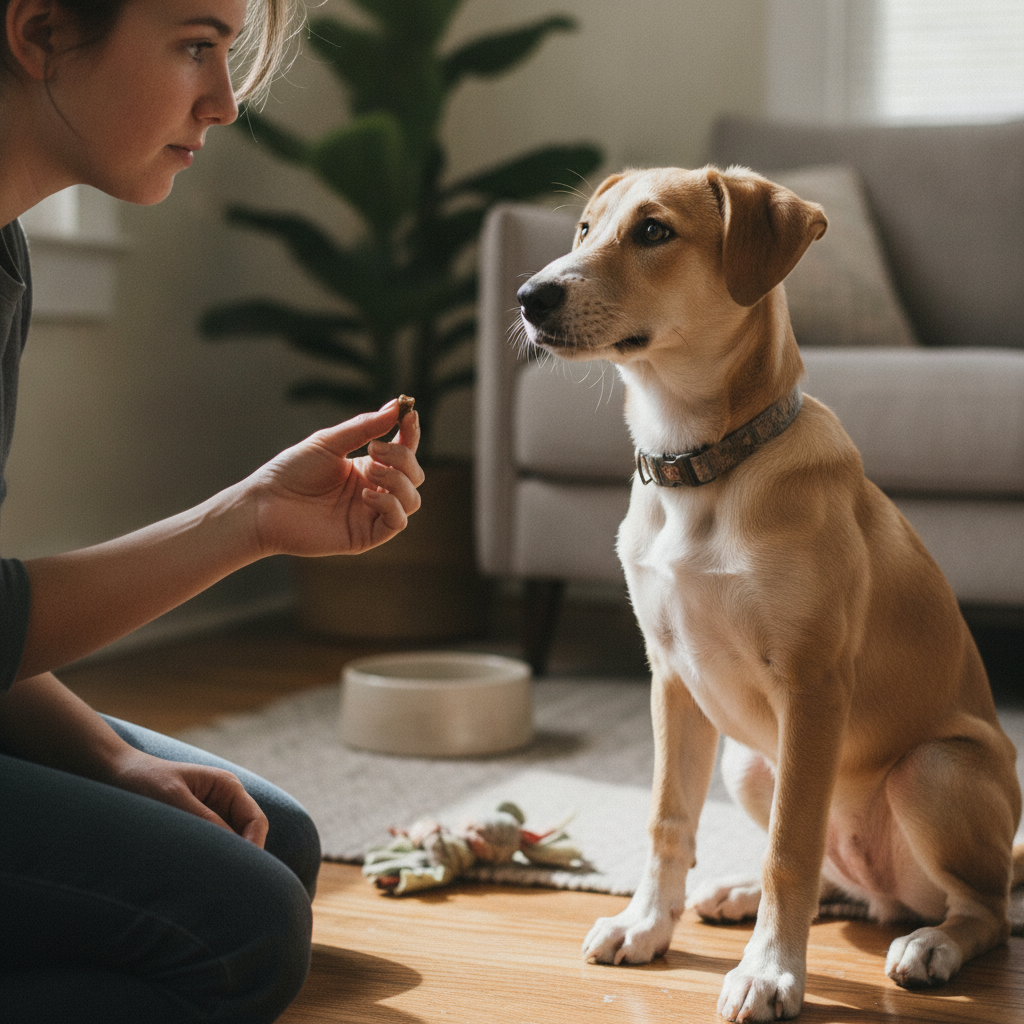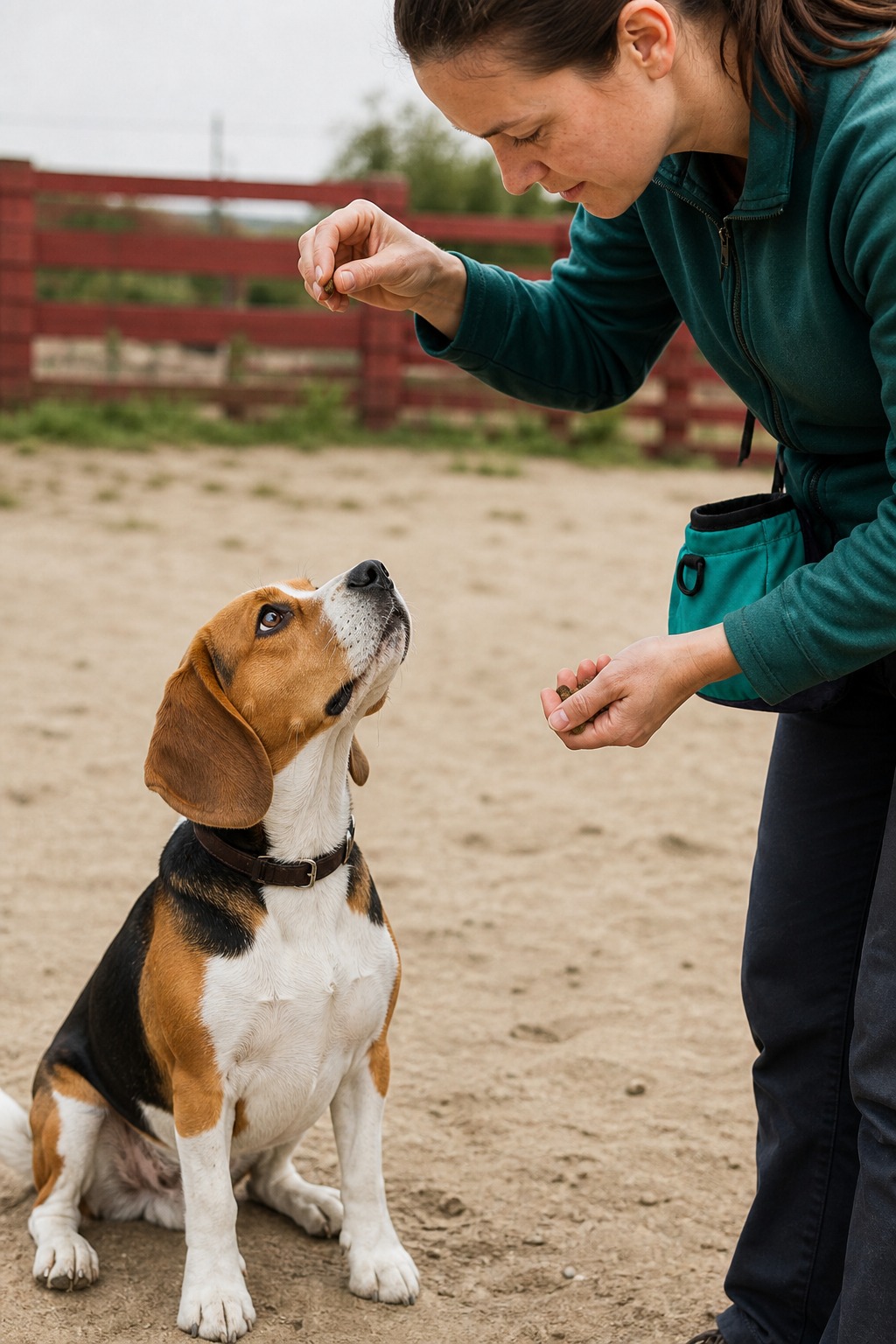
Every dog owner has seen the look. You hand out treats, one dog gets two and the other gets one, and the shorted dog stares at you with an expression that reads unmistakably as hang on, that’s not fair. It’s tempting to laugh it off as projection. But brain research suggests the shortchanged dog really did register the difference, not by counting, exactly, but with a built-in sense of quantity that turns out to be startlingly similar to our own.
The study that scanned dogs doing “math”
The key evidence comes from a 2019 study out of Emory University. Researchers used functional MRI to scan the brains of 11 dogs while flashing arrays of dots on a screen. To make sure the dogs were responding to how many dots there were and not just the amount of visual “stuff,” the team held the total dot area constant and changed only the number. Crucially, none of the dogs had ever been trained in what the researchers call numerosity, and they were a mix of breeds.
In eight of the 11 dogs, a region called the parietotemporal cortex lit up as the number of dots changed. That’s telling, because the analogous region in the human brain, the parietal cortex, is what handles our own spontaneous sense of basic numerical quantity. The senior author, Gregory Berns, noted that the work showed not only that dogs use a similar brain region to process numbers of objects as humans do, but that they don’t need training to do it.
Three of the 11 dogs didn’t show the effect, which is a meaningful chunk of a small sample. So this isn’t proof that every dog is quietly tallying. But it’s strong evidence that the basic machinery for judging “more versus fewer” comes standard in a lot of dogs, no schooling required.
Why a dog would evolve a number sense
None of this means your dog is doing arithmetic. What they have is closer to an instinct for quantity, and it likely earned its keep long before dogs shared our couches.
“A rough sense of more versus fewer is genuinely useful in the wild,” says Dr. Priya Nair. “It helps an animal choose the patch with more food, or steer clear of the direction where there are more predators. You don’t need to count to two hundred to benefit from knowing which pile is bigger.”
That evolutionary logic is why the ability shows up without training. It’s not a party trick dogs learn; it’s a piece of equipment they’re born with.
The part that actually affects your dog
Here’s where the science stops being cute and starts being useful. That same quantity sense is tied to expectation, and expectation is tied to stress.
If your dog reliably gets a certain number of treats, they come to expect that number, and they notice when the count drops. For a confident, easygoing dog, that’s no big deal. But for a dog who runs anxious or sensitive, a gap between what they expected and what they got can feed frustration.
“In a dog that’s already prone to anxiety, having things not add up the way they’ve come to expect can nudge their stress higher,” Dr. Nair says. “I’m careful not to pin that entirely on some counting ability, because we can’t prove that link. But the practical move is easy: keep the treat routine steady so you’re not accidentally setting up little disappointments.”
So the takeaway isn’t to test your dog’s math. It’s to be consistent. Predictable routines around food and rewards give a dog fewer reasons to feel shorted, and that’s worth more than any parlor trick.
What it really tells us
The bigger message from this line of research is one owners tend to feel long before scientists confirm it: there’s more going on behind those eyes than we give dogs credit for. Berns pointed out that dogs and humans are separated by at least 80 million years of evolution, which makes a shared way of processing quantity a genuinely deep connection, evidence that this number sense is old, common, and built into brains far removed from our own.
Pair that with everything else dogs pick up about our routines, our moods, and our schedules, and the picture is less “can my dog count” and more “my dog is paying closer attention than I assumed.” The treats are just the part they’re most honest about.