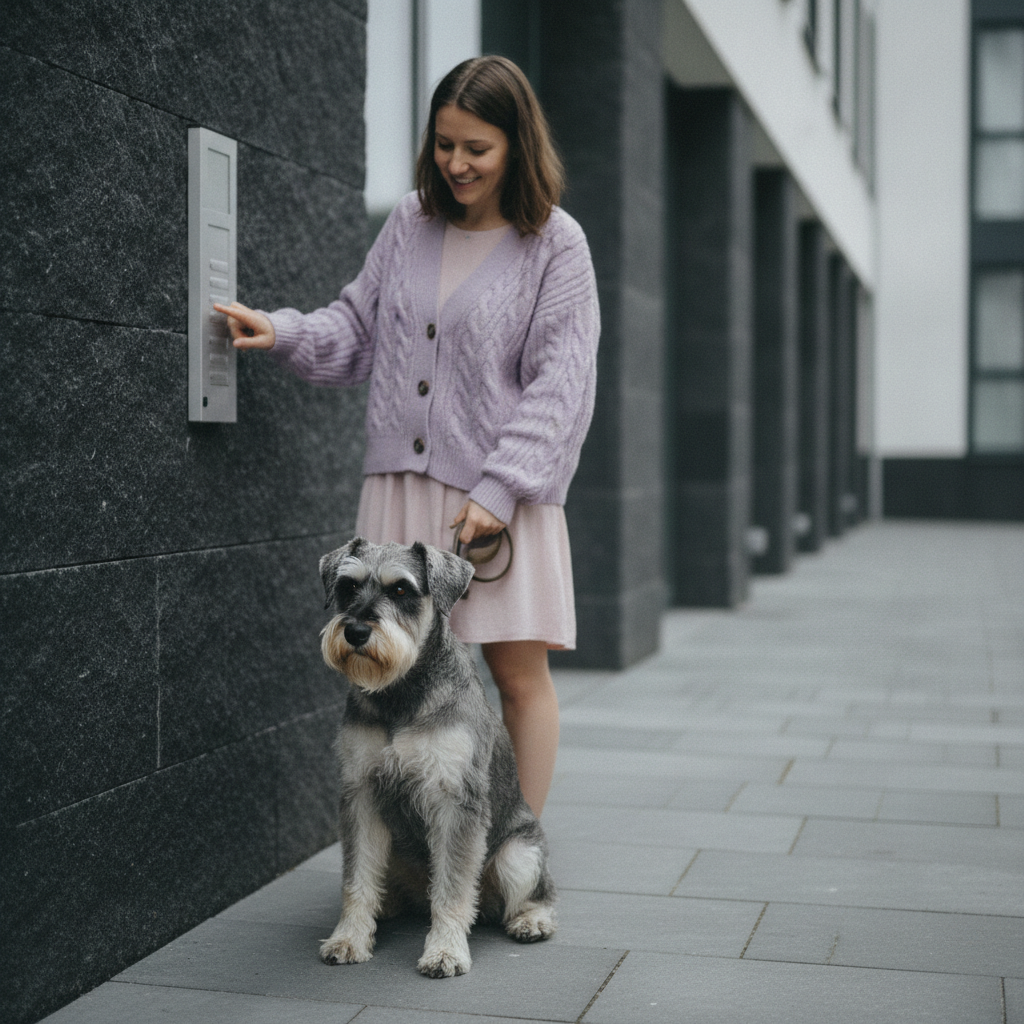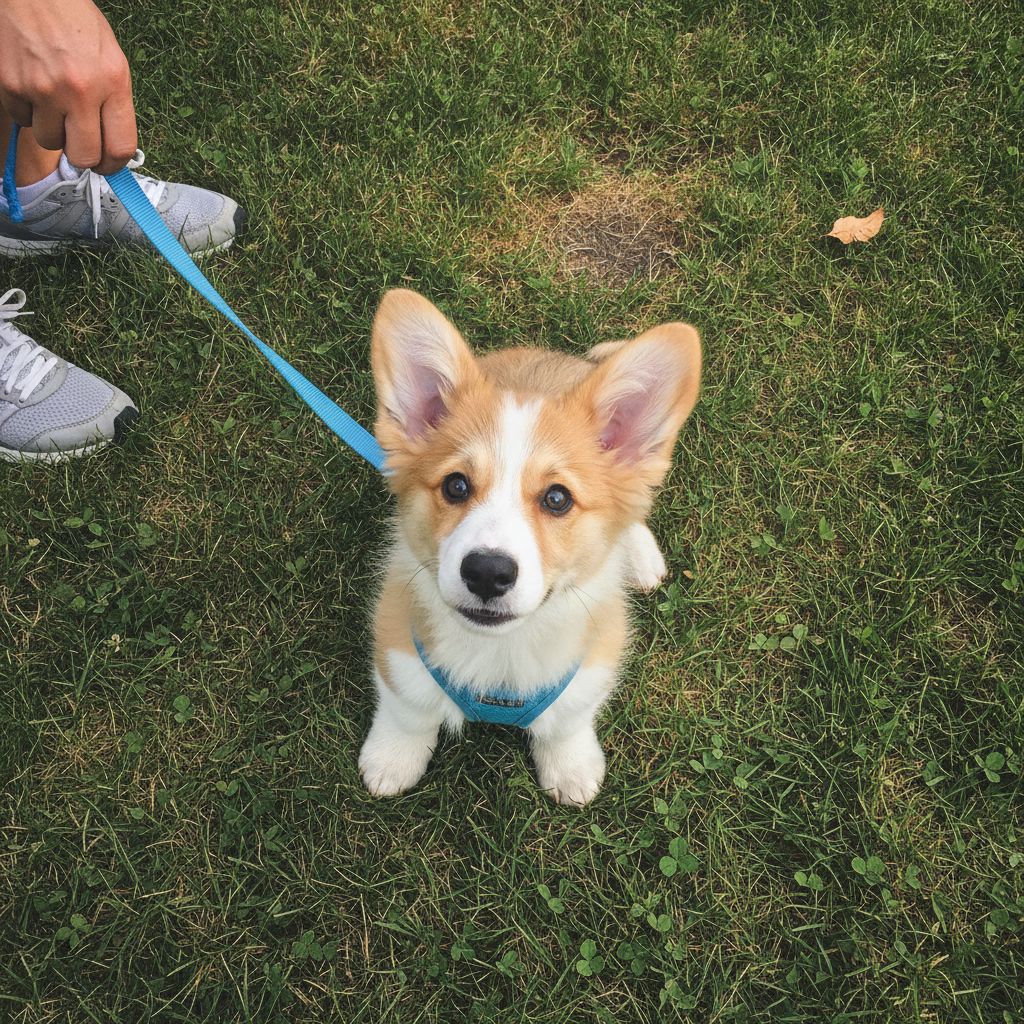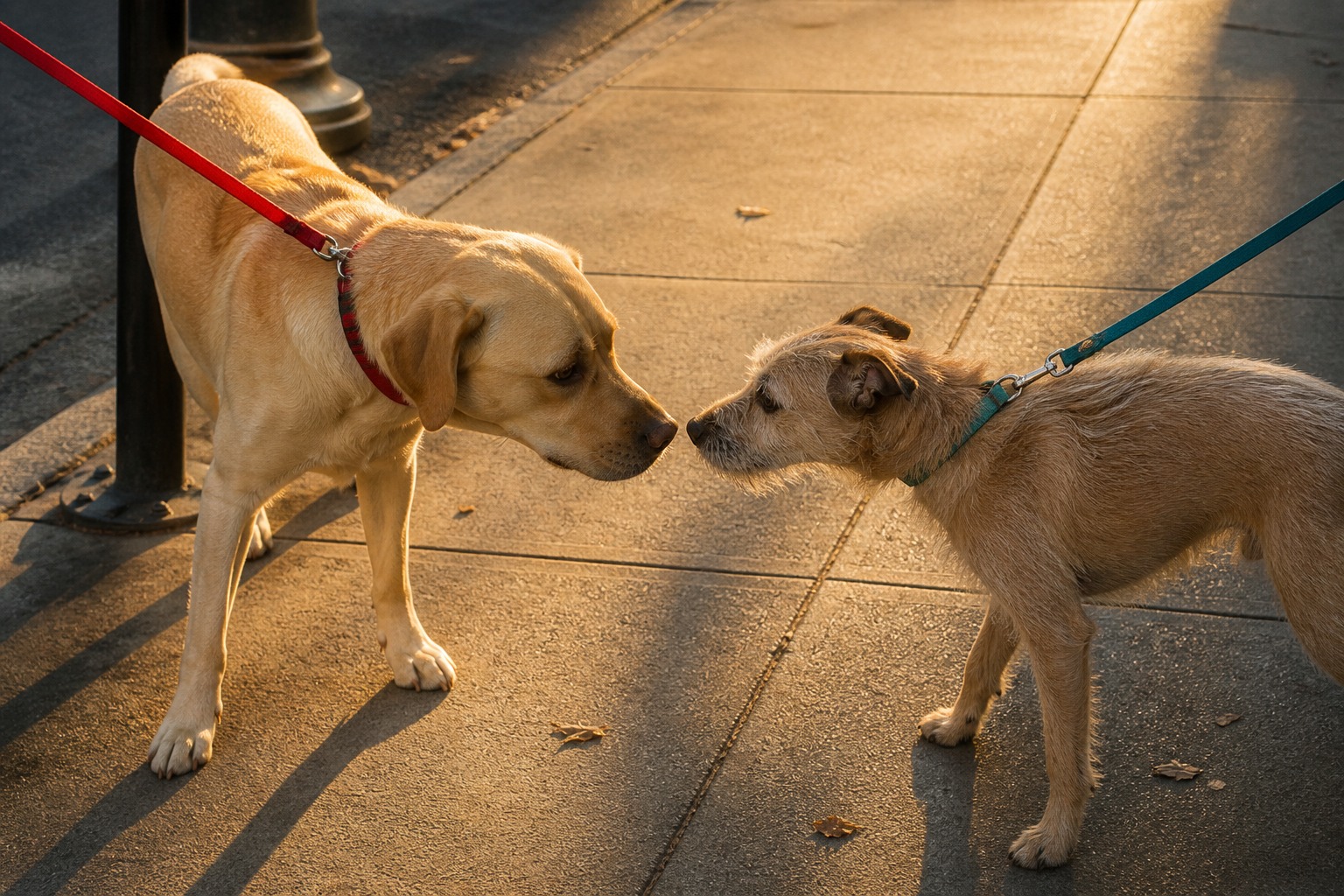
You are out on a walk, another dog and owner are coming the other way, and both dogs perk up. The friendly move seems obvious: let the leashes go slack, let the dogs bump noses, exchange a “so cute!” with the other owner, and carry on. It feels neighborly. It feels kind.
It is also one of the most reliable ways to teach your dog to lose their mind on a leash. The on-leash, face-to-face greeting, the single most common setup for dogs to meet, is exactly the one trainers wish people would stop doing. The polite thing, more often than not, is to keep walking.
Head-on is a threat in dog
Start with what a straight-on approach means to a dog, because it is the opposite of what it means to us. When two dogs come at each other head-on, that direct line reads, in the language of dogs, as a challenge. It is natural for both to feel defensive and to brace for it.
Left to their own devices, dogs do not greet like that at all. They approach in a curve rather than a straight line, specifically to signal that they are not a threat, and they gather information by sniffing each other’s rear ends and circling, not by locking eyes nose-to-nose. A leash makes that natural choreography almost impossible. You have pointed two animals directly at each other and removed their ability to arc, circle, and defuse, and then handed them a hello.
The leash makes it worse without your knowing
The leash is not a neutral rope in this scene. It is one of your main channels of communication with your dog, and it is broadcasting the whole time, often the wrong message.
Watch what your hands do when another dog appears: you tighten up. It is instinctive. But that little hit of tension travels straight down the line and tells your dog that you are tense, which tells them they should be too. You think you are steadying them; you are actually confirming that this is a situation worth worrying about. That is how a greeting tips into anxiety, and sometimes into a snap.
“The leash is basically a phone line between you and your dog, and most people don’t realize it’s always on,” says Dr. Priya Nair. “The half-second you stiffen up because you’re nervous about the other dog, you’ve just texted your dog ‘be nervous.’ They can’t tell the difference between your caution and a real threat, so they prepare for one.”
Even when it goes well, an on-leash greeting can cause trouble. If your dog has a lovely time meeting a strange dog, the lesson they take away is that every dog on the street is a potential friend to rush toward. When you inevitably do not let them, the result is frustration, and frustration on a leash has a name: reactivity, lunging, and pulling toward every dog in sight.
What it costs you long-term
These are not one-off bad moments. Repeatedly putting a dog in tense head-on greetings has lingering effects. A dog can grow genuinely anxious about heading outdoors at all, or about the mere sight of another dog approaching. They can build a habit of leash reactivity that takes real work to undo. And, more quietly, they can lose trust in you, because you kept walking them into confrontations you were supposed to steer them out of. Once a dog decides you cannot be relied on to protect their space, they stop deferring to you and start making their own calls, like blowing past you to charge every dog on the block. That erosion of trust makes everything else about training harder.
How to actually introduce two dogs
If you want two dogs to meet, do it in the setup that gives them the best odds, not the worst.
The ideal introduction happens in a neutral, controlled space with both dogs off-leash, a fenced yard or any enclosed area where they can move freely and read each other naturally. If the dogs do not know each other, having a professional trainer there to oversee it is genuinely worth it. Pick a low-stimulation spot, not a chaotic park or a crowded sidewalk, and avoid timing it around meals or near favorite toys, which give dogs something to guard.
If a leash introduction is genuinely unavoidable, you can at least stack the odds in your favor. Rather than a head-on meeting, walk the two dogs parallel to each other first, letting one drift behind to sniff the other, then switching. If that goes well, move to a large enclosed space and drop the leash, but leave it clipped to the collar so you can grab it fast if you need to step in. The dropped-but-attached leash gives the dogs freedom to greet correctly while keeping your safety net in reach.
You don’t owe anyone a greeting
The mindset shift underneath all of this is simple: on a walk, your only obligation is to your own dog. Not to the friendly stranger, not to their dog, not to the social expectation that dogs should say hi. Your dog has no actual need to meet every dog they pass, and both dogs are safer for skipping it.
Advocating for your dog means it is your job to keep others from rushing them, and to steer clear of unfamiliar dogs whose temperament, and whose owners, you do not know. Save the greetings for dogs and people you trust, in settings you control. On the sidewalk, “we’re not saying hi today, sorry,” is not rude. It is you doing your job.
References
- American Veterinary Society of Animal Behavior. “Position Statement on the Use of Dominance Theory in Behavior Modification of Animals.” avsab.org
- Fear Free Pets. “Leash Reactivity and On-Leash Greetings.” fearfreepets.com
- Handelman, Barbara. Canine Behavior: A Photo Illustrated Handbook. (On canine greeting and calming signals.)