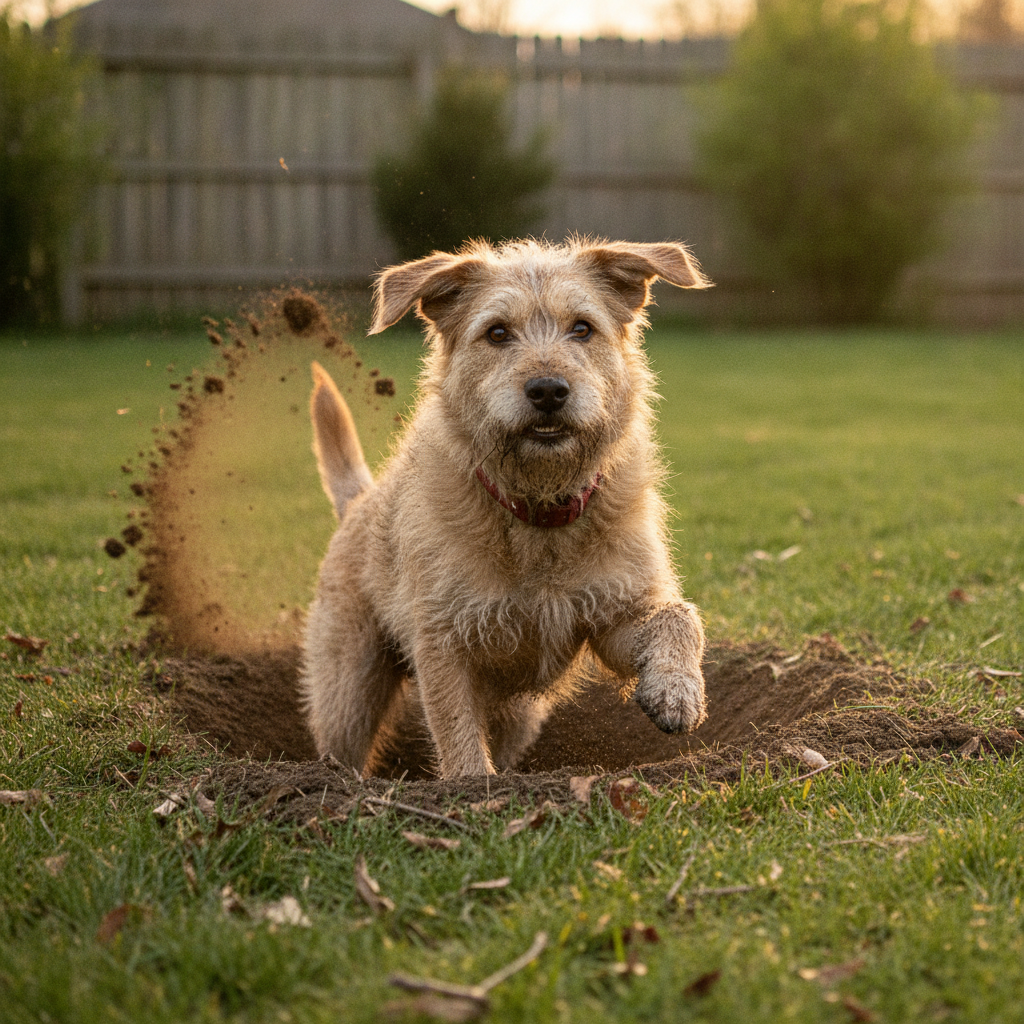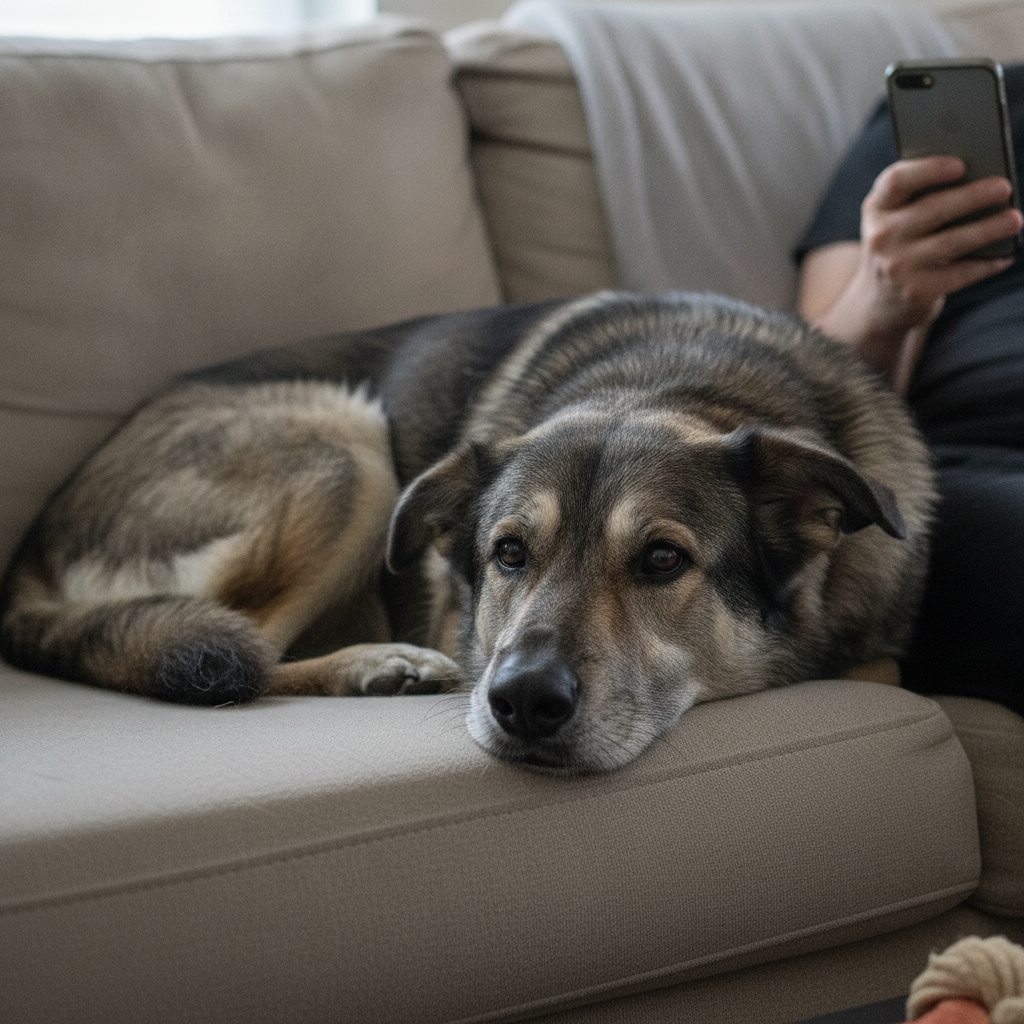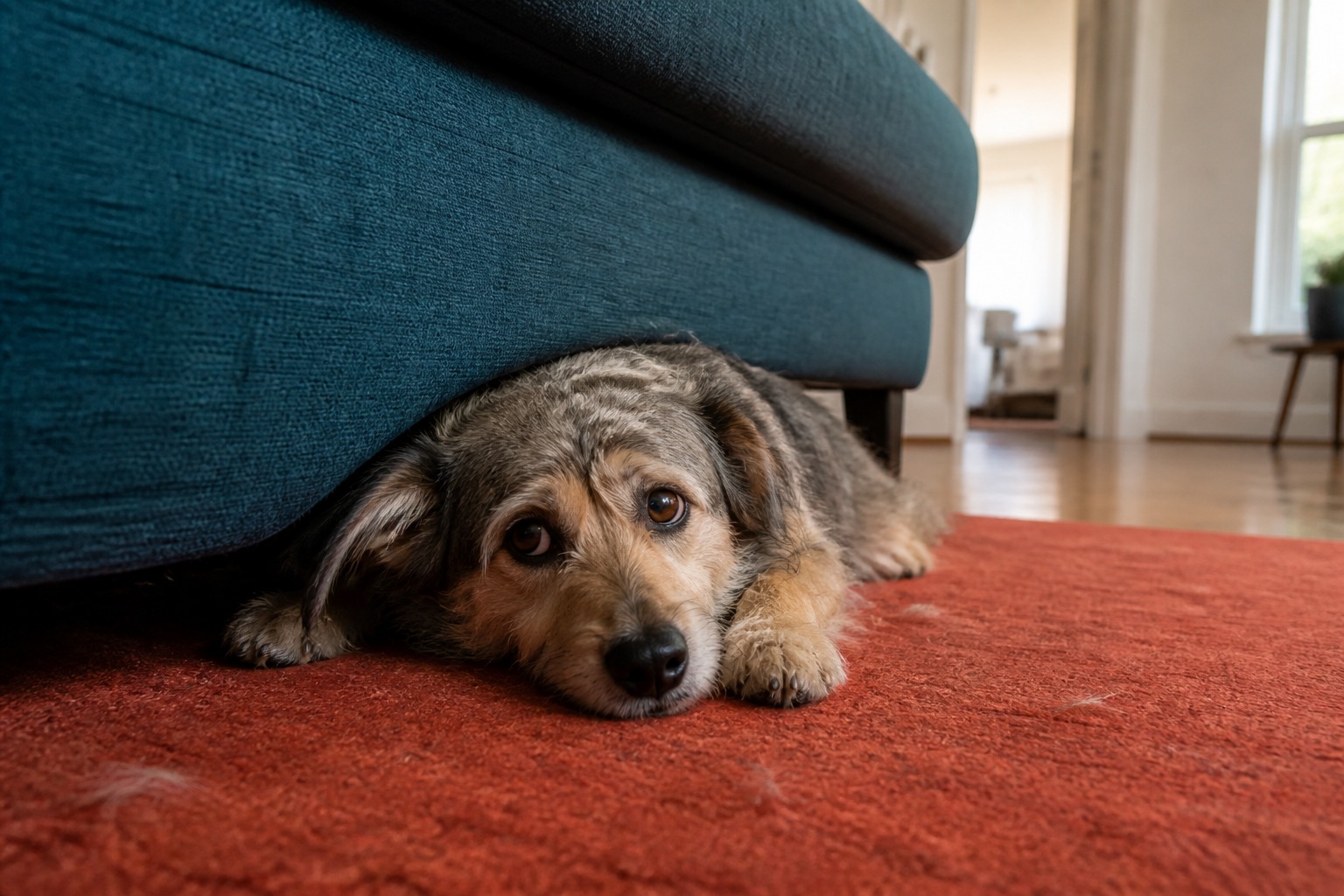
If your dog loses it when people come over, you are not alone, and your dog is probably not the dog you think he is. Owners almost never call a trainer to say they have a fearful dog. They call to say their dog is aggressive toward visitors, barking, lunging, growling, sometimes even biting. But peel back that behavior and, more often than not, the engine underneath it is fear, not menace.
That distinction matters, because it changes the fix. You don’t manage a scared dog the way you’d manage a pushy one. And once you see the fear for what it is, the most useful adjustment becomes obvious, and it happens before your dog ever meets the guest.
“The doorway is the worst possible stage for this introduction, and people set it there by default,” says Dr. Mara Chen. “A stranger appearing at the threshold hits a fearful dog with everything at once, a new sight, a new smell, a new sound, arriving at the exact spot the dog feels responsible for guarding, with no time to process any of it. Of course the alarm bells go off. Move the meeting to a person who’s already sitting quietly inside, and you’ve removed most of what was scaring him in the first place.”
The one change that does the heavy lifting
The trick is simple to state: your dog should never see your guests come in. Instead, arrange things so your dog meets them once they’re already settled in the house.
Think about it from the dog’s side. A person materializing at the door and crossing the threshold is an intense event, all their alarm systems fire at once, and the whole thing screams intruder. It is far, far easier for a nervous dog to walk into a living room and find a calm person already seated on the couch than to watch that person arrive. Same guest, completely different experience.
How to set it up
Have visitors text before they enter. Ask them to call or text as they’re pulling up, so you can get everything staged instead of being caught off guard by a knock.
Put your dog out of sight before you open the door. Before anyone comes in, tuck your dog somewhere they can’t see the entry, a crate in another room, the backyard, the laundry room. I’ve had clients whose dog was happiest waiting in the car in the garage, and that worked fine too. The point is simply that your dog doesn’t witness the arrival.
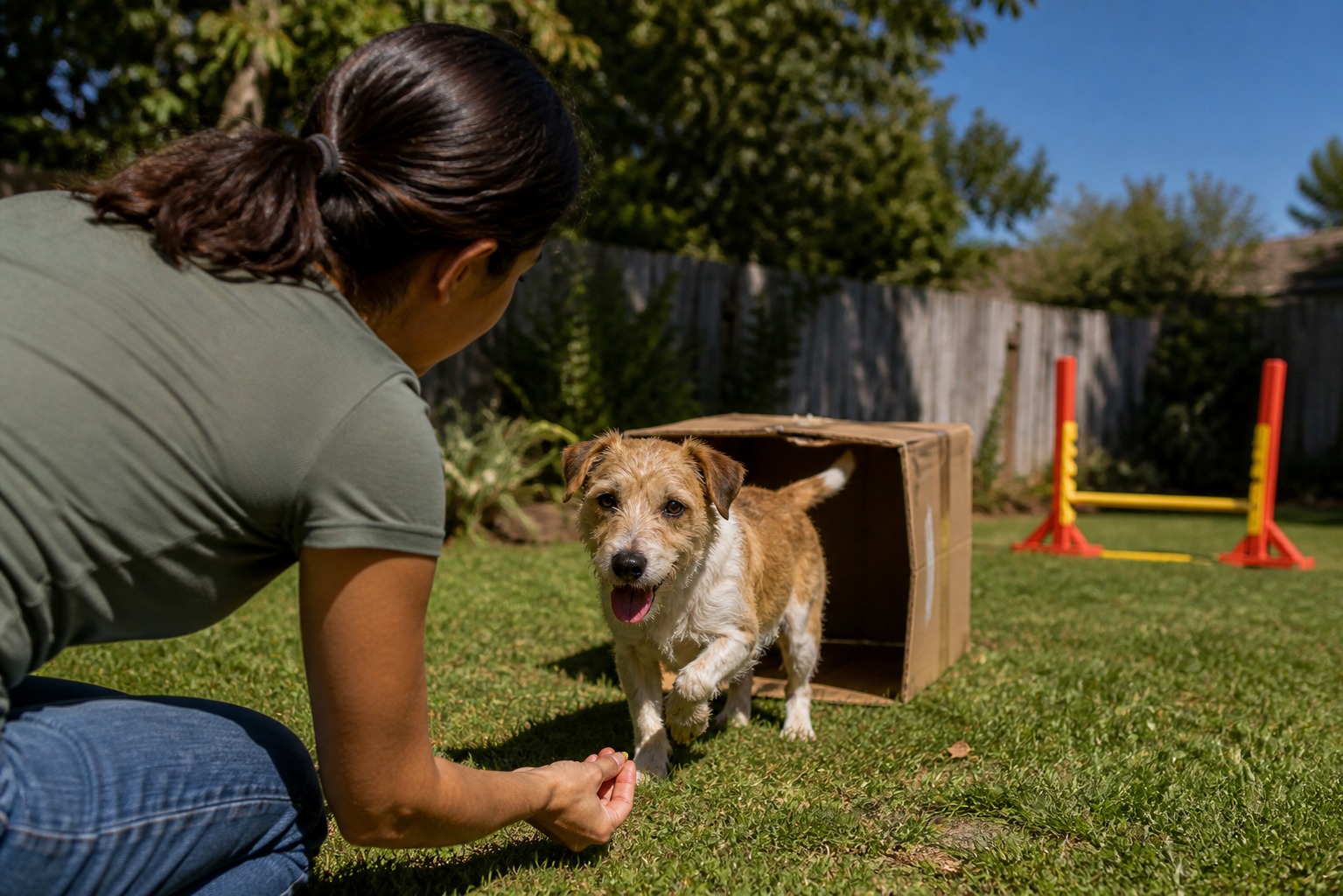
Let your guest sit down and hold the good stuff. Bring your visitors in, have them get seated, and hand them whatever treats or toy your dog loves most, before your dog is in the room.
Bring your dog in to meet a calm, seated person. Now let your dog wander in and find the visitor already settled, and let that seated guest be the one who hands over the goodies. Depending on how your dog is doing, you may want them on a leash or behind a baby gate for this first interaction.
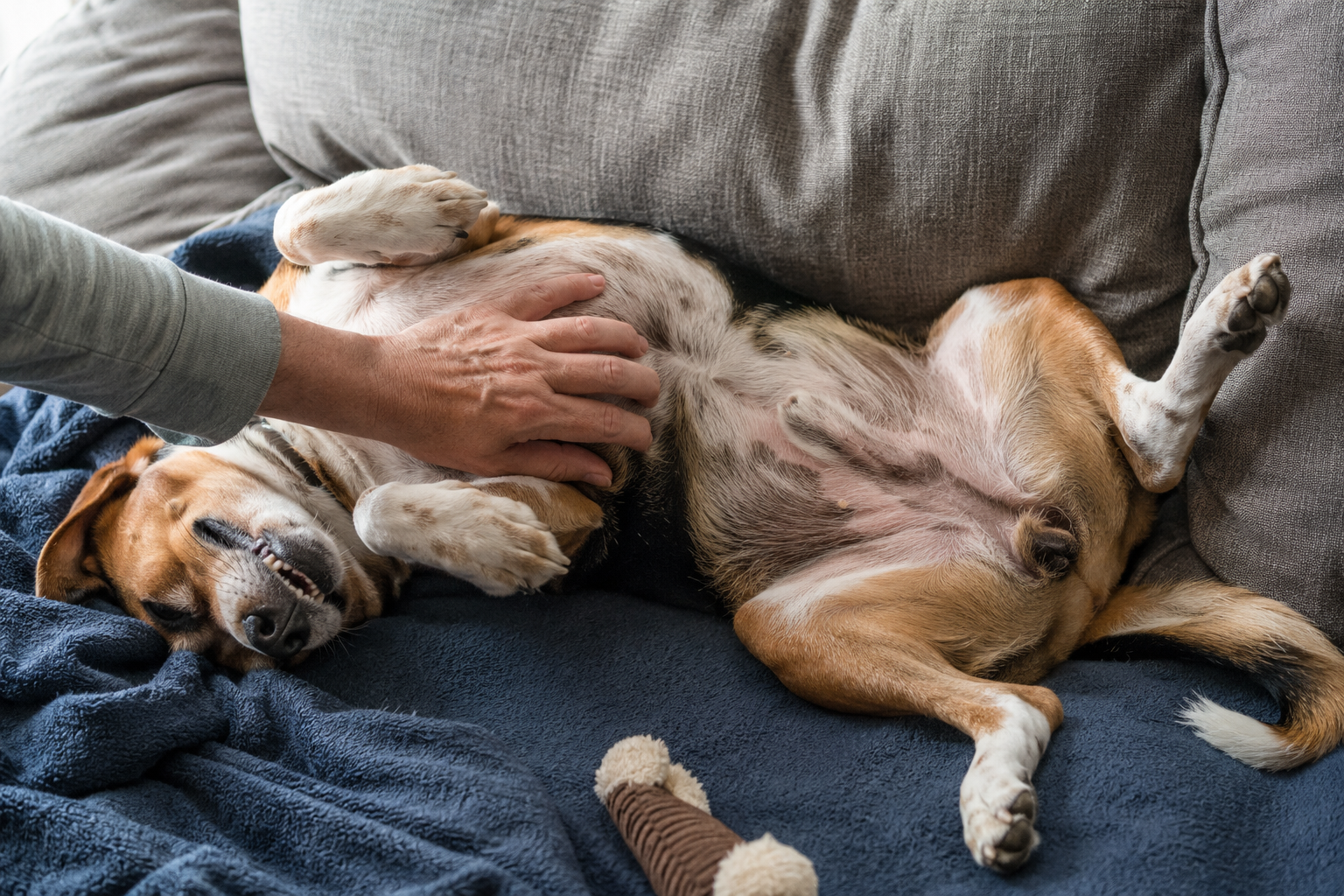
Then read the room. Some dogs are totally fine once they’ve met someone this way, and for that visit, you’re done. Other dogs do well until somebody stands up or moves suddenly, and for them it’s better to keep them separated after that initial hello. Those dogs can absolutely improve with more work, but this is a solid first step, not the whole staircase.
What this is really doing
Under the hood, you’re pairing visitors with good things, treats, toys, calm, so that over time your dog’s gut reaction to company shifts from fear toward anticipation. A real, comprehensive plan for a reactive dog is individually designed around that dog and that household, and it’s usually a long, patient process, not a single trick. But bypassing the doorway ambush is the highest-leverage piece, and it’s one almost any home can put in place tonight.
When to bring in a professional
This technique is a management tool, not a cure, and it isn’t right for every situation. Use real caution with any dog who has already bitten someone, and don’t try to muscle through it alone if your dog is escalating, if the fear is severe, or if anyone in the home could get hurt. A qualified trainer or a veterinary behaviorist can build a step-by-step plan (and, in some cases, discuss whether anti-anxiety support would help) that’s calibrated to your specific dog. There is no quick fix here. But with a friend or two willing to play guest, a handful of great treats, and some patience, you can genuinely change how your dog feels about the doorbell.