


Your Dog Doesn't Owe Every Dog a Friendship. Here's How It Actually Chooses.
We treat a dog snubbing another dog like a problem to fix. Usually it isn't. Dog friendship runs on the same rules ours does, temperament, shared interests, mutual respect, and personal history, and being picky is normal, not broken.

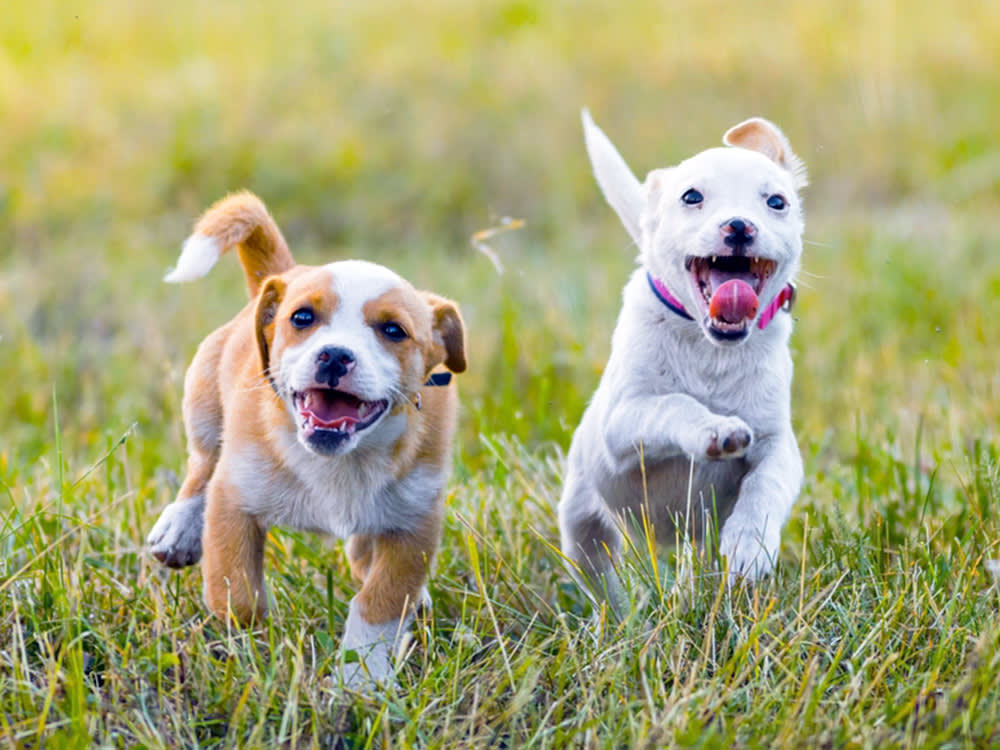
Some dogs are open-hearted extroverts who trot up to every dog they see, tail going like a metronome. Others aren’t hostile, exactly, but they’re choosy, breezing past most dogs while lighting up for a select few. If you’ve got one of the picky ones, you’ve probably stood at the park wondering what your dog could possibly have against the perfectly nice dog it just turned its back on, and why it adores that other one for no reason you can see.
Here’s the reframe that takes the sting out of it: a dog being selective about other dogs is not a malfunction. We tend to treat any snub as a training problem to solve, but dog friendship works a lot like human friendship, driven by temperament, shared interests, mutual respect, and plain personal history. Expecting your dog to like every dog is like expecting yourself to like every person you pass. Nobody does, and nobody should have to.
Sociability is a spectrum, not a switch
The single most useful idea here is that dog sociability isn’t on or off; it’s a bell curve. Every dog sits somewhere on a spectrum. At one end are the dogs who seem to love nearly every dog they meet; at the far other end are dogs who are fearful of or aggressive toward most or all other dogs. But most dogs live in the fat middle of that curve, where they’re asocial, tolerant, or selective, friendly enough, but with opinions about who’s worth their time.
Even a well-adjusted, friendly dog will meet other dogs it simply doesn’t want to befriend, and that’s completely normal. Think about yourself. You can be an outgoing, likable person and still not click with every human you’re introduced to. Dogs are no different, and we do them a disservice when we expect otherwise.
A lot of things shape where a dog lands. Early socialization in roughly the first twelve weeks of life is a big one. So is a dog’s history of play: positive experiences push a dog toward sociable, and bad ones can knock them the other way. And while training can help a fearful dog cope, it rarely rewrites who they are.
“If a dog is genuinely scared of other dogs, careful work can help them feel safer, but it won’t manufacture a social butterfly,” Hadley says. “Dogs have their own tastes about what’s fun and who they want near them, and there’s a limit to how much of that we get to override.”
How dogs actually pick their friends
When a dog does choose a friend, several factors are in play, and a big one is fit, dogs often gravitate to others whose personality and energy complement their own.
“A dog who likes a mellow, sniff-everything walk will usually peel away from a bouncy, barky dog that keeps insisting on play, and settle in next to another dog who also just wants to potter around quietly,” Hadley says. “Flip it around and a high-energy dog might try to coax a shy one into playing if there’s no one else about, then lose interest and move on the second a livelier playmate shows up.”
It isn’t always tidy, though. Some pairs look mismatched on paper yet get along because they share some deeper trait underneath. Sometimes, like people, dogs bond over common interests, both love to run flat-out, both love a good play-wrestle, both love a long, nose-down sniffari. Other times what draws two dogs together is respect for each other’s space.
“Picture a senior dog and a rowdy adolescent,” Hadley says. “If that younger dog gives the older one room and doesn’t come barreling in during a case of the zoomies, the senior reads that as respect, no jumping, no bulldozing, no lunging for their toy, and relaxes. That acceptance is its own kind of liking.”
Why dogs make enemies, too
The reasons dogs dislike each other are just as layered. A common one is a sensitive dog stuck near a loud dog with no sense of personal space, or two very evenly matched dogs, say two unneutered males of similar age and confidence, sizing each other up. Trouble tends to flare when two dogs who don’t care for each other can’t simply move apart.
Personal history looms large, and sometimes there’s real trauma behind it, a quiet dog may distrust a louder one because it was jumped on in the past, or because it can’t predict what the other dog will do next, or because it can’t relax while bracing for an ambush of play.
There’s a stranger factor, too: dogs occasionally dislike each other because of the people attached. A handler who’s very loud, shouting praise or barking their dog’s name constantly for attention, can make a nearby dog uneasy and eager to keep its distance, because that loud human is inevitably part of the package. So there may be no actual conflict between the dogs at all, just guilt by association. If a dog seems to dislike yours for no reason, maybe do take it a little personally.
Finally, sudden shifts can flip the whole picture. It can look like a dog turned on an old friend overnight, but the real cause is usually that the dog is sick or sore and doesn’t want to be bothered by anyone.
“When a dog is hurting and can’t get that across through body language, it may resort to a growl or a quick snap that just means ‘give me space,’” Hadley says. “People read that as the friendship breaking, but once the dog feels well again, things usually slide right back to normal.”
What the research reinforces
None of this is wishful thinking, either. The idea of an early socialization window is well established in behavioral science, and a dog’s sociability is understood to be partly stable temperament, shaped early and only so malleable later, rather than a dial you can crank to “loves everyone.” That’s why the most humane goal isn’t to make a selective dog universally social; it’s to help them feel safe and let them keep their preferences.
At the end of the day, your dog picks its friends for a tangle of reasons, most of which you don’t control. You decide who your dog meets, at the park, on walks, at daycare, but you can’t order them to enjoy anyone’s company. And honestly, would you have wanted your parents choosing your friends for you? Extend your dog the same courtesy.
References
- American Veterinary Society of Animal Behavior. “Position Statement on Puppy Socialization.” avsab.org.
- Serpell, J., ed. The Domestic Dog: Its Evolution, Behavior and Interactions with People. Cambridge University Press (chapters on social behavior and temperament).
Tom Hadley writes about training and behavior, helping owners understand what their pets are trying to tell them. His work covers everyday manners, decoding common behaviors, and the small changes at home that make dogs and cats easier to live with.
Meet our experts ↗Keep reading
 TrainingBelly Up Isn't Always 'Rub Me.' Read the Rest of the Dog.Dr. Priya Nair · 7 min
 Health & WellnessYour Dog's Lip Lick Means Nausea or 'Please Back Off.' Learn to Tell.Dr. Priya Nair · 7 min
 TrainingStop Pushing Your Dog Down. Catch Them Doing It.Dr. Nina Kohl · 6 min
 TrainingThe Frozen Stare Isn't the Fight. It's Your Last Few Seconds to Stop One.Dr. Amara Solis · 6 min
 TrainingYour Dog Tolerates Your Hugs. That's Not the Same as Liking Them.Dr. Ravi Mehta · 7 min
 TrainingThe Walk Isn't Cardio. 9 Myths That Ruin It.Dr. Nina Kohl · 8 min