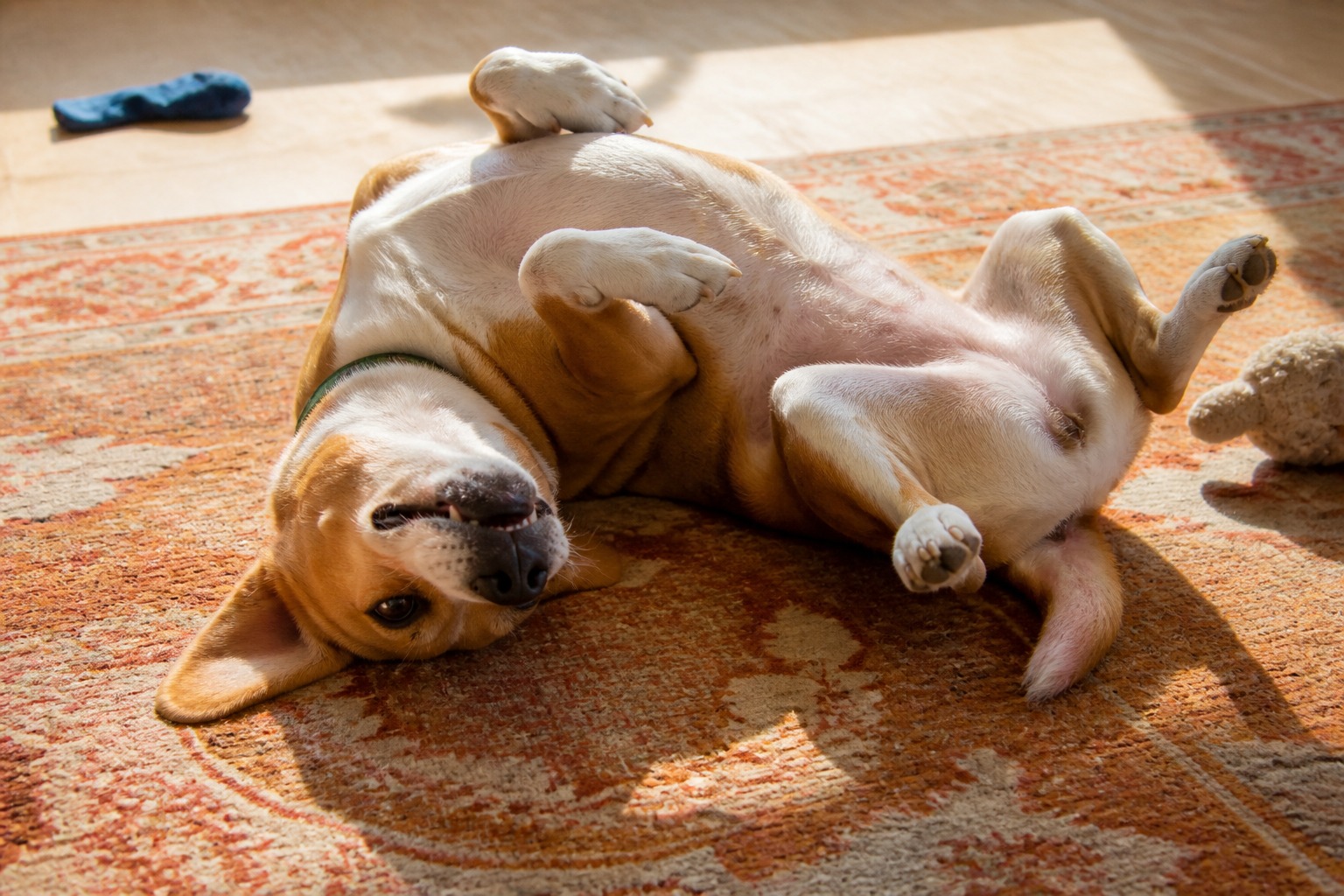
Your dog flops over, exposes the belly, and looks at you upside down. You reach out, because that’s obviously what this is.
Sometimes it is. And sometimes you are about to answer a question your dog didn’t ask.
Rolling onto the back is one of the most misread things dogs do, because it has at least six different meanings and they all use the same posture. The belly is not the message. The rest of the dog is.
The three-second test
Before you assume it’s an invitation, use the simplest tool in dog behavior.
Pet the dog for three seconds. Then stop and take your hands away.
Watch what happens next.
- They lean back in, nudge your hand, paw at you, or reposition to keep the contact: that was a yes. Carry on.
- They get up, move away, freeze, go still, turn their head away, lick their lips, yawn, or show a crescent of white at the corner of the eye: that was not an invitation, and you just got an answer.
This takes three seconds, works on every dog, and will change your relationship with dogs who have spent years tolerating things they didn’t enjoy.
“Most people never ask the dog. They just start rubbing, and then report that the dog loved it,” says Dr. Priya Nair. “Take your hands off for two seconds and let the dog vote. You’d be surprised how often they don’t vote yes.”
The six sentences a belly-up dog might be saying
“I’m comfortable.” The straightforward one. The belly carries less fur, and exposing it dumps heat, which is why you see more of it on warm days and on cool floors. It’s also a vulnerable position, so a dog who sprawls belly-up in the open is telling you they feel safe. Sunny spot, splayed legs, soft eyes, loose mouth: this is a dog at rest.
“Let’s play.” Mid-play, dogs throw themselves down and roll for the fun of it, and as a tactic. Flipping onto the back is a useful move in a wrestling match, a way to dodge, to pounce from below, or to hand a smaller dog the advantage. Look for the whole play package: bouncy exaggerated movements, a play bow, an open relaxed mouth, taking turns.
“I’ve got an itch.” The ground is a scratching post you don’t have to buy. Dogs roll to reach places they can’t get to with a leg, to rub off loose fur and dander, and to work at a specific spot. Watch for whether they’re targeting one patch over and over, which is different from a general full-body wriggle.
“The grass feels amazing.” Texture and temperature. Cool grass on a warm back is a straightforward physical pleasure, and lots of dogs have a favorite patch they return to.
“Look what I found.” Scent rolling: the smearing of the shoulders and neck into something dead, foul, or otherwise unspeakable. This one is old, probably inherited from wild canids, and the theories are still competing (masking their own smell, or carrying information about a find back to the group). What’s certain is that it isn’t for your benefit.
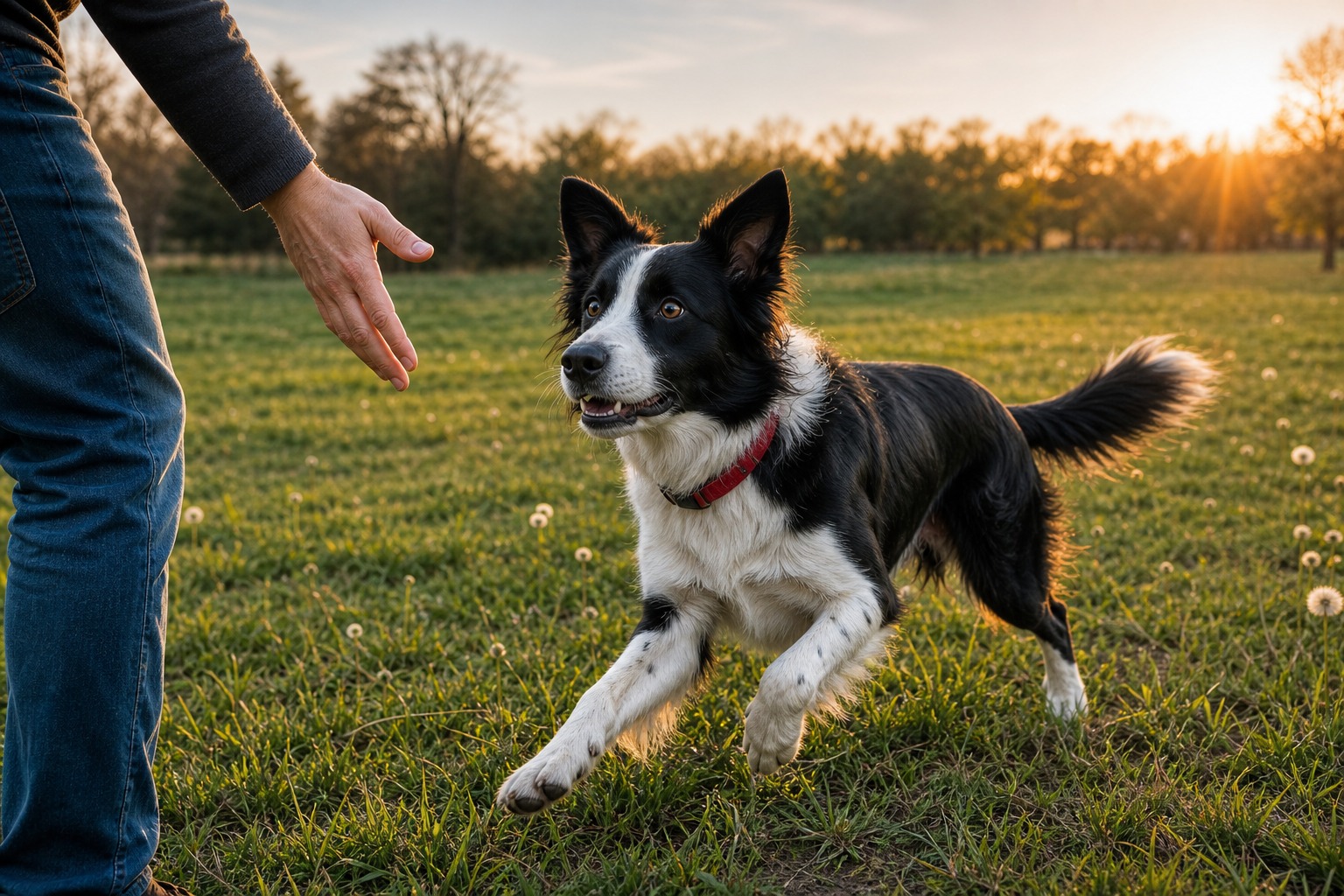
“I’m not a threat.” The one people miss. A dog who rolls over when a person leans over them, when a stranger approaches, or when a pushier dog comes in close is appeasing, not inviting. It’s a de-escalation move, and it can defuse tension between dogs beautifully. Read it right and you’ll see the difference immediately: a tense body, a tucked or fast-flicking tail, ears back, head turned away, maybe a little leaked urine. That dog wants space, not scratching.
The two rolls people get wrong
The appeasement roll is number one, and it’s why the three-second test matters. The dog who rolls when your loud uncle bends over them is not being cute. They’re being careful. Reaching in to rub the belly is, from their side of it, an escalation, and enough of those is how a soft dog learns that appeasing doesn’t work, and to try something louder.
The second is the “submission” story. The old idea that a dog on their back is accepting your dominance has not held up, and the veterinary behavior consensus has moved away from dominance-based interpretations of pet dog behavior for years. The roll isn’t a status ceremony. It’s context: comfort, play, itch, or appeasement.
The roll that’s a symptom
Most rolling is fine and needs nothing from you. Take a second look when it stops looking blissful and starts looking urgent.
Frantic, repetitive rolling with scratching, chewing, or licking usually means the skin is the problem. Allergies, fleas, mites, and dermatitis all itch relentlessly, and the ground is what’s available. Look for redness, bald patches, scabs, a greasy coat, an odor, or head shaking, and get to the vet, because the itch cycle only gets worse.
Rolling with yelping, whimpering, disorientation, or an inability to get back up is a different level of concern. That can indicate pain or a neurological problem, including vestibular disease, and it’s an urgent visit.
Obsessive, driven rolling in a particular smelly thing, over and over, well past the point of normal, can be compulsive rather than instinctive, especially in a dog with other anxiety-related behaviors.
The general rule: desperate, not delightful, means call.
What to actually do
- Let them roll. Most of the time this is a dog enjoying being a dog, and there is no reason to interfere.
- Give the behavior somewhere to go. Safe grass, textured mats, a patch of yard they’re allowed to wriggle in, sniffing walks where the world is interesting enough that the dead thing isn’t the highlight.
- Stay on top of skin and parasites. Consistent flea and tick prevention plus a real grooming routine removes the most common driver of miserable rolling.
- Redirect, don’t punish. If they’re heading for something foul, a cheerful “leave it,” a recall, and a good treat beats grabbing the collar and shouting. You want them to come toward you when you call, even when they’re covered in something horrific.
- Check your own yard. Lawn treatments, fertilizers, synthetic carpets, and household cleaners are common skin irritants, and they’re easy to overlook when you’re busy blaming the pollen.
What newer research adds
The most useful change here is a negative finding, which is that the dominance frame is out. Position statements from veterinary behavior groups, and long-standing guidance from centers like Ohio State’s Indoor Pet Initiative, are explicit that interpreting everyday dog behavior through a hierarchy lens is both scientifically shaky and practically harmful, because it leads people to confront dogs who are already signaling that they want to avoid conflict. A dog rolling over is not conceding a rank contest. They are managing a social moment, and the correct response is to take the pressure off, not to press it.
The other shift is toward consent as a standard practice. The three-second test, sometimes called a consent test, has moved from trainer folklore to routine advice in fear-free handling, because it repeatedly turns out that dogs who “tolerate” handling actually just have no way to decline it. Ask, and a surprising number of dogs will tell you exactly what they want.
References
- Gibeault, Stephanie. “Why Does My Dog Roll on Their Back?” American Kennel Club, 2023. https://www.akc.org/expert-advice/lifestyle/why-does-my-dog-roll-on-their-back/
- American Veterinary Society of Animal Behavior. “Position Statement on the Use of Dominance Theory in Behavior Modification of Animals.” https://avsab.org/resources/position-statements/
- Ohio State University Indoor Pet Initiative. “Dominance Position Statement.” https://indoorpet.osu.edu/
- University of Pennsylvania School of Veterinary Medicine. “Dog Body Language Basics.” https://www.vet.upenn.edu/
- Cornell University College of Veterinary Medicine, Riney Canine Health Center. “Vestibular Disease.” https://www.vet.cornell.edu/departments-centers-and-institutes/riney-canine-health-center/canine-health-topics