


Your Dog Remembers That. Yes, Even Yesterday.
The comforting myth that dogs live purely in the moment turns out to be wrong. Research shows they carry a kind of episodic memory, recalling things they had no reason to think would matter.

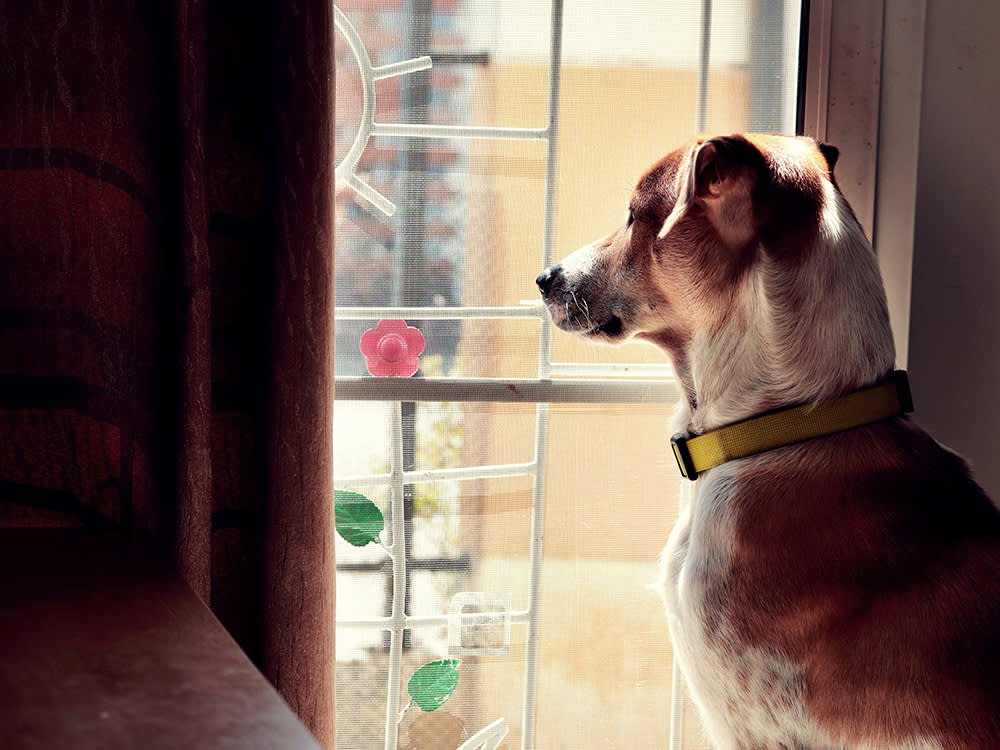
We tell ourselves a comforting story about dogs: that they live entirely in the now, unburdened by yesterday, blissfully incapable of dwelling. It is a lovely idea. It is also not what the research shows. Dogs remember more than we give them credit for, including specific events they had no reason to file away, and once you know that, a lot of your dog’s behavior starts to make more sense.
The kind of memory in question is called episodic memory, the recollection of particular events rather than general facts. Humans are good at it: what you ate for breakfast, the time you called your teacher “mom.” The open question was whether dogs do anything like it, or whether they simply run on trained reflexes and associations with no real “remembering” behind them.
The study that cracked it open
Researchers cracked it with a clever experiment. Their report, which carried the title “Recall of Others’ Actions after Incidental Encoding Reveals Episodic-like Memory in Dogs,” ran in Current Biology. They used a training method called “Do as I Do,” where a dog watches a person perform an action and then, on cue, copies it. If a person jumps and says “Do it,” the trained dog jumps.
But being able to imitate on command does not prove episodic memory. The trick was the twist. After teaching seventeen dogs to imitate, the team retrained them to do something completely different, lie down, after watching any human action. Once the dogs reliably lay down, the researchers ambushed them: they showed an action, and then suddenly said “Do it” instead. The dogs recalled and reproduced the action they had just seen, even though they had every reason to expect they should lie down and no reason to think the action mattered. That surprise recall of an incidentally observed event is the fingerprint of episodic-like memory.
The elegance of that study is the ambush. The dog wasn’t cramming for a test. It saw something, filed it without meaning to, and could still pull it back a moment later. That’s a very different, more human kind of remembering than the reflexes we usually credit dogs with.
The dogs were tested at one minute and again at one hour, and they succeeded at both, though their accuracy slipped as time passed. That decay is itself telling: human episodic memory fades faster for things we did not deliberately try to memorize, and the dogs showed the same pattern.
More than a lab curiosity
Long before the formal experiments, careful observers argued dogs obviously remember yesterday. Evolutionary biologist Marc Bekoff pushed back hard on the “dogs don’t remember” claim, pointing to the everyday evidence: dogs who recall where they and others relieved themselves, who remember where friends and rivals live, who change their behavior based on past experience, who recall where food is fed or where they cached a bone. Dogs who have been badly treated remember that too. The list runs long, and none of it fits a creature with no access to the past.
What newer research adds
The 2016 study was a starting gun, not the finish line. In 2020, the same research group published follow-up work in Scientific Reports showing dogs can hold a mental representation of their own past actions, not just actions they watched a human perform, another layer of episodic-like memory. And researchers have since turned to owners directly, using survey studies of hundreds of dog and cat households to catalog the specific, one-off events pets appear to remember from daily life, building a fuller picture of how animal memory works outside the lab.
The broad conclusion is that episodic-like memory did not evolve only in primates. It looks like a more widespread skill across the animal kingdom, and dogs, living inside human social groups, make an unusually good species to study it in.
What this means for you
Practically, this is a reason for kindness and consistency. If your dog carries specific memories, then the frightening trip, the harsh correction, and the wonderful afternoon all leave traces, and those traces shape how your dog meets the next similar moment. It is also a reason for a little awe. The dog gazing out the window is not necessarily a blank slate waiting for the next meal. Some of what they are is built from what they have already lived. As one researcher put it, your dog is paying attention, and they will remember.
Common questions
Do dogs remember the past?
Yes, to a degree. Studies show dogs have episodic-like memory, meaning they can recall specific past events, including things they had no reason to think they'd need to remember. That memory fades over time, faster than a deliberately memorized fact would.
How long is a dog's memory?
Dogs recalled demonstrated actions after both one minute and one hour in testing, though accuracy dropped as time passed. For familiar people, places, and routines, dogs clearly retain associations for months or years.
Do dogs remember their owners?
Yes. Dogs form durable associations with the people, places, and other animals that matter to them, which is why a dog can recognize a person after a long separation.
Dr. Chen is a small-animal veterinarian who leads health and safety coverage at The Pet Times. She writes and reviews the bulk of our illness, condition, and safety content, translating clinical guidance into clear, practical advice owners can act on at home.
Meet our experts ↗Keep reading
 TrainingYou Didn't Train Your Dog Wrong. They're Just Wired This Way.Jordan Ellis · 6 min
 LivingNew York's Hottest Club Is a $795 Dog RunNina Vasquez · 8 min
 TrainingYou're Not Breaking Up a Fight. You're Interrupting a Conversation.Dr. Nina Kohl · 9 min
 TrainingA Therapy Dog Isn't a Service Dog. Here's Where They Do Their Best Work.Sasha Ford · 7 min
 TrainingYour Dog Nibbles You Like Corn on the Cob. Two Experts Disagree About What to Do.Dr. Nina Kohl · 8 min
 TrainingHow to Actually Start Dancing With Your Dog (No Rhythm Required)Sasha Ford · 8 min