


Wet vs. Dry Cat Food: The Moisture Question Settles Most of It
There's no single right answer for every cat, but there is a real one for most of them, and it comes down to water. Here's how to read your own cat's needs, plus what newer research says about wet food and urinary health.

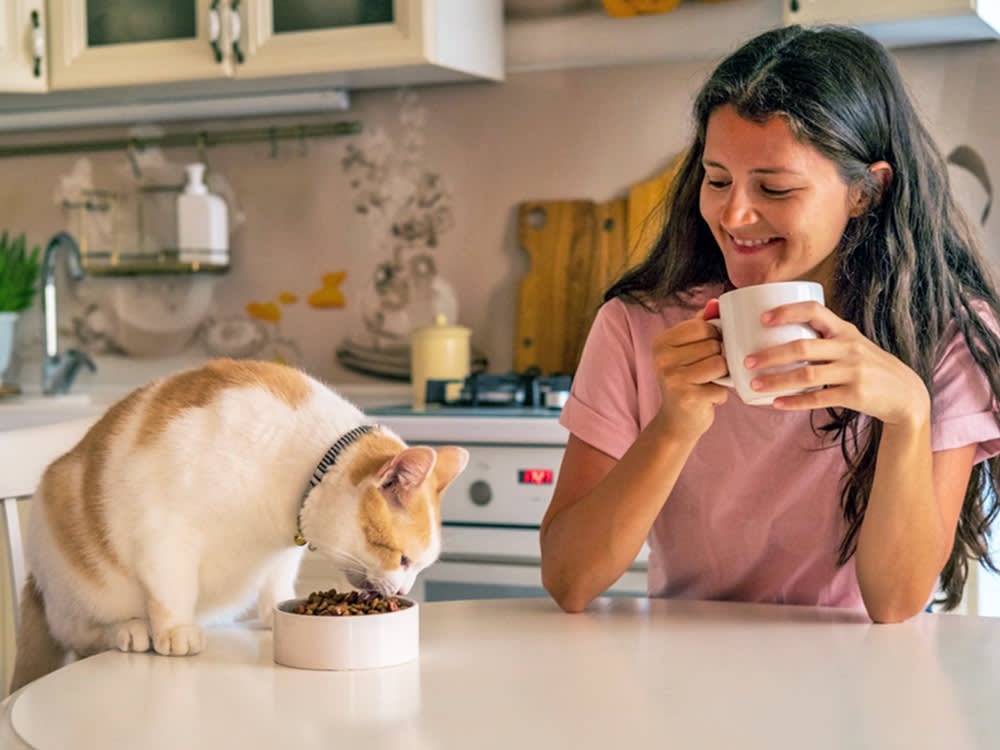
Wet or dry? Canned or kibble? It is one of the most common questions cat parents wrestle with, and the honest answer is frustrating on its surface: it depends on the cat. What is right for yours may be wrong for your neighbor’s, and it can even change over your own cat’s life.
But “it depends” is not the same as “it’s a toss-up.” Underneath the debate, one factor does most of the deciding, and it is water. Once you understand why moisture matters so much to a cat, the wet-versus-dry choice gets a lot clearer, even if it never becomes truly one-size-fits-all.
Why moisture is the quiet main character
Cats evolved from desert animals with a famously low thirst drive. Left to their own devices, many simply do not drink enough water, and they are wired to get much of their hydration from food. That is the lens to keep in mind through everything below: a food’s moisture content is not a minor spec, it is central to feline health, especially for the kidneys and urinary tract.
Wet food carries that moisture built in. Dry food does not. That single difference drives most of the pros and cons on both sides.
What wet food is, and where it shines
Wet or canned food is made by blending meats and vegetables, sometimes with grains and other ingredients, packing the mixture into a sealed can, and cooking it inside that can to destroy anything that would cause it to spoil. It comes in an array of flavors, from fish to chicken to, yes, cheeseburger, and most cats go wild for it, whether as a full meal or a treat.
Its strengths are real. The high moisture content is the headline. It also tends to smell and taste stronger, which makes it more enticing, and that matters more than it sounds. Wet food is often the best choice for picky eaters with strong opinions about aroma and flavor. It is gentler for cats with dental disease, who find chewing kibble a chore. And it is frequently the most tempting option for a cat whose appetite is suppressed by nausea or illness, including kidney disease. Speaking of which, cats with kidney disease need all the fluid they can get, and wet food is a quiet way to sneak it in; the same higher-fluid benefit applies to cats managing diabetes and feline lower urinary tract disease.
The downsides are practical. Wet food keeps almost indefinitely unopened, but once you break the seal the clock starts: it needs refrigeration and will spoil within a few hours at room temperature. It also usually costs more than kibble.
What dry food is, and where it wins
Dry food, or kibble, is made by combining fats, grains, meats, and vegetables, cooking everything at high heat, pushing the mixture through an extruder into those familiar shapes, and cooling it. Fats or carbohydrates are often sprayed on afterward to boost the taste.
Its advantages are all about convenience and cost. Kibble has a long shelf life even after opening, can be left out the whole day at room temperature without going bad, and is generally cheaper, with the option to buy in bulk to save more. That makes it the natural fit for a grazer rather than a gobbler, and the only real option if you rely on automatic feeders or food puzzle toys, or if your cat free-feeds throughout the day. (Most vets do not love all-day free-choice feeding, but where it happens, dry is the only food that supports it.)
Dry food is generally more processed than wet, though that line blurs, some smooth pate wet formulas are quite refined too.
So how do you actually choose?
Ask five vets which cat food they recommend and you may get five answers, because there are so many good options and everyone has favorites for their own reasons. Rather than chase a single “best” brand, work through a short checklist.
Start with an AAFCO statement. The Association of American Feed Control Officials sets the baseline nutritional standards a pet food must meet, and a food carrying that approval should meet a cat’s minimum needs. It is a floor, not a quality guarantee, but a food without it may be missing nutrients.
Next, read the ingredient list for whole foods, meats, grains, vegetables, near the top. You will not recognize every single item, but the first four or five should be familiar, because whole ingredients tend to be more nutritious and more digestible, which means your cat actually absorbs what they eat.
Then factor in your specific cat. Preferences count, a cat who adores chicken and snubs fish will do better with a food built around what they will actually eat. So do their health needs; a cat who needs more moisture and dislikes crunchy kibble is telling you wet food is in your future.
Finally, be honest about your finances and access. The best food in the world is no good if you cannot reliably afford it or keep it in stock. You will hopefully be feeding this cat for many years, so pick something sustainable for the long haul.
And if you are still torn, you do not have to pick a side. Many cats thrive on both, and mixing gives you the benefits of each plus some welcome variety. Combine them in one bowl, or feed wet in the morning and dry at night, just keep an eye on total portions so the combination does not tip your cat into overfeeding.
When an owner asks me to just pick one, I ask about their cat’s water habits first. For a cat prone to urinary issues or one who barely drinks, I lean toward more wet food for the hydration alone. For a healthy grazer on a budget, good-quality kibble is perfectly fine. The bowl should fit the cat, not a rule.
What’s new since this was written
The moisture argument has picked up harder evidence. Newer veterinary research links switching a cat from predominantly dry to predominantly wet food with a substantially lower risk of urinary crystals, on the order of a 45 percent reduction in one recent report, because the extra water dilutes the urine and makes crystals less likely to form. For context, wet food typically runs about 75 to 78 percent moisture, versus a small fraction of that in kibble.
There is a weight angle, too. Dry food is more calorie-dense by volume, so the same-looking amount delivers more calories, which can nudge cats toward obesity, itself a leading risk factor for feline type 2 diabetes. Veterinary groups increasingly frame wet food, or at least mixed feeding, as a tool for supporting hydration, urinary health, and healthy weight, not just a flavor upgrade. None of this makes dry food “bad,” but it does tilt the moisture question a little further toward wet for a lot of cats.
This is general nutrition information, not a substitute for your veterinarian’s guidance; a cat with kidney disease, diabetes, urinary issues, or weight concerns should have their diet set with their vet.
References
- AAHA, “Wet Cat Food: More Than a Meal, a Key Ingredient for Feline Wellbeing.” https://www.aaha.org/newstat/publications/wet-cat-food-more-than-a-meal-a-key-ingredient-for-feline-wellbeing/
- Cornell Feline Health Center, “Feeding Your Cat.” https://www.vet.cornell.edu/departments-centers-and-institutes/cornell-feline-health-center/health-information/feline-health-topics/feeding-your-cat
- American Veterinary Medical Association, “Feline Lower Urinary Tract Disease (FLUTD).” https://www.avma.org/resources-tools/pet-owners/petcare/feline-lower-urinary-tract-disease
Common questions
Can I feed my cat both wet and dry food?
Yes, and many cats do well on a mix. You can combine them at each meal or feed one in the morning and the other at night. Just track total portions so you don't overfeed.
Which cats especially benefit from wet food?
Picky eaters, cats with dental disease, and cats who need more fluids, including those with kidney disease, diabetes, or feline lower urinary tract disease, tend to do better with the higher moisture and palatability of wet food.
How do I judge a food's quality?
Start with an AAFCO statement confirming it's complete and balanced, then read the ingredient list for recognizable whole foods near the top. Factor in your cat's preferences and what you can reliably afford long-term.
Not a substitute for your vet. Our guidance is educational. For urgent symptoms, contact a vet or emergency clinic right away. Editorial standards
Dr. Chen is a small-animal veterinarian who leads health and safety coverage at The Pet Times. She writes and reviews the bulk of our illness, condition, and safety content, translating clinical guidance into clear, practical advice owners can act on at home.
Meet our experts ↗Keep reading
 FoodWet Food Beats Kibble. That Doesn't Mean All-You-Can-Eat.Dr. Mara Chen · 6 min
 FoodYour Kitten Isn't Starving. Weigh Them Every Week.Dr. Priya Nair · 7 min
 FoodA Kitten's Diet Changes Every Few Weeks. Here's the Whole Schedule on One Chart.Dr. Priya Nair · 7 min
 FoodHigh Protein Isn't a Health Upgrade for Cats. It's a Prescription.Dr. Mara Chen · 7 min
 FoodYou're Probably Overfeeding Your Cat. The Bag Is Part of the Problem.Dr. Nina Kohl · 4 min
 FoodYour Cat's 'I'm Starving' Act Is Fake. A Skipped Meal Isn't.Dr. Lena Park · 6 min